Futureproof Festival / 2026
Amber Case: your house shouldn't need a system administrator
The conversations worth coming back to.
Source and citation
This is an authored, illustrated recap. The session date records when the talk took place. An edited transcript and festival recording have not been released on this page.
Kris Krüg. “Amber Case: your house shouldn't need a system administrator” Futureproof Festival 2026 proceedings, Volume 01. Session: 2026-10-28. Edition updated 2026-11-06. https://www.futureproof.website/2026/proceedings/sessions/amber-case/
You can also select and copy the citation above.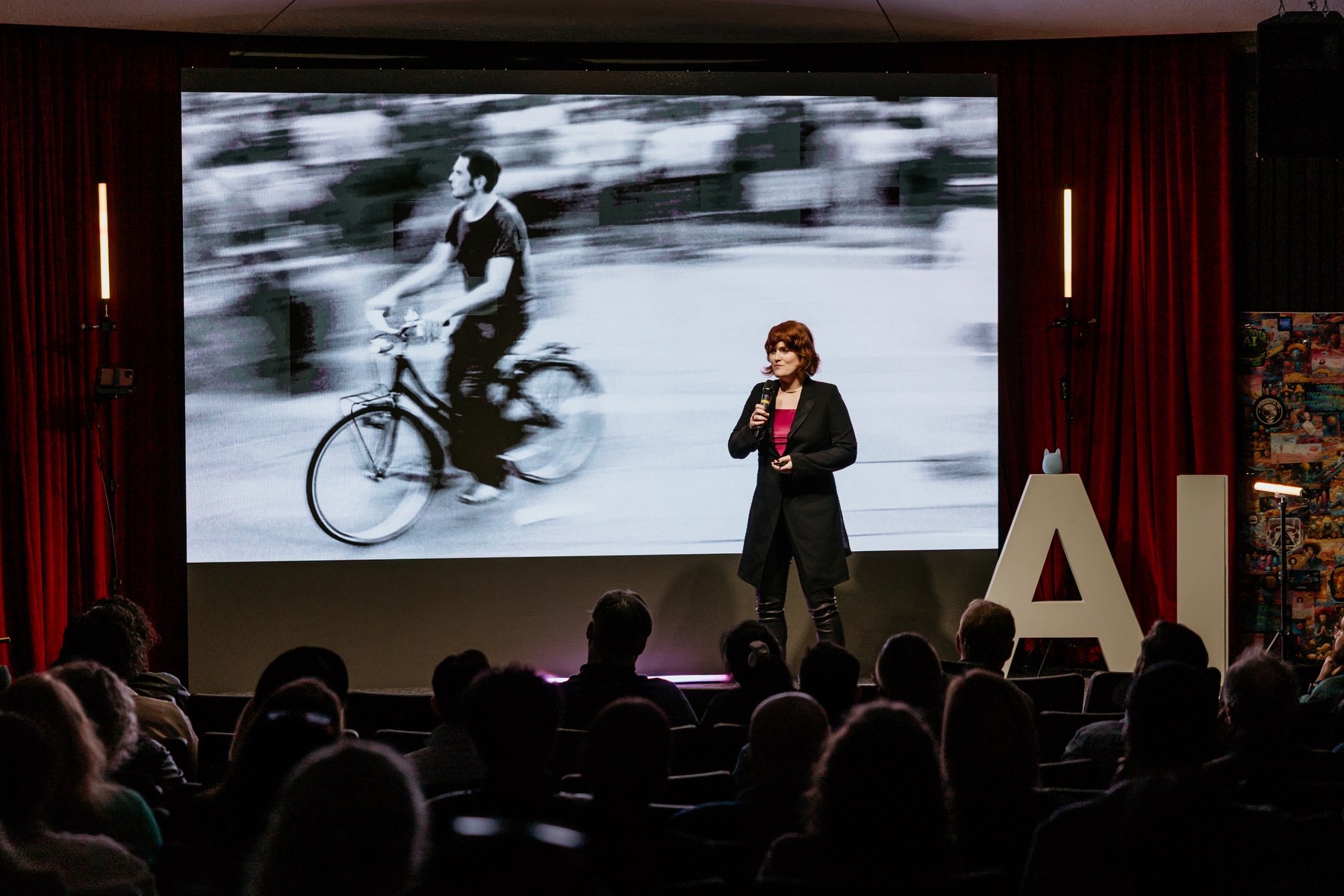
The bicycle at the centre of Amber Case's opening-night argument. Futureproof Festival of AI, October 28, 2026.
A bicycle doesn't ask you to phrase your request differently.
You push. You steer. The resistance in the pedals tells you something about the hill. The machine gives you information through your body while your eyes stay on where you're going.
Amber Case opened Futureproof Festival's first night with that ordinary piece of engineering and a fairly rude question for the technology industry: why do so many newer tools make us work harder to use them?
Her talk, Calm Technology in the Age of Loud Machines, examined the attention a product takes in exchange for the thing it supposedly does. A voice assistant interrupts your activity, waits for a command, makes you wait for a response and sometimes sends you back to the beginning. Try putting that interface on a bicycle. See how far the conversation gets before you hit something.
The bicycle establishes a useful standard. Once learned, a tool can become part of an activity. A product that keeps demanding an audience has a different relationship with its owner.
Your hands already know things
Amber compared physical car controls with flat screens. A knob has a location, an edge and resistance. You can learn where it lives. A screen can put the same function somewhere else after the next software update and leave your fingers looking for the old address.
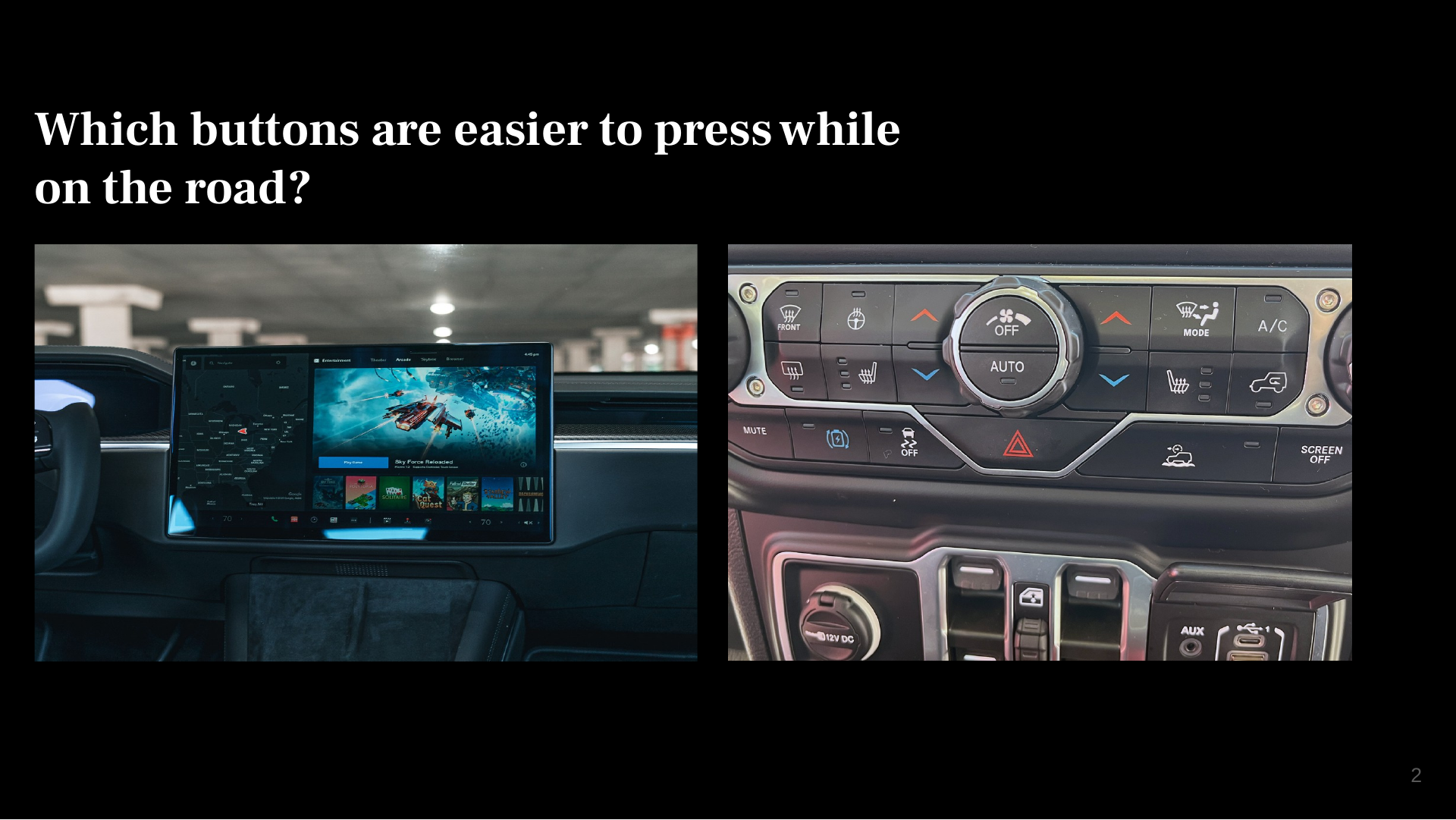
A comparison from Amber's submitted presentation, slide 2. Presentation: Amber Case / Calm Tech Institute. Rendered from the original PowerPoint.
She used the idea of proprioception, our sense of our bodies in space, to argue for interfaces that work with skills people have already acquired. Her distinction between something easy on the first encounter and something comfortable after years of use deserves a place in every product review.
Moving a familiar control has a cost. The company gets to announce a redesign. The person using it gets homework.
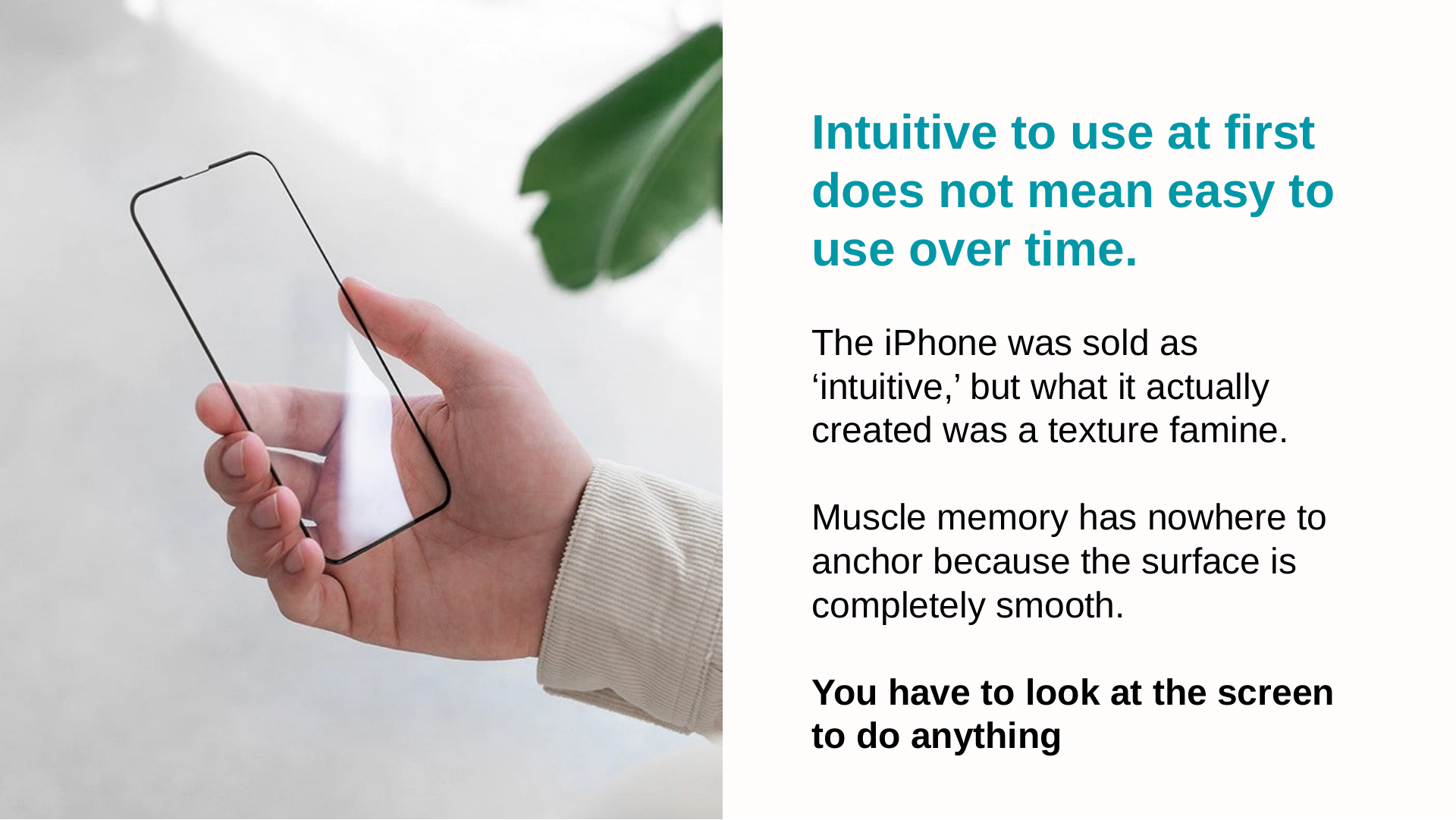
The texture argument, submitted slide 10. Presentation: Amber Case / Calm Tech Institute.
Amber brought up cameras as objects people become accustomed to through use. That connection is immediate in my photography practice. Knowing the controls helps keep your attention on the person, the light and the moment changing in front of you. Learning the instrument is part of making the picture.
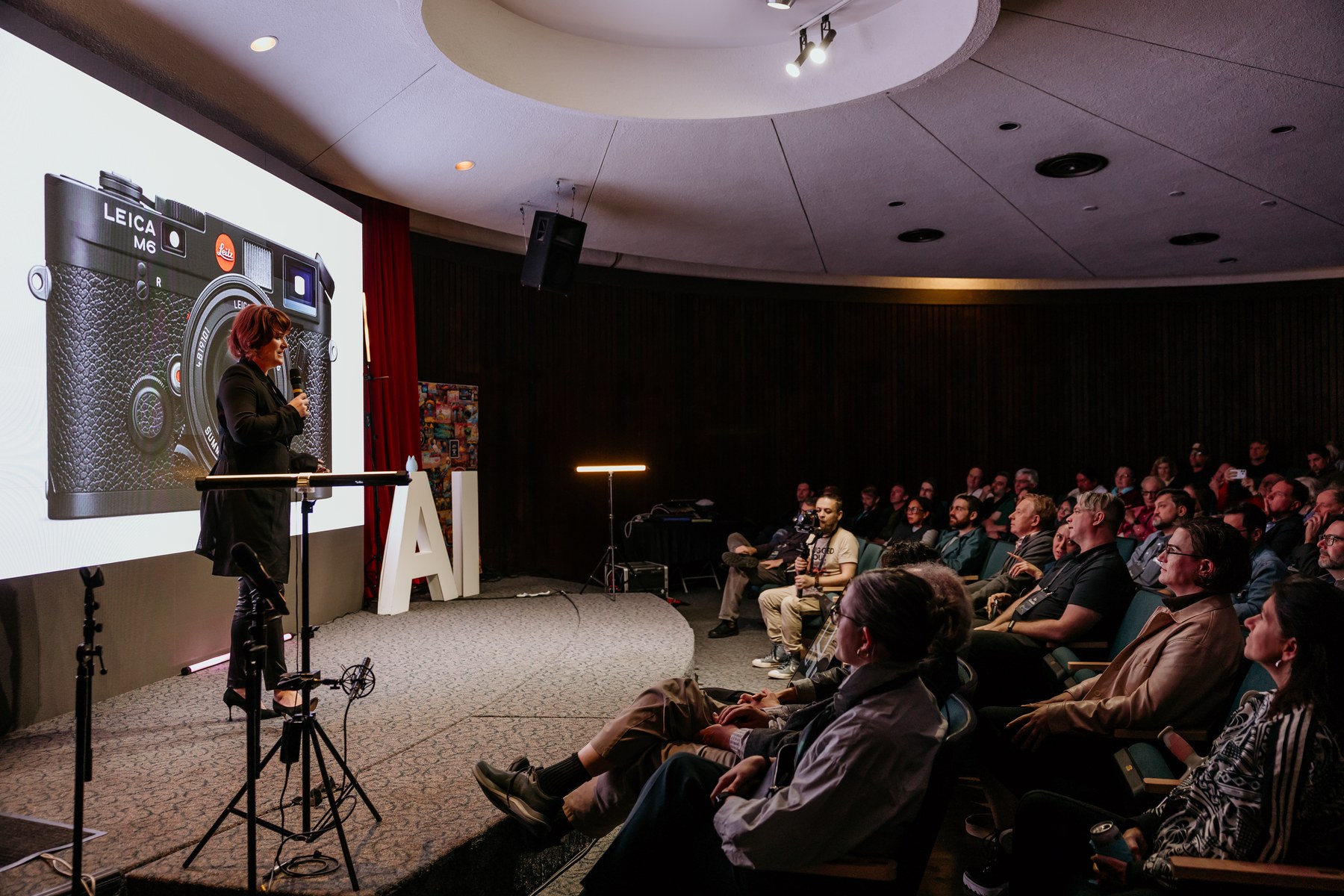
The camera example during the opening-night presentation.
There is a practical consequence for anyone adding AI to existing software. That new feature occupies space somebody was already using. Ask what gets displaced, what has to be relearned and whether the person trying to finish their work gets any say in the bargain.
Calm can mean more information
Calm technology is easy to mistake for an empty screen in a tasteful shade of beige. Amber's examples were more interesting than that.
A small blind-spot indicator appears where a driver already looks. A weather light changes colour, giving someone a rough sense of the day without delivering a spoken forecast. The information is available without insisting that every other activity stop.
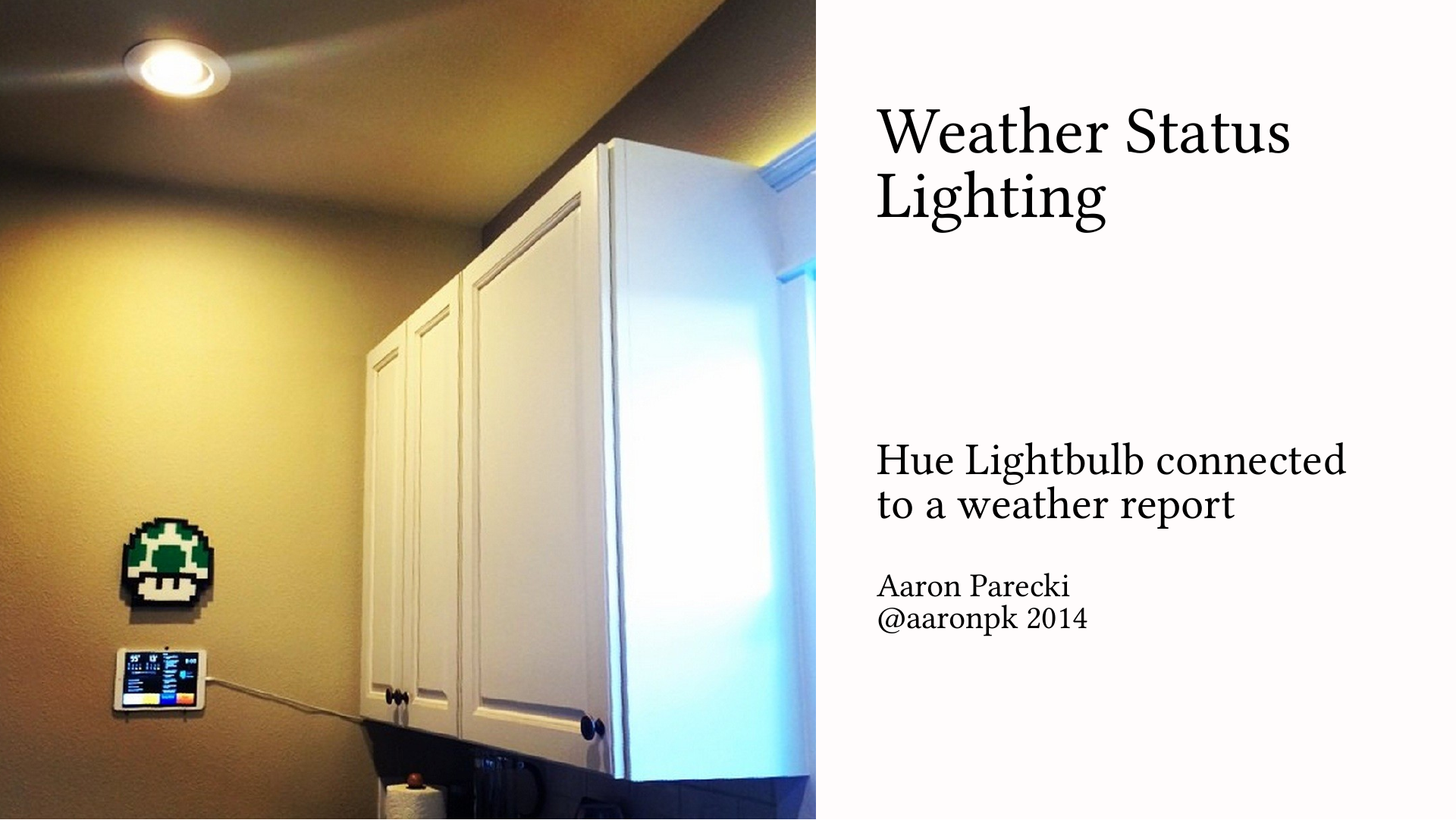
Weather Status Lighting, credited in the submitted presentation to Aaron Parecki, 2014. Slide 84. Presentation: Amber Case / Calm Tech Institute.
That is the useful history behind Mark Weiser and John Seely Brown's 1995 paper, Designing Calm Technology. Information can move between the edge of our attention and the centre when we need it. Everything doesn't have to arrive as an alert.
In the Q&A, someone asked Amber about chatbots. She described an earlier software operation where multiple visible displays helped people understand what the system was doing. Her objection to a single chat window was that it could hide too much of the surrounding activity.
That complicates the minimalist sales pitch. A clean-looking interface can still leave you anxious about what is happening behind it. A useful status display can give you enough context to get on with something else.
The design question is how people learn the system's state, how they notice a change that matters and how much attention that requires. Putting a smiling chatbot in front of uncertainty doesn't settle any of those questions.
What survives the outage?
One of Amber's principles of calm technology asks whether a product can still work when it fails. She used an escalator turning into stairs to make the principle legible.
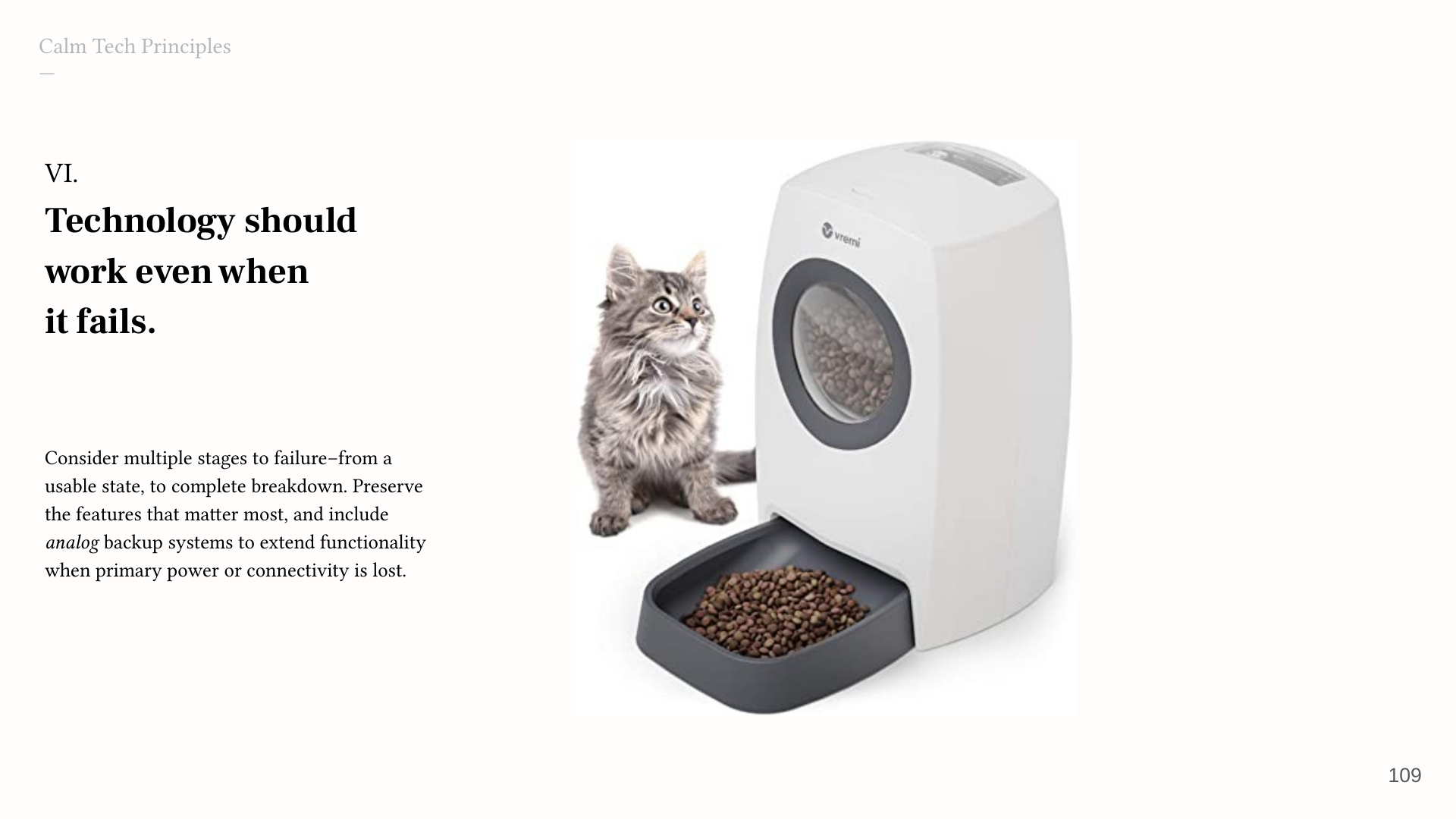
Preserve the features that matter when connectivity or power is lost. Submitted slide 109. Presentation: Amber Case / Calm Tech Institute.
For connected products, that means asking what remains usable when a server disappears, an app stops working or the owner loses access to an account. These are design choices with consequences inside somebody else's home.
Amber's answer includes institutional work. The Calm Tech Institute's certification programme evaluates products against a framework covering attention, periphery, durability, light, sound and materials. On stage, she described trying to make respectful design specific enough for people to recognize and ask for it.
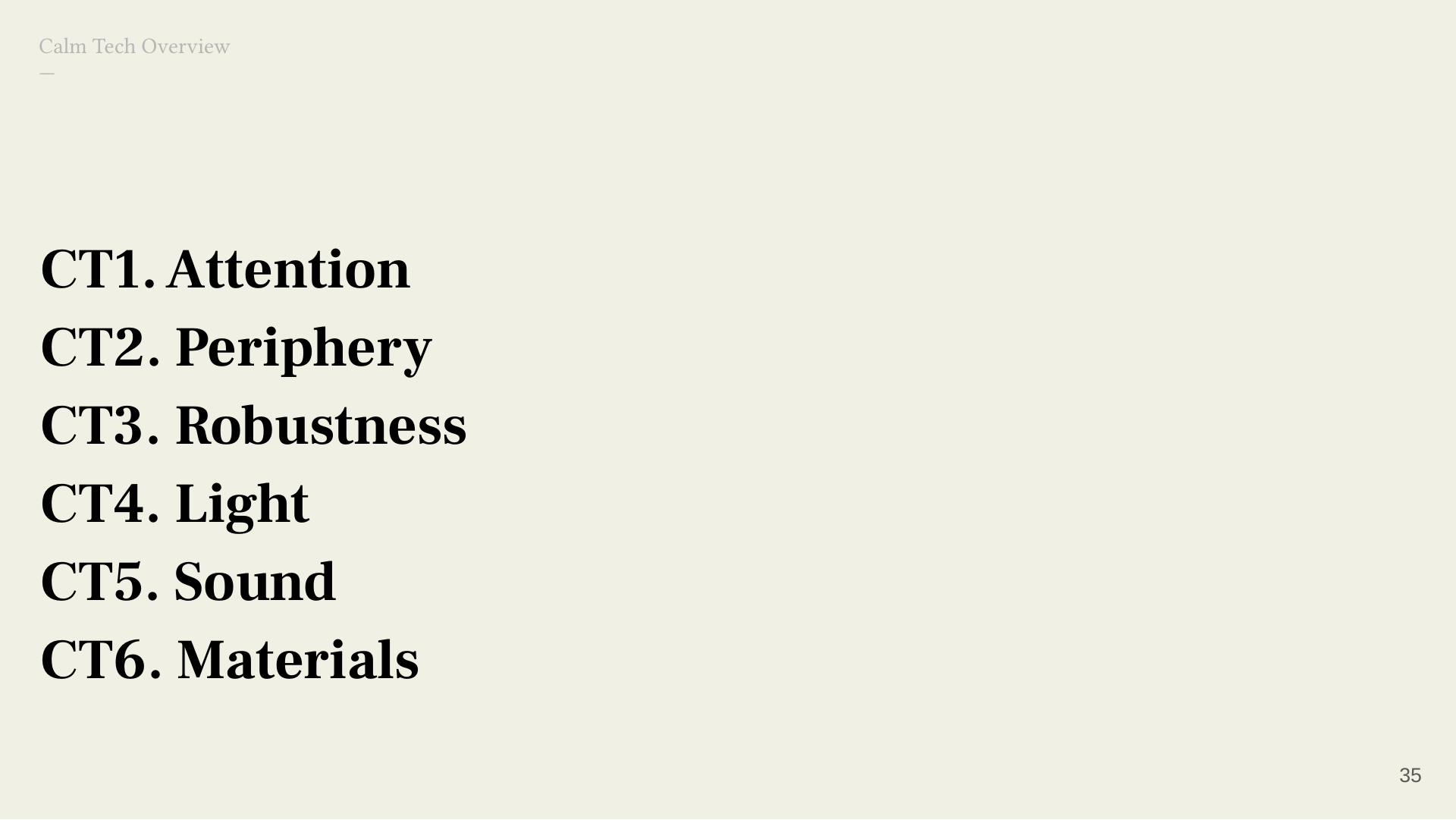
The framework as shown in the submitted deck, slide 35. The institute's current website names the third category Durability. Presentation: Amber Case / Calm Tech Institute.
A seal will have to earn people's trust. What matters in her proposal is the attempt to turn a vague promise about a better experience into questions somebody can actually investigate. Does it need this alert? Can the owner still use it without an app? Can they turn the sound off?
During the audience discussion, Amber also described the long work of making a standard useful to manufacturers and eventually regulators. That is a different timescale from announcing the next feature. Someone has to stay with the problem after the launch party.
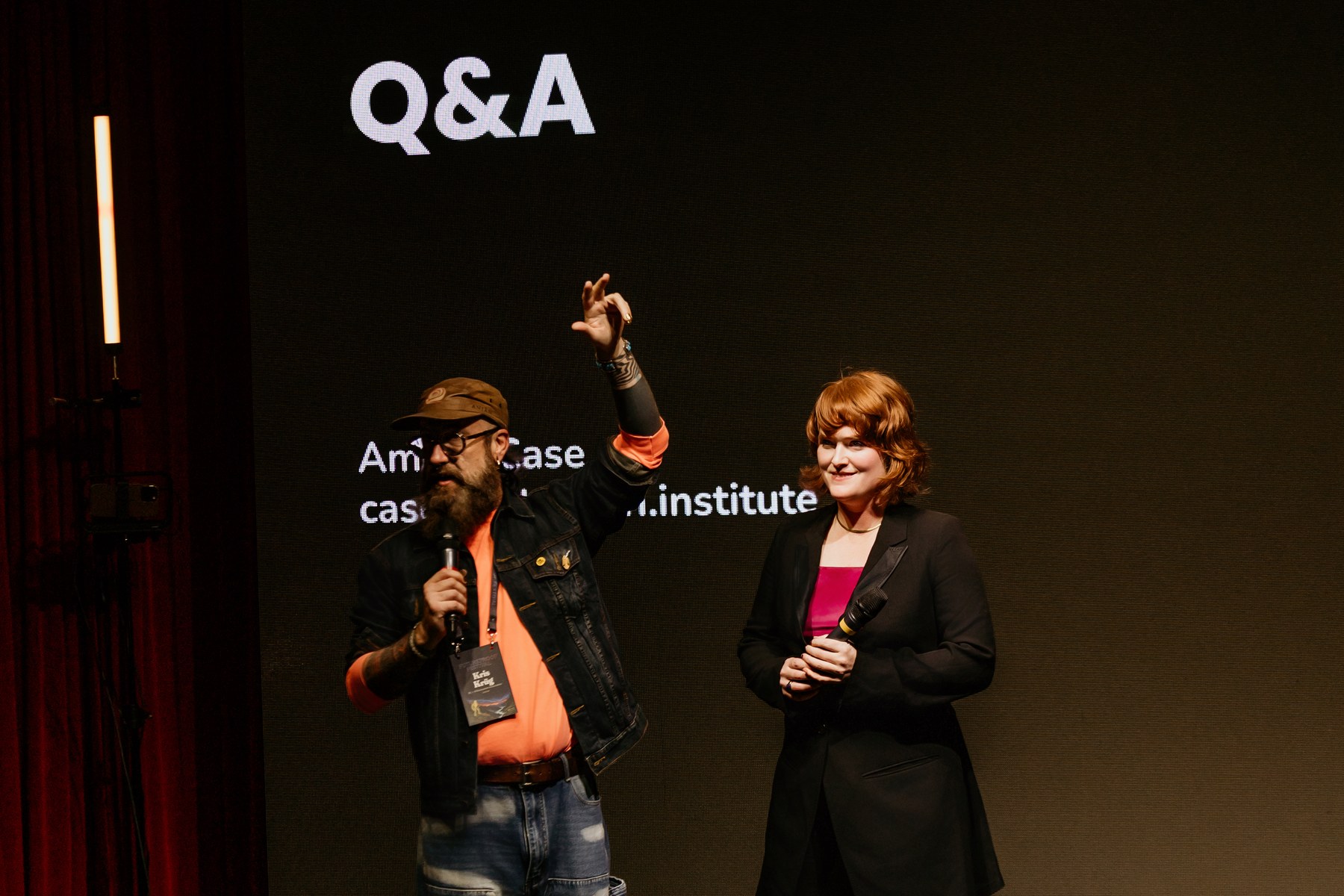
Opening-night questions after Amber's talk.
In my account of Futureproof's first year, I described Amber getting people thinking about their bodies and their relationships with technology. That relationship is something we can examine together at the Vancouver AI gatherings, too. Bring an interface people actually use. Watch where it makes them stop, search, wait or apologize.
Start with the product you touch every day. Count the work it creates before you count the work it saves. If living in your house requires maintaining a small IT department, somebody has assigned you a second job and called it convenience.