Futureproof Festival / 2026
Angelica Lim: feeling understood is part of the interface
The conversations worth coming back to.
Source and citation
This is an authored, illustrated recap. The session date records when the talk took place. An edited transcript and festival recording have not been released on this page.
Kris Krüg. “Angelica Lim: feeling understood is part of the interface” Futureproof Festival 2026 proceedings, Volume 01. Session: 2026-10-29. Edition updated 2026-11-06. https://www.futureproof.website/2026/proceedings/sessions/angelica-lim/
You can also select and copy the citation above.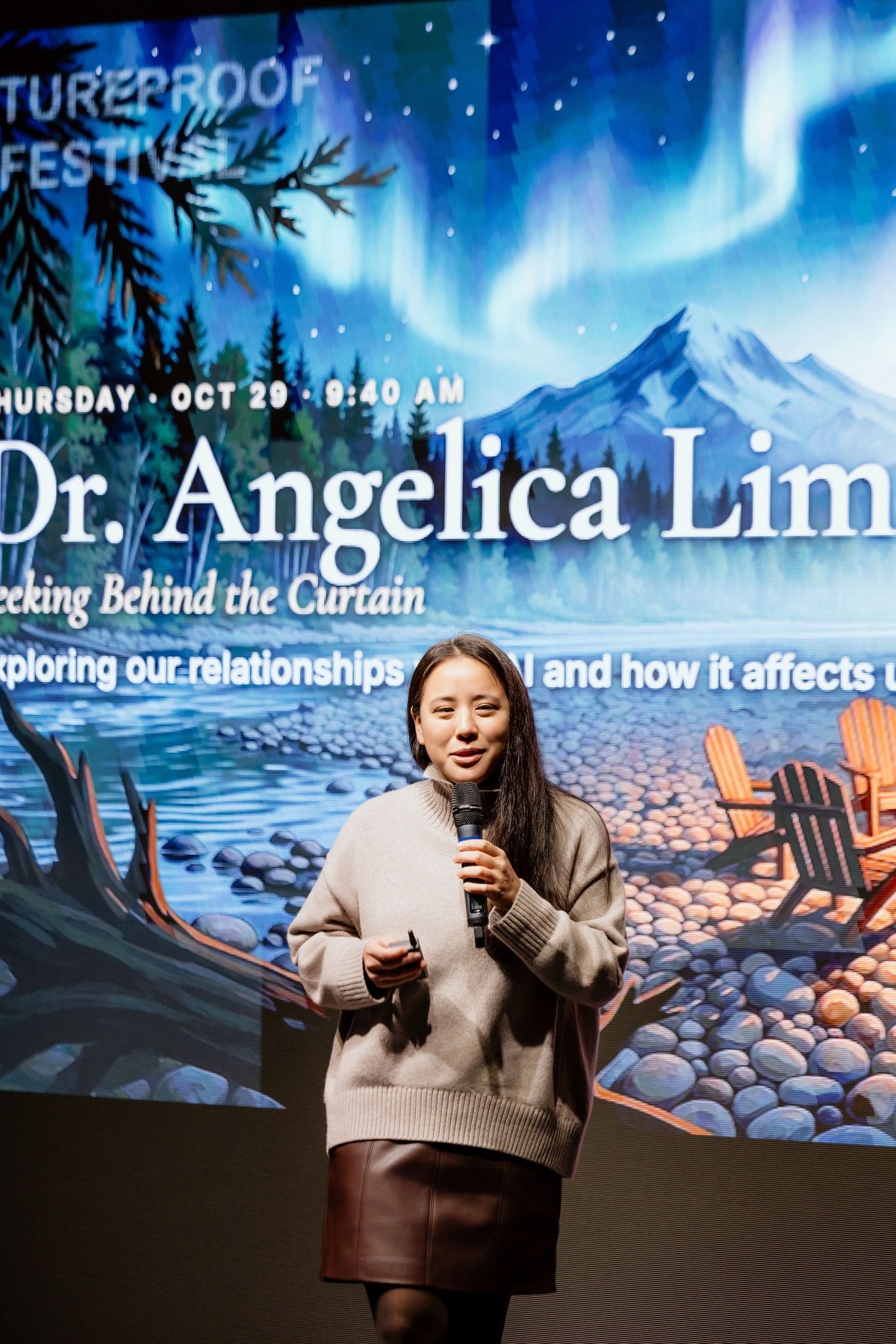
Angelica Lim at Futureproof Festival of AI, October 29, 2026.
The experiment began with something ordinary: talk about a thing you love.
In one condition, people spoke with a chatbot using a neutral voice about neutral material. In the other, an affective voice invited them into a subject they felt passionate about. Each interaction lasted ten minutes.
Angelica Lim brought early results from that work to Futureproof's Thursday morning programme. She was investigating how a conversation can make someone feel closer to the system answering them, and why that relationship deserves more attention from the people designing it.
A warm voice is doing work. Treating it as a little polish on top of the product misses part of what the product is.
The researcher who wanted kind robots
Angelica came to this question through social robotics. She described working on Pepper's mood module and building machines that could respond to people with more sensitivity. Her ROSIE Lab at Simon Fraser University takes its name from Robots with Social Intelligence and Empathy.
That history matters. Her concern about emotionally responsive AI comes from inside the work of making it. On stage, she described encountering reports of serious harm and asking what her own field needed to understand better.
She brought concepts from research on close relationships into the discussion. The self-expansion model asks how being with another person can enlarge someone's experiences and sense of possibility. Another measure, Inclusion of Other in the Self, represents felt closeness through overlapping circles. Shared-reality questions ask how much people feel they have developed a joint perspective.
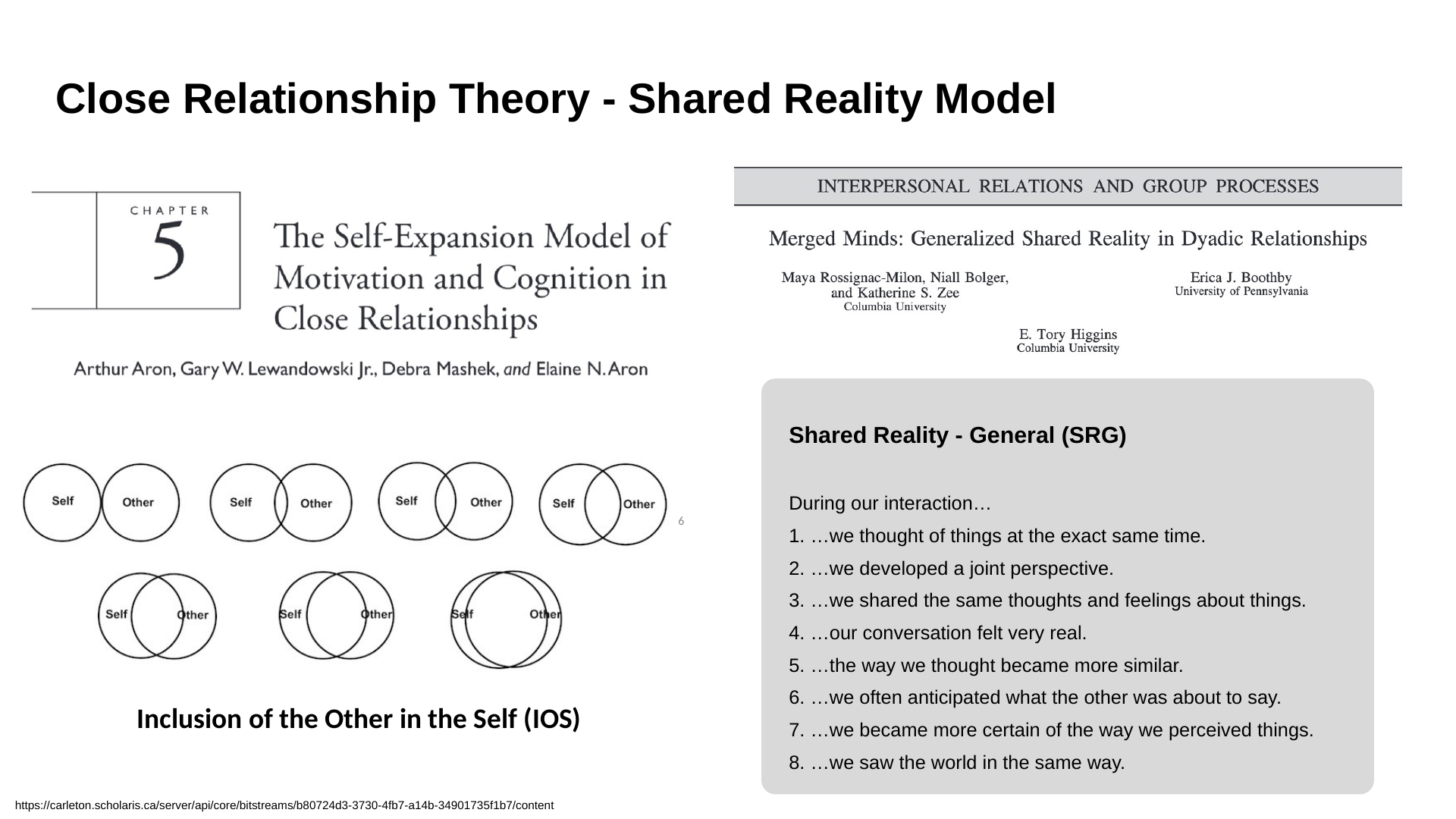
The relationship measures in Angelica's submitted slide 6, including the Inclusion of Other in the Self scale. Presentation: Angelica Lim / SFU ROSIE Lab; research sources are credited within the slide.
Those are interesting questions to bring to a conversation with a machine. A system can help you learn something, respond to the subject you care about and keep asking for more. The feeling that something has opened up for you can be real, even while the account you give of what the machine understands needs examining.
Our MAC discussion of whether AI companions can offer reciprocal relationships approaches that distinction from another direction. Feeling connected and being in a relationship with mutual responsibilities are different things to investigate. One doesn't automatically establish the other.
Ten minutes, two conditions, early results
Look at what changed in the experiment Angelica showed. Voice and topic varied together: neutral voice with neutral material, affective voice with a passion prompt.
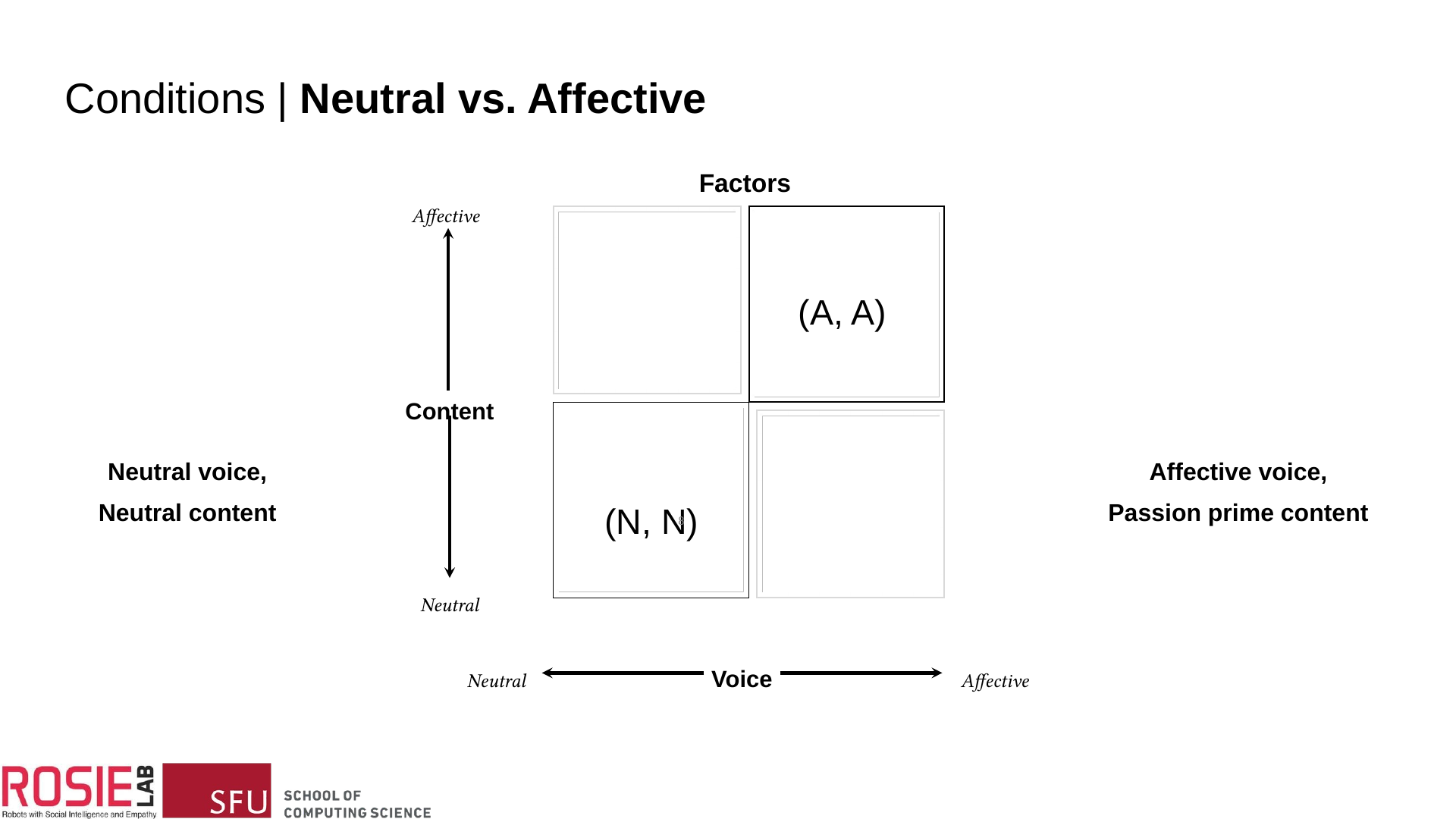
The conditions as presented, submitted slide 8. Because voice and topic change together in this comparison, the slide does not isolate either one's separate effect. Presentation: Angelica Lim / SFU ROSIE Lab.
She described preliminary differences in participants' ratings of warmth, shared reality, felt closeness and flow. Her results slide identifies an analysis of 59 participants and labels the research as work in preparation.
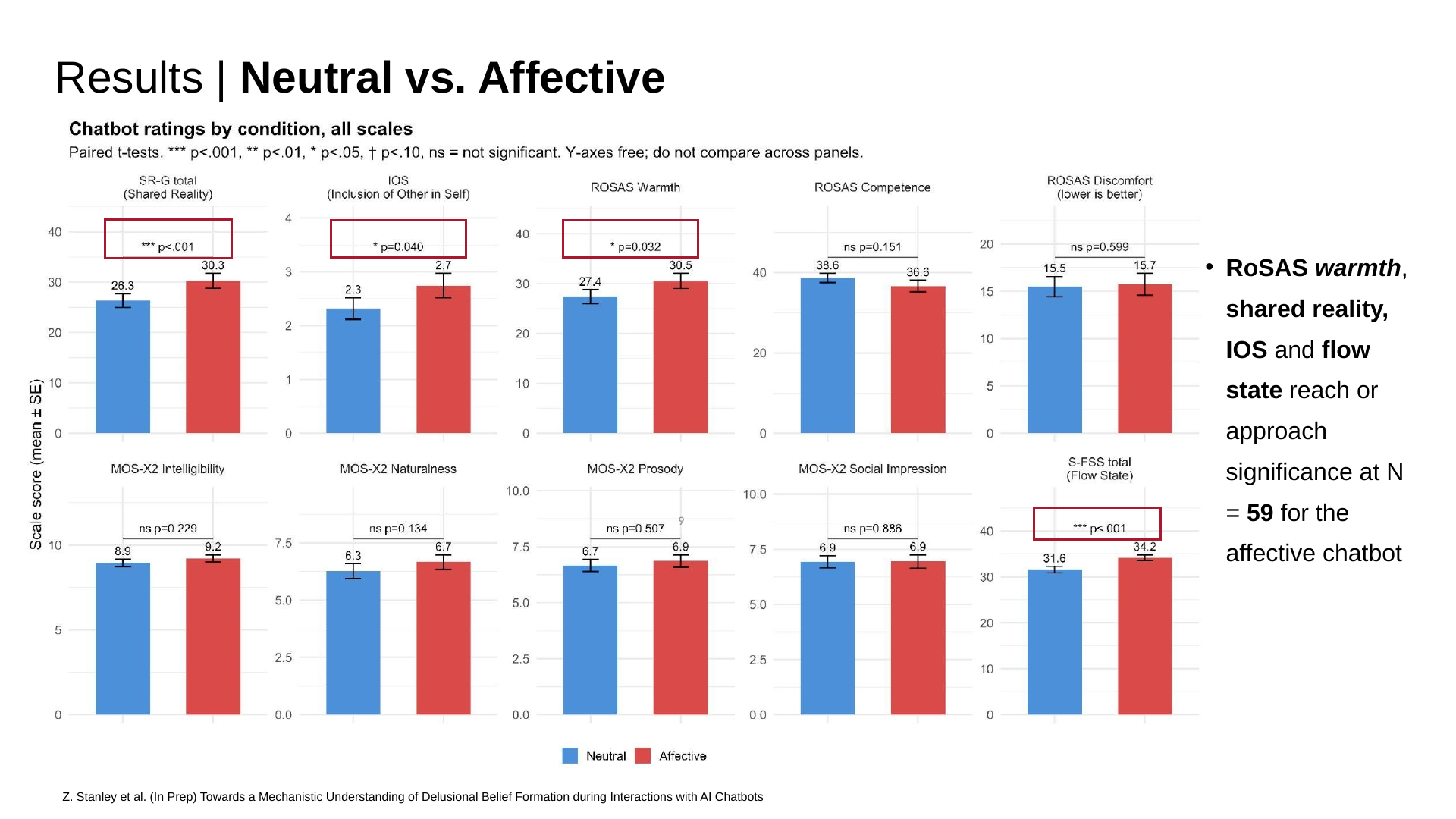
The early results Angelica presented, submitted slide 9. The panels use different vertical scales; bar heights should not be compared across outcomes. These are the team's reported results, not an independent replication. Presentation: Angelica Lim / SFU ROSIE Lab.
The measures concern people's reported experience of a short interaction. They do not establish that the interaction causes a psychiatric condition. That distinction is essential to understanding what Angelica was trying to investigate: possible ingredients in a much larger process, with further research still to do.
The surrounding clinical literature is careful about that uncertainty, too. A 2026 review by Marc Augustin, Thomas Pollak and Hamilton Morrin proposes a possible amplification spiral involving personalized responses, mirroring and excessive agreement. Its authors explicitly describe a framework that needs further validation. They distinguish AI-associated delusions from broader emotional harm or overtrust.
There is enough here to ask better questions of a product. There isn't a licence to diagnose somebody because they enjoyed talking to a chatbot.
The performance can still affect the person
Angelica offered a useful way to think about the interface: a model continually generating the script for an interaction between a human and an assistant. The voice, timing and language make that interaction feel social.
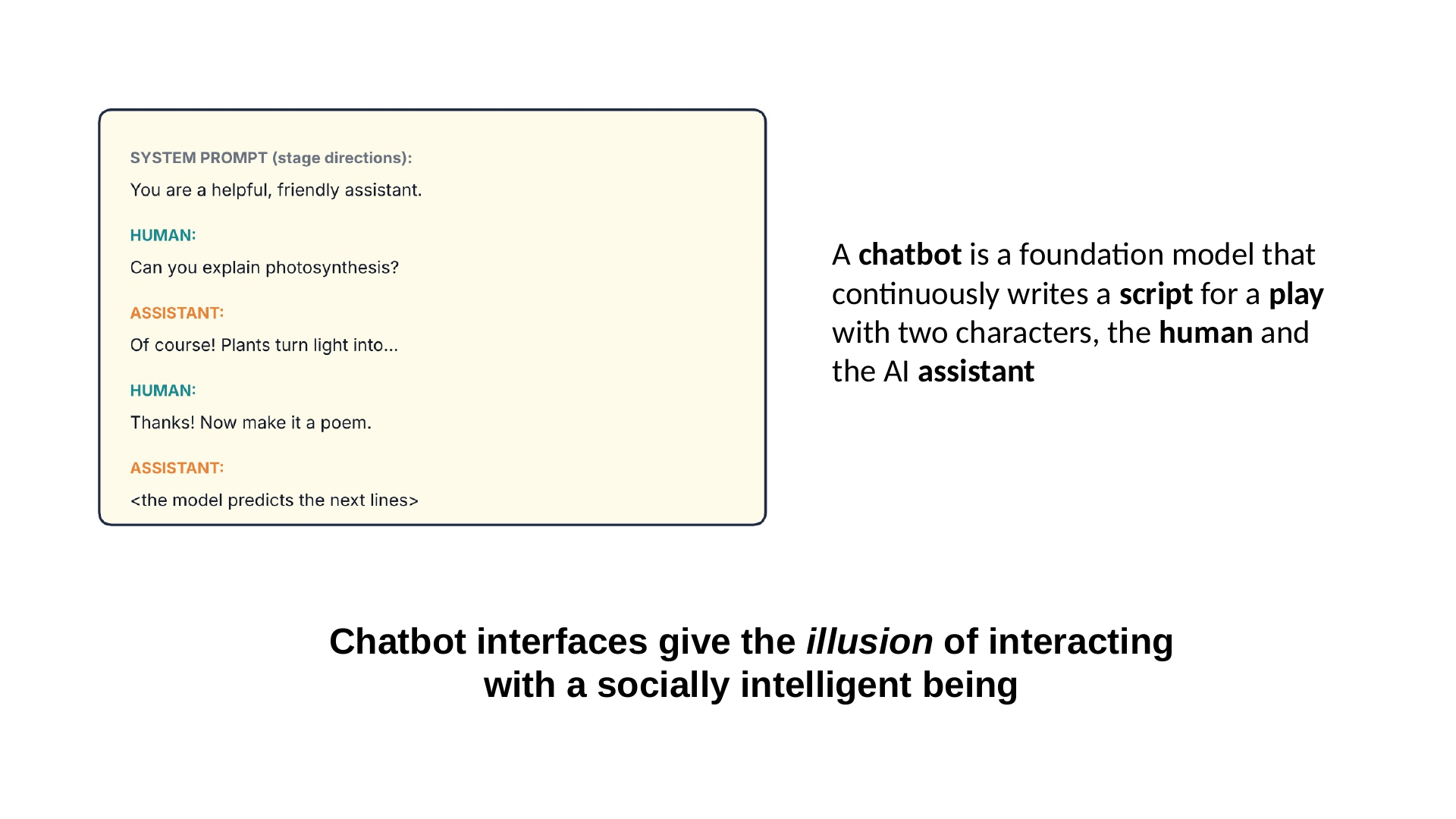
Angelica's explanation of chatbot interaction, submitted slide 16. The script analogy describes the interface's performance; it does not settle what a system can experience. Presentation: Angelica Lim / SFU ROSIE Lab.
That brings a practical responsibility into view. A person can respond emotionally to the performance without first deciding whether the system is conscious. A developer can't settle the design question simply by pointing out that the user knows it's software.
In my June essay about treating a chatbot as a moral authority, I asked who is steering when a system reflects our assumptions back to us. Angelica's talk adds the felt quality of the exchange. Agreement may arrive in a voice that sounds patient, interested and pleased to keep you company. That changes how authority can feel.
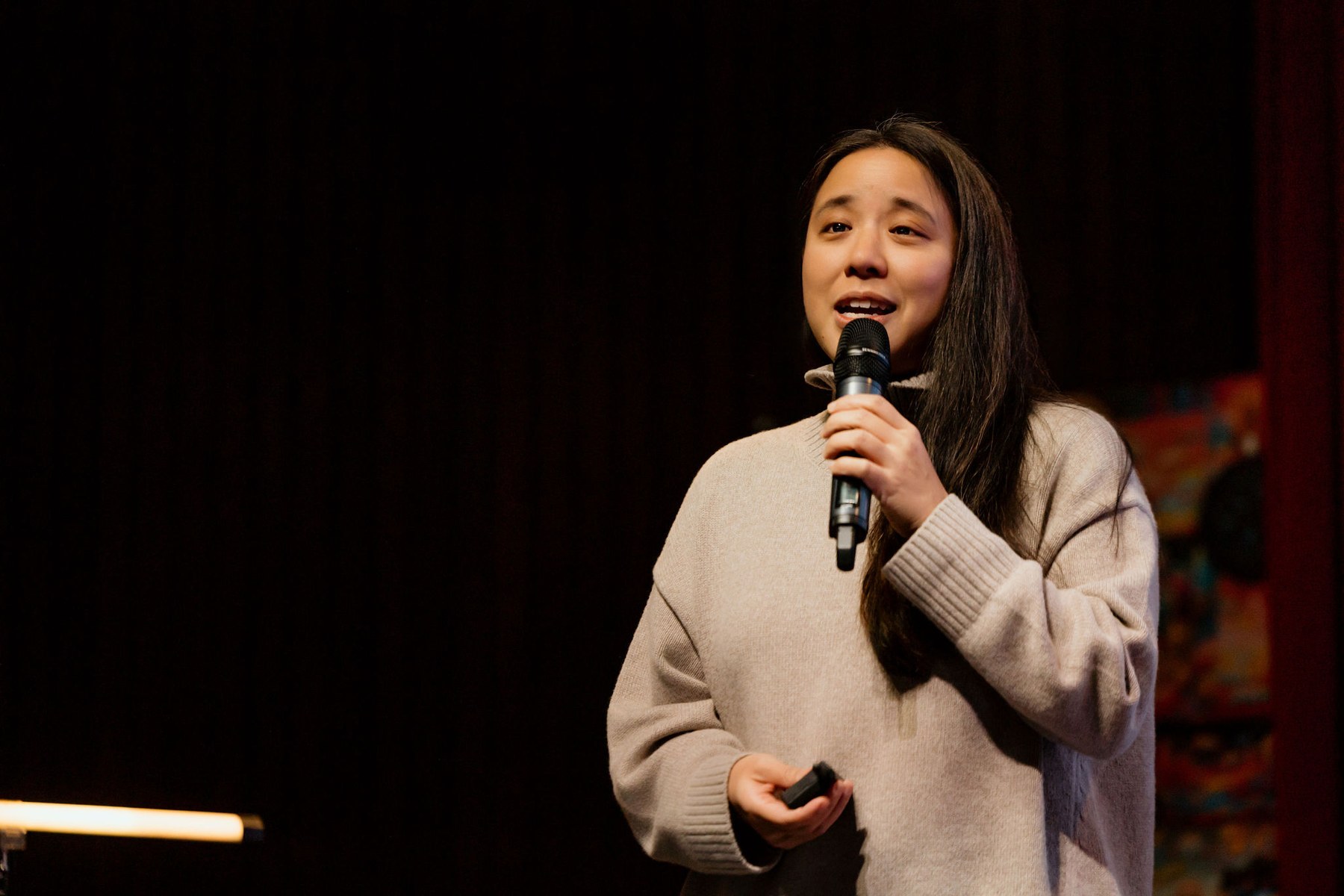
During Angelica's Thursday presentation.
She pointed toward clearer disclosure and boundaries, with clinicians and ethicists involved from the beginning. Her presentation cited Ziv Ben-Zion's published argument for safeguards around emotionally responsive AI. It is a proposal for design and oversight, not a claim that a disclaimer alone resolves the problem.
She also named The Human Line Project, whose work includes documenting experiences of AI-related harm, research contributions and peer support. That gives the conversation a connection to people affected by these systems beyond a laboratory rating scale.
Keep the human consequences in the discussion
In the shared Q&A, someone asked why researchers wanted to build machine consciousness when people still struggle to understand and care for other living beings. Angelica explained the scientific motivation for expressing a mechanism in code: it can give researchers a way to test an account of how minds work. She kept that interest separate from the judgment about whether a particular thing should be built.
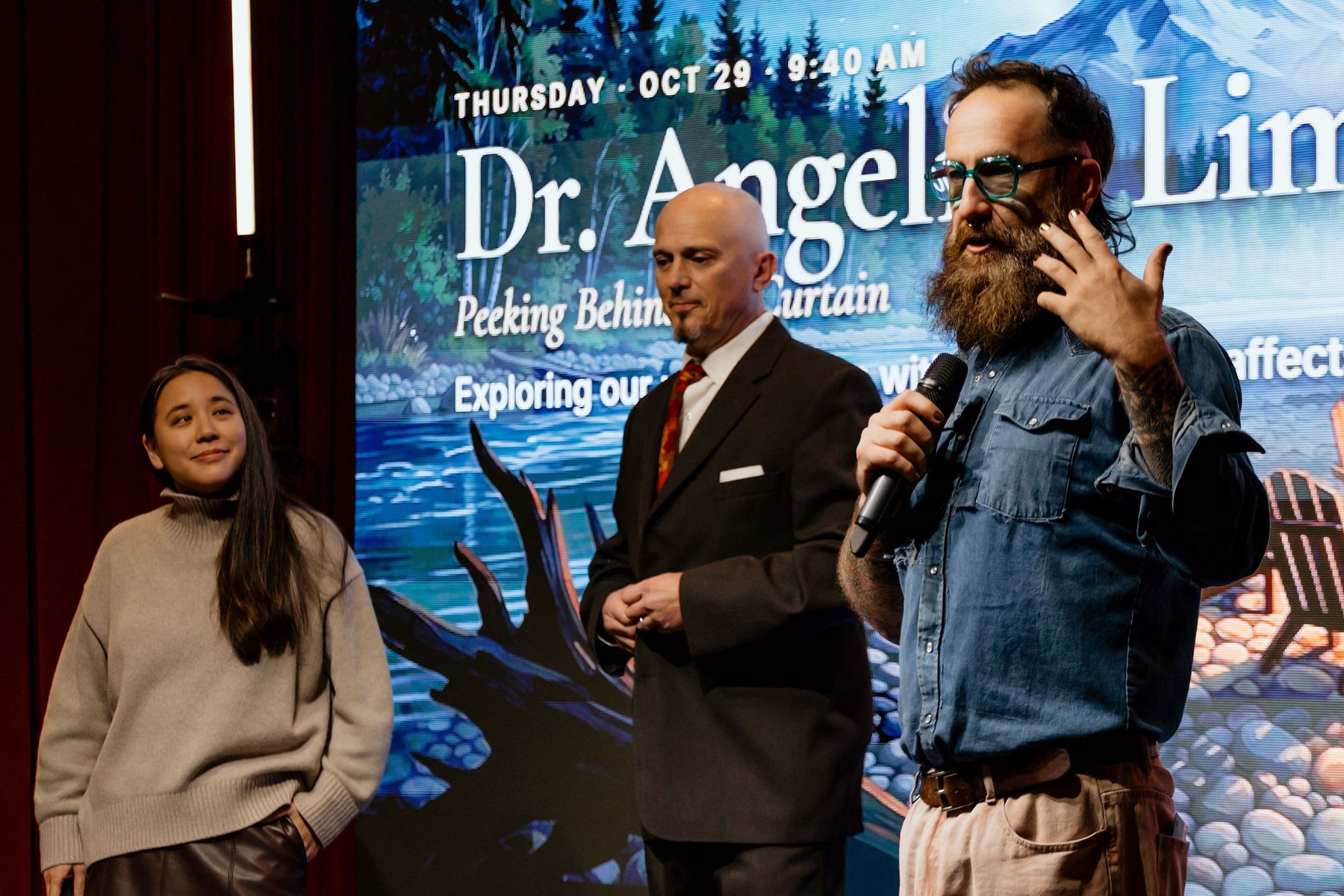
The joint discussion after Angelica and Loki's talks.
That separation belongs in a product meeting as much as a research discussion. Making a system more compelling to talk to is a capability. Knowing when that capability serves the person using it takes another kind of work.
If your interface encourages someone to feel understood, examine what it promises in the next turn of conversation. Give the person an honest account of what's answering them, including the moments when a warmer, more agreeable response would make it easier to keep them talking.