Futureproof Festival / 2026
Brewster Kahle: the library is part of the machine
The conversations worth coming back to.
Source and citation
This is an authored, illustrated recap. The session date records when the talk took place. An edited transcript and festival recording have not been released on this page.
Kris Krüg. “Brewster Kahle: the library is part of the machine” Futureproof Festival 2026 proceedings, Volume 01. Session: 2026-10-28. Edition updated 2026-11-06. https://www.futureproof.website/2026/proceedings/sessions/brewster-kahle/
You can also select and copy the citation above.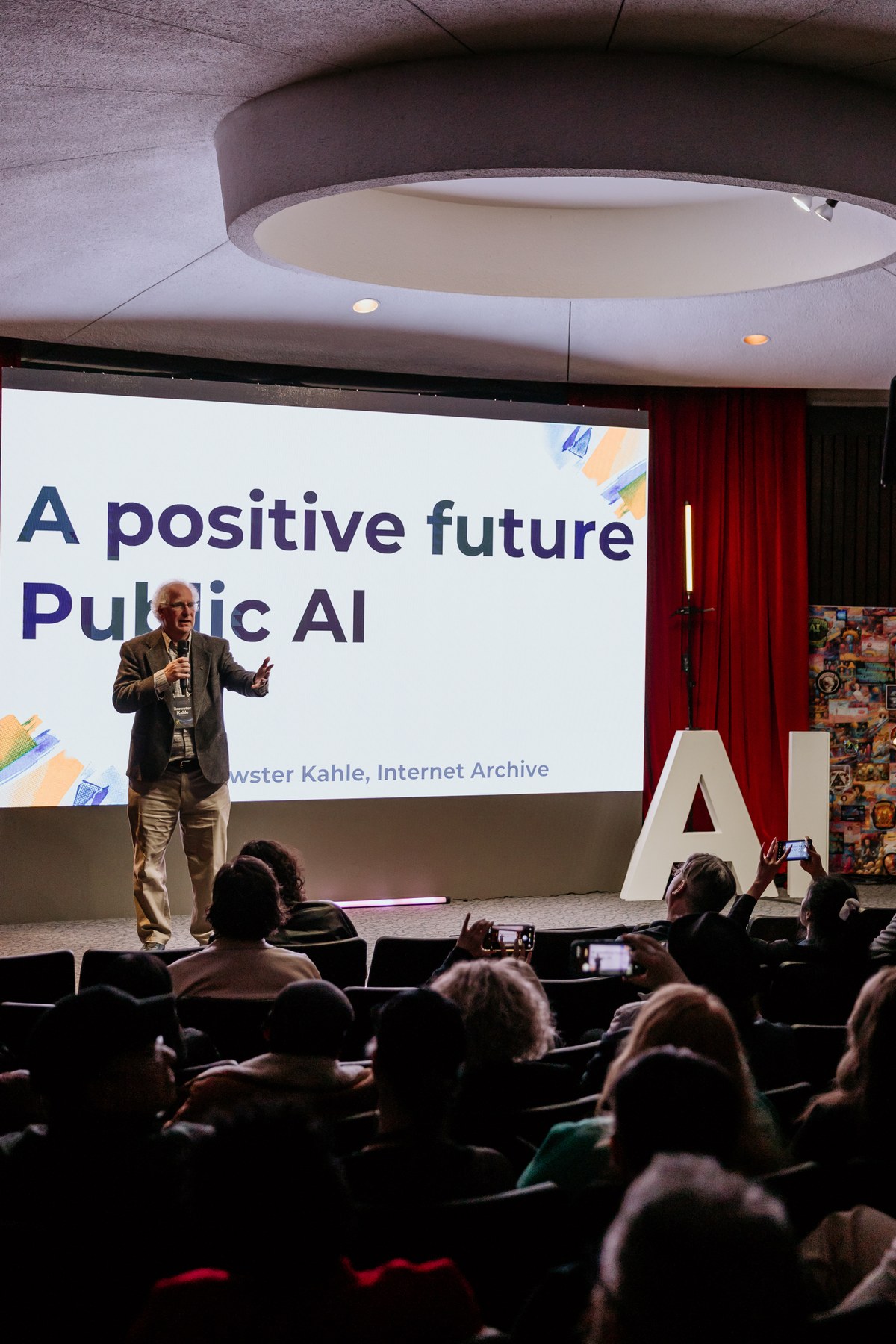
Public AI on the opening-night screen at Futureproof Festival of AI, October 28, 2026.
Brewster Kahle called government-document librarians the helicopter pilots of the profession. They deal with things that aren't supposed to fly.
It was a generous way to begin after two fellows had demonstrated what they'd built with government publications. It also named the work underneath the demonstration. Records arrive in awkward formats. Dates go missing. Institutions change their vocabulary. Someone has to preserve the material, describe it and make it possible for the next person to find anything useful.
Brewster followed Jacob Ortiz and Daniel Shavit onto the Futureproof stage with a proposal for public AI. He connected it to the library work he'd spent his career doing. If we want different people to build these systems for different purposes, the collections and institutions they depend on need sustained support.
The library is already inside the AI argument. We should probably notice who keeps it running.
Someone kept the page
Brewster described libraries as engines for research. Preserving something gives a future reader the chance to do work its original author may never have imagined.
The fellows had just made that relationship visible. Jacob's The Archive Argues With Itself brings scanned government records into a reading interface where an answer can be questioned against the page. Daniel's Tale of a City connects records with places people recognize.

Fellowship project context: Jacob Ortiz's source comparison, from his submitted slide 4. This image illustrates the work Brewster acknowledged, rather than a slide from Brewster's presentation. Project and presentation: Jacob Ortiz. Source scans: Internet Archive.
Our account of both fellowship projects follows that work back to the digitization partnerships behind the records. A model didn't produce the source collection because somebody asked a good question. People had already done years of collecting, scanning and description.
In the May Vancouver AI conversation with Andrea Mills, I wrote about finding my old Spark Online site again through the Wayback Machine. That experience gives public preservation a very personal scale. Someone else's decision to keep a copy can return something you thought was gone.
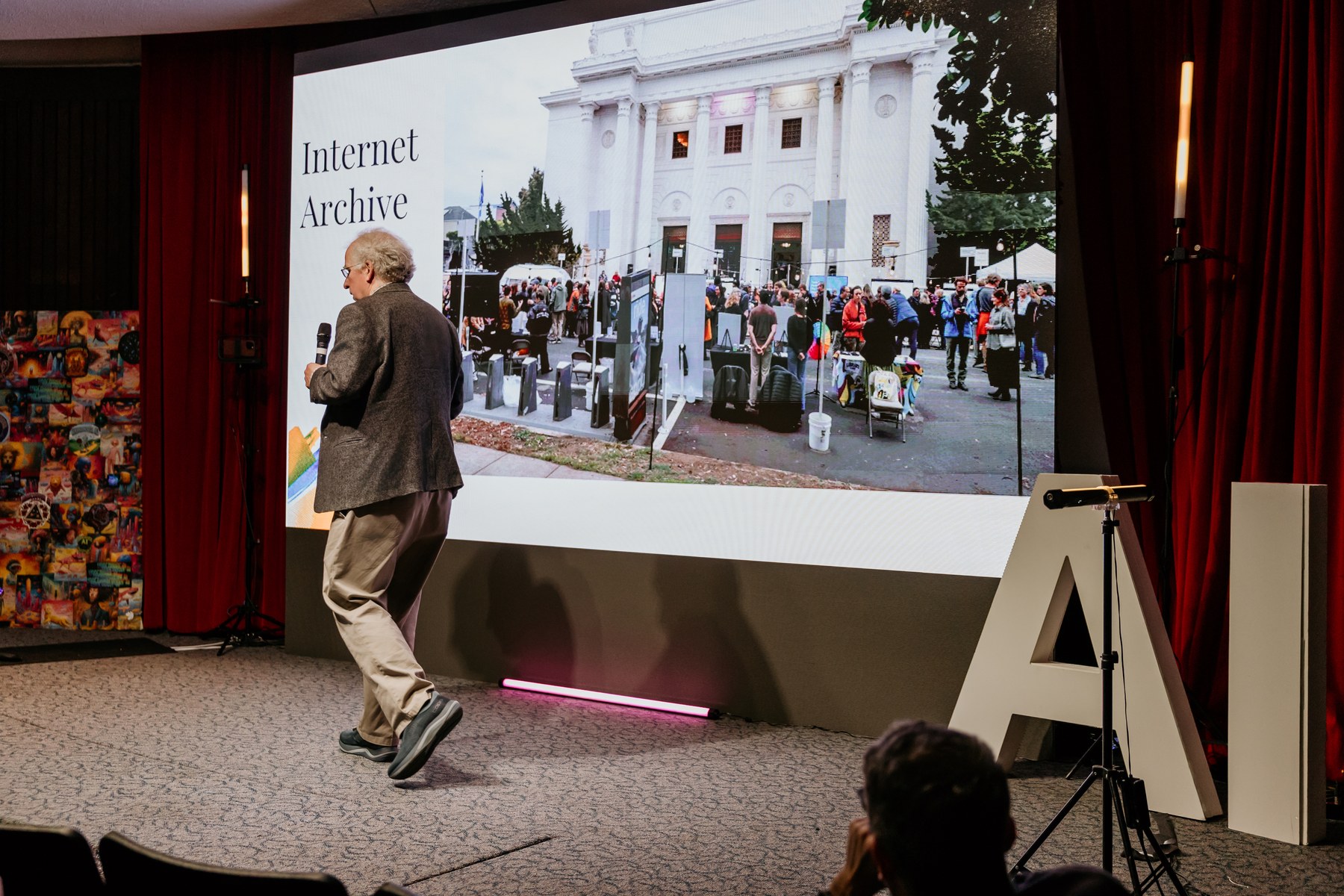
The institution behind the collection appears in Brewster's presentation.
Brewster celebrated the scale of what people had chosen to publish on the web. He was also furious about how much useful knowledge remains difficult to access. His argument joined two responsibilities: keep what people have made, then make it possible to learn from it.

Brewster showed the Internet Archive’s Websites of Canada display at Futureproof. The slide identifies Vancouver Public Library and shows the collection’s search and zoom controls.
The Websites of Canada display made the scale visible. At first you see a field of dots. Zoom and search are what let you go looking for a website you remember. The work continues at the point where the collection meets somebody’s question.
Public AI has to be useful for something
The public AI Brewster described would give more institutions and communities the ability to work on problems they choose. He contrasted that possibility with a market concentrated around a handful of companies and their financial priorities.
His climate example made the proposal more specific. He pointed to ClimateGPT, a project focused on interdisciplinary climate research, as a different direction from asking one general system to know a little about everything.
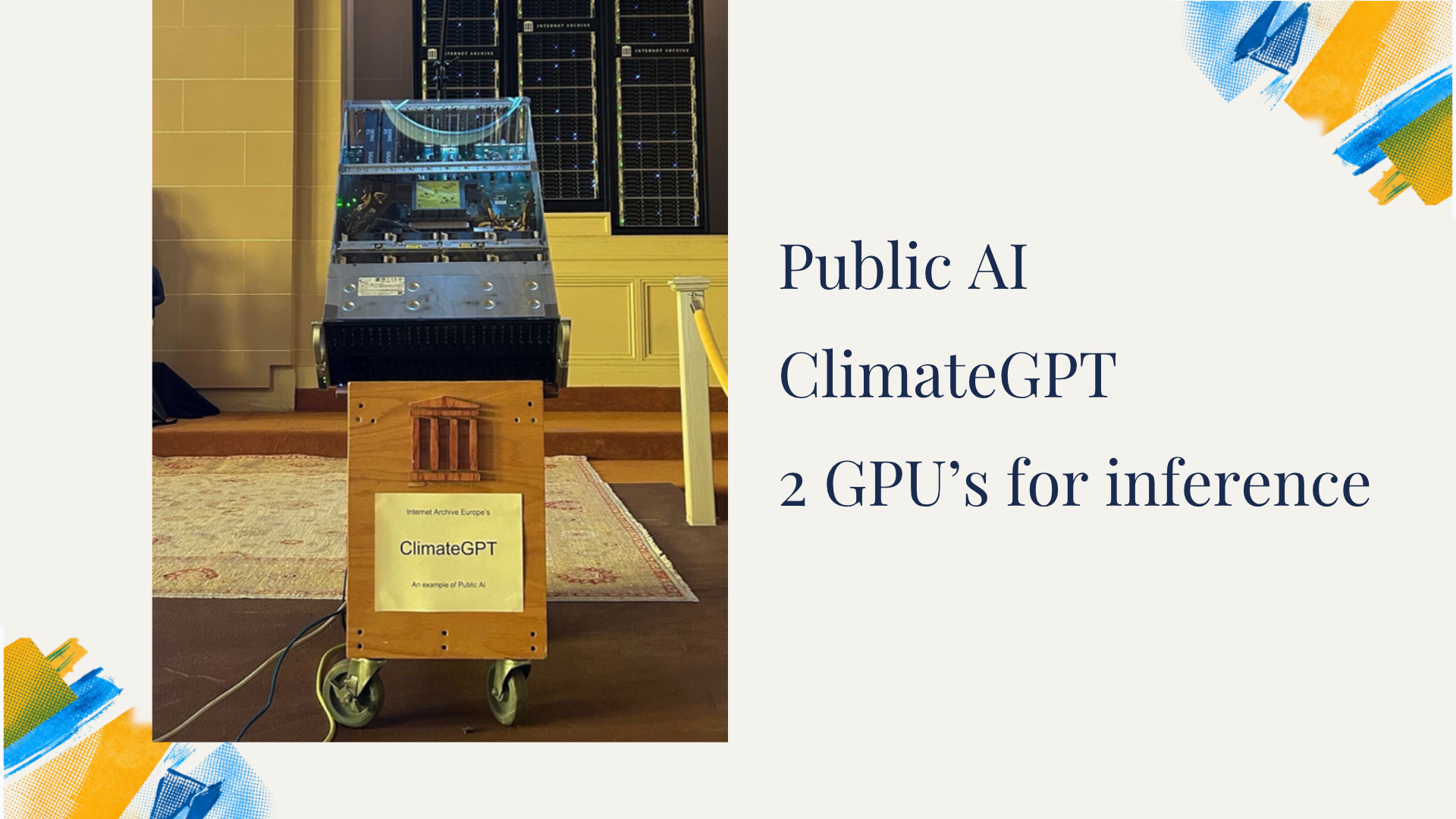
Brewster’s ClimateGPT slide shows the equipment he discussed for inference, the job of running an existing model.
The published model card gives readers somewhere to examine that particular model's purpose and limitations. Specialization is a choice about the work a model is meant to support. It still needs evaluation against that work.
During the Q&A, an audience member asked Brewster to distinguish the hardware needed to run a model from the hardware needed to build it. He clarified that training requires more. That exchange matters when a small computer becomes the photograph everyone remembers. Running an existing model and producing it are different jobs.
The question worth carrying into a public project is what capability an institution can actually maintain. What collection does it have? What task needs doing? What equipment and expertise can it keep available after the demonstration?
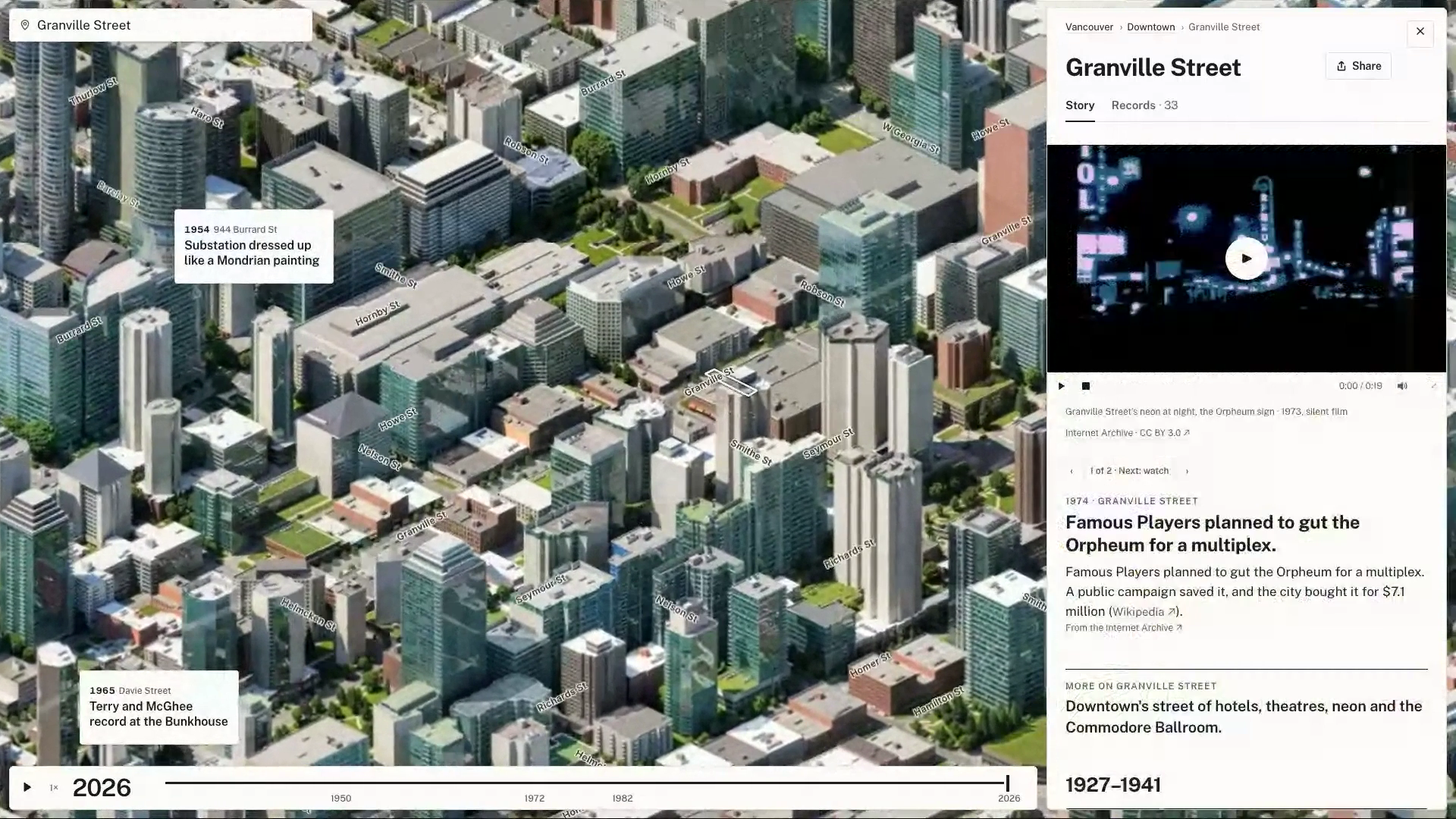
Fellowship project context: a frame at 02:30 from Daniel Shavit's submitted Vancouver film. Visualization and interface: Daniel Shavit / Qipu, with archive material credited inside the interface. This is a project example, not a Brewster slide or archival aerial photograph.
The Vancouver public-records work is one answer at the scale of a city. Another is a focused reading tool like Jacob's public-health project. Neither has to become a universal oracle to give people a useful new way into a collection.
Preserve the tools, too
Someone asked whether the Archive would prioritize human-made material as generated work becomes harder to distinguish. Brewster said they were preserving generated material as well, with context to help people study it.
He went further: he described archiving open-weight models and collecting responses to repeated questions so researchers could examine changes over time.
That shifts the object being preserved. A future researcher may need more than an article about what a model supposedly did. They may need the model, the questions, the responses and enough context to understand the conditions under which those responses were produced.
Keeping that record doesn't settle how it should be interpreted. It gives somebody a better chance of investigating it. The same distinction runs through the fellows' projects: access to evidence creates the possibility of judgment; it doesn't perform the judgment for you.
Brewster also spoke about searching theses and dissertations. His separate essay, An Edition of One, traces an earlier system for making scholarship findable and the dependence created when copies sit behind a single commercial operation. It's a useful companion to his festival argument about the institutions through which knowledge travels.
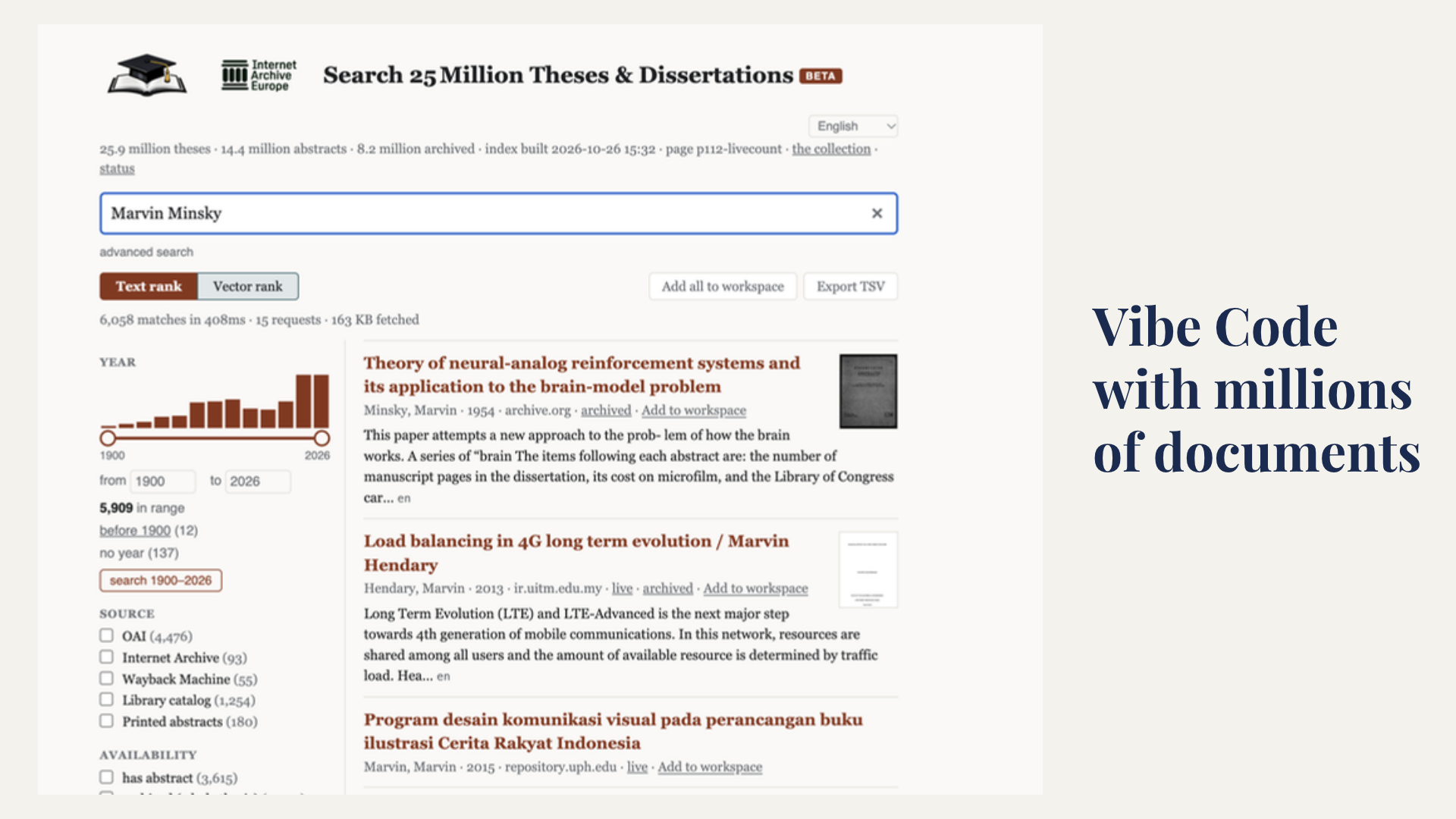
Brewster’s thesis search example shows filters by year, source and availability. A search result and an accessible copy are two different things.
The proposal after the talk
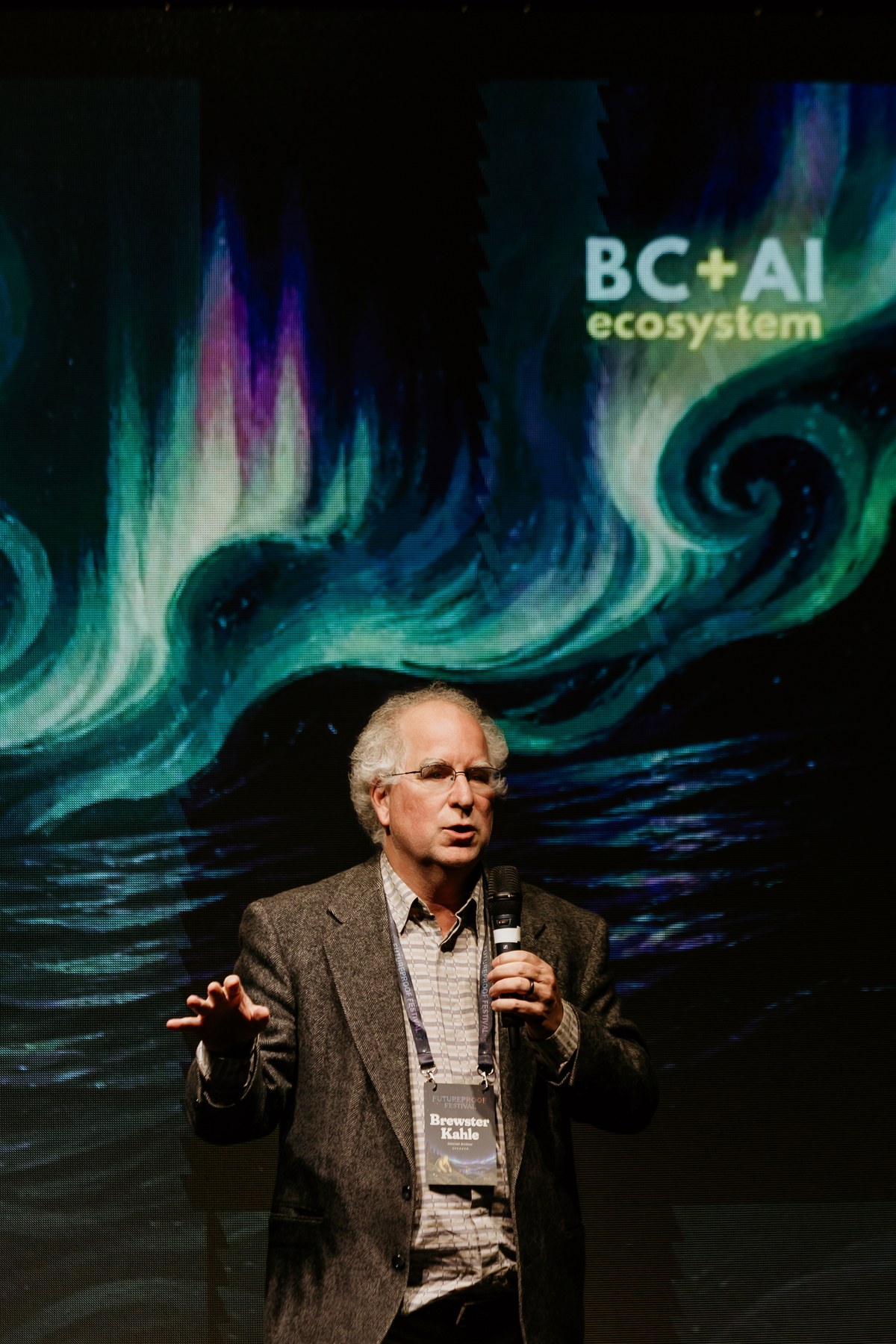
Brewster during the opening-night Q&A.
I asked Brewster whether he'd come back to talk about preserving open-weight models and studying bias through repeated prompts.
“Nope,” he said.
Then he proposed putting forward a small stipend and bringing talented people here to study the data they'd collected. I said it was a deal. In my account of opening night, I wrote about wanting to follow that possibility through. Research and arrangements still need to be worked out; this was a proposal, not a new programme announcement.
That response gives us work to do as organizers. Find a question worth pursuing. Find people who can pursue it. Put some support behind them and make the result available to others.
The AI Builders Fellowship had already put an early version of that idea on stage. Brewster's challenge was to keep going. The people who come after us will need more than a record of how impressed we were by AI. Leave them collections they can read, tools they can inspect and institutions still capable of helping them use both.