Futureproof Festival / 2026
Jos Duncan-Asé: ask the community before you ask the machine
The conversations worth coming back to.
Source and citation
This is an authored, illustrated recap. The session date records when the talk took place. An edited transcript and festival recording have not been released on this page.
Kris Krüg. “Jos Duncan-Asé: ask the community before you ask the machine” Futureproof Festival 2026 proceedings, Volume 01. Session: 2026-10-29. Edition updated 2026-11-06. https://www.futureproof.website/2026/proceedings/sessions/jos-duncan-ase/
You can also select and copy the citation above.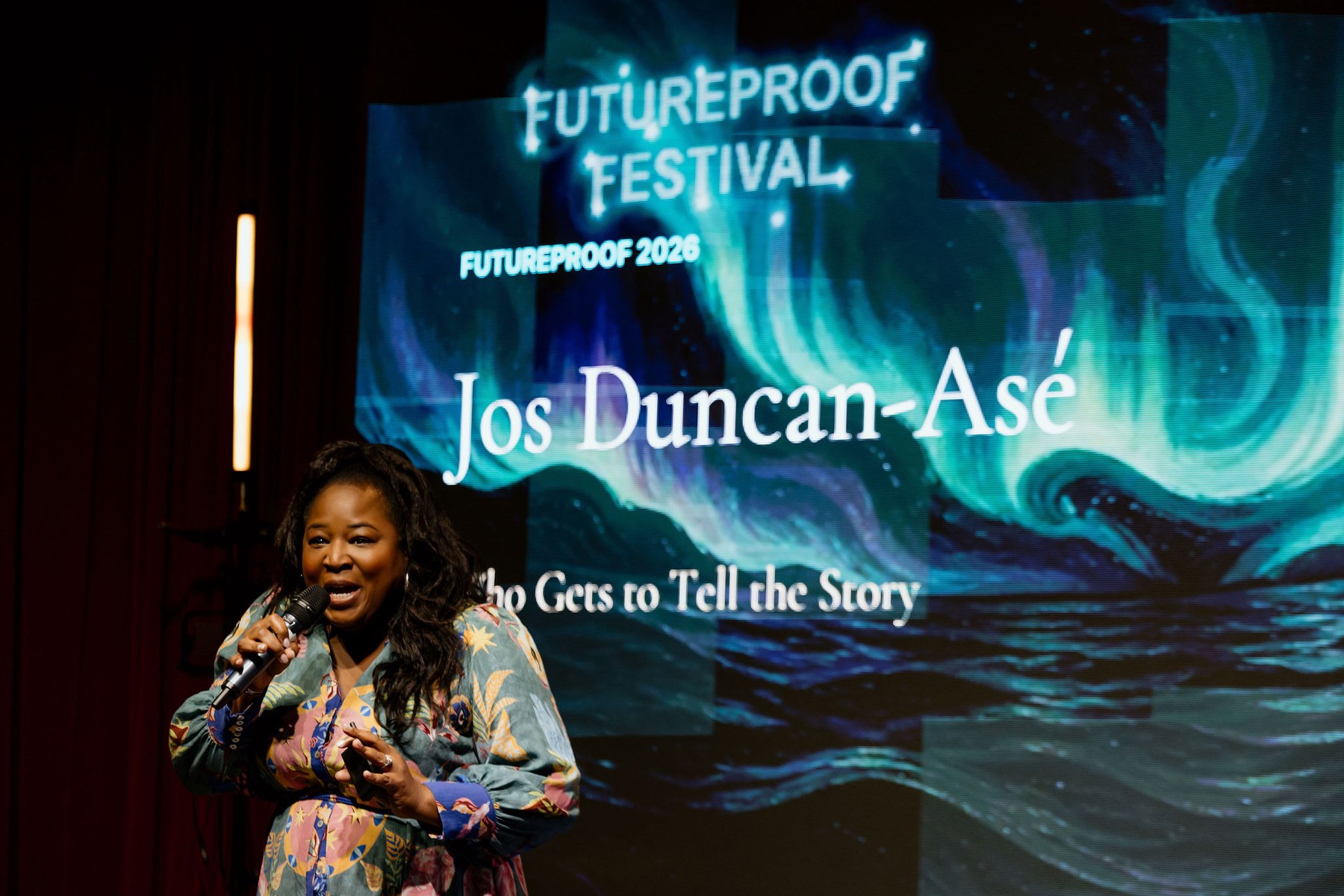
Jos Duncan-Asé at Futureproof Festival of AI, October 29, 2026.
Before the chatbot, there were people on the streets of Philadelphia answering a question about love.
What would make the place they lived more loving? What was missing? Where was care already happening?
Jos Duncan-Asé described interviewing more than a hundred people, transcribing their answers and using AI to look for recurring themes. Then came the important bit: training and paying human writers to report on what those conversations brought into view.
The machine didn't get to declare what Philadelphia needed. People supplied the concerns, the places and the possibilities. The analysis helped the newsroom decide where to look more closely.
That sequence is worth keeping intact. You can ask a model for a community engagement strategy in ten seconds. It won't mean you've engaged a community.
She started by telling a story
Jos arrived at Futureproof with a framework rooted in her practice as a traditional African and Indigenous storyteller. Before explaining it, she invited the audience to take a breath, think about place and consider the people who had helped them arrive.
Then she told a story.
In the telling she shared, a young leader kept asking an elder how her people could survive. The instruction was to dig. The turning point came when the leader joined the smallest child and began working alongside them. Others started digging together.
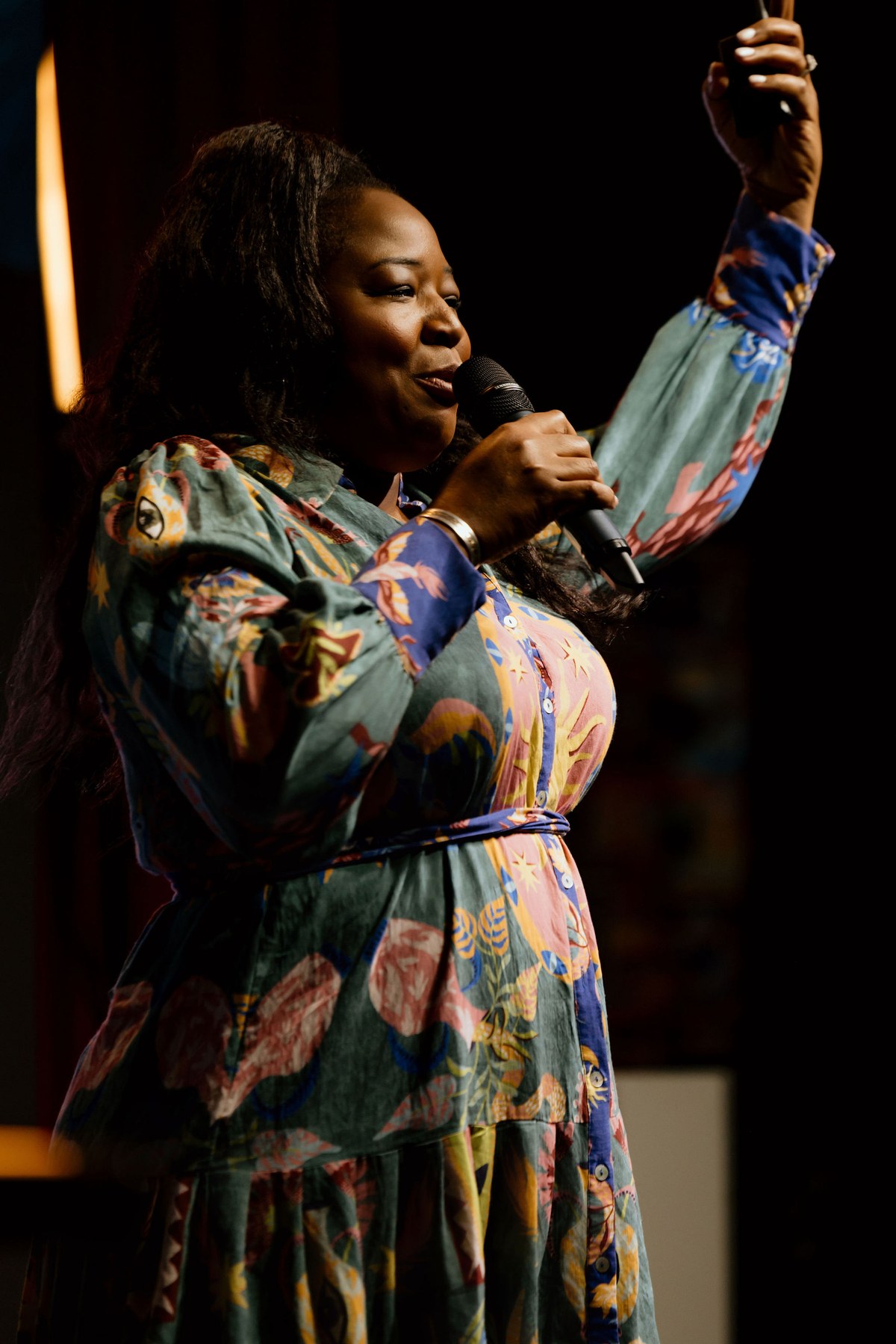
During Jos's Thursday storytelling sequence.
Jos used call and response to make the telling participatory. Afterward, she explained how stories can carry knowledge between generations and communities, opening ways of thinking that an instruction alone may not reach.
The way the knowledge travels is part of the knowledge. Someone tells it. Someone answers. The place and the people present enter the telling.
That gives a very different starting point for a discussion of artificial intelligence. Before asking what a model can produce, ask what relationships the work is supposed to sustain.
Reporting begins before the pattern appears
Jos founded Love Now Media after years of storytelling work. On stage, she described frustration with coverage that repeatedly reduced Black and Brown communities to the same narrow stories. Even attempts to argue back could leave people stuck responding to someone else's frame.
She wanted community members to have room to tell stories on their own terms.
The Philadelphia interviews began there. Asking what would make a community more loving could reveal something absent, something people wanted to protect or something already working that deserved attention.
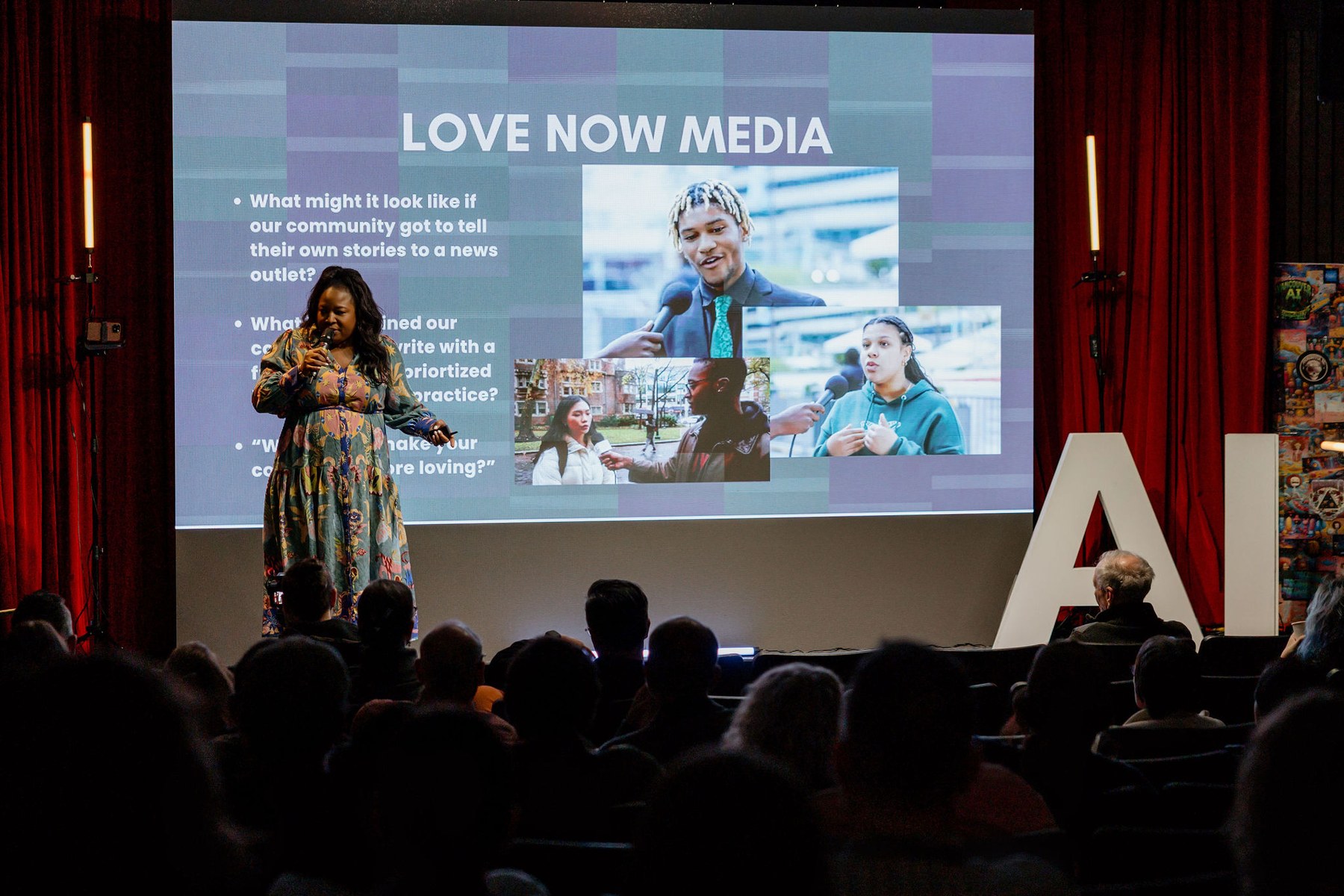
Love Now Media's community-interview work on the screen during Jos's talk. Presentation: Jos Duncan-Asé / Love Now Media.
Jos described using the transcripts to build a thematic map. A repeated concern became a lead: look up the reports, investigate the institution, talk to the people doing the work. The output had somewhere to go beyond a dashboard of themes.
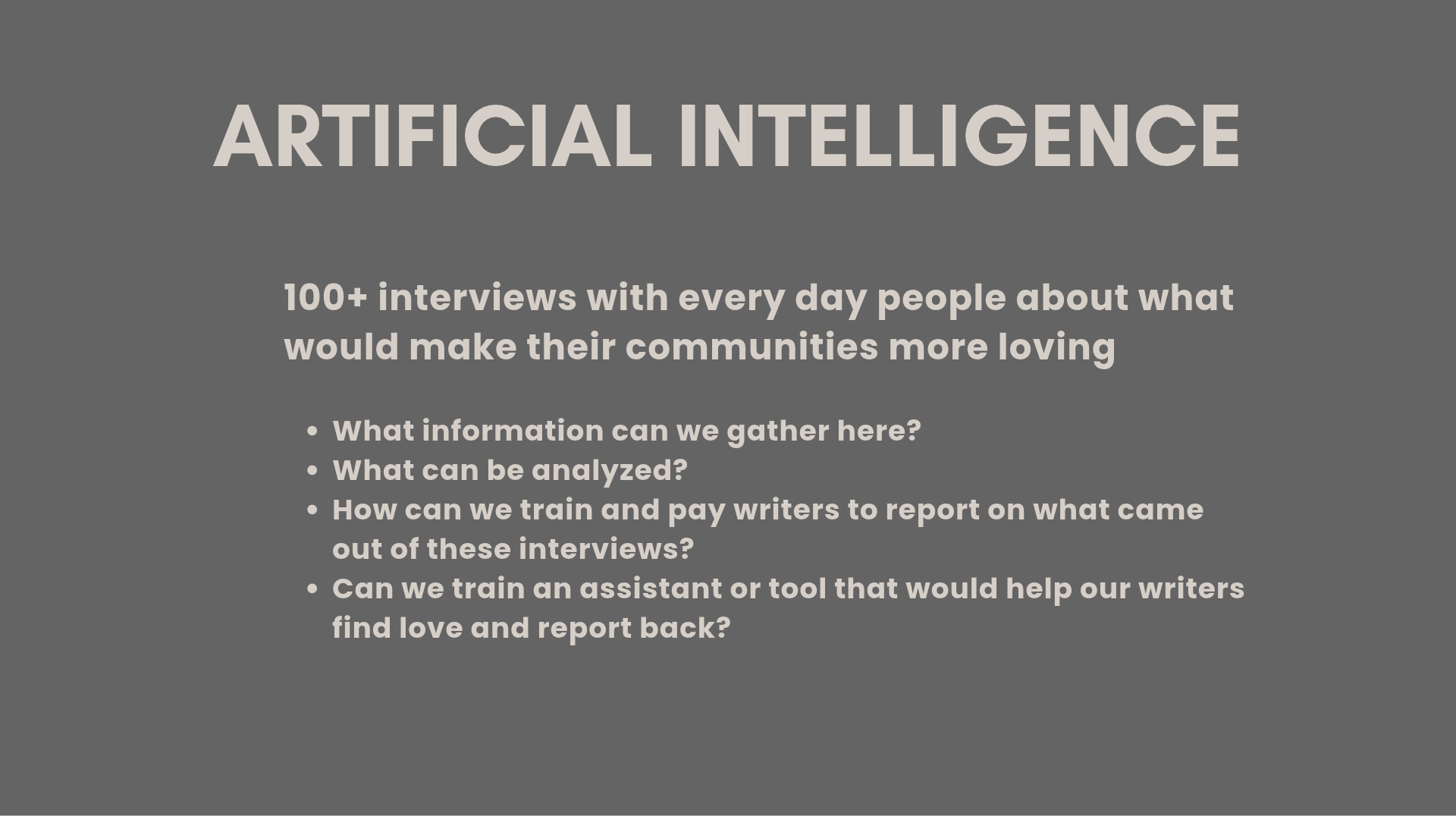
Jos’s Futureproof slide puts more than 100 interviews first, followed by questions about analysis, paying writers and what a reporting assistant could help them do.
Love Now Media's 2024 annual report documents a related sequence in its A More Loving Philly initiative: community interviews, AI-assisted theme analysis and subsequent reporting. It gives readers a way to follow the newsroom's work beyond the festival talk.
A map of interviews isn't a census of a city. It reflects who was asked, what they were asked and what the analysis brought forward. Its value depends on the reporting and listening that follow it.
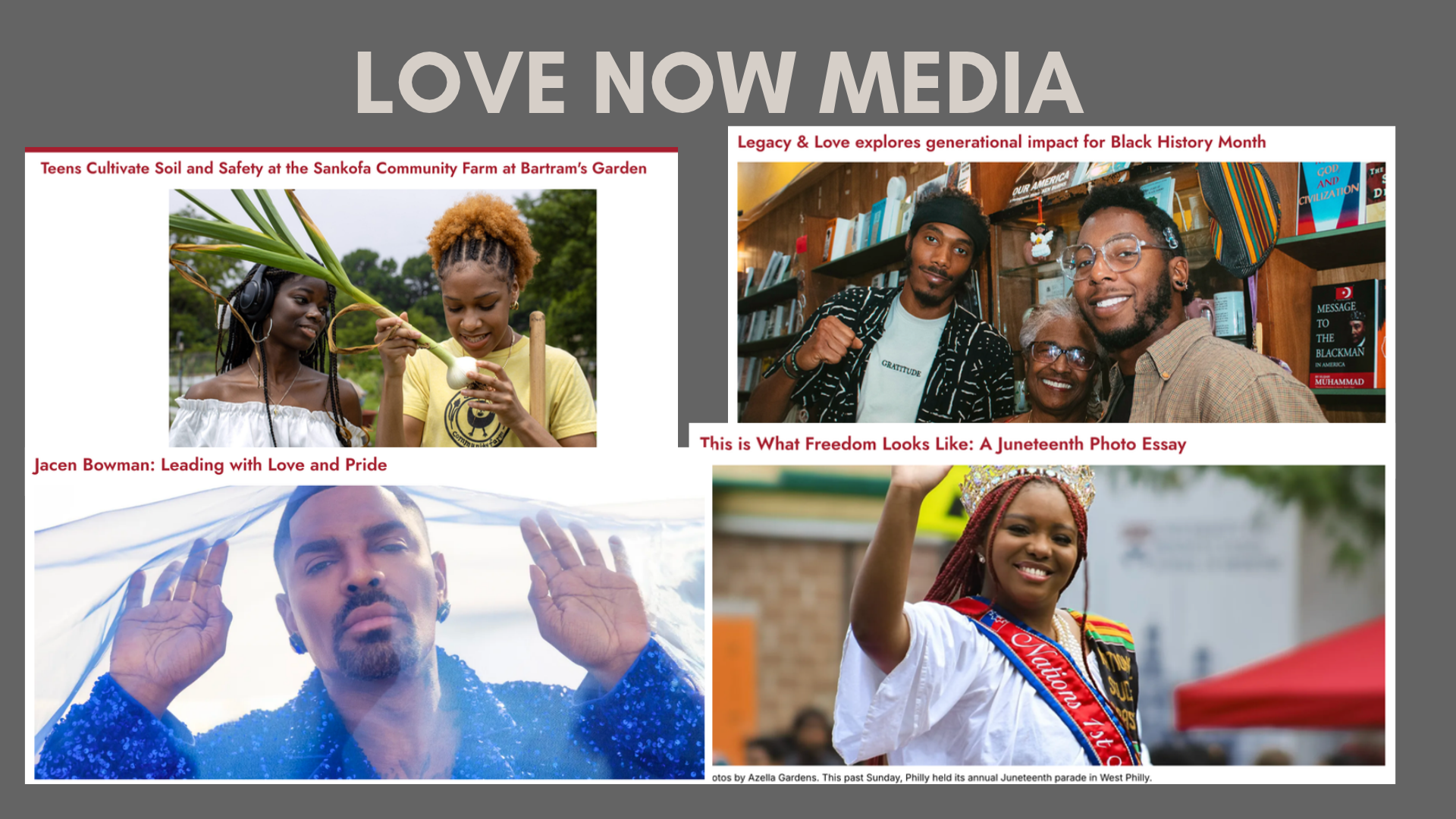
Examples from the Love Now Media newsroom, as shown in Jos’s Thursday presentation. Story and photography credits appear in the original coverage.
Put that beside Lanaa Dantzler’s reporting from Sankofa Community Farm. The young people in the story talk about safety in their own terms, through the farm, the greenhouse and the people who make those places feel different. Jos also showed coverage of Philadelphia’s Black-owned businesses that asks what a family can build across generations. The stories give us people and places a thematic map could only point toward.
Four questions that make the work specific
The second assistant Jos described was there to help community journalists ask better questions of other people. Some were new writers. The framework gave them a way into a story without making the software its author.
She started with land and place. What made this location significant? Who shaped it? What would someone miss if they treated it as a generic setting?
Then lineage. Who came before the person doing this work? Who taught them, encouraged them or carried something forward that they now practise?
Then community. Who else is involved? What relationships make the work possible?
Finally, the future. What could this work make possible for the people around it?
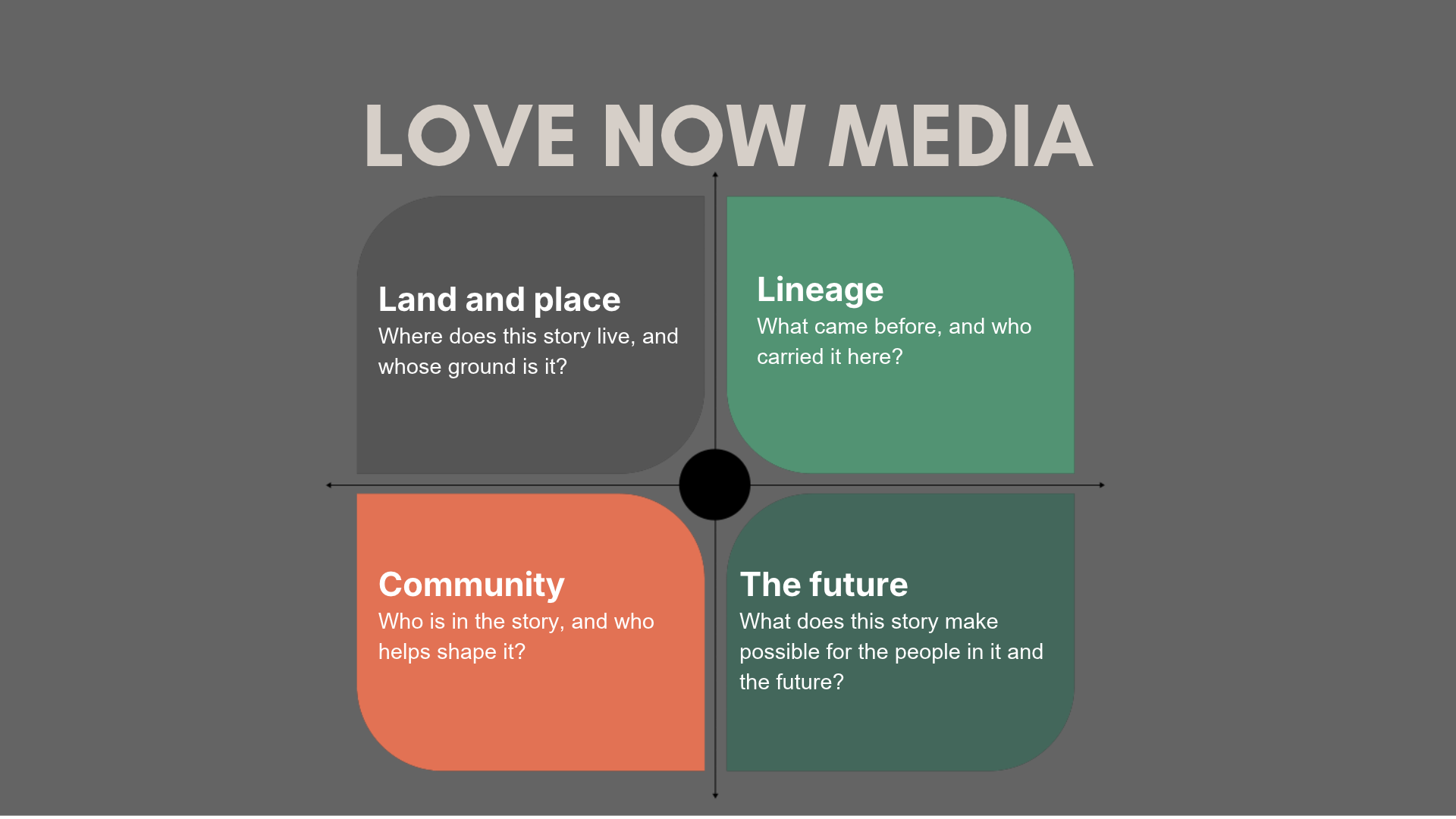
The four prompts Jos brought to Futureproof anchor a story in land and place, lineage, community and the future.
Jos carried the same questions into technology design. Where will the system be used? What came before it? Does that earlier tool need replacing? Who is the new thing for, and what future does it help create?
Those questions can change the brief before anybody chooses a model. They also make it harder to pass off novelty as a sufficient reason to build.
In my earlier writing on AI, creative practice and cultural representation, I argued for working with the people who carry a tradition rather than treating their culture as visual material to summon. Jos offered a concrete reporting practice built around people, lineage and place. The information comes with relationships attached.
A policy is something your audience can read
Love Now Media's public AI policy names its experimentation, its opposition to plagiarism and its commitment to human writers and editors being intentionally involved in publication decisions.
That makes the policy useful to someone outside the newsroom. Readers can see what the organization says it is doing and ask whether the work matches.
Our Futureproof AI policy makes a related commitment to naming how we use the tools and keeping people responsible for the result. A public statement gives the audience something specific to hold us to.
The work also connects with BC + AI's governance programme, where the practical task is to examine a use of AI and the people affected by it. Jos's questions make a useful place to start that examination.
The next interview still matters
In Q&A, an audience member asked whether the project had specifically sought the perspectives of elders and very young children. Jos said the interviews included people across a broad age range, with young journalists conducting them. She distinguished that from deliberately designing an inquiry around the youngest children, which they hadn't done.
That answer keeps an appealing idea from turning into a claim of complete representation. Wanting generations to meet doesn't mean every generation has already been heard.
When another question turned to connecting distant family members, Jos brought the scale back down. Start with the people in your own family and what might help them talk. Experiment with something that serves that relationship.
You don't need a planetary mission statement to begin. You need someone to listen to, a question worth asking and a reason to take the answer seriously.
Then, perhaps, you have something worth asking the machine to help you understand.