Futureproof Festival / 2026
Shane Gibson: your agent should notice the question you didn't ask
The conversations worth coming back to.
Source and citation
This is an authored, illustrated recap. The session date records when the talk took place. An edited transcript and festival recording have not been released on this page.
Kris Krüg. “Shane Gibson: your agent should notice the question you didn't ask” Futureproof Festival 2026 proceedings, Volume 01. Session: 2026-10-29. Edition updated 2026-11-06. https://www.futureproof.website/2026/proceedings/sessions/shane-gibson/
You can also select and copy the citation above.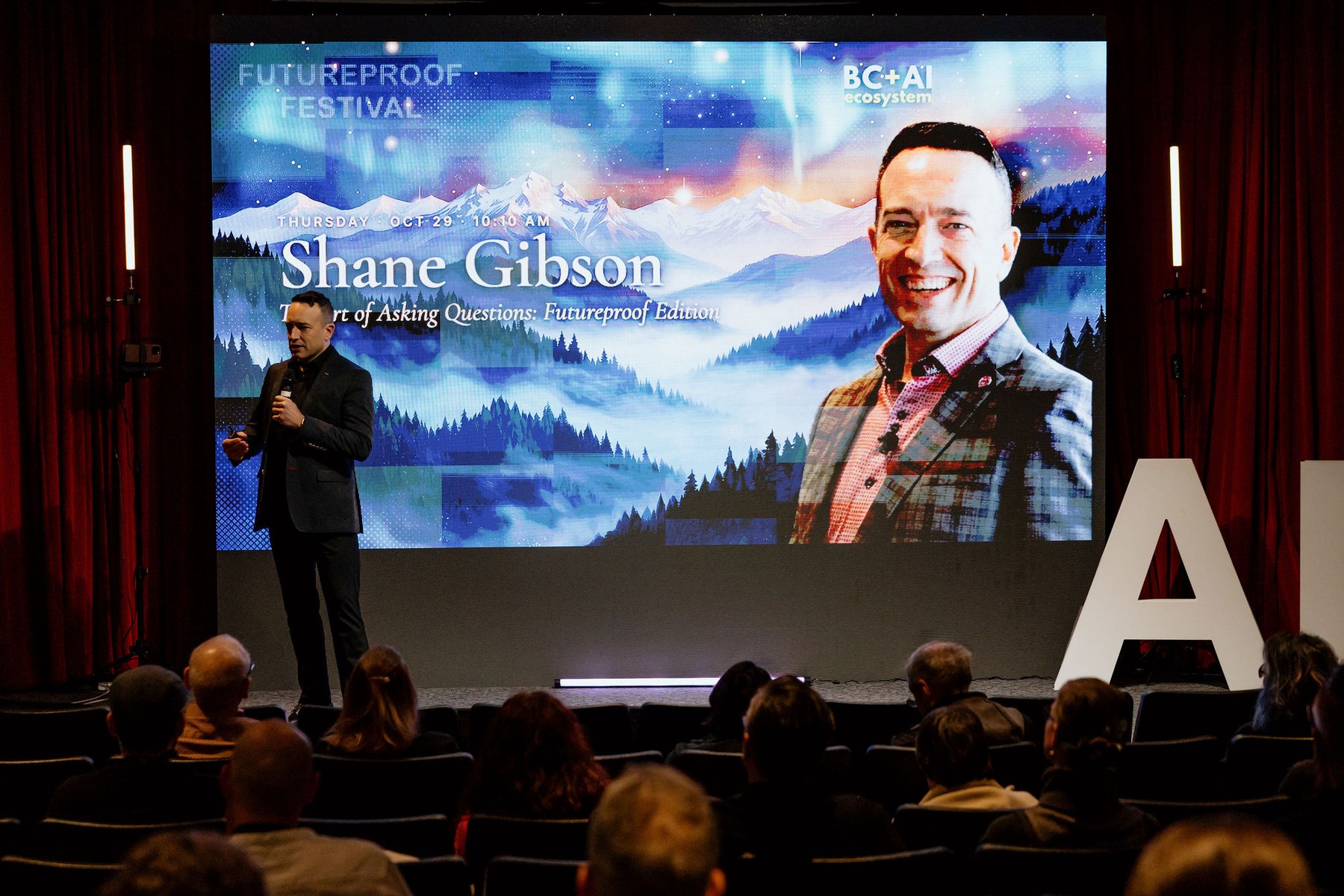
Shane Gibson at Futureproof Festival of AI, October 29, 2026.
Shane Gibson fed five successful sales conversations into an AI system and asked what he was doing that his own training materials hadn't captured.
The pattern it reported was simple: he was already helping people before asking them to buy anything. An interpretation, a useful connection, a possible way through the problem. Some of the value arrived while he was still finding out what the problem was.
That's a much more interesting use of a transcript than turning it into another tidy meeting summary nobody opens.
At Futureproof, Shane used his questioning practice to show how a personal agent can help examine work. The useful part begins when the output gives you something specific to correct, test or try in the next conversation.
Ask a question the other person can actually answer
Shane works with sales teams whose managers ask him to teach people how to talk to people again. The tools are plentiful. Actual conversation can get squeezed out by all the cutting, pasting and preparation happening around it.
His answer starts with the order of the questions.
Opening a difficult coaching conversation with an accusation and then complaining that the person isn't receptive is quite a little management trick. Shane proposed a less theatrical entrance: find out how things are going, establish some context, then move toward the problem.
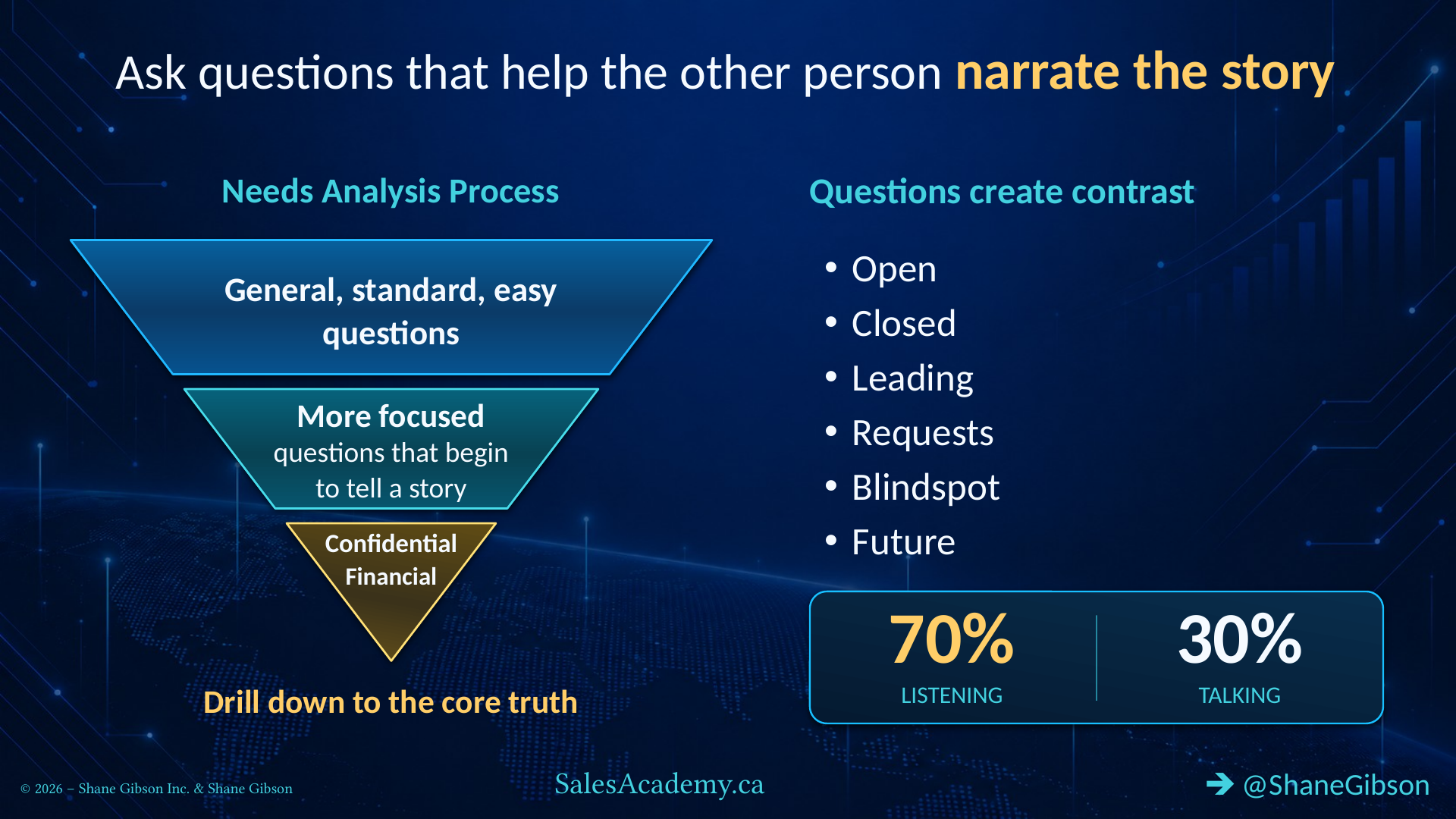
Shane's questioning map, submitted slide 6. The listening ratio is his coaching guideline. Presentation: Shane Gibson / Professional Sales Academy.
The funnel moves from easy, general questions to the story behind them. What brought someone to this conversation? What would a useful result look like? What has to change for that result to matter?
His employee-retention example made the progression tangible. Someone says they want lower attrition. You can write that down and move on. Or ask what lower means, what the current number is, what changing it would mean financially, and what it would do to the culture of the organization.
Each answer gives the next question somewhere to go. A question bank helps, but treating it as a script can miss the person sitting in front of you.
Shane's earlier Art of Asking Questions resource page includes a listening assessment and related podcast episodes. The two-page assessment also gives you something to work through without needing the festival room's Wi-Fi to cooperate. The live quiz had a bumpy few minutes on that front.
Give the coach a method to work from
Shane described building a discovery-call coach from participant manuals, training slides, podcasts, keynote transcripts, a question bank and his writing about the work.
It reviews call transcripts, evaluates the conversation and suggests questions that could have gone deeper. The deck shows the intended path from a knowledge base through analysis to a coaching report and a dozen questions for the next call.
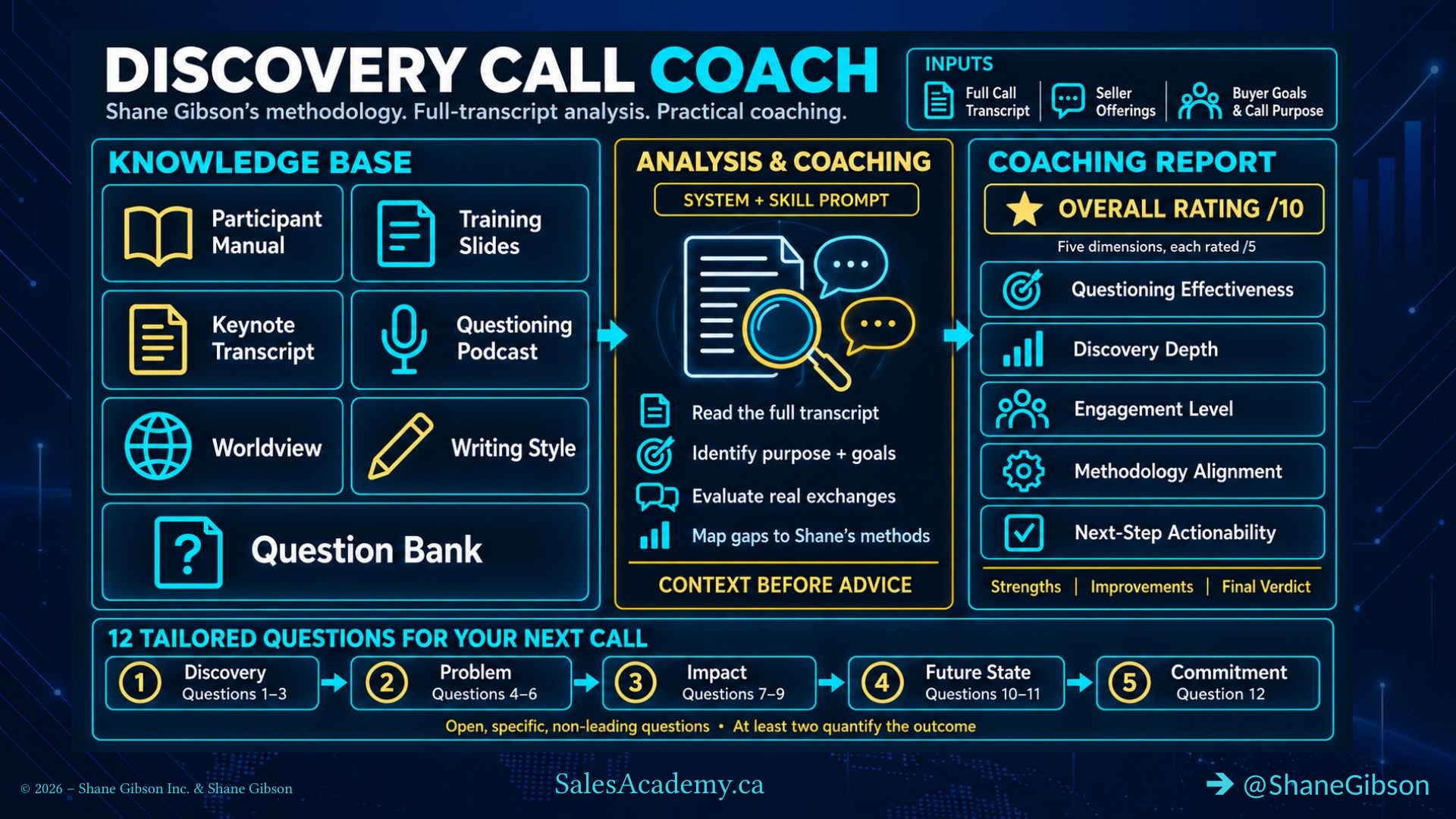
The workflow in submitted slide 7. This describes Shane's system; it is not an independent evaluation of its scores or advice. Presentation: Shane Gibson / Professional Sales Academy.
The material matters because a request to evaluate a conversation needs a definition of good. Without one, you're asking the model to supply the standard as well as the verdict.
Shane said that repeated reviews across hundreds of calls helped him see patterns. That's his account of using the system. A plausible coaching report still needs comparing with what happened in the call and what happened afterward.
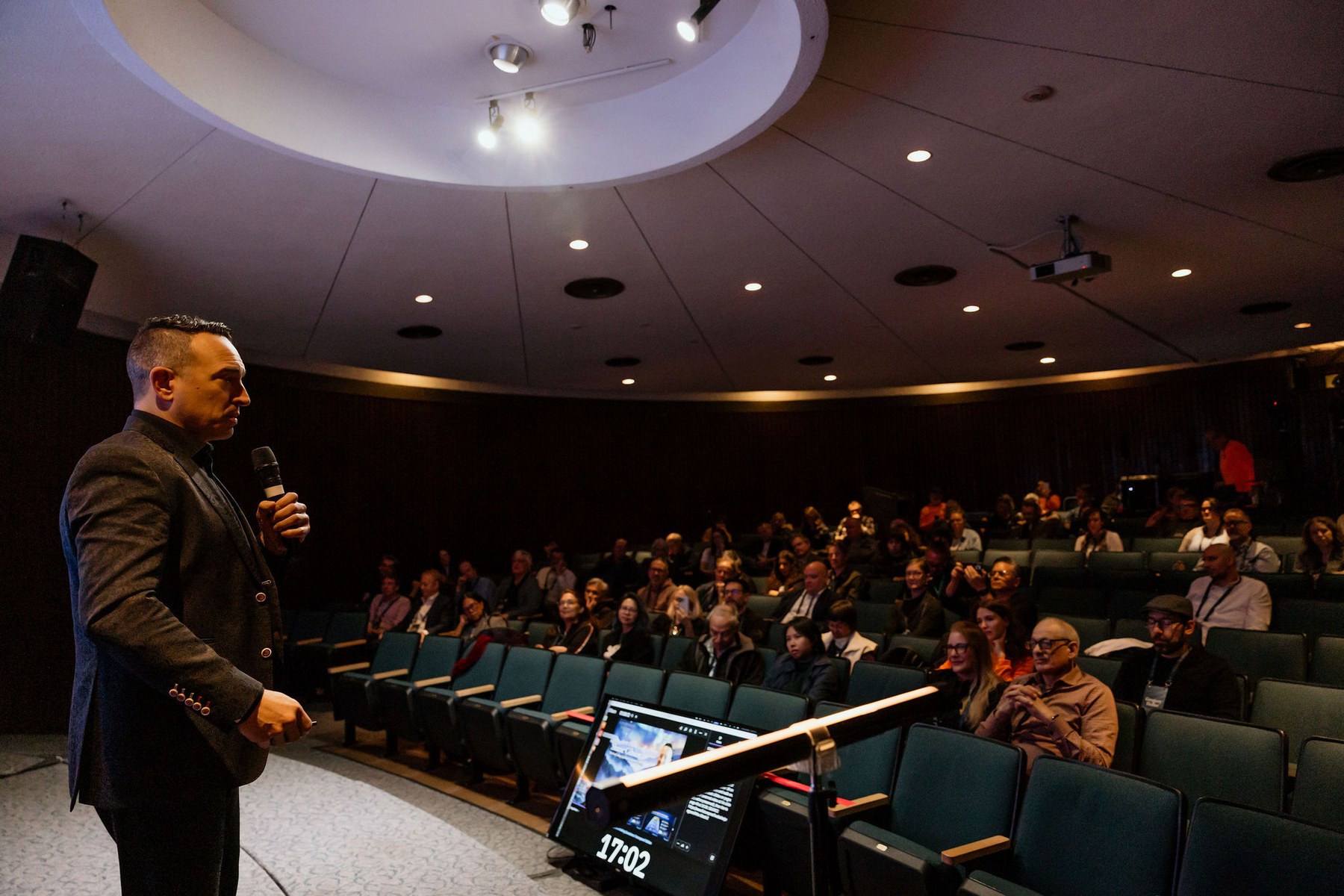
The Thursday morning session, seen from the stage.
The five-call exercise was particularly useful because he asked about departures from his own best practices. Where was he doing something different that appeared to work? What had the written method missed?
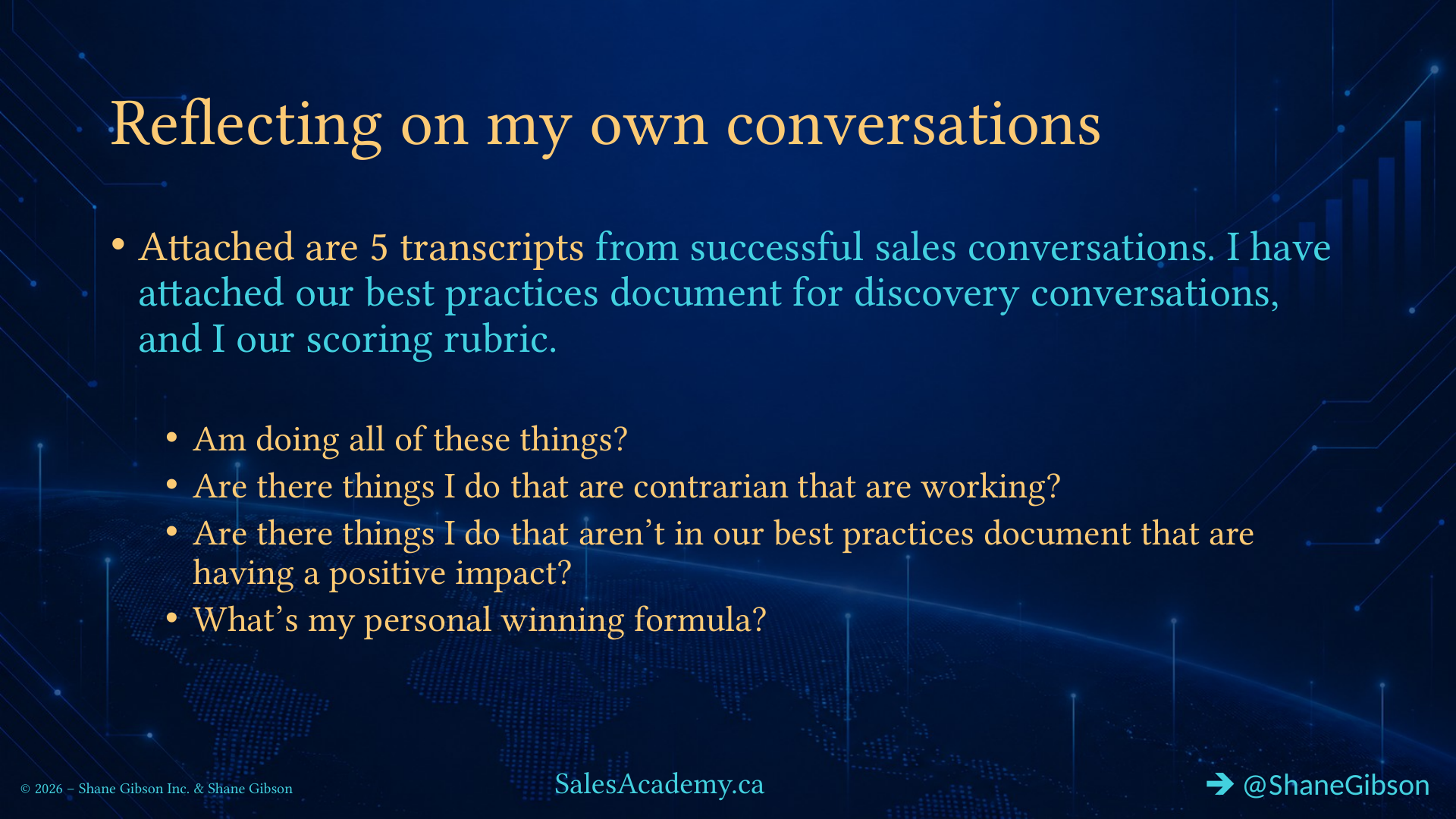
The reflection prompt, submitted slide 12. The reported pattern is a lead for Shane to examine, rather than proof that a particular behaviour caused a sale. Presentation: Shane Gibson / Professional Sales Academy.
A rubric should be open to correction too. Otherwise the machine can become very efficient at telling you to obey a method that no longer describes your best work.
The corrections belong somewhere
The more personal experiment was Shane Brain: an agent grounded in his professional materials, values, assessments and accounts of experience.
He wanted it to get closer to how he makes decisions. When it produced something that didn't fit, he discussed the mismatch and added the lesson to a knowledge log. He described reviewing those lessons in deliberate working sessions before revising the system.
That interval matters. A response he dislikes doesn't immediately become a new permanent rule. There's time to examine what went wrong and whether the proposed correction makes sense.
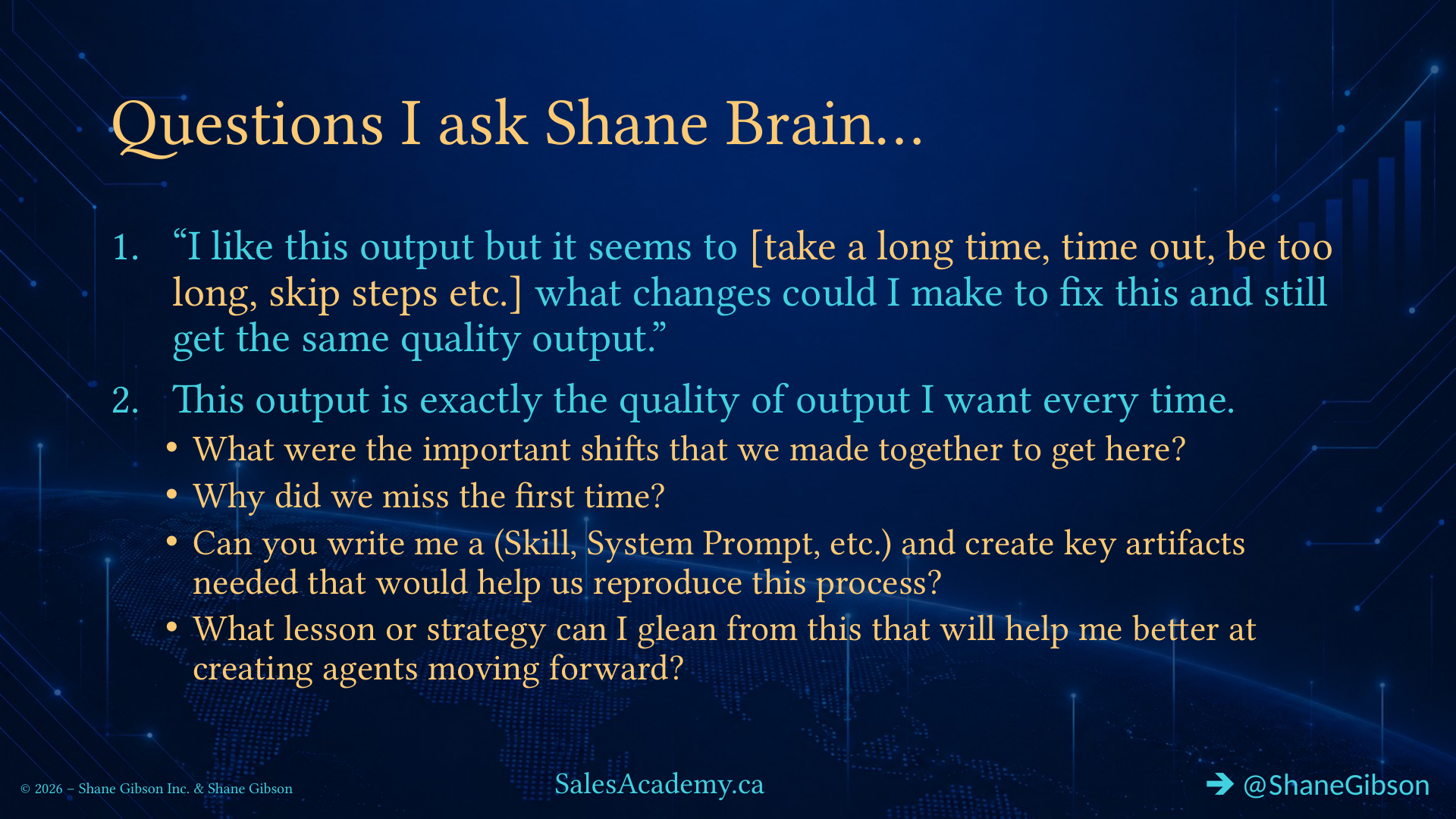
Questions Shane uses to improve the system, submitted slide 11. Presentation: Shane Gibson / Professional Sales Academy.
The strongest questions on that page concern the work itself: what changed between the failed attempt and the good one? What needs saving so the next attempt can reproduce it? What did this teach him about building an agent?
This is also where my question about who is steering an AI interaction becomes practical. A system that sounds like you can still flatter a bad decision. Making its advice familiar doesn't make the advice right.
The audience asked about the uncomfortable part
In the shared Q&A with Kerris Hougardy, an audience member asked how Shane protected the intellectual property inside these agents.
His answer began with an admission that the protection probably wasn't sufficient yet. He described provider settings and keeping his underlying knowledge elsewhere, while allowing the tools access to it. He also said he hadn't handed the personal agent to his team as originally intended. The more personal context it contained, the more he could see the risk of someone using it to understand how to influence him.
Keeping a knowledge base in a separate place doesn't settle who can access its contents when a model uses them. The question reaches into what you choose to record in the first place.
Asked whether people knew their sales conversations were being captured, Shane described disclosing the AI note taker and taking notes instead when someone declined. He also still takes handwritten notes himself because the act helps him listen.
There's a connection here to BC + AI's Responsible AI Professional programme: work through the actual use, the information involved and the decisions someone must answer for. A clever personal system still needs those questions.
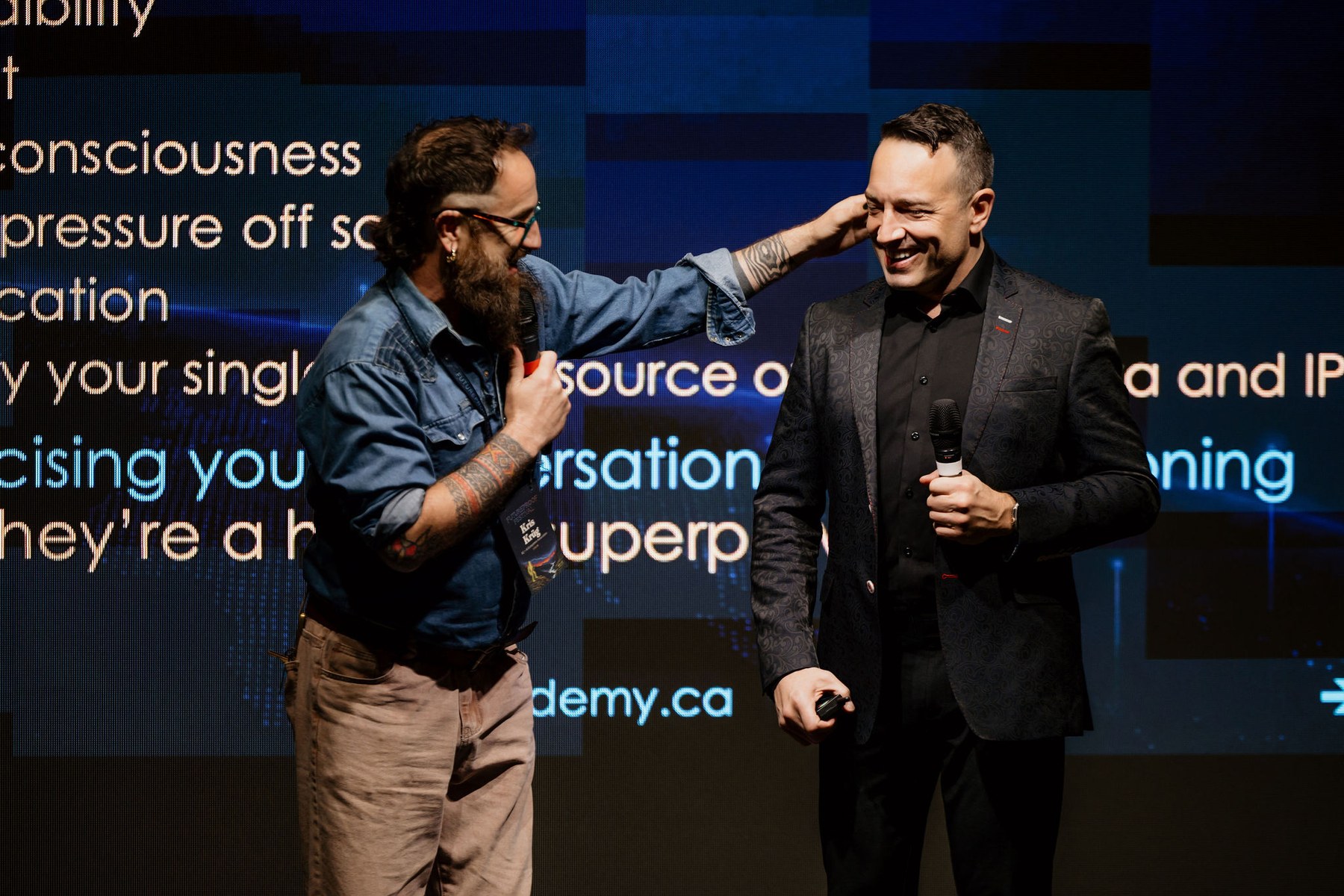
At the end of Shane's presentation.
When the conversation turned to younger people without decades of professional archives, Shane pointed toward mentorship and experience alongside other people. The archive has to come from somewhere. People need opportunities to do the work, make mistakes and learn what a useful question feels like when somebody answers it.
Start with one conversation you have permission to review. Pick one question you should have asked. Try it next time. Then find out whether it helped the other person explain something that mattered.
That's a better test than how convincingly your agent can impersonate you.