Futureproof Festival / 2026
Anselm Hook: let the neighbours play with the model
The conversations worth coming back to.
Source and citation
This is an authored, illustrated recap. The session date records when the talk took place. An edited transcript and festival recording have not been released on this page.
Kris Krüg. “Anselm Hook: let the neighbours play with the model” Futureproof Festival 2026 proceedings, Volume 01. Session: 2026-10-29. Edition updated 2026-11-06. https://www.futureproof.website/2026/proceedings/sessions/anselm-hook/
You can also select and copy the citation above.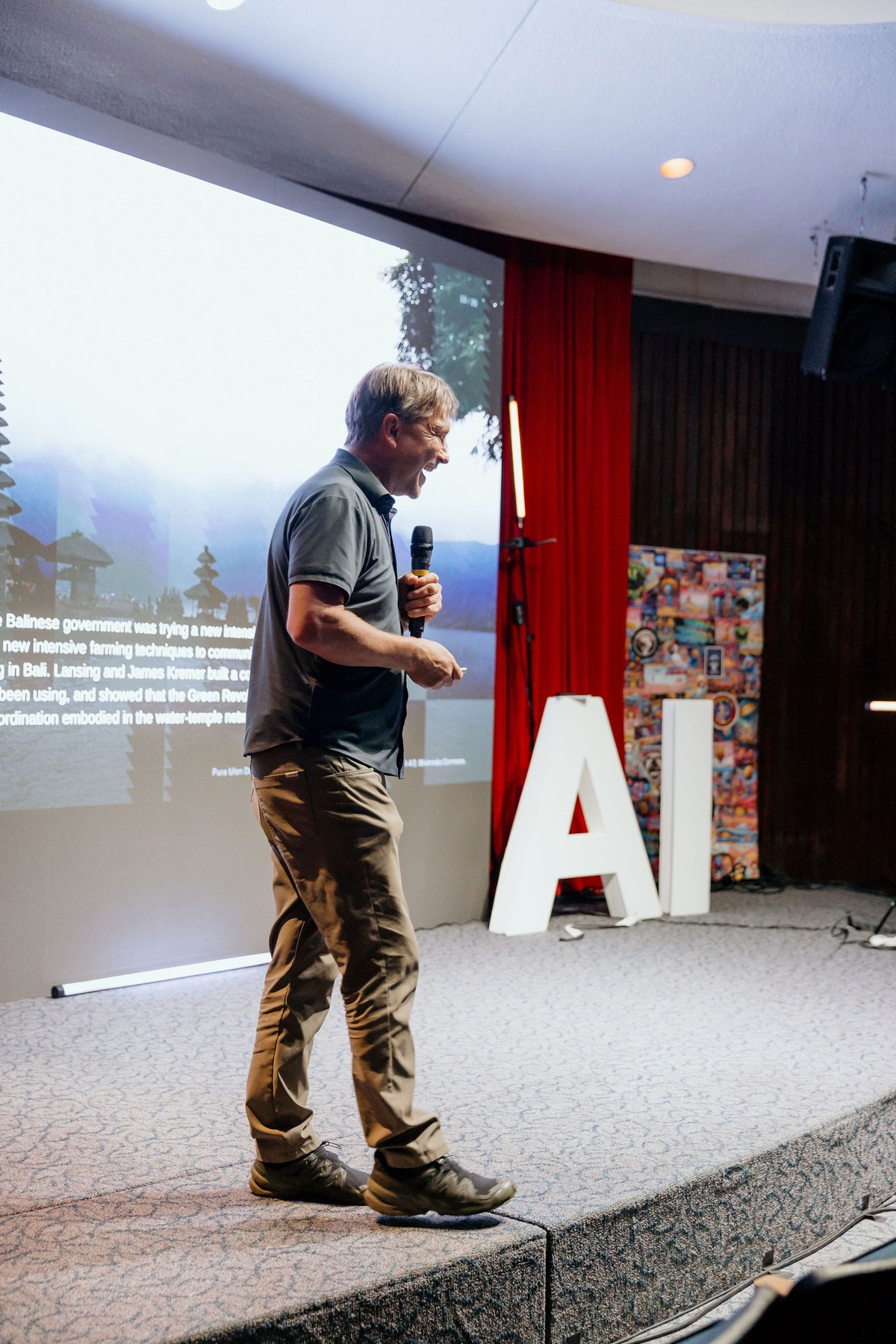
Anselm Hook at Futureproof Festival of AI, October 29, 2026.
When the robots blocked the elevator, Anselm Hook had to live with his software's decisions.
He described staying in a hotel while working on the system coordinating its robots. Deliveries, cleaning and the movement of people all shared the same physical building. A wrong decision could get in someone's way. The developer was among the people trying to get somewhere.
That's a useful place to begin a talk about modelling the world. Eventually, somebody has to live inside the consequences.
Anselm's Futureproof argument moved from that hotel to a much bigger ambition: give people tools to rehearse decisions about the places they care about. Put civic models within reach of the people affected, so they can question a proposal with more than a few minutes at a microphone.
Your building won't follow the demo script
The hotel had a digital model as well as a physical existence. Anselm described using it to reason about where robots and elevators would be, and how to coordinate their movements.
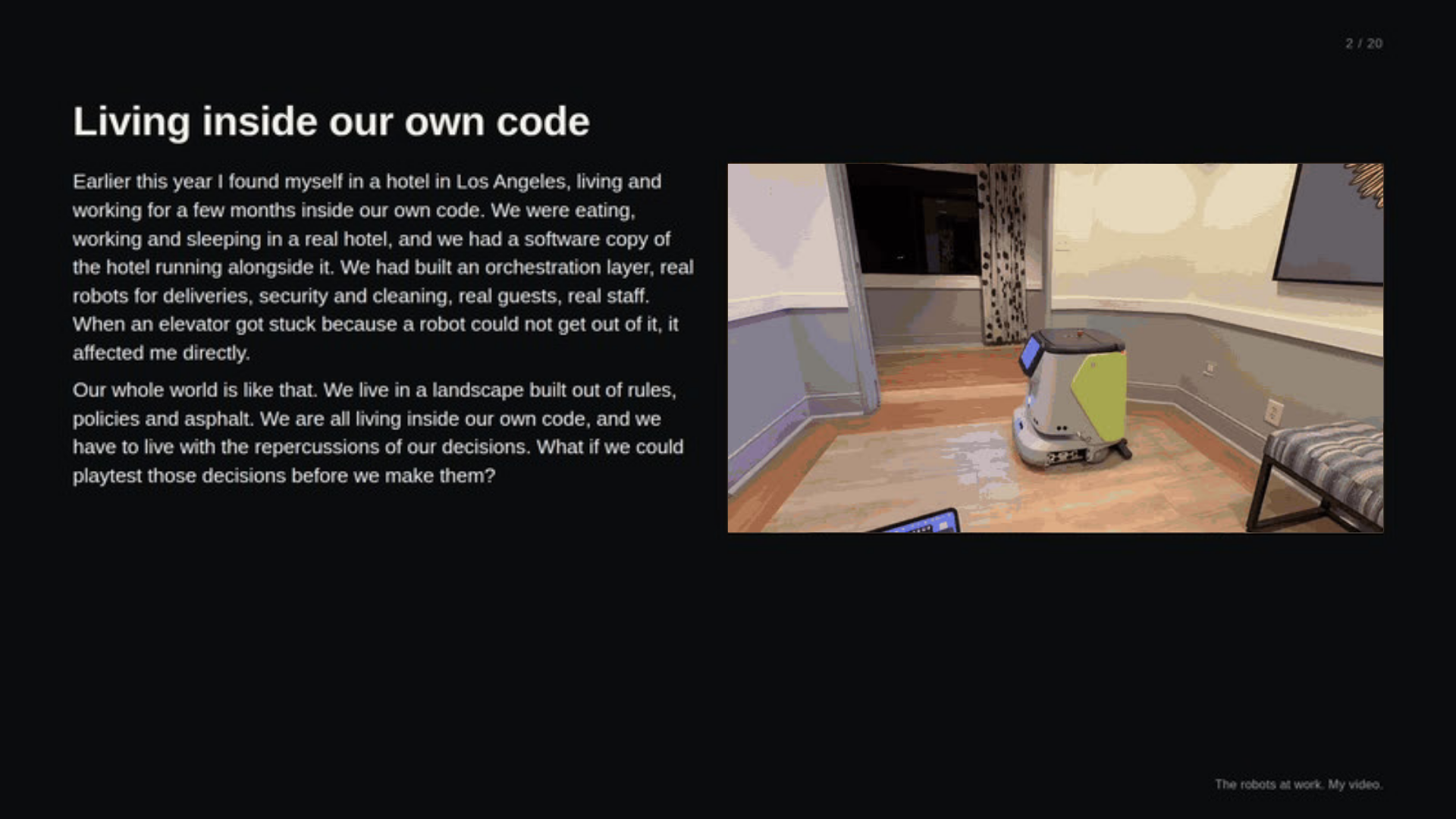
Anselm’s Futureproof slide pairs his account of living inside the hotel’s software with a frame from his own video of a robot at work.
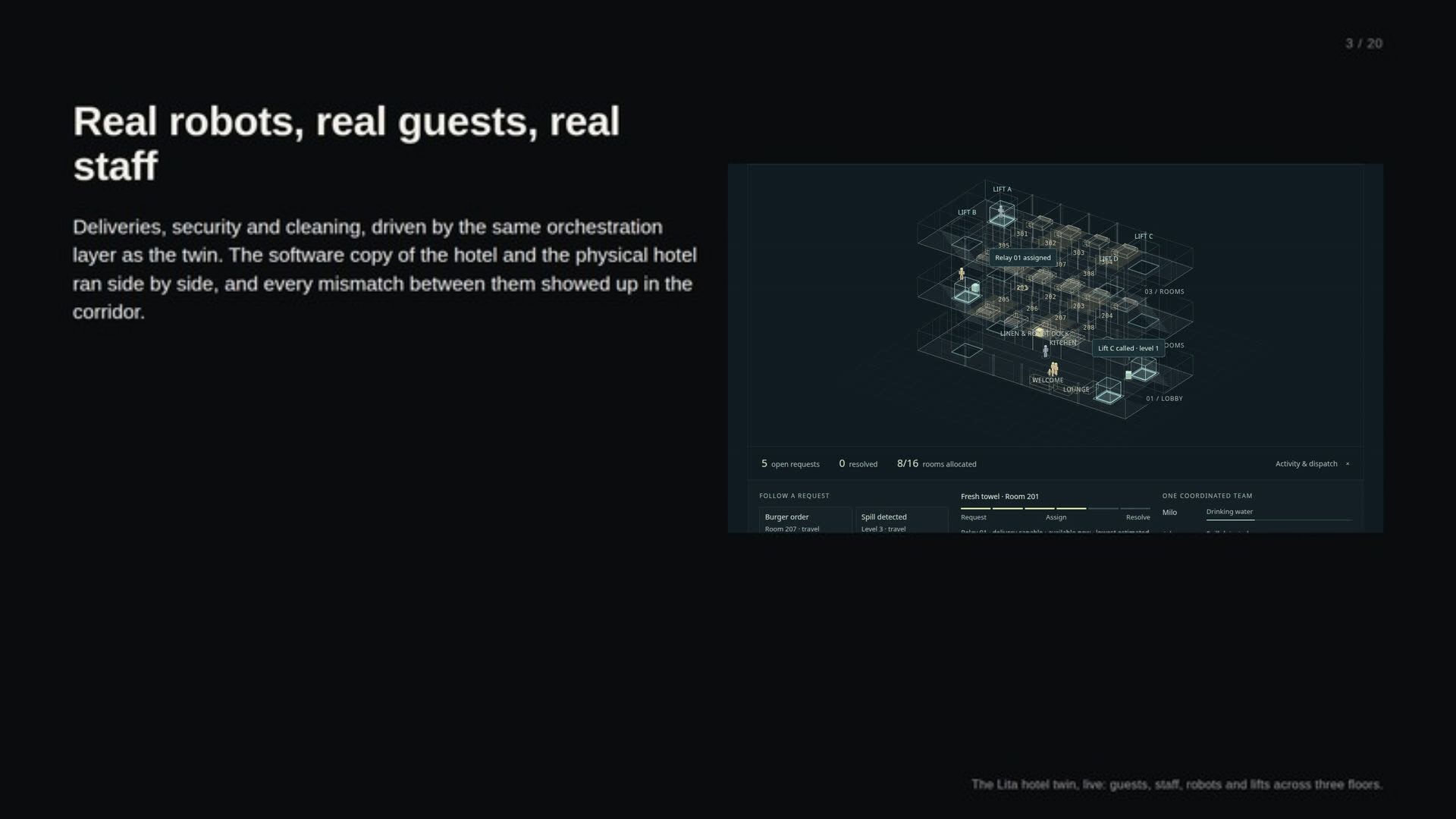
The other half of Anselm’s hotel example shows the software model running alongside the building. The inset follows a burger order through the system.
Then there was the actual hotel. Laundry carts occupied space. Guests reacted differently to the robots. Testing had to fit around a busy building.
Put those two pictures beside each other. In the model, a burger order moves through a diagram. In the hotel, somebody has to share a corridor with the thing carrying it. A clean route on a screen is the beginning of that conversation.
That distinction carried into his account of using language models for orchestration. He described moving from writing individual instructions toward exposing a system's state, constraints and desired outcomes. The system could propose an action. Sometimes the hamburger still went to the wrong place.
There's enough in that example without declaring the end of programming. Someone must decide what the system can do, notice when it fails and deal with the person whose dinner has wandered off.
Start with something you care about
Anselm spoke about growing up near the Rockies and about diving, where the behaviour of living things made an ecosystem feel immediate to him. He connected that attachment to a desire to protect places and understand what might happen to them.
His Simulate World essay, published in 2015, traces the longer-running civic ambition behind that concern. It asks how modelling could help people reason together about ecological consequences and collective choices.
The question is practical. What do you want to understand well enough to act on? A watershed, a coastal place, a neighbourhood facing a development decision? Start with the place and the people who know it, then work out what a model would need to represent.
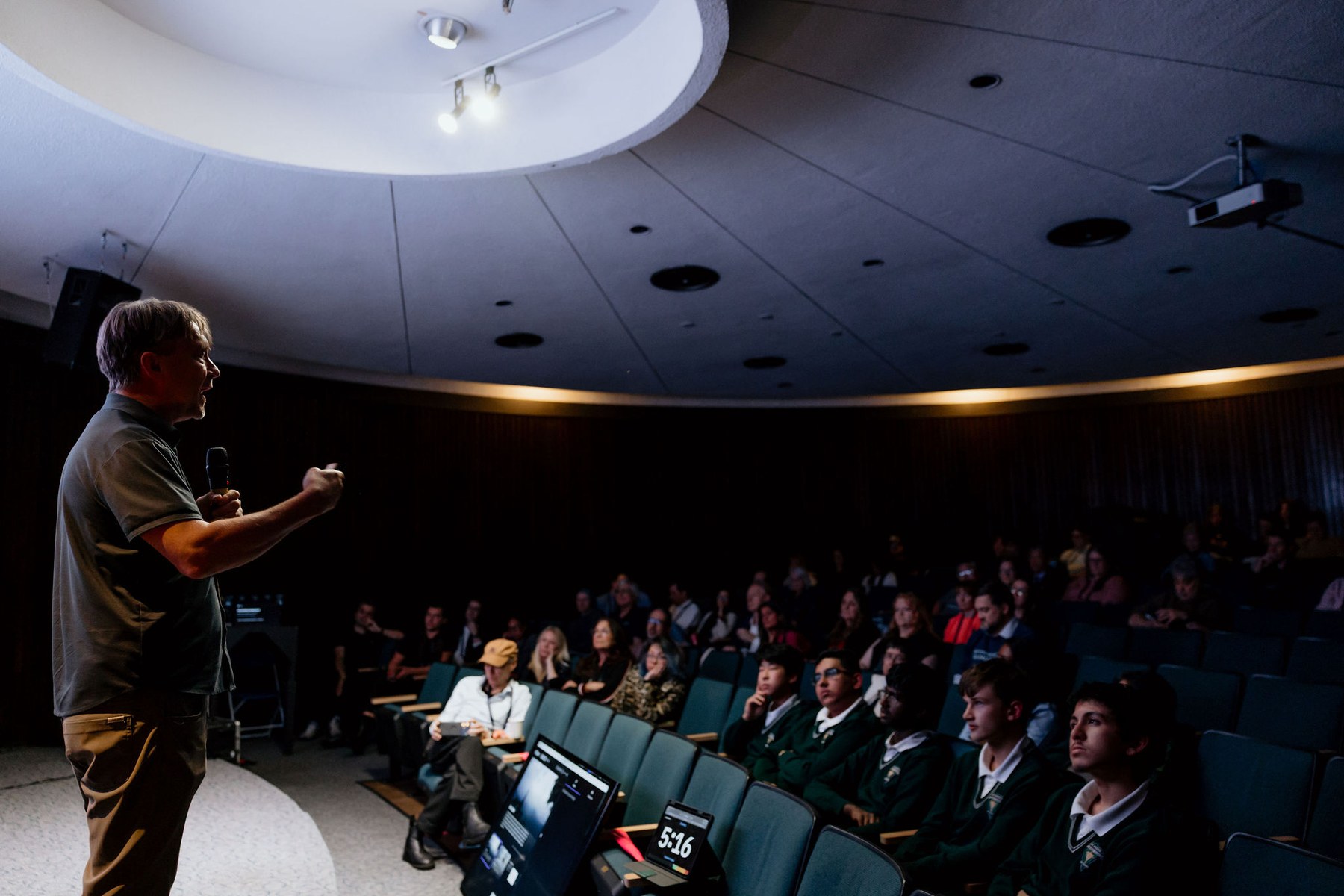
The discussion on the Space Centre stage.
Anselm challenged people to imagine work that would take a year with these tools, rather than stopping at the quick thing they could make in an afternoon. A faster first draft can be the beginning of a harder project. It doesn't have to be the ceiling of your ambition.
A model can help explain why cooperation matters
He turned to research on Bali's water-temple networks as an example of modelling that helped make existing coordination visible.
The 1993 study by J. Stephen Lansing and James N. Kremer examines relationships among irrigation, cropping schedules and pest control. Farmers coordinating a fallow period can affect pests across neighbouring fields. Too many fields demanding water at once creates a different problem.
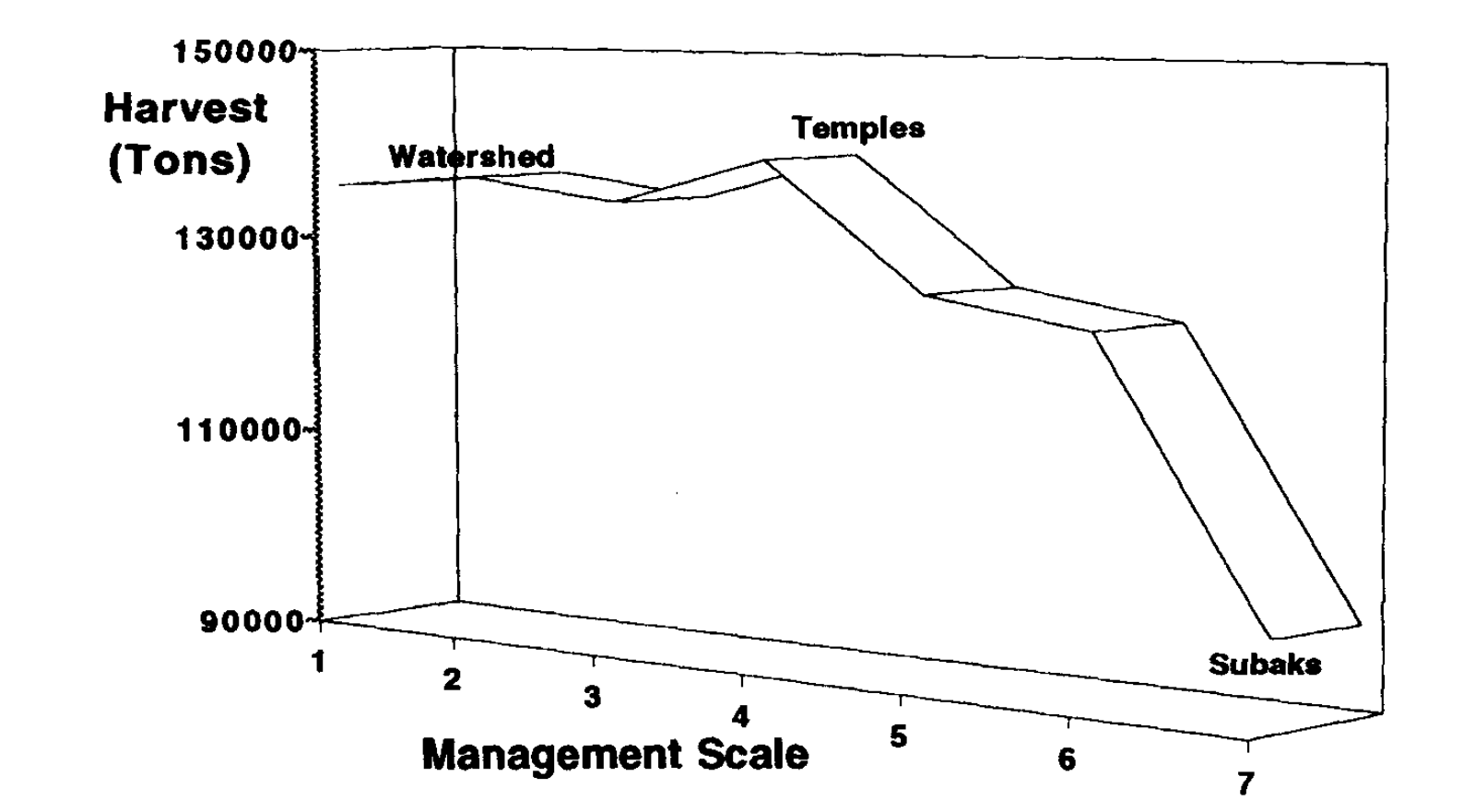
Research context added for this article: the chart from Figure 6 in Lansing and Kremer (1993), printed page 105. It compares coordination scales within their model; it is not a current forecast or a universal ranking of governance systems. Source: American Anthropologist / American Anthropological Association. This is a research excerpt, not Anselm's stage slide.
The study investigated how the scale of coordination affected those competing constraints. Its model supported an examination of relationships that could be missed by treating each field as an isolated optimization problem.
Anselm valued the possibility of a model helping different people discuss a practice. The knowledge and coordination belonged to people already managing the landscape. Software offered another way to investigate their effects.
That makes the example more useful than a story in which a computer arrives and finally makes local people legible. A model is one representation of a place. The people living there have to be able to challenge what it includes.
Who gets to change the assumptions?
David McConville's question pushed directly on that boundary. Could contemporary modelling engage with traditional ecological knowledge and different ways of understanding a place, beyond the quantitative inheritance of the tools?
Anselm answered with a specific project account: work with a colleague on modelling possibilities for bamboo planting in the Philippines. He described local conditions and planting schedules, then the difficulty of explaining a future outcome to someone considering funding it.
That is a reason to investigate a model. It doesn't settle David's larger question. The representation still needs choices about what can be counted, whose knowledge sets the assumptions and who can reject the result.
Our Responsible AI Professional programme asks practitioners to examine the purpose and consequences of a deployment. Civic modelling makes those questions very tangible. A persuasive picture of a place can influence a decision about it. People need a way to inspect how that picture was made.
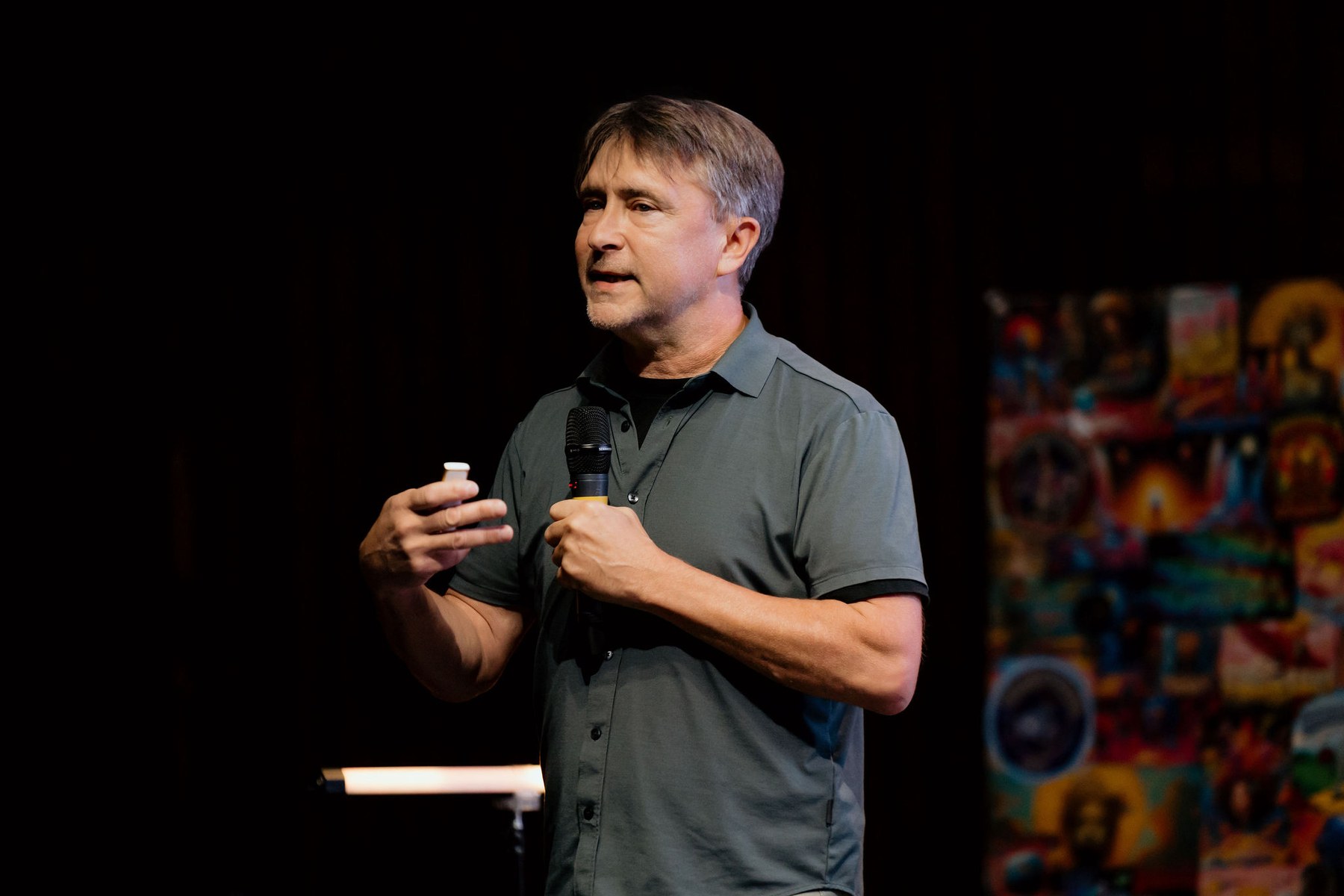
During Anselm's Thursday presentation.
Give the public the same expressive tools
Anselm's most pointed answer came when he imagined citizens bringing their own models into a public decision. Corporations and governments already have ways to make proposals look substantial. He wanted residents to have comparable tools for describing consequences and asking better questions.
That adds another layer to my question about who sovereign AI is for. Access to computing matters. So does access to the means of making an argument that a decision-making institution will take seriously.
His Digital Twins Wiki is a place to continue the practical investigation. It collects modelling tools, data sources and examples, with the site's own draft and proposal states visible. In the talk, he asked for contributions to an open reference rather than presenting a finished engine capable of modelling the whole planet.
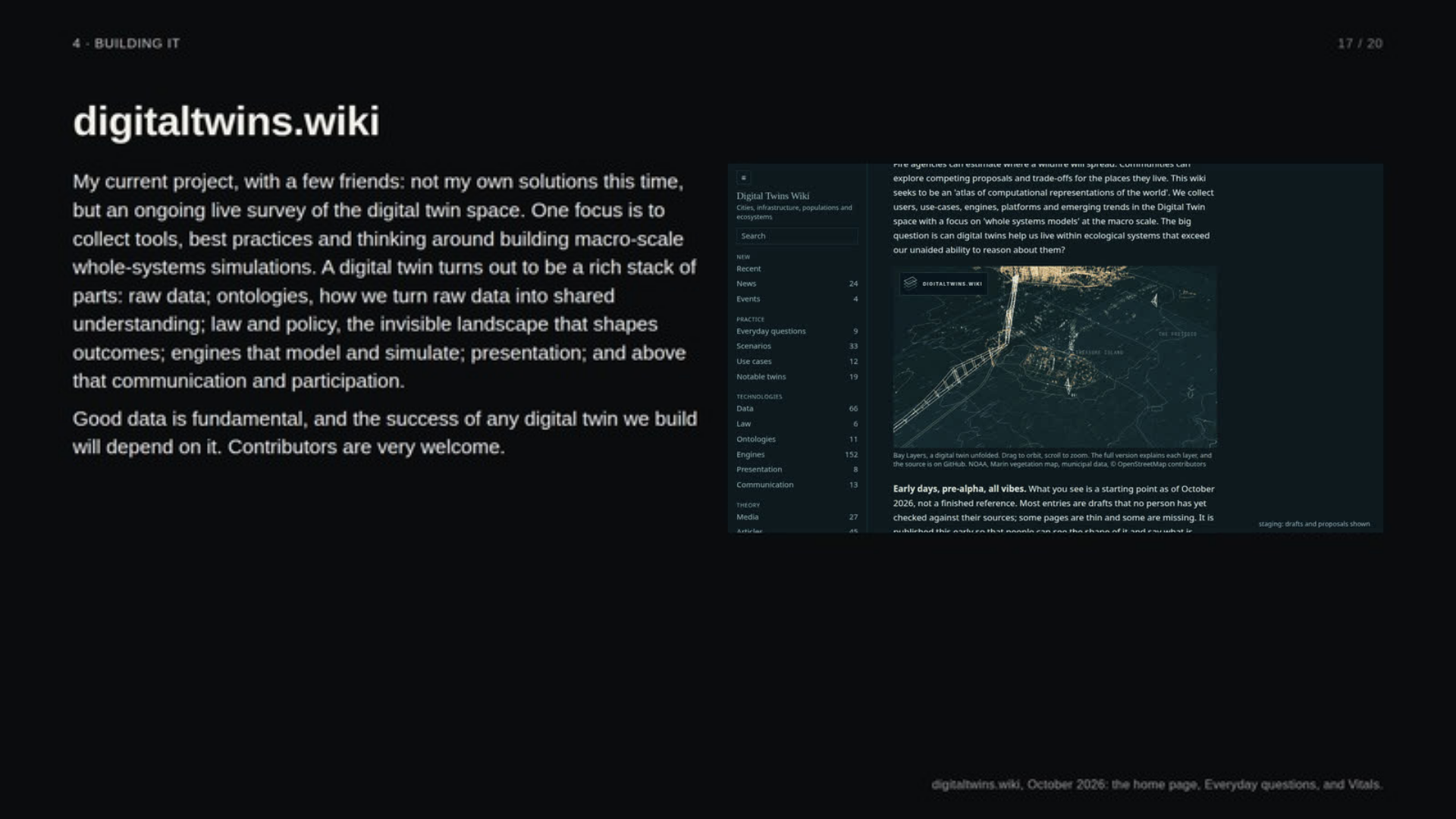
Anselm’s Futureproof slide shows the Digital Twins Wiki and identifies layers a civic model depends on, from source data and policy to presentation and participation.
There's a connection to Toshi Anders Hoo's futures practice: a representation can let people consider more than the expected outcome. The model should leave room to compare choices, including the choice not to proceed.
Anselm closed the Q&A by clarifying his ambition. He wanted people affected by decisions to be able to deliberate about them together. The simulation would support that work; it wouldn't make the decision legitimate on its own.
Let the neighbours play with the model. Let them break its assumptions. If the plan changes their lives, the argument about the plan belongs to them too.