Futureproof Festival / 2026
Toshi Anders Hoo: a model should give people something to argue with
The conversations worth coming back to.
Source and citation
This is an authored, illustrated recap. The session date records when the talk took place. An edited transcript and festival recording have not been released on this page.
Kris Krüg. “Toshi Anders Hoo: a model should give people something to argue with” Futureproof Festival 2026 proceedings, Volume 01. Session: 2026-10-29. Edition updated 2026-11-06. https://www.futureproof.website/2026/proceedings/sessions/toshi-anders-hoo/
You can also select and copy the citation above.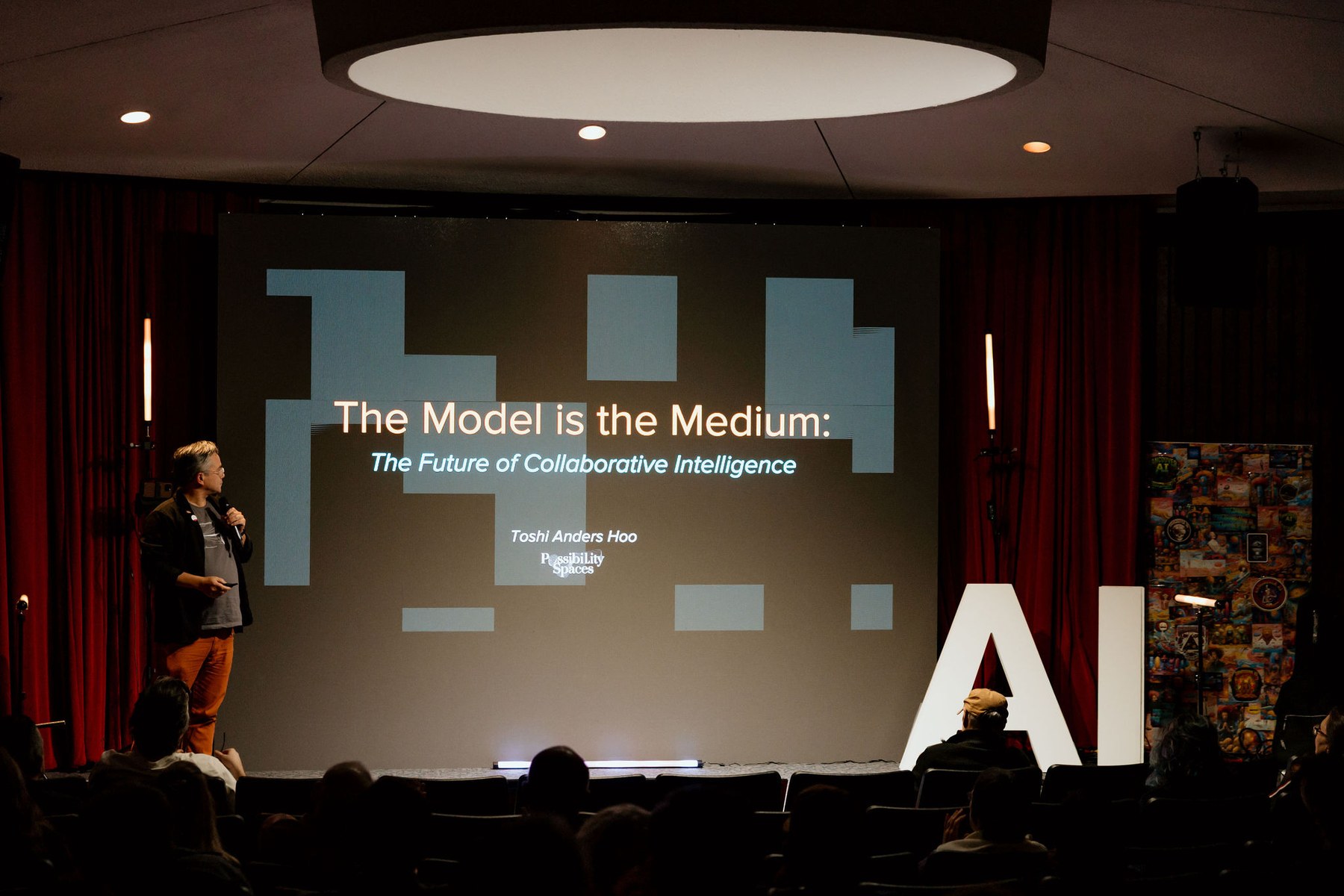
Toshi Anders Hoo at Futureproof Festival of AI, October 29, 2026.
Toshi Anders Hoo came to a festival called Futureproof and cautioned against the word futureproof.
Fair enough. A name shouldn't get diplomatic immunity in its own room.
His concern was the confidence implied by having the future handled. If you think you already know what will happen, the thing actually happening can become harder to see. He proposed being future curious, with curiosity understood as a willingness to be changed by what you encounter.
That was the beginning of his argument about AI. What if the most useful thing a model does is help people change the models already in their heads?
Leave room for the future you actually want
Toshi spent a decade at the Institute for the Future before starting Possibility Spaces. He brought a futures practitioner's distinction between predicting an outcome and expanding the range of outcomes people can consider.
His possibility cone puts the projected continuation of the present alongside probable, plausible and much less comfortable possibilities. It also marks preferable futures: the ones people might choose to work toward.
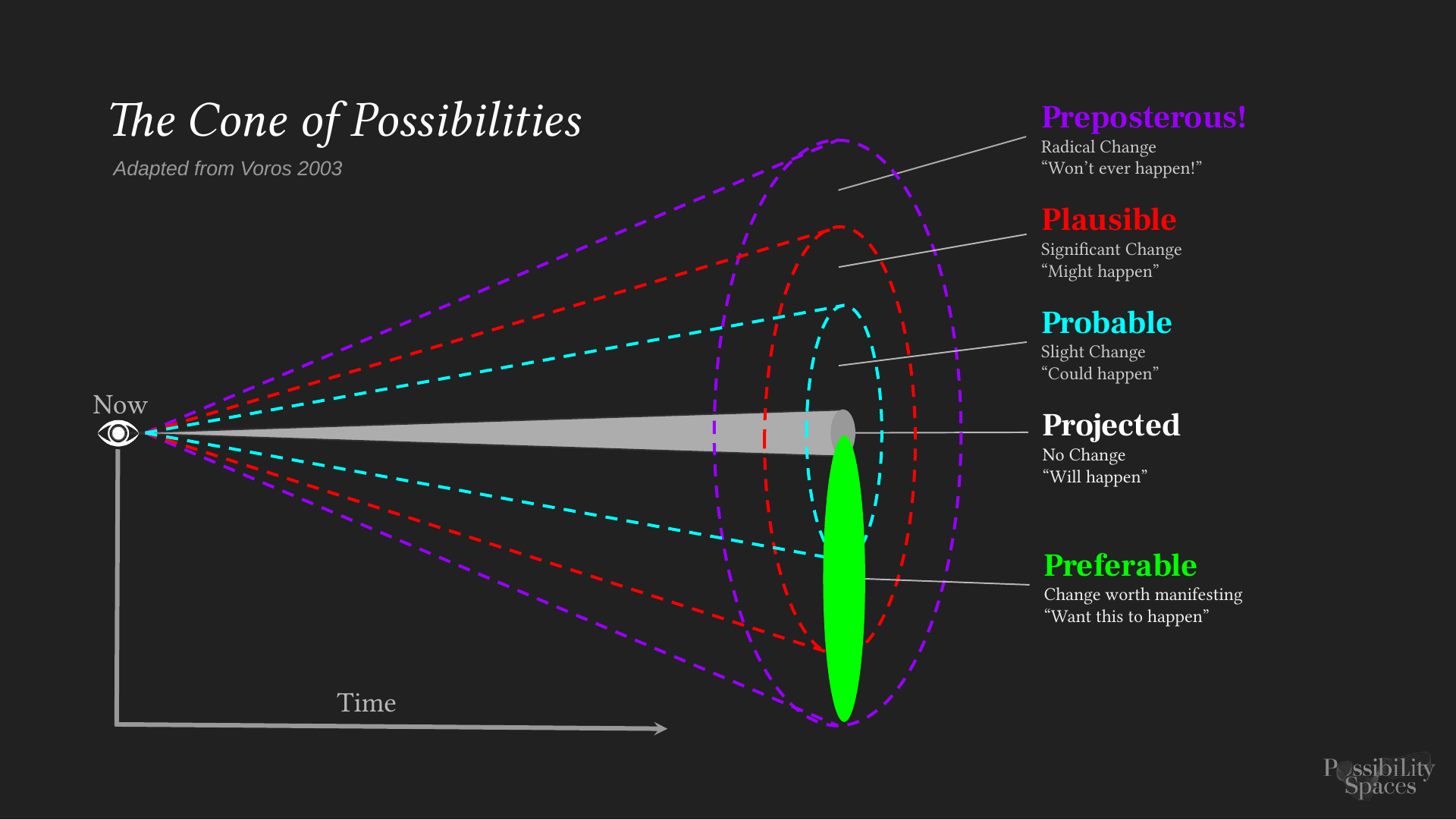
The Cone of Possibilities, submitted slide 10. Presentation: Toshi Anders Hoo / Possibility Spaces; the diagram credits an adaptation from Voros 2003.
The preferred future doesn't necessarily sit inside the narrow path you already expect. If you only plan around that path, you may leave something desirable outside the discussion before anyone gets to make a choice.
Toshi applied that concern to the story of AI as inevitable human replacement. He wanted another possibility in the room: AI as a medium through which people can think and model together.
That's an invitation to examine what we're building and who can participate. A forecast should make today's decisions more thoughtful. It shouldn't excuse anyone from making them.
Separate what you saw from what you assumed
Toshi described a mental model as observations joined by assumptions. The change from data to observations was deliberate. Calling something data can make its interpretation sound more settled than it is.
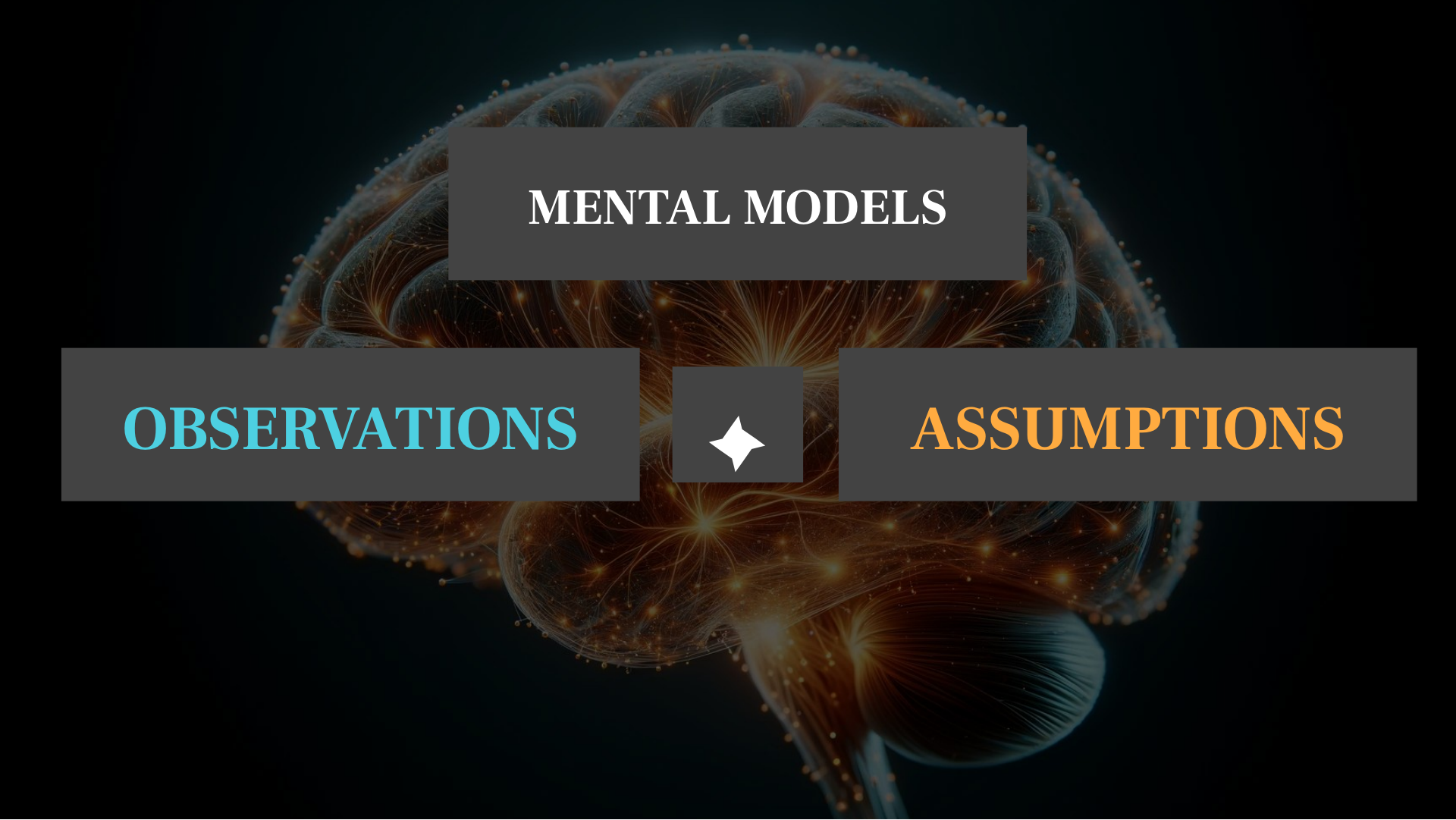
How Toshi represented a mental model, submitted slide 35, PDF page 32. Presentation: Toshi Anders Hoo / Possibility Spaces.
You observe that fewer people attended an event. You assume the topic put them off. Someone else notices a scheduling clash. Another person heard that the registration page confused people. Each account suggests a different next move.
That event example is a way to apply his distinction. The point is to make the assumption available for discussion instead of burying it inside a conclusion.
Toshi proposed intelligence as an activity: building a model of a situation and being able to update it. Other people can help because they bring different observations, experience and assumptions. Agreement isn't the only useful result. Finding the disagreement can reveal what needs investigating.
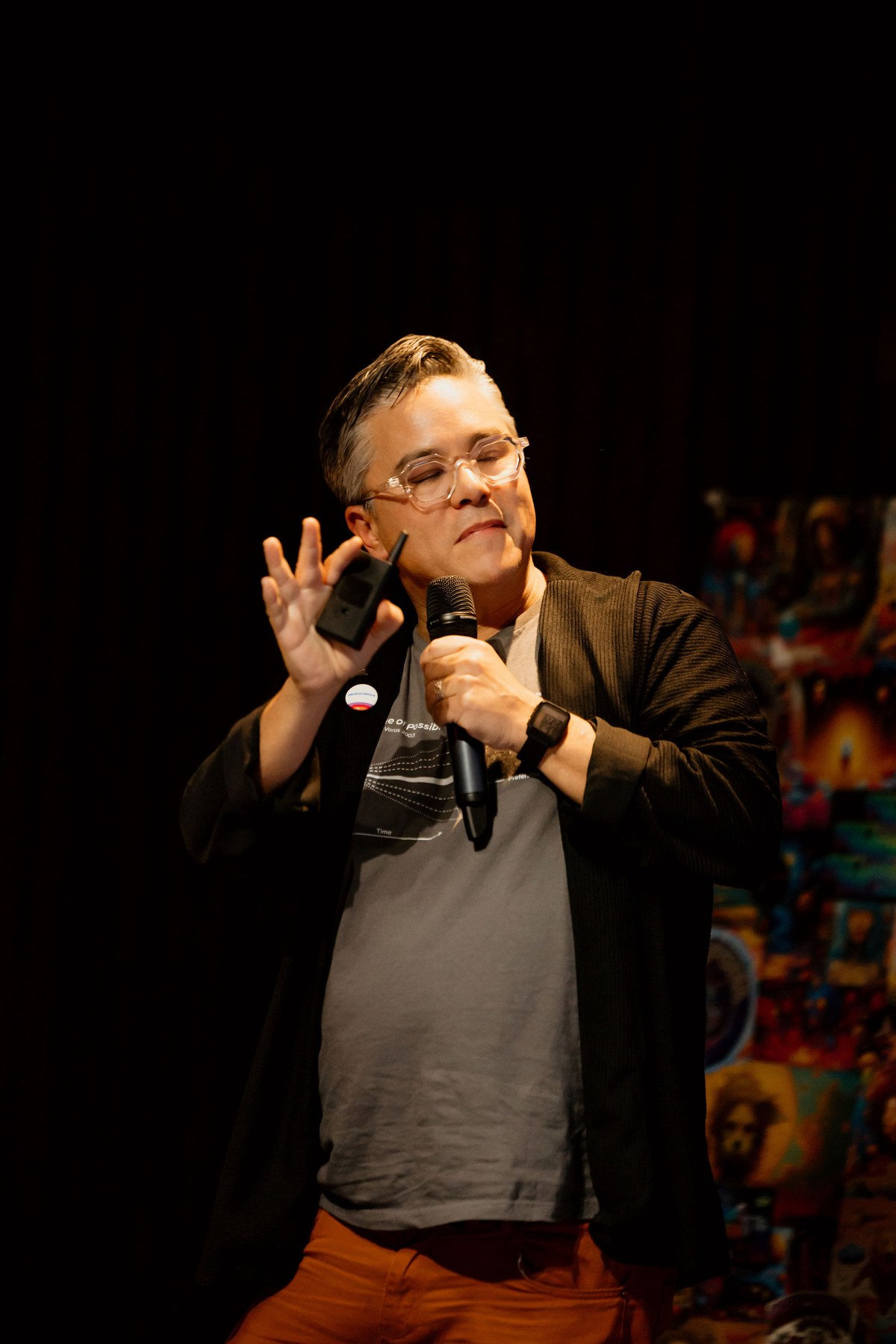
During Toshi's Thursday session.
That also puts a useful demand on an AI second brain. Saving more of your thinking creates material you can revisit. The worthwhile next step is examining which parts still describe the world and which parts need changing.
An archive of your assumptions can be useful. An assistant that endlessly confirms them is considerably less interesting.
Put the model somewhere other people can inspect it
Toshi's forecast was that more collaborative work would happen through models people could make, alter and share. He called it a desktop modeling revolution, drawing a comparison with the spread of tools for creating and publishing documents.
The practical examples made the idea easier to follow.
He showed a model of an innovation centre he was helping develop. He described taking architectural material into Claude and building a way to explore a place that didn't yet exist.
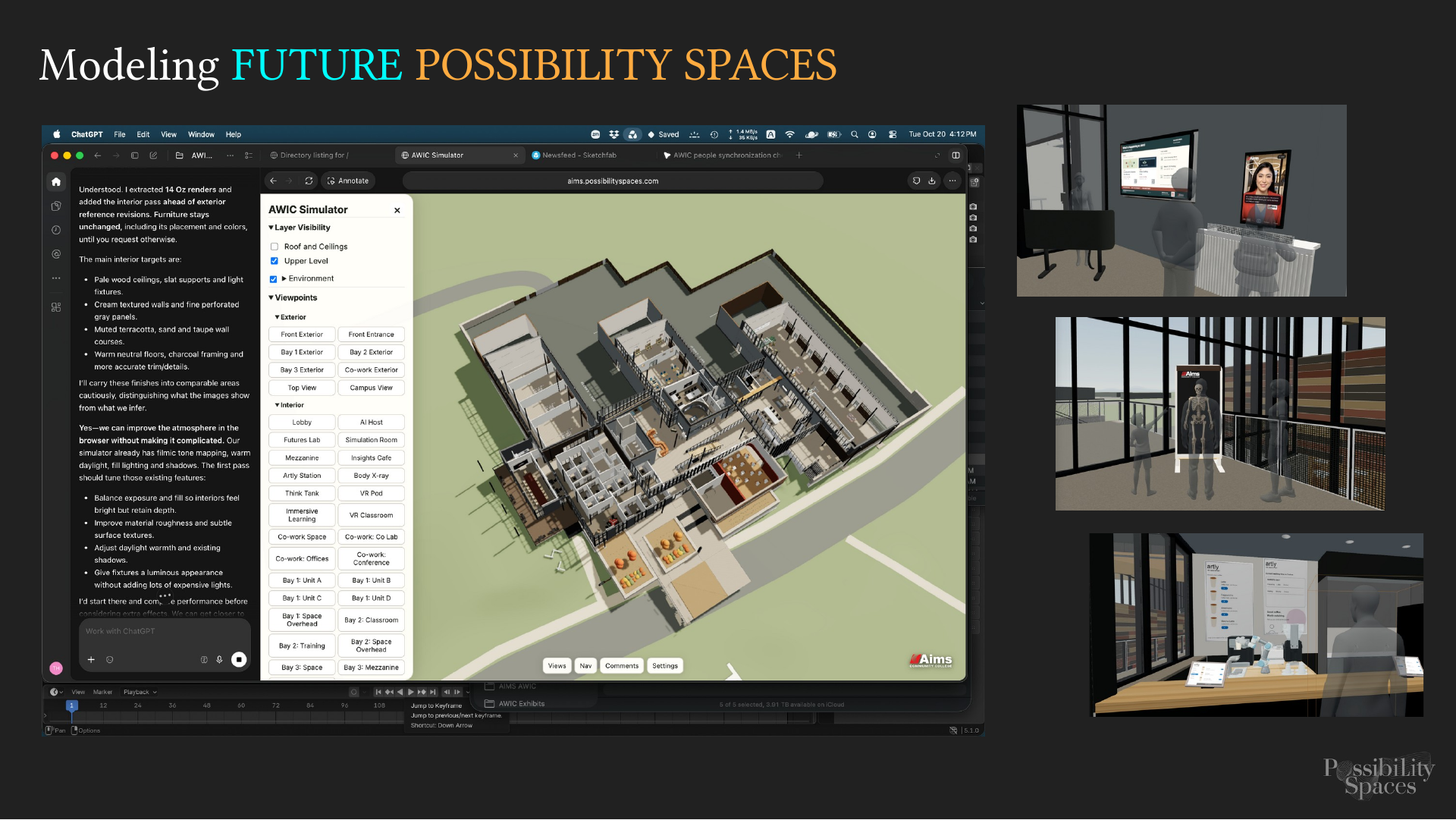
Toshi's project example, submitted slide 65, PDF page 55. These are planning-model views, not photographs of a completed building. Presentation: Toshi Anders Hoo / Possibility Spaces.
A shared model gives the conversation an object. People can point to the same room, disagree about what it needs and change the proposal. They don't have to discover halfway through a project that everybody imagined a different building.
His bioregional example moved between software and a physical object. He described a hike connected to the water system serving his region, research into that system and a three-dimensional printed model of it.
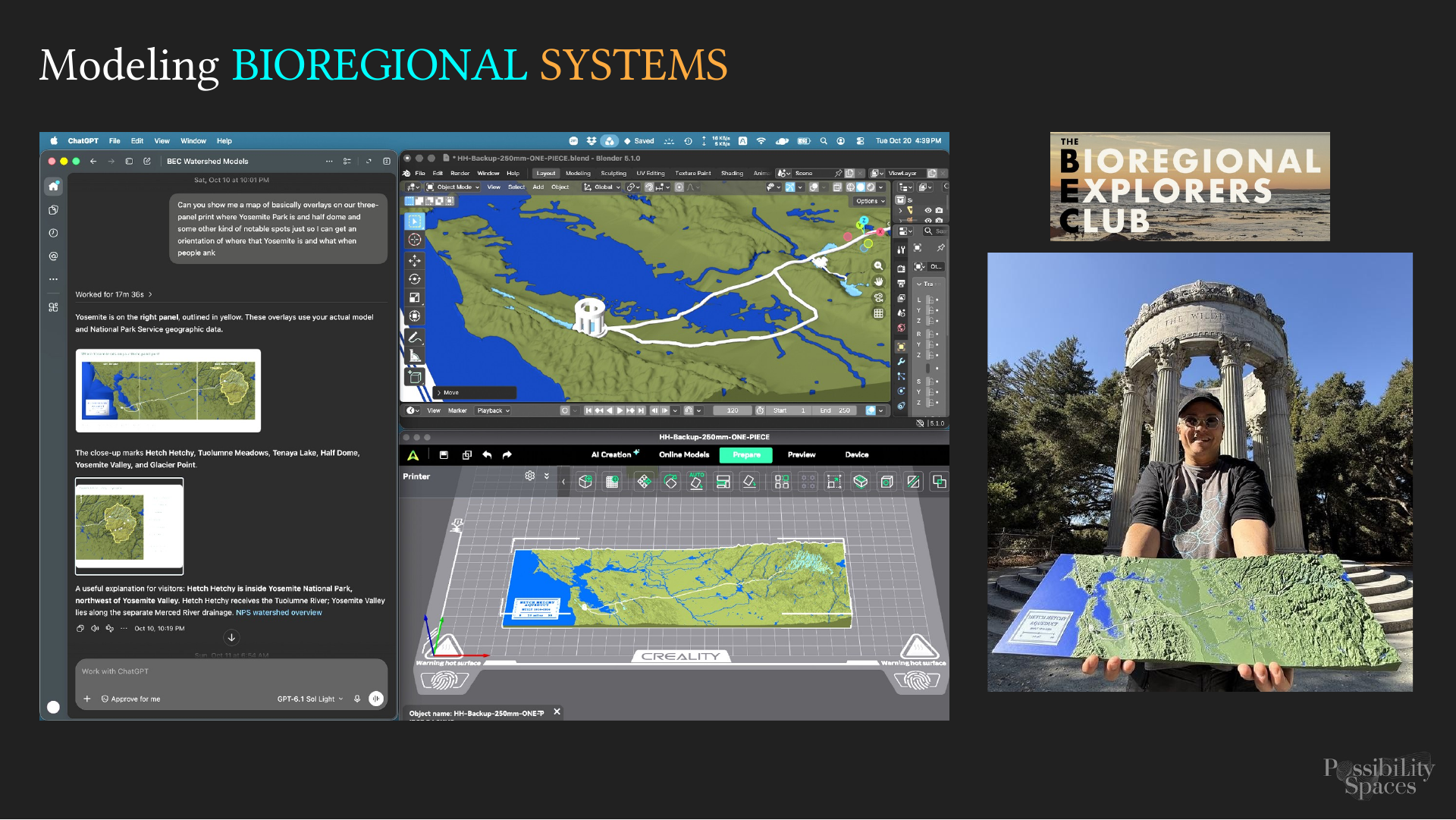
The bioregional water-system example, submitted slide 66, PDF page 56. Presentation and project images: Toshi Anders Hoo / Possibility Spaces.
The model could become something to gather around and question. Where does the water come from? What relationships does this representation make visible? What did the person building it choose to include?
A tidy shape doesn't settle those questions. It gives them a place to begin.
The interface carries assumptions too
Toshi connected his argument with Brad Necyk's preceding discussion of creative tools. The medium shapes what people can notice, express and do. An AI discussion that stops at the impressive output misses the arrangement producing it.
In Q&A, people challenged the language around world models and asked how richer visual interfaces would relate to documents and shared standards. Toshi clarified that he wasn't proposing the disappearance of documents. He was interested in more ways to represent complex systems and work with them.
There are specific technical approaches within that wider idea. World Labs' explanation of 3D as an interface describes representations that people can inspect, edit and move into existing spatial tools. That is a concrete design argument from the company, rather than a definition covering every kind of model Toshi discussed.
The interface needs questioning along with the content. Which assumptions can a person change? What can they inspect? What is hidden behind the convincing view? Who gets to use the tool and who gets represented by it?
Those are practical questions for BC + AI's Responsible AI Professional programme, where practitioners examine actual deployments and their consequences. The model-literacy lens adds another way to interrogate what an organization is asking people to trust.
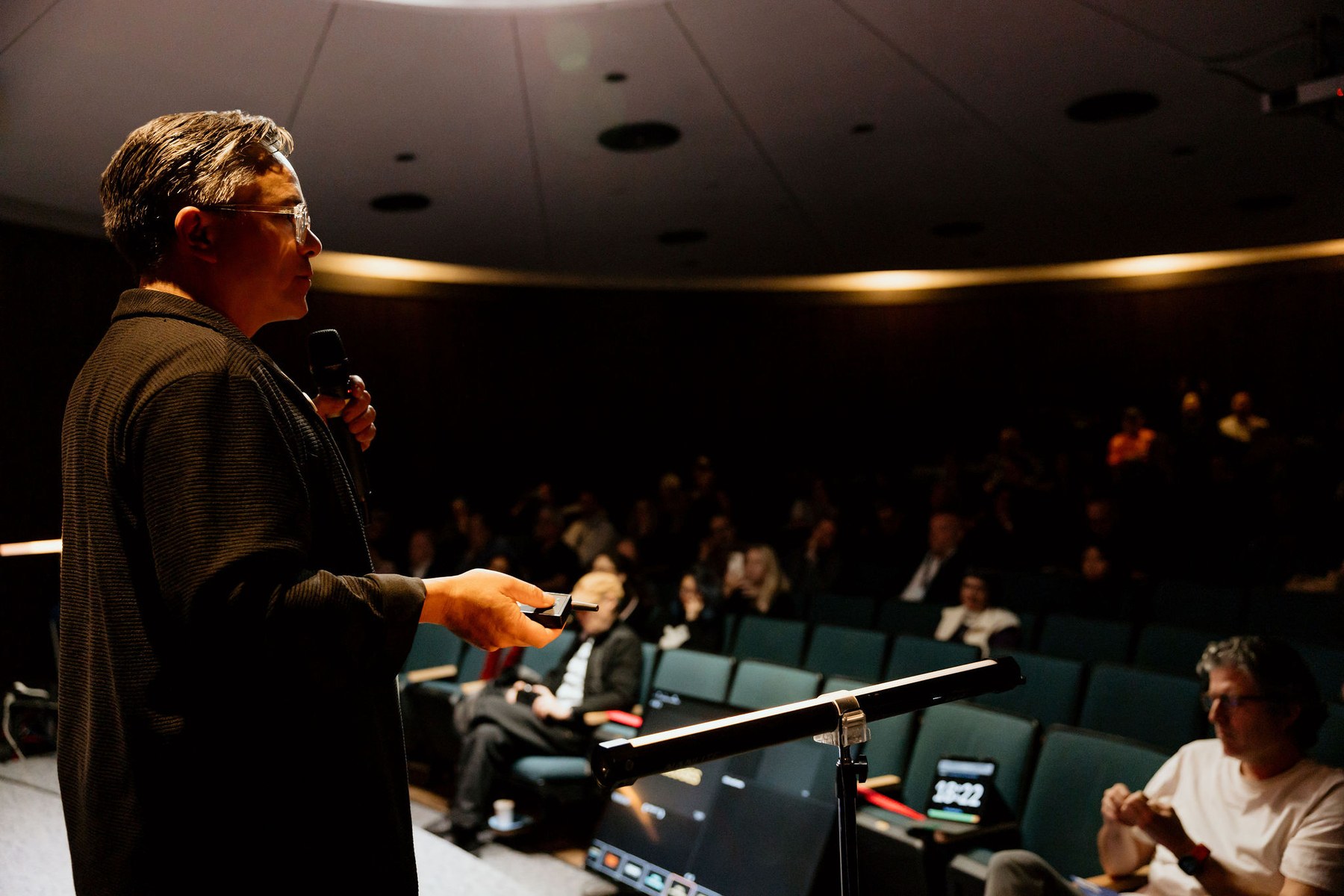
The conversation from the stage.
Try Toshi's argument on a decision you're making with other people. Name the observations. Put the assumptions beside them. Build a representation everyone can inspect, whether that's a drawing, a spreadsheet or a navigable prototype.
Then invite someone to tell you what it leaves out.
The model becomes useful when the conversation can change it. So do we.