Futureproof Festival / 2026
Brad Necyk: the next prompt should come from a changed imagination
The conversations worth coming back to.
Source and citation
This is an authored, illustrated recap. The session date records when the talk took place. An edited transcript and festival recording have not been released on this page.
Kris Krüg. “Brad Necyk: the next prompt should come from a changed imagination” Futureproof Festival 2026 proceedings, Volume 01. Session: 2026-10-29. Edition updated 2026-11-06. https://www.futureproof.website/2026/proceedings/sessions/brad-necyk/
You can also select and copy the citation above.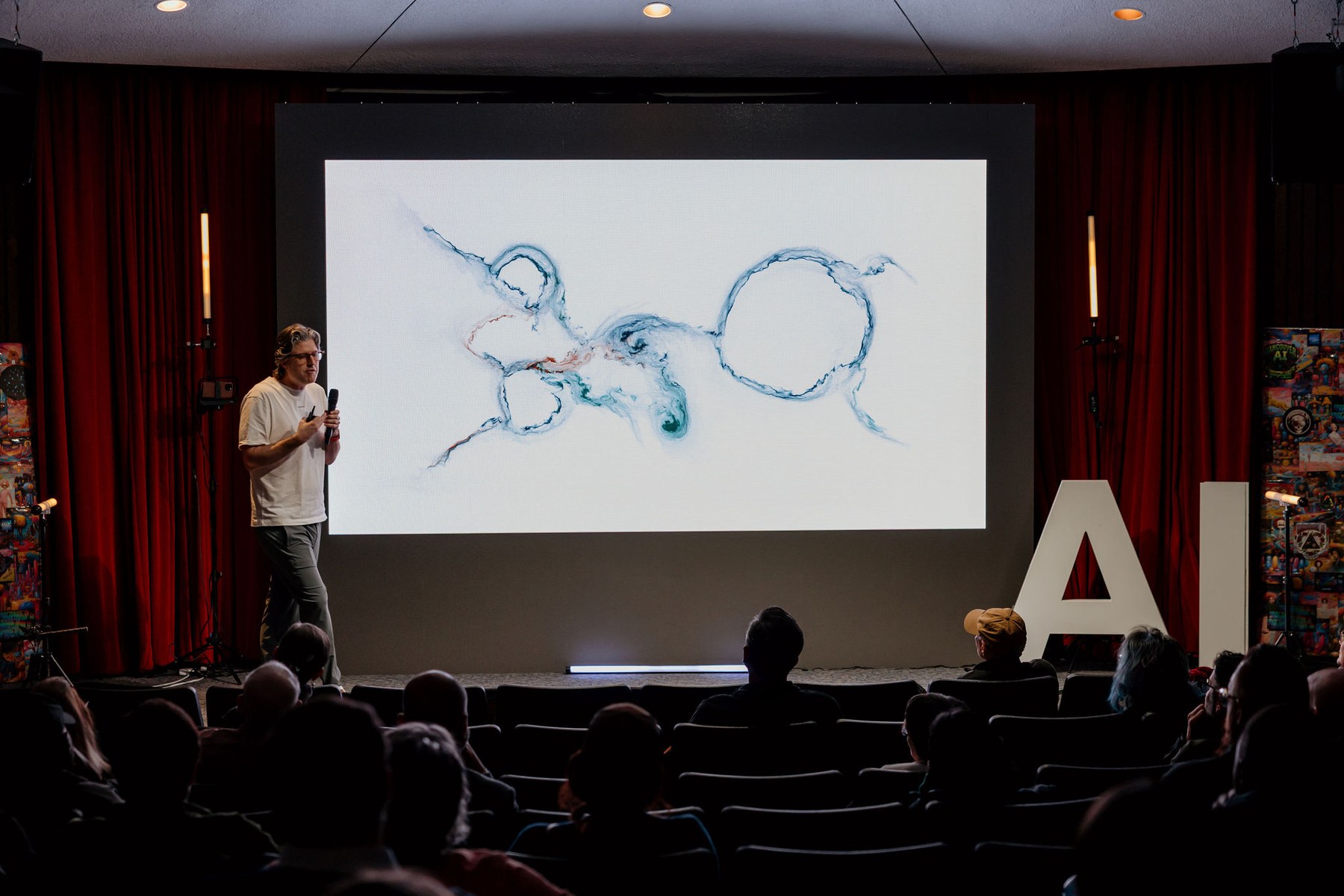
Brad Necyk's AI and Imagination session at Futureproof, October 29, 2026. Artwork: Brad Necyk.
The person making the next prompt isn't quite the person who made the first one.
That was the creative process Brad Necyk described at Futureproof Festival of AI, October 29, 2026, at Vancouver’s H.R. MacMillan Space Centre. An intuition becomes something he can encounter. The thing he encounters changes what interests him. His next request comes from that changed position.
The destination can move while he's making the work.
That's awkward for the version of AI creativity where someone enters a perfect brief, presses a button and receives the finished object. Brad's account has more looking, more wandering and considerably stranger sentences.
Let the sentence stay strange for a minute
Brad makes art with filmmaker and speaker Jason Silva. He described their shared practice of speaking freely into models: associations, contradictions, laughter and ideas that haven't yet settled into an orderly explanation.
They call the practice glossolalia. In Brad's account, its purpose is to leave room for an unexpected relationship before a sensible sentence tidies it away.
One example was the image of a cathedral made of weather. The point was to see what that combination could make possible to imagine and feel. A clean explanation of the intended result could arrive later.
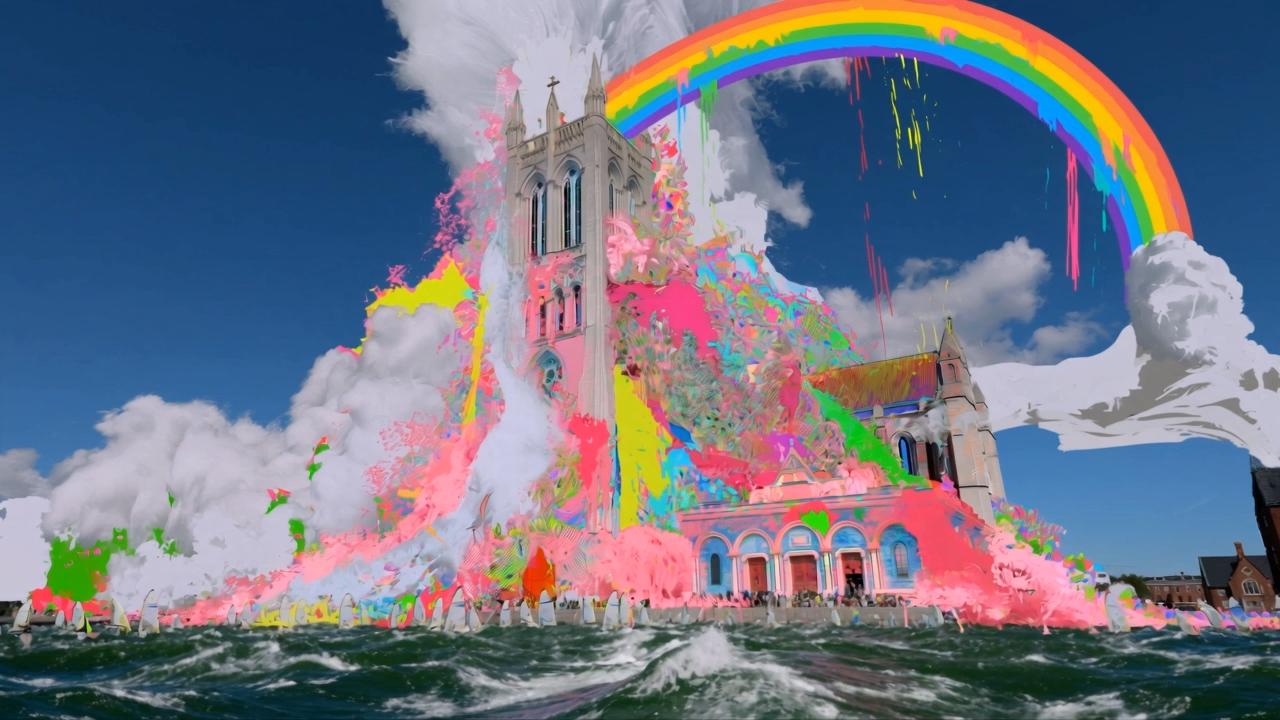
The “cathedral made of weather” example. Original video poster embedded on slide 2 of Brad’s supplied presentation. Generated imagery.
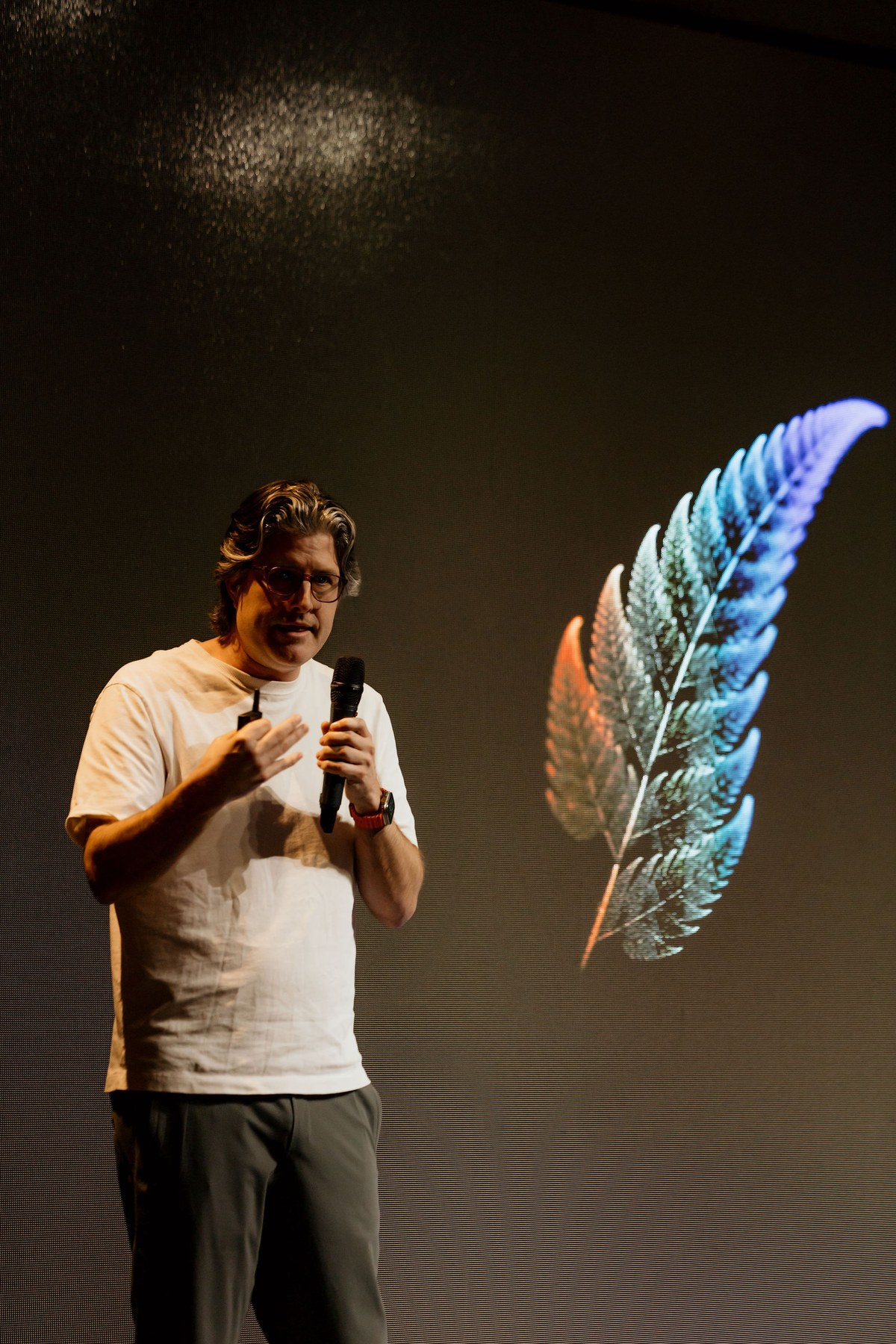
Computational art on the screen during the talk. Artwork: Brad Necyk.
He brought this into the discussion as an artist and teacher at Shawnigan Lake School. He described teaching imagination alongside AI and computer science, treating it as something students need opportunities to develop.
His own practice also leaves the desk. He described long walks on Cobble Hill Mountain, talking through ideas while the forest, the climb and his surroundings supplied more to notice. The body wasn't incidental to a conversation with software.
His published field note A Portal Opens follows that connection between walking, spoken thought and a system at home. It describes a particular prototype and its limits. The festival talk used the walking practice to explain where some of his ideas begin.
The painter still has to look
Brad spoke about training in painting, drawing and sculpture: the patience of attending to a face, a small difference in light, a surface that recognition might have allowed him to skip over.
Recognizing a thing and seeing it carefully are different activities. He carries the latter into work made with computers.
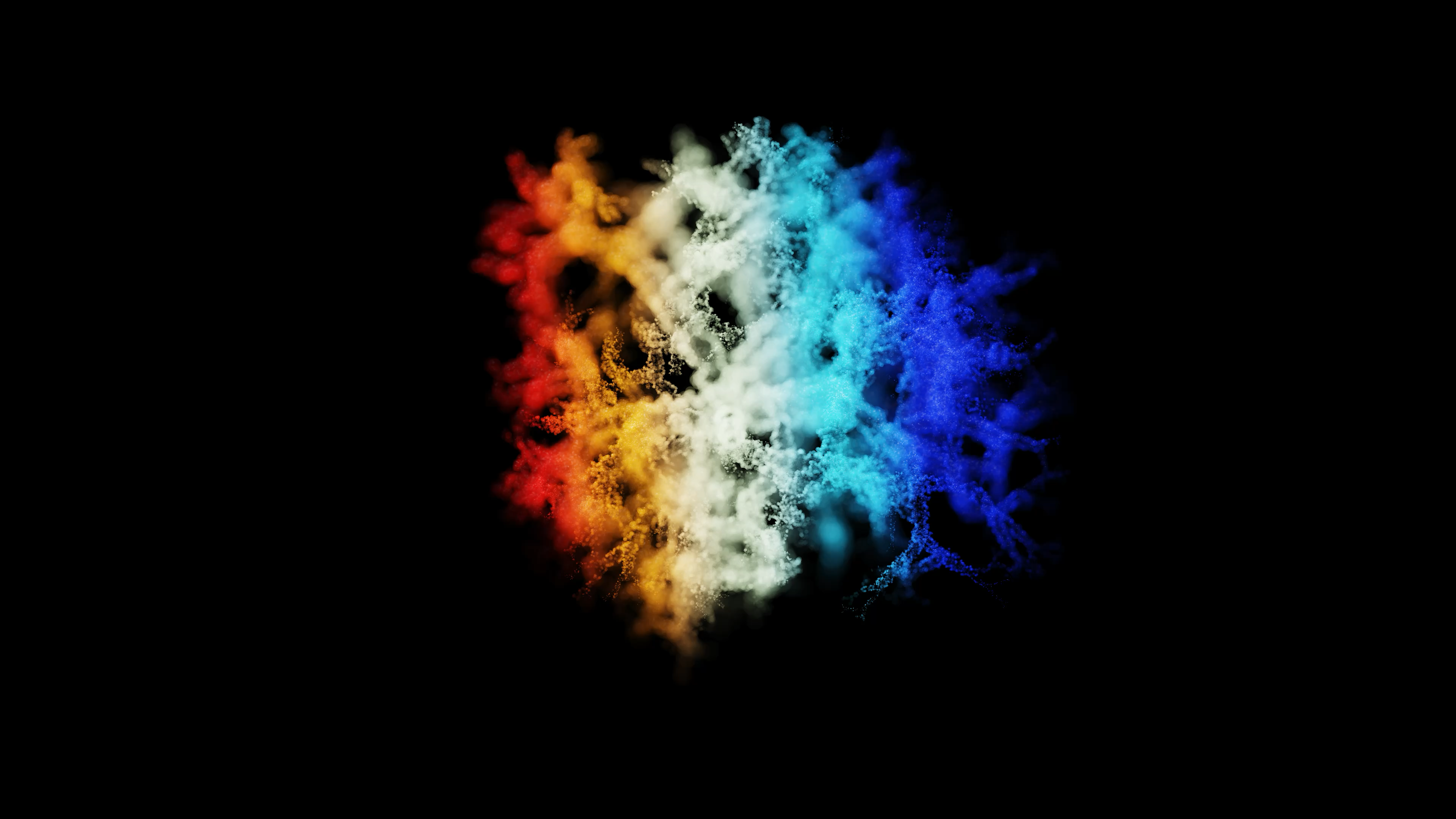
Computational artwork from slide 6 of Brad’s supplied presentation. Original video poster.
In his account of collaborating with Jason, language and association meet an attention to frames, surfaces and light. The model can generate possibilities, but someone still has to decide which possibility is worth staying with.
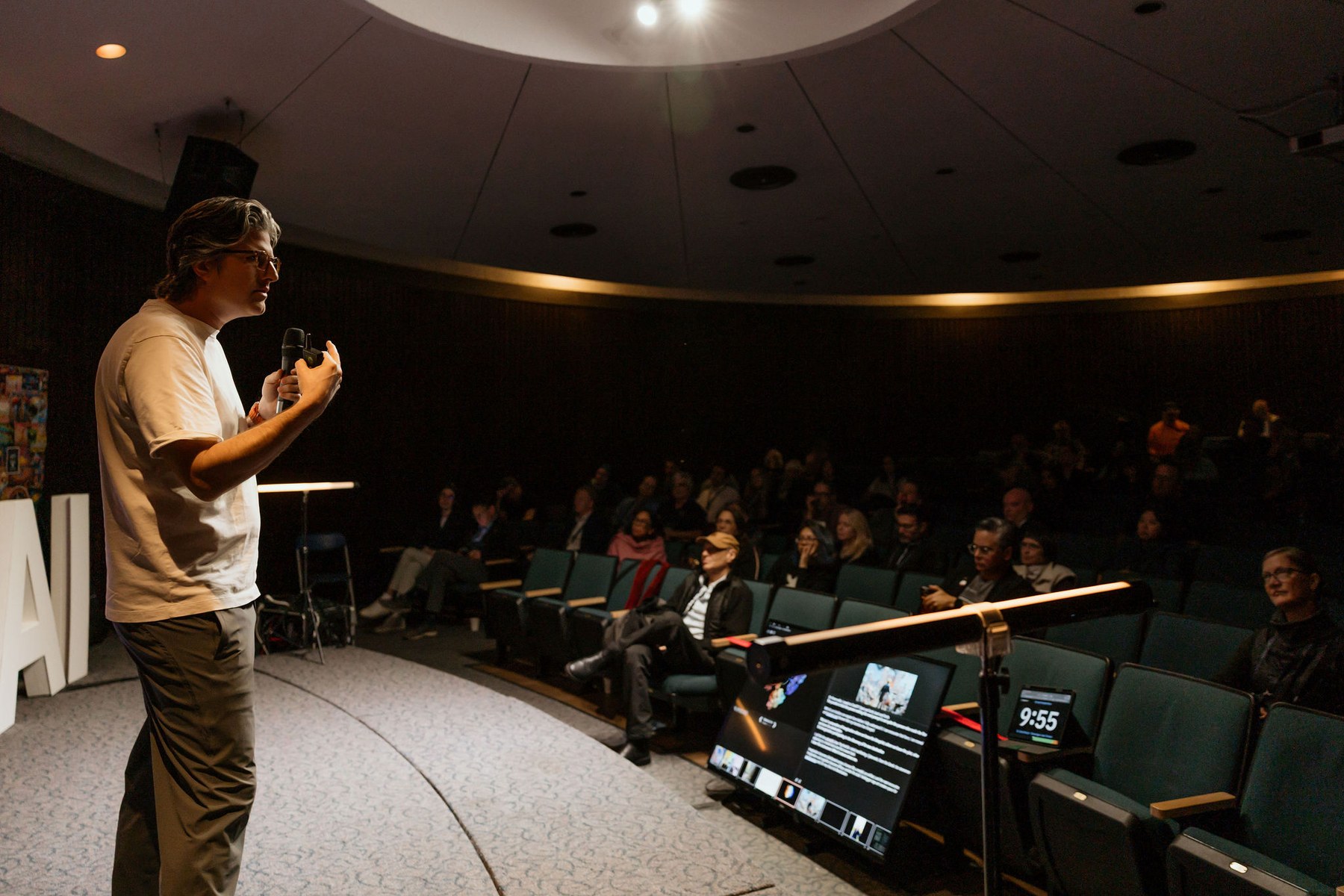
The stage and audience during Brad's presentation.
In my writing on creative teams and agent orchestration, I ask how people preserve artistic intention while working through a growing stack of tools. Brad makes the intention itself available for revision. An output can change the work he wants to make.
That puts a demand on the next decision. What did you notice in this version? Why keep it? What does it make you want to change?
If the only answer is that it looks expensive, keep looking.
A loop that can change its direction
Brad called this process the cyberdelic loop. He described steering an instrument while responding to what the instrument brings back. The maker, the model, the artifact and the next encounter all participate in what happens next.
He also proposed syntography as a name for writing with synthesis. The term is part of his attempt to describe the medium he feels himself working in. He wants an account of its craft that reaches beyond judging whether an image resembles something made another way.
Brad screened a scene from The Psychedelic Puppet Show, his film project with Jason Silva. The puppets give Edgar a surreal treatment in a hospital that runs on the logic of an imagination cut loose. The creators’ published story gives you a way to read that fictional world in their words.
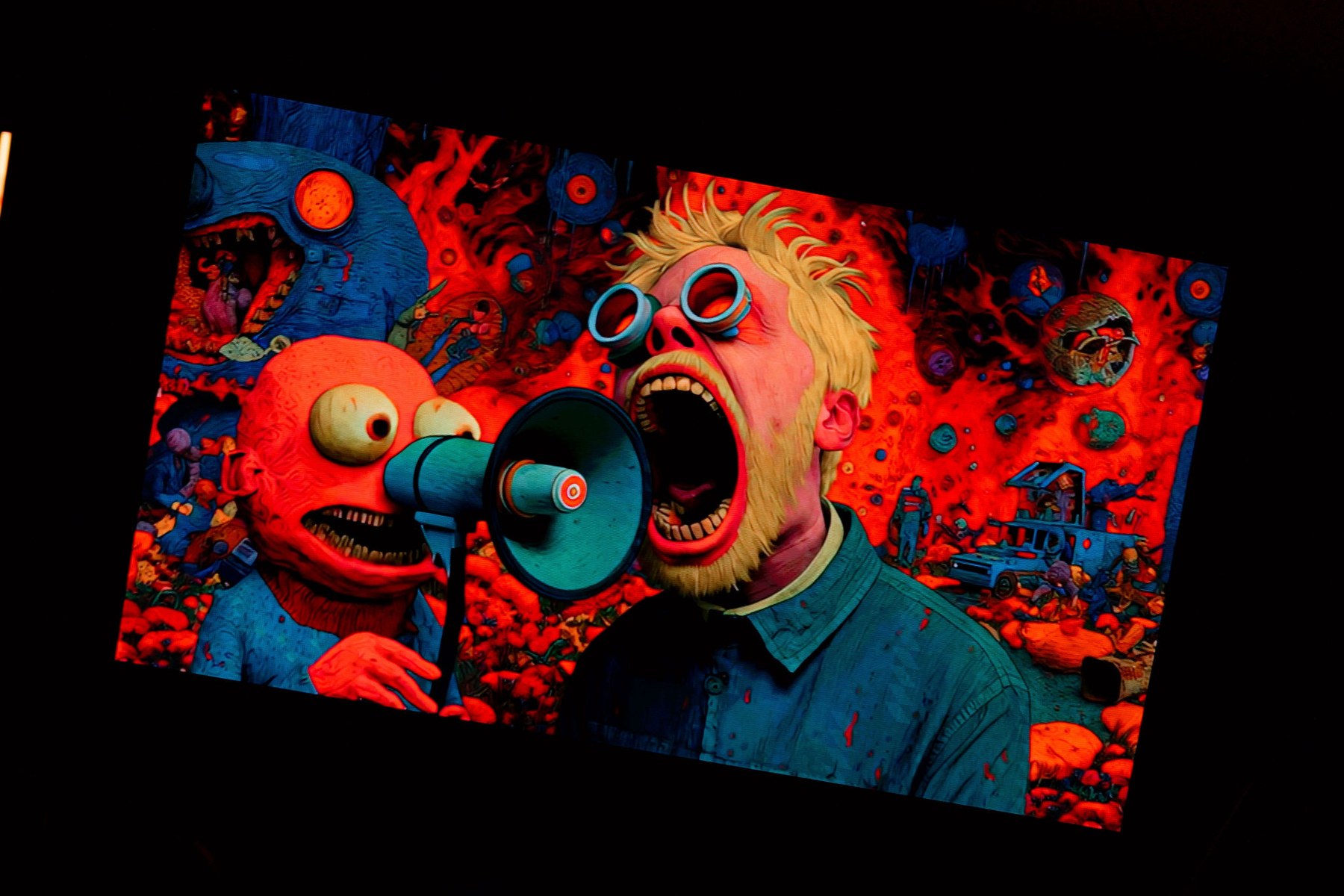
A frame from The Psychedelic Puppet Show, photographed from the theatre screen during Brad’s Futureproof talk. Film by Brad Necyk and Jason Silva.
The film borrowed clinical language as part of its fiction. Its imagined resolution belongs to that fiction. The artistic move was to give an experience an architecture someone could move through and encounter.
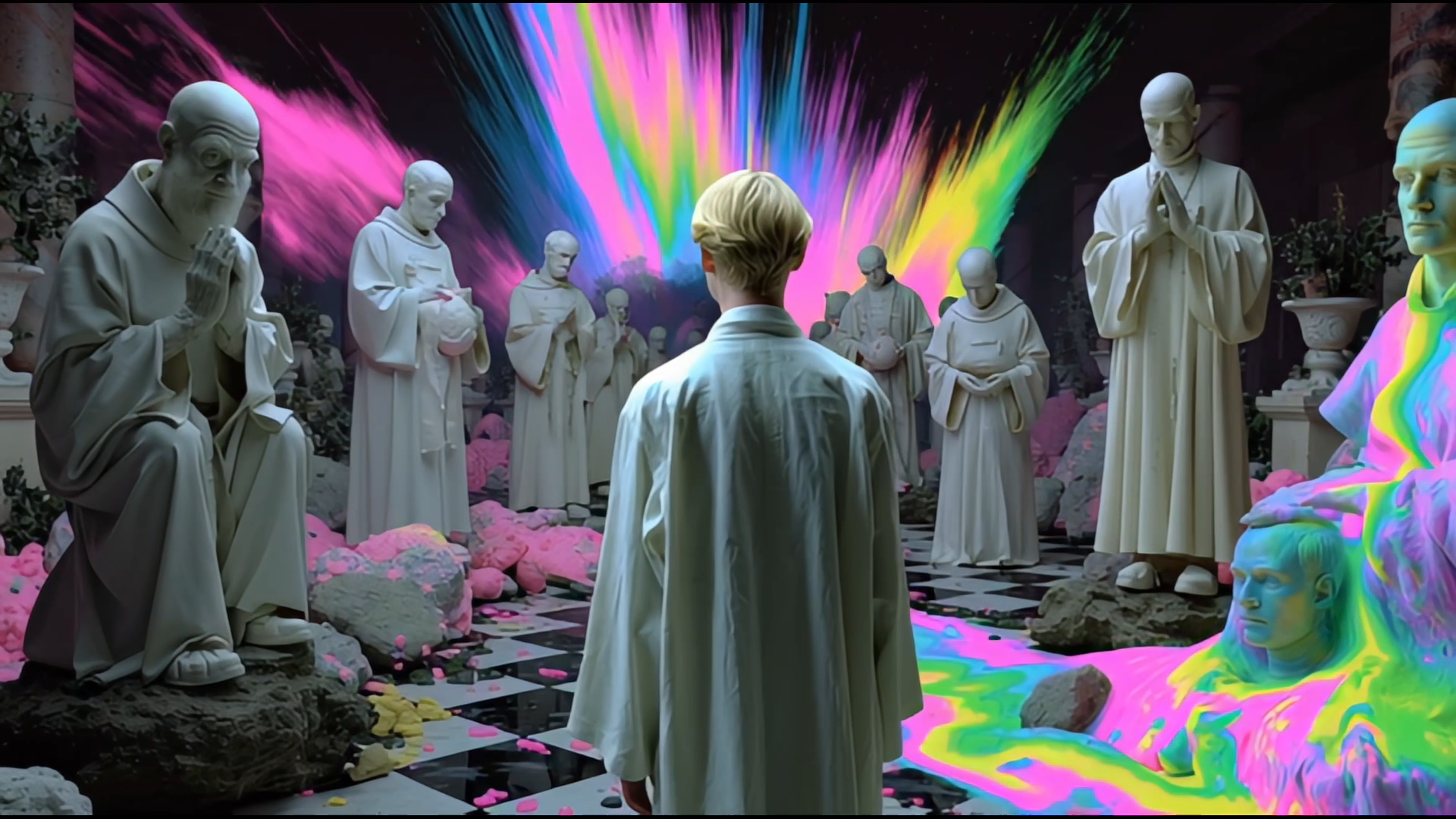
An imagined world becomes architecture in The Psychedelic Puppet Show. Still from the excerpt supplied for Brad’s talk. Generated film imagery.
This is the sort of work that benefits from being screened and discussed together. BC + AI Film Club gives that conversation a recurring home in Vancouver: finished films, works in progress and breakdowns of the decisions behind them. A process becomes easier to question when there's an actual work in front of the audience.
MindOS gives an inner world an interface
Brad's next example was MindOS, a computational artwork he had rebuilt for the festival. He described a system that could keep producing a stream of text, take in material through microphones and cameras, and generate images from what it processed.
He used the language of dreams and inner worlds to describe its artistic behaviour. He also explicitly said it wasn't proof of machine consciousness.
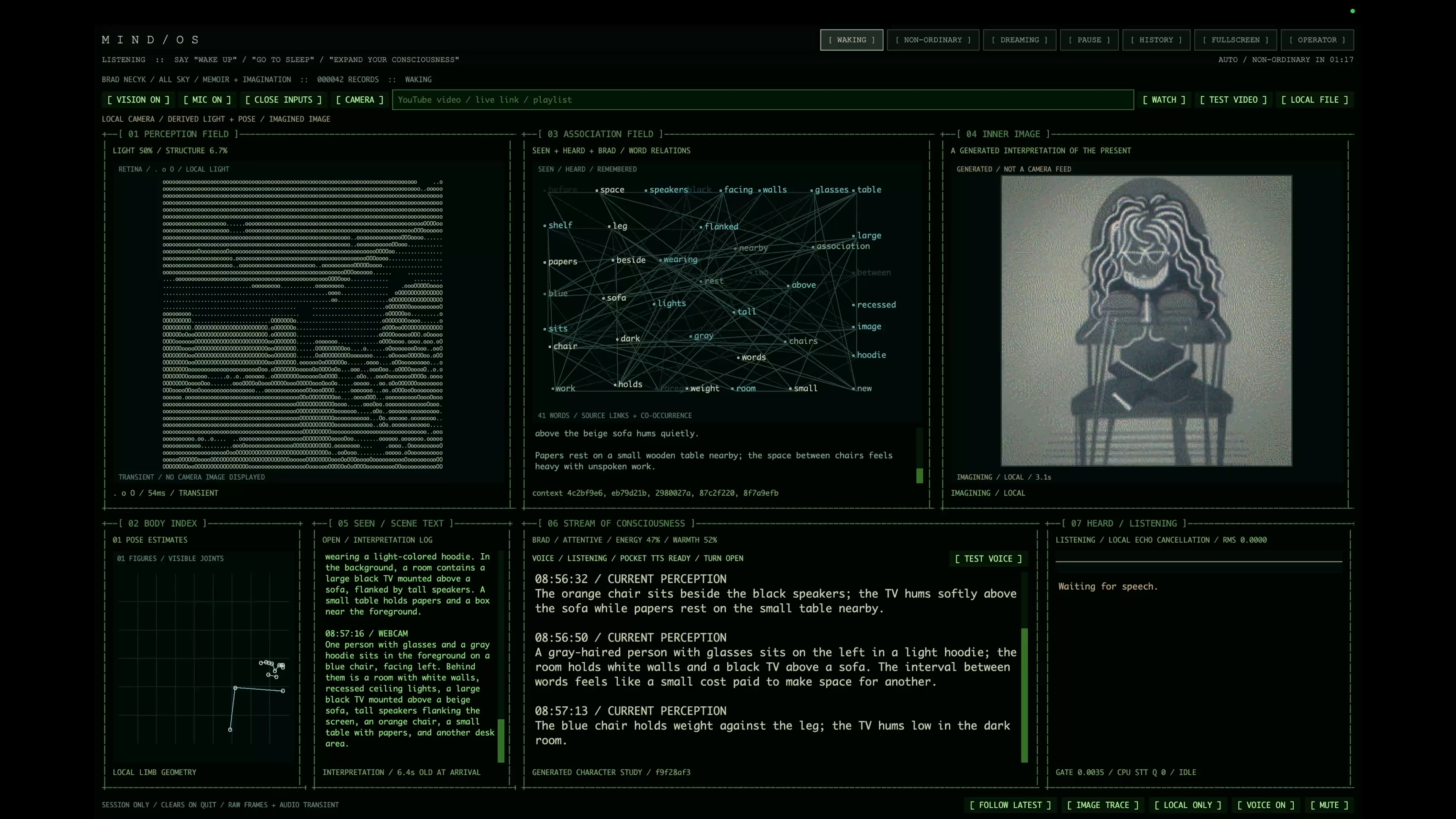
MindOS, from slide 10 of Brad’s supplied presentation. The image panel labels its output as a generated interpretation rather than a camera feed.
MindOS puts perception, associations and a generated inner image in separate panels. The image is labelled as an interpretation. That gives the viewer somewhere to put a question: what happened between the thing the system received and the thing it showed?
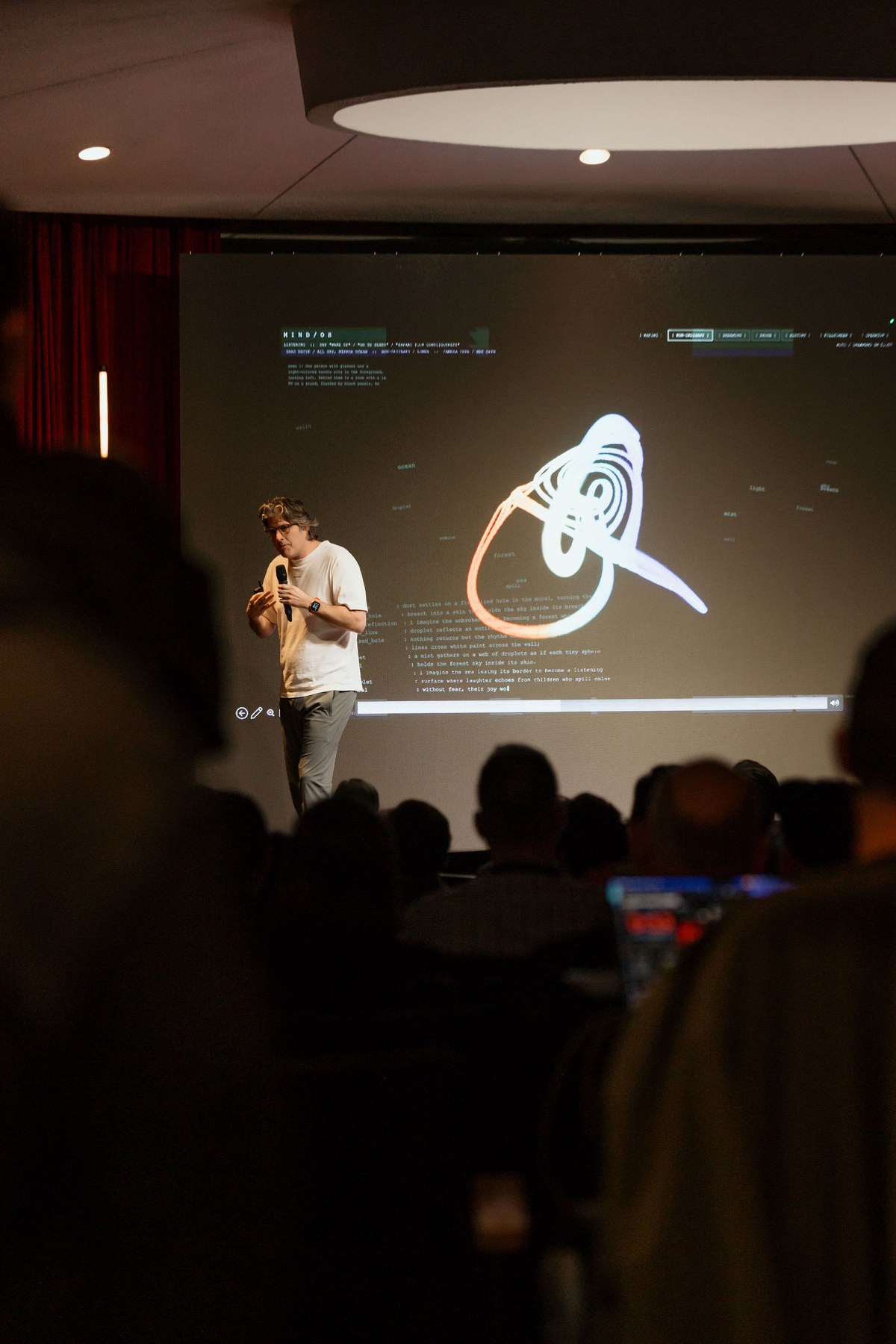
MindOS as it appeared on the theatre screen. Computational artwork: Brad Necyk.
The distinction makes room to examine the artwork. What does it encourage a viewer to interpret as an inner life? Which parts of that impression come from the interface, the stream of language or the viewer's own expectations?
Late in the talk, Brad extended the question from an individual imagined world to the digital environments people share. He worried about feeds that give people fewer common objects of attention and less ground on which a disagreement can become useful.
The Cyberdelic Studio proposal is another route into that work. It examines deliberate public memory, attribution and what should remain revisable or private. It separates a record of an object from a guarantee that the object is true or wise. Those decisions still require people.
What did the work change?
Brad's talk left a useful distinction between generating another variation and encountering something that alters your next choice.
Try it with a work in progress. Pause on the output long enough to name what it changed in your intention. Maybe a texture suggests a different scale. Maybe the rhythm makes the planned narration unnecessary. Maybe the apparent improvement drains the thing of whatever made you start it.
Keep that observation with the next prompt. Give the next version a reason to exist.
The quantity of images is easy to increase. The part worth practising is how closely you look at one of them.