Futureproof Festival / 2026
Naomi Klein and Catherine Warren: who gets to define “we”?
The conversations worth coming back to.
About Naomi Klein · About Catherine Warren
Source and citation
This is an authored, illustrated recap. The session date records when the talk took place. An edited transcript and festival recording have not been released on this page.
Kris Krüg. “Naomi Klein and Catherine Warren: who gets to define “we”?” Futureproof Festival 2026 proceedings, Volume 01. Session: 2026-10-30. Edition updated 2026-11-06. https://www.futureproof.website/2026/proceedings/sessions/naomi-klein-catherine-warren/
You can also select and copy the citation above.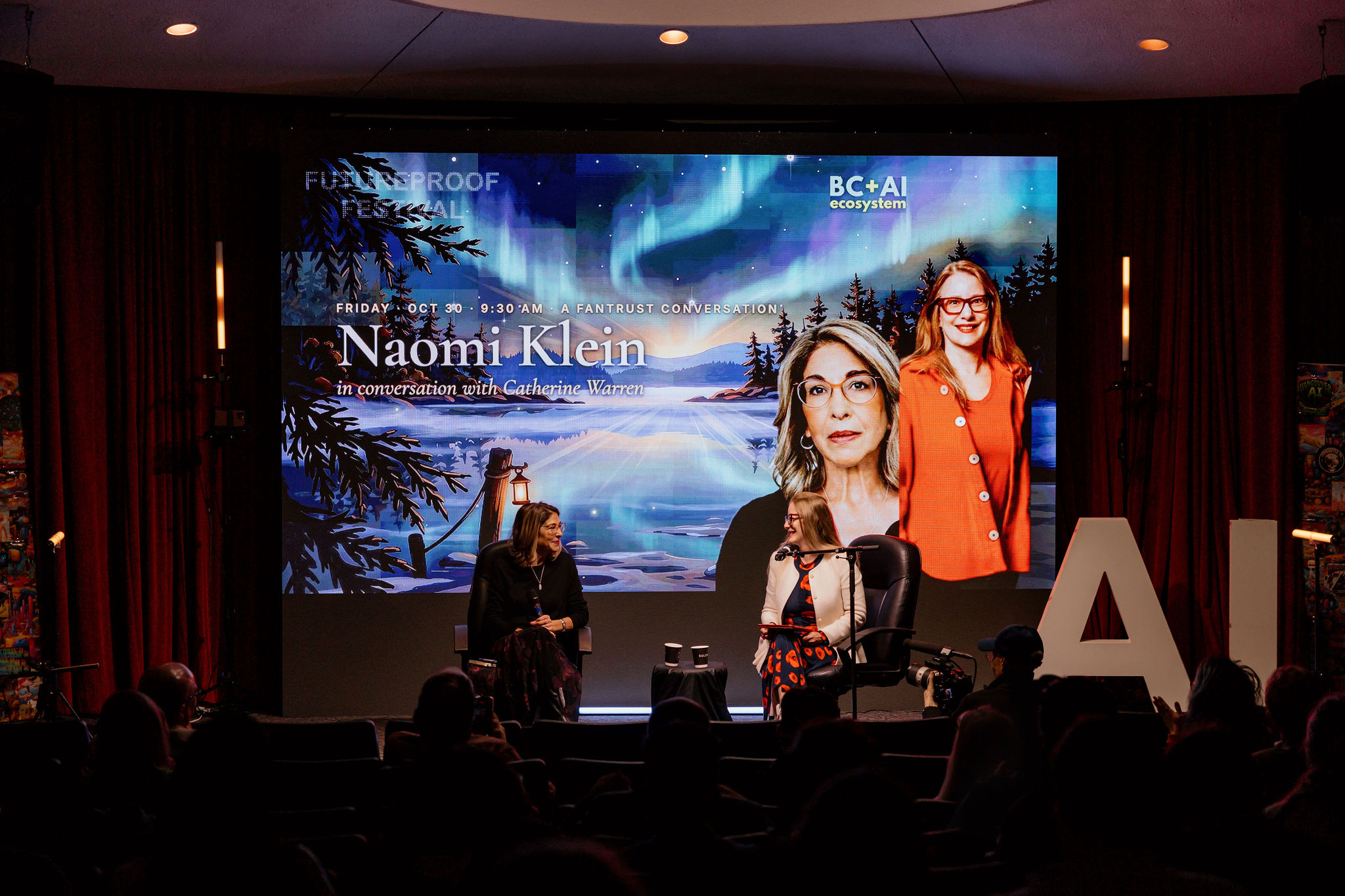
Naomi Klein and Catherine Warren at Futureproof Festival of AI, October 30, 2026, at Vancouver's H.R. MacMillan Space Centre.
Catherine Warren asked whether we could agree on the goals for AI. Climate, for instance. Something worth putting this machinery to work on.
Naomi Klein stopped at the pronoun.
Who is “we”?
The question interrupted a comfortable habit in technology conversations: moving straight from an impressive capability to a plan for everybody else. The people expected to live with that plan can disappear somewhere between the demo and the announcement.
At Futureproof Festival of AI, presented by BC + AI, Catherine kept bringing possibilities into the conversation. Naomi kept asking who had the power to decide which possibilities would get built.
Useful friction. Neither question gets to eat the other.
The escape story has a politics
Naomi developed an argument from her book with Astra Taylor, End Times Fascism and the Fight for the Living World. They describe a politics in which powerful people anticipate catastrophe while preparing protected futures for themselves. The promise of escape, through a fortress or a technological elsewhere, replaces responsibility for a shared world.
She brought that framework to the corporate race around AI: extraordinary promises about human flourishing, extraordinary warnings about destruction, and enormous decision-making power concentrated among the people making both claims.
She explicitly distinguished that critique from a verdict on every application of AI. Her target was the political and economic arrangement carrying the technology into everyday life.
An interesting use doesn't answer a governance question. A governance failure doesn't make every use uninteresting. Holding those distinctions takes more work than choosing a team and buying the hoodie.
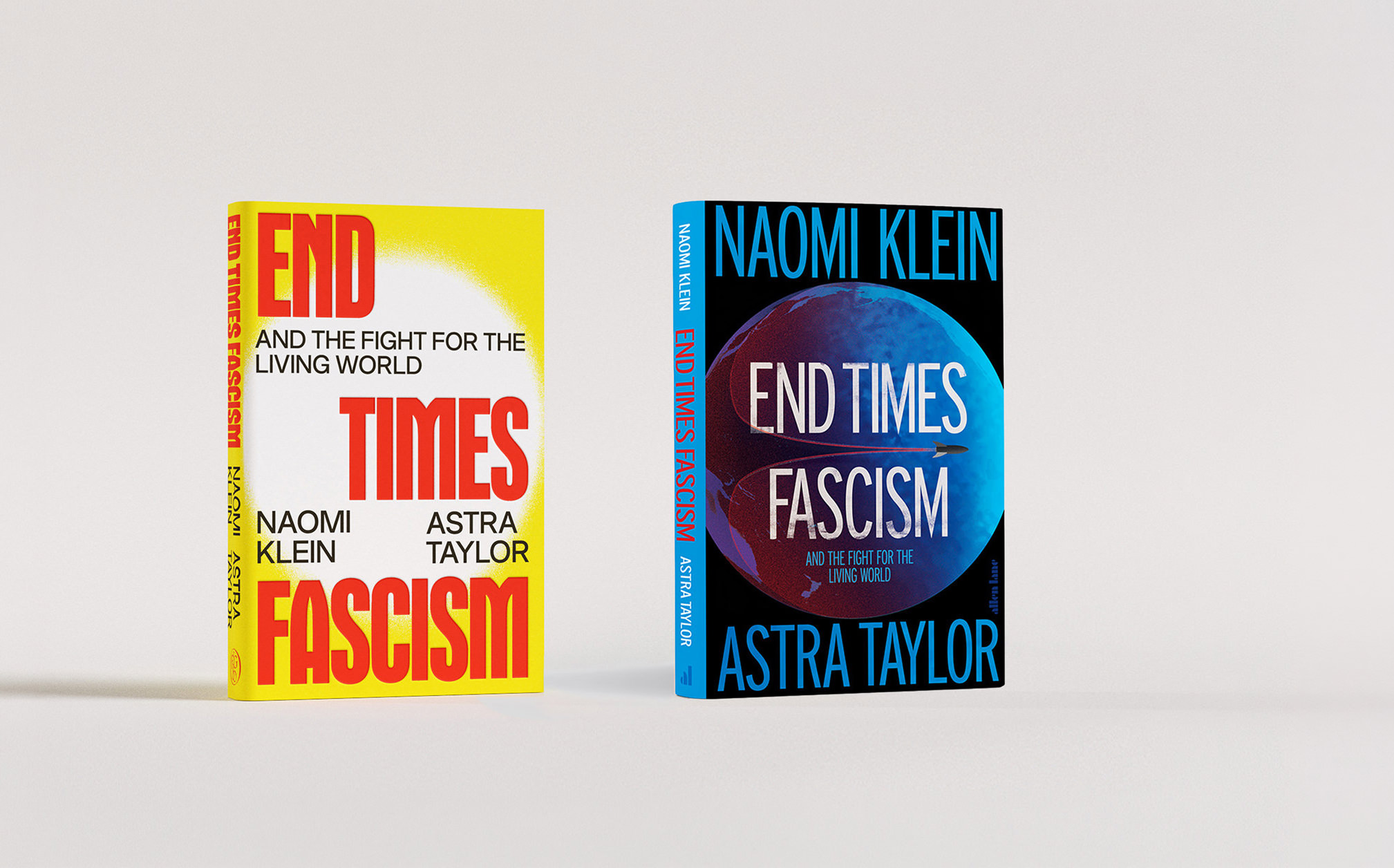
Book context: the two covers shown on Naomi Klein's official book page. Source: Naomi Klein / Klein Lewis Productions. This is a published book image, not a festival presentation slide.
The authors also made a companion short film explaining their argument. It offers a separate route into the book for readers who want to follow the critique beyond this conversation.
A digital double doesn't need your permission to sound convincing
Naomi recalled an AI-made meme that paired her face with words she had never said. She agreed with its sentiment. That made the problem stranger, rather than making it disappear.
Friends passed it along. She tried to correct the record. The appealing version had its own momentum.
Here was a small, concrete version of the control problem. The statement could sound like her, fit someone's understanding of her politics and still be falsely attributed. Agreement with a message doesn't make it your sentence.
Catherine's questions about digital doubles opened into a broader argument about turning ourselves into brands. Naomi connected that pressure to the practice of breaking people and their work into tasks that can be measured, replicated and sold.
For a writer, photographer or organizer, the difficulty isn't simply another image arriving in a feed. It's losing the ability to tell people what you actually made, meant or agreed to.
That's an agency problem with a very ordinary interface: somebody forwards you a picture and says, “Love this.”
The cloud has neighbours
Catherine brought the conversation down to land, electricity and water. Who carries the physical costs? Who collects the returns?
Naomi challenged the old story that digital life somehow floats above material life. Compute happens somewhere. Decisions about its infrastructure land on people who may have had little say in the demand driving it.
In Sovereign AI for Whom?, I ask a related question about the bargain surrounding Canadian compute: what can the people carrying the load actually influence? A national label leaves that question wide open.
Our BC + AI municipal issues briefing takes the same concern into specific public systems and infrastructure decisions. It asks what the record establishes, what remains unknown and what a resident can challenge. Those are useful habits after election day, too.
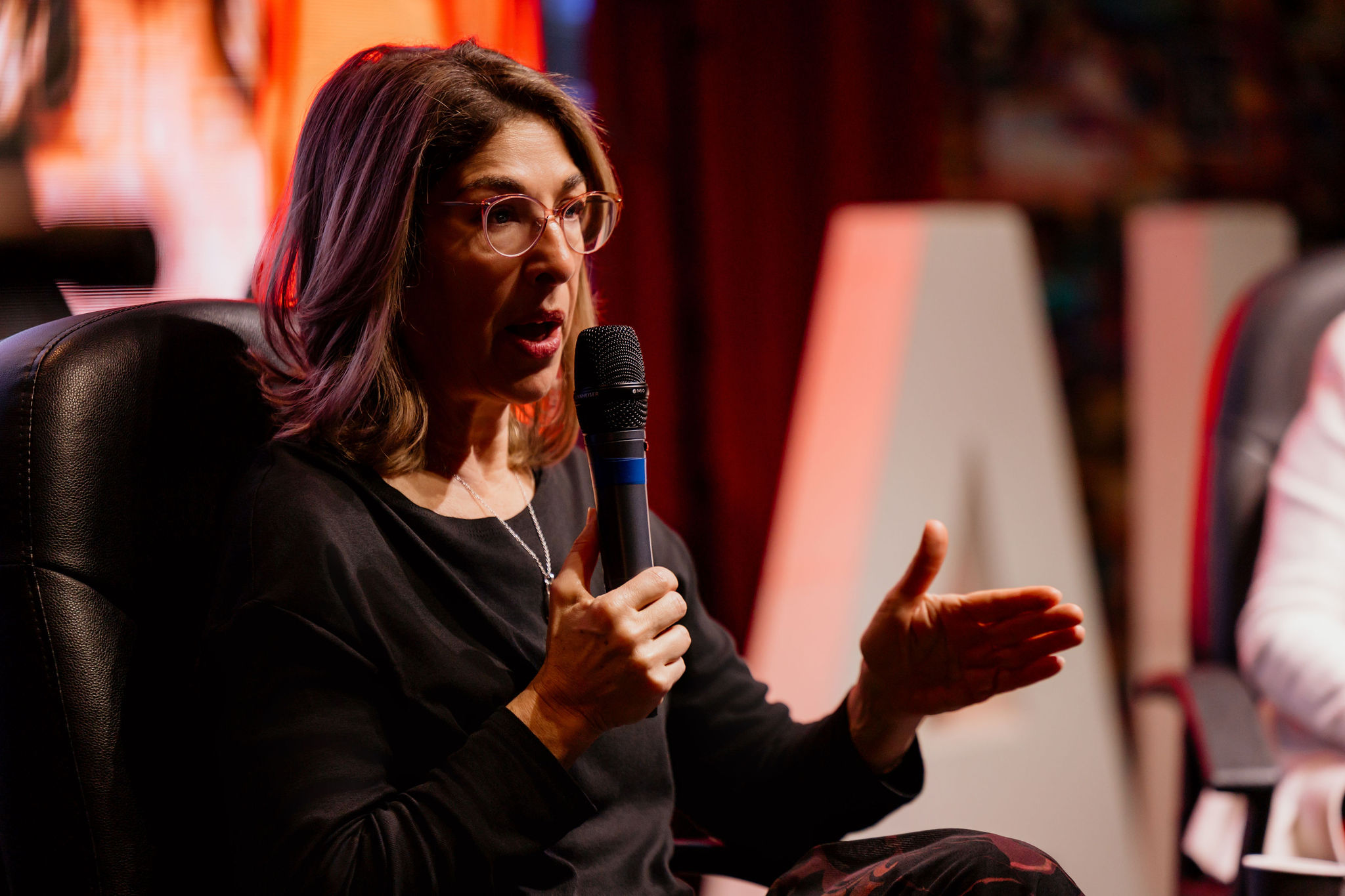
Naomi during the Friday conversation.
When Catherine raised inventive uses by people in the Global South, Naomi resisted treating those people as a single constituency with a single view. Someone can make a tool useful under difficult conditions without gaining control over the infrastructure behind it.
Resourcefulness is real. So is dependence. Celebrating the first shouldn't quietly excuse the second.
What gets lost when the result arrives instantly?
The conversation became especially pointed around creative work. Naomi described the difficult middle of writing: working through frustration, rearranging ideas, earning a judgment that wasn't available when the task began.
If the finished object arrives immediately, what happens to the person who would have developed through making it?
That's a serious question for creative education. It asks us to name which part of a process is drudgery and which part is how somebody learns to see.
Catherine asked whether AI art could move her. Naomi said it could, while also saying that discovering how it had been made would change her response. For her, art opens a relationship with another person's experience.
That was a personal account of what she seeks in art. It didn't establish a universal test for every artist or viewer. It did give the practitioners at the festival something substantial to answer: what human experience is your process allowing another person to encounter?
Keep the disagreement in the conversation
In the Q&A, Alexandra Samuel challenged the discussion of individual agency. People use these tools inside institutions that already fail them. Access to help can matter before the larger system gets repaired.
Naomi's response put the comparison itself under pressure. Are we comparing a tool with properly resourced human relationships, or with services that have already been allowed to become inadequate?
There is a real disagreement here about where to begin. Immediate usefulness matters to a person trying to get through the day. It also matters who benefits when that immediate need becomes the reason to leave the underlying failure in place.
On copyright and the commons, Naomi acknowledged that she wasn't offering a settled legal solution. Turning every aspect of ourselves into property wasn't an adequate answer either.
No tidy bow. Some questions deserve a little air around them.
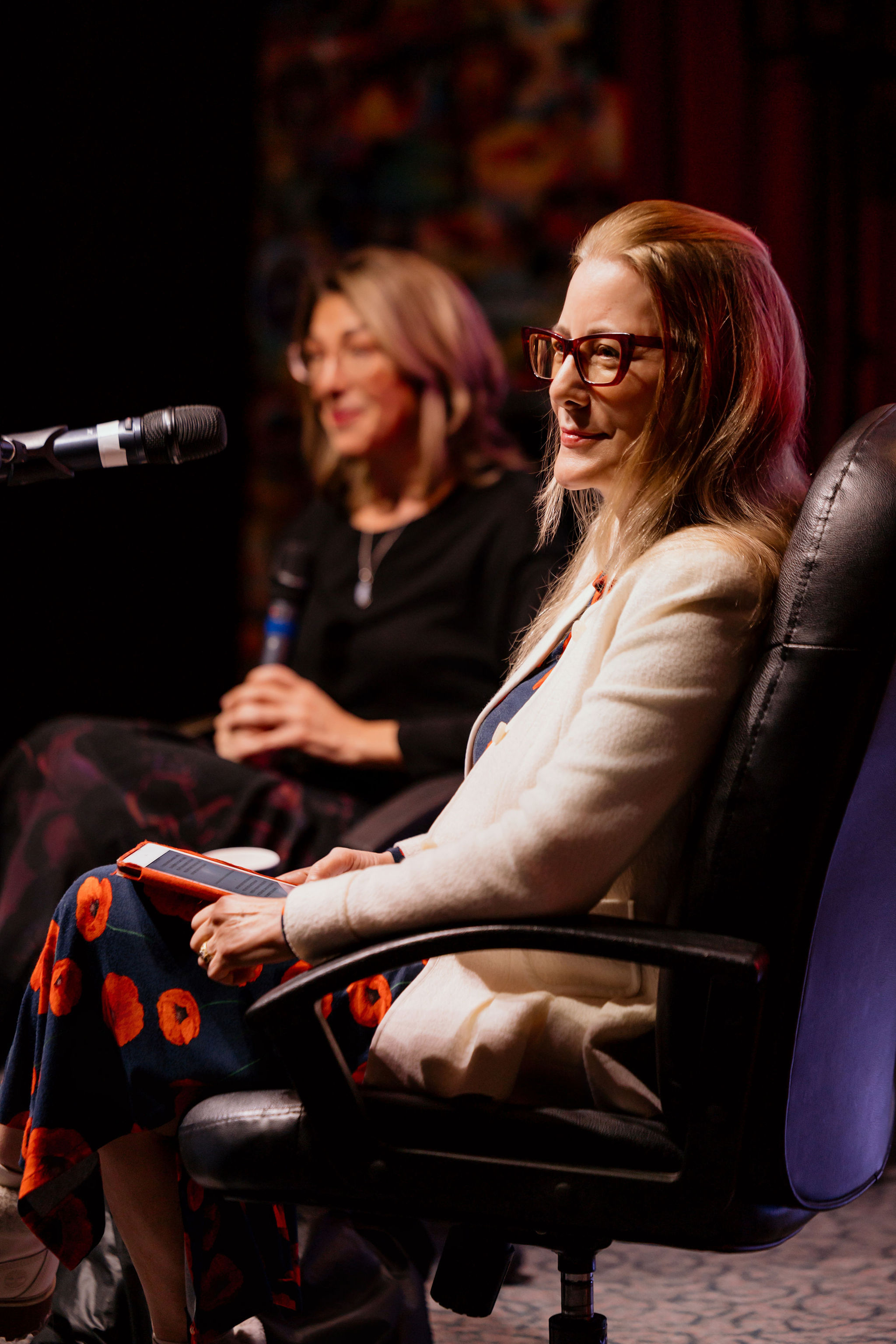
Catherine's questions kept returning to agency, possible uses and the choices available to people now.
Nobody has to pass a purity test to ask who has power
Naomi made a point late in the conversation that is easy to lose inside a polarized argument: people can use AI and still criticize the systems producing it. Consumer purity tests don't do the work of organizing political power.
Her alternative to the escape story was rooted in place. Learn the history of where you are. Build relationships that can carry responsibility. Tell stories in which people survive by looking after one another, rather than by purchasing a private exit.
She also pointed toward the AI Now Institute as a practical resource. Its North Star data-centre toolkit gives readers a way into infrastructure questions and organizing, with a US policy focus. For Vancouver, it is a source of questions to investigate locally, rather than a set of Canadian legal answers.
Bring the pronoun back into the next AI proposal. Who was invited to define the goal? Who can change it? Who has to live with the result?
“We” is a lovely word. Make it earn its place.