Futureproof Festival / 2026
Ana Serrano and Prem Gill: build the capacity, keep the judgment
The conversations worth coming back to.
About Ana Serrano · About Prem Gill
Source and citation
This is an authored, illustrated recap. The session date records when the talk took place. An edited transcript and festival recording have not been released on this page.
Kris Krüg. “Ana Serrano and Prem Gill: build the capacity, keep the judgment” Futureproof Festival 2026 proceedings, Volume 01. Session: 2026-10-30. Edition updated 2026-11-06. https://www.futureproof.website/2026/proceedings/sessions/ana-serrano-prem-gill/
You can also select and copy the citation above.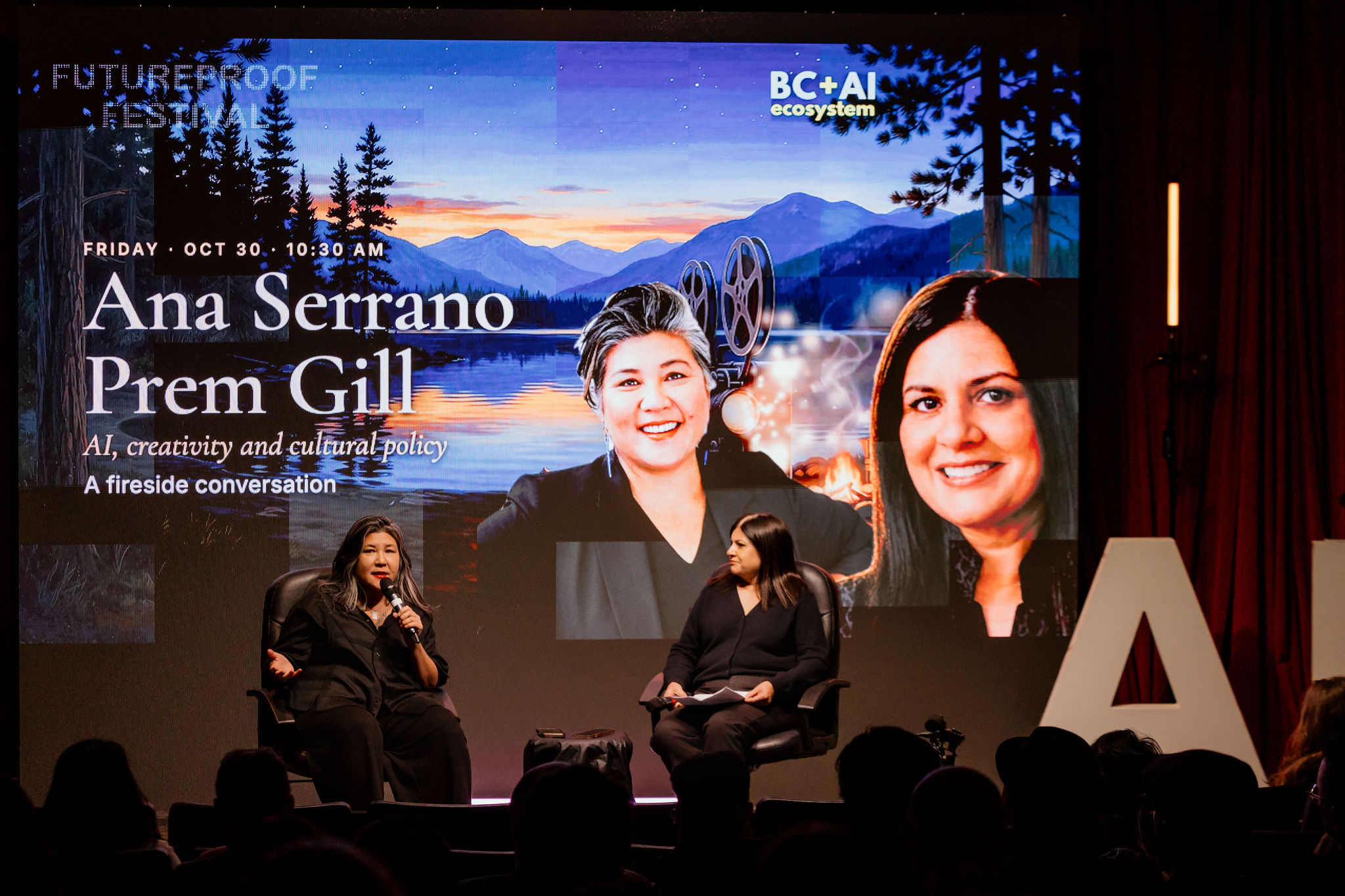
Ana Serrano and Prem Gill at Futureproof Festival of AI, October 30, 2026.
Imagine a small arts organization trying to figure out a grant application. Four people doing the work of considerably more than four people. A project worth making. A set of criteria written in a dialect that apparently requires its own postgraduate degree.
Ana Serrano proposed a tool that could help that organization understand what the funder was asking for, see patterns and develop its capacity to apply.
Prem Gill pressed on the uncomfortable part: if everybody gets help from the same machinery, do the applications start sounding the same?
There it was. A useful public tool can still train people to fit a template. Helping somebody get through a process and helping them become more capable are related ambitions. They deserve separate attention.
At Futureproof Festival of AI, presented by BC + AI at Vancouver's H.R. MacMillan Space Centre, Ana and Prem brought that tension into cultural policy, creative education and the public infrastructure Canada might choose to build.
Start with a problem somebody actually has
Ana, president and vice-chancellor of OCAD University, described work around public AI with the university's Cultural Policy Hub and collaborators across arts, research and civic technology. Prem, a senior policy fellow at OCAD and former Creative BC CEO, kept asking how those institutional ambitions would reach people making a living in culture.
Ana's proposal was deliberately practical: assemble enough of a public AI stack to solve particular problems. Some components might be open source. Work might be distributed across organizations. A useful arrangement didn't require one institution to own every layer.
In Who Will Build AI for the Public?, Ana and Jake Hirsch-Allen make the wider case for shared infrastructure and international collaboration. At the festival, the discussion gave that argument a smaller address: an arts organization with limited staff and an administrative process consuming time it doesn't have.
The coalition work was still developing. Ana described experiments, interested collaborators and unresolved funding. She wasn't unveiling a finished national grant service.
That matters. An ambition becomes more useful when people can see which part exists and which part still needs building.
Public infrastructure needs a public who can use it
The grant example wasn't a pitch to generate everybody's artistic voice. Ana wanted to help organizations understand criteria and develop stronger projects, rather than simply produce a smooth application on demand.
Prem's sameness question belongs inside the design brief. If a system repeatedly suggests the safest language and most recognizable project, it could make an application more legible while making the work less distinctive.
A public tool should be able to explain the criteria it is working with. The person using it should be able to disagree, revise and keep their own intention intact. Otherwise we have built a very efficient etiquette tutor for a system nobody was allowed to question.
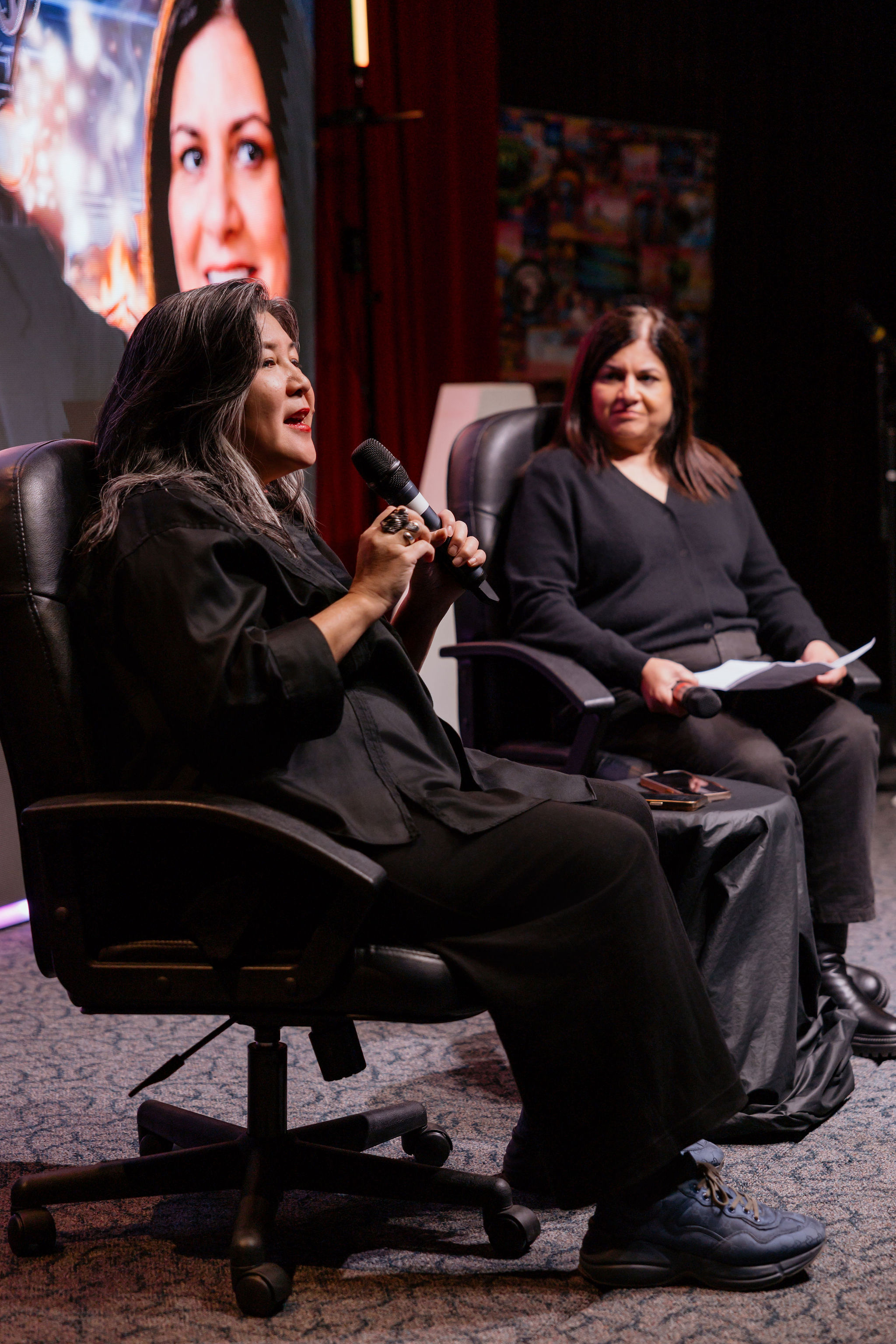
The conversation moved between institutional infrastructure and the practical constraints of creative organizations.
Ana also discussed the data that such work might need. Permission, access and the treatment of information are part of building the service. Describing a possible local model or anonymized dataset doesn't establish that the relevant data have been cleared, or that a secure service has already been delivered.
For the organization using it, the test is concrete. Can you understand the answer? Can you see which requirement it refers to? Can you correct its reading of your project without having to adopt its voice?
Discoverability is an infrastructure problem, too
An audience question brought the discussion to performing arts and discoverability. If people can't find an event, a brilliant generation tool won't fill the seats.
Ana pointed toward work involving Culture Creates. The broader Artsdata knowledge graph offers a concrete example of shared cultural information: organizations contribute information about arts activity, and other services can use it.
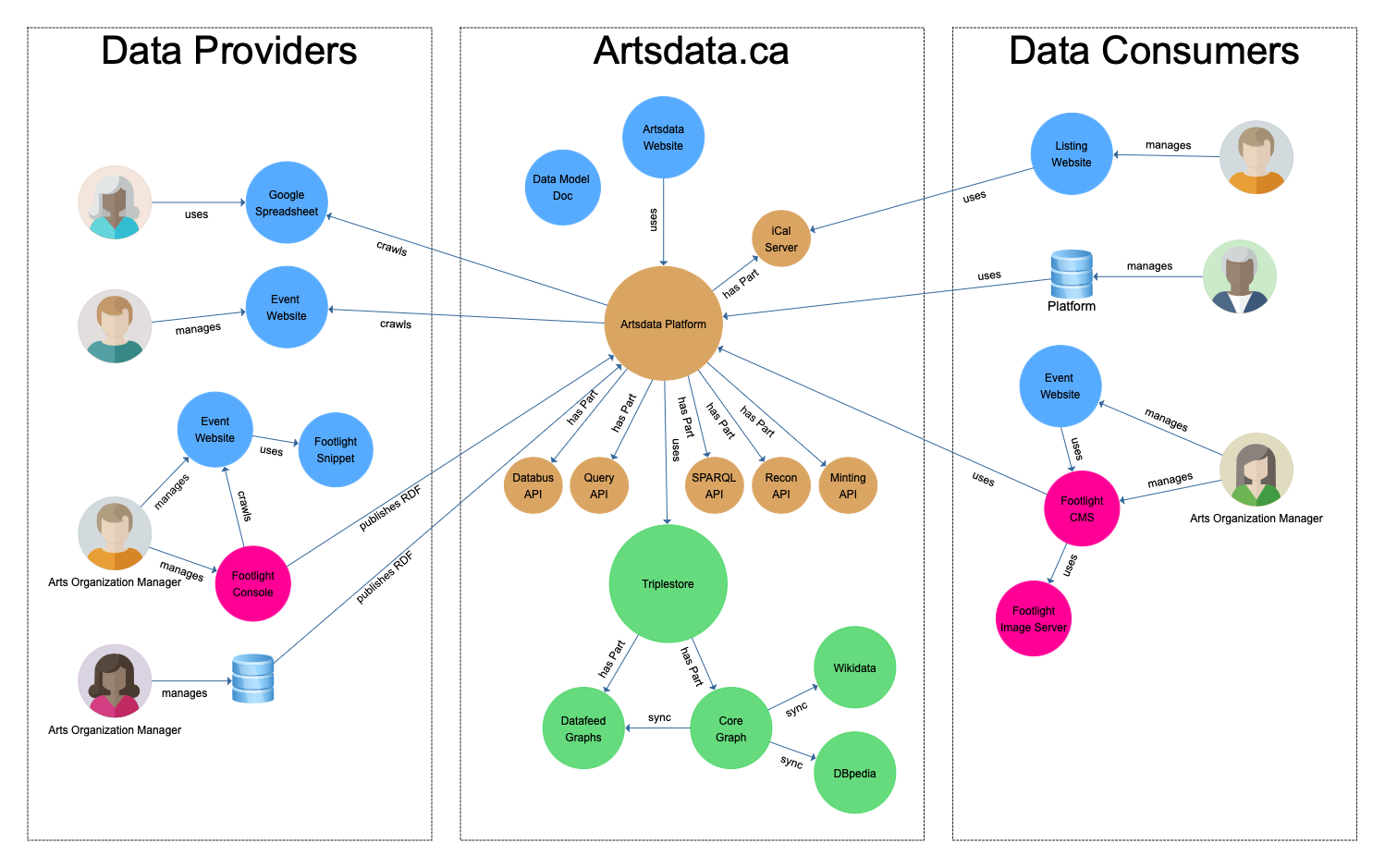
Added project context: the original Artsdata data-flow architecture, published by Artsdata. It shows an existing cultural-data system, not a festival slide or the proposed public AI grant tool. Open the full-size image to read the component labels.
The diagram makes a less glamorous kind of technical work visible. Information has to get from the people producing it to the places where audiences look. It needs structure and maintenance along the way.
This is a useful corrective to the habit of treating “AI for culture” as synonymous with making more images. Sometimes the job is helping people find the performance that already exists.
Students deserve more than instructions to catch up
Prem raised the fear creative students carry into this discussion. Ana acknowledged it. She separated several questions that often get thrown into one anxious pile: the legal treatment of creative work, how to teach critical agency, and the economic conditions graduates will enter.
A classroom exercise can't settle the labour market. Ignoring the tools won't make the conditions outside the classroom disappear either.
Ana recalled a design-class example from LASALLE in Singapore. Students had to show their prompting and iterations, then defend the originality of their choices. Producing an image was the beginning of the discussion, not the entire assessment.
Her example was a teaching account, rather than evidence that one method solves creative education. But the change in emphasis is useful: ask somebody to show how they reached a decision and what they rejected along the way.
Our AI Upgrade for Creative Professionals works through projects and practice. The connection is the demand to make something, examine it and keep the maker's judgment active. Watching a tool demonstration is a thin substitute for learning to decide.
In my founders' workflow session, the brief and working context came before the output. That's the habit worth carrying into an arts organization: make the purpose inspectable before asking a system to help execute it.
Count what people can decide
An audience member asked how to encourage agency and how to measure adoption. Ana described work with the Dais and the Cultural Policy Hub on measuring adoption.
Good. “More people used the tool” tells us very little about how much control those people gained.
For the grant example, an evaluation could ask whether somebody can better explain the criteria, identify a poor suggestion and decide what to do next. Those are questions this discussion suggests testing, rather than results the session established.
The difference matters when an institution reports success. A usage dashboard can look excellent while its users become more dependent on instructions they can't examine.
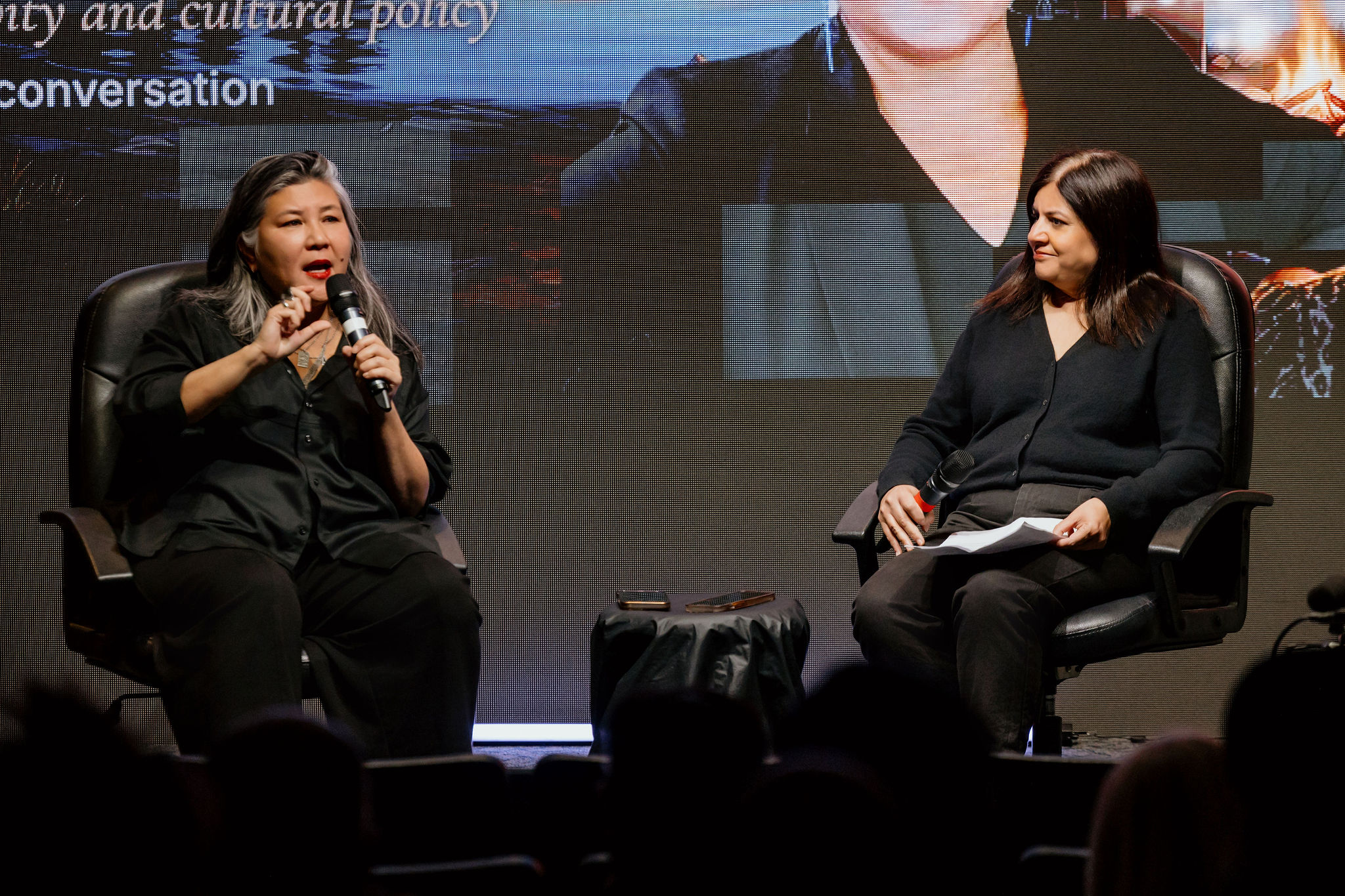
Ana and Prem during the Friday discussion on creativity and cultural policy.
Leave the jury able to talk
The final funding question returned to the prospect of machines writing applications for machines to read. Prem defended the conversation among peer assessors: people discussing artistic intent, weighing differences and exercising judgment together.
For a concrete Canadian reference, the Canada Council's current AI guidance says it does not use AI to assess applications or make funding recommendations and decisions. It also prohibits peer assessors from using AI in assessment. Applicants remain responsible for the accuracy and originality of their submissions when using permitted assistance.
That policy is specific to the Council. The wider design question remains useful across institutions: where can a tool reduce administrative strain, and where does the conversation among people do essential work?
Ana and Prem left us with a public AI brief worth getting our hands dirty on. Pick a real constraint. Build with the people carrying it. Make the tool's reasoning and limits available to challenge. Then ask whether somebody can do more, and decide more, than they could before.
If all we've achieved is a better-sounding application, we should keep working.