Futureproof Festival / 2026
Sara Blenkhorn: stop making good people start from scratch
The conversations worth coming back to.
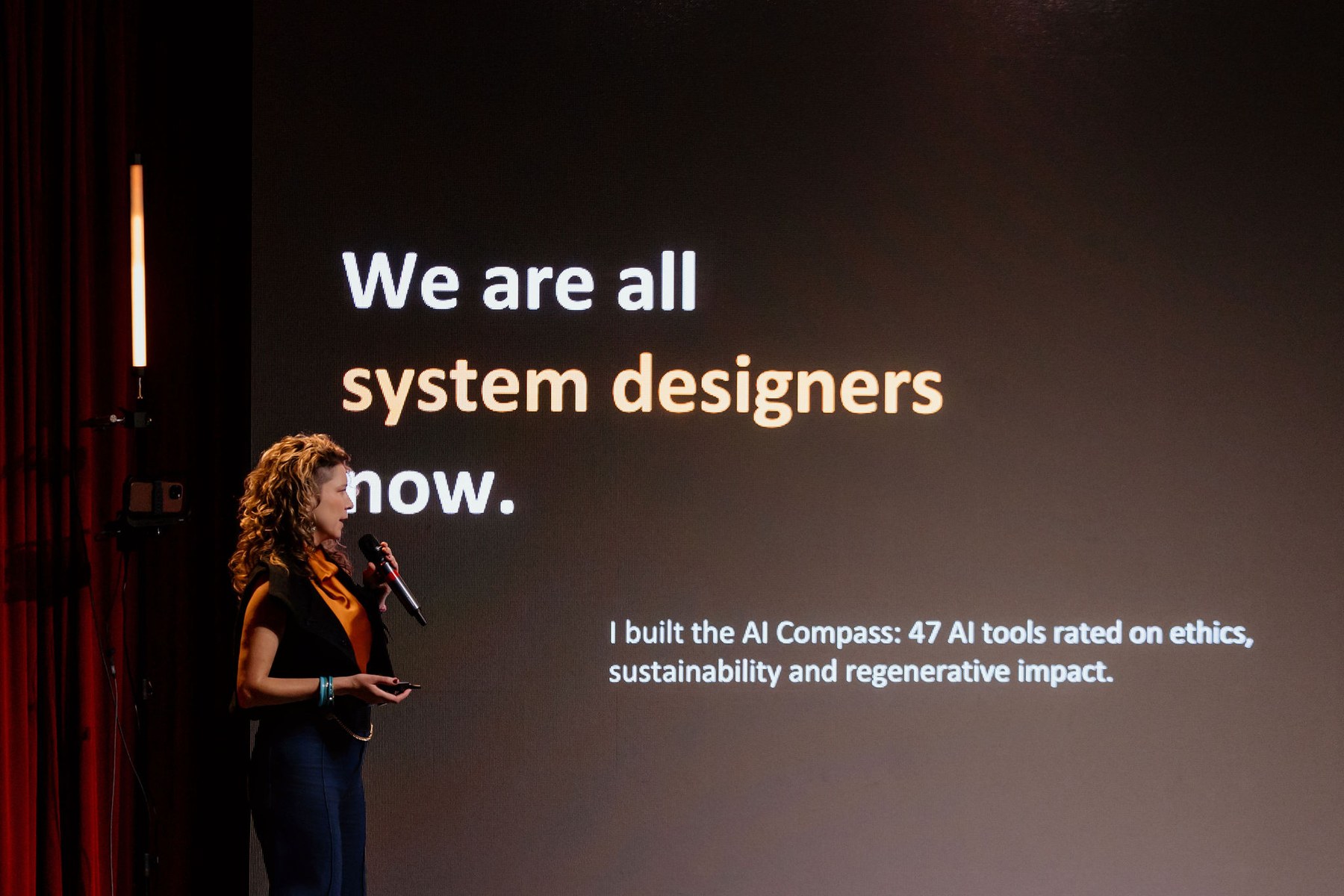
Sara Blenkhorn's systems-change presentation at Futureproof Festival of AI, October 30, 2026.
Sara Blenkhorn asked us to place civilization on a scale from Fyre Festival to Marie Kondo.
You probably don't need a spreadsheet to make that call.
Her October 30 talk at Futureproof Festival of AI, at Vancouver's H.R. MacMillan Space Centre, got underneath the joke. Plenty of people are working hard on problems that matter. Why does so much of that effort fail to add up?
Sara, Director of Innovation at the Buckminster Fuller Institute, came at the question through a lake in Mexico. As a teenager, she watched an organization bring fishermen, farmers and a water-treatment operation into the same conversation. In her account, they began to see how their separate decisions affected the same body of water. Changes upstream became part of bringing the lake back to life.
The lake gave them something a mission statement couldn't: a shared system they had to understand together.
Follow the problem below the waterline
Sara used an iceberg to distinguish the event we notice from the structures and assumptions producing it. The visible emergency gets our attention. Underneath it sit decisions about how money moves, which work counts and who gets to set the goal.
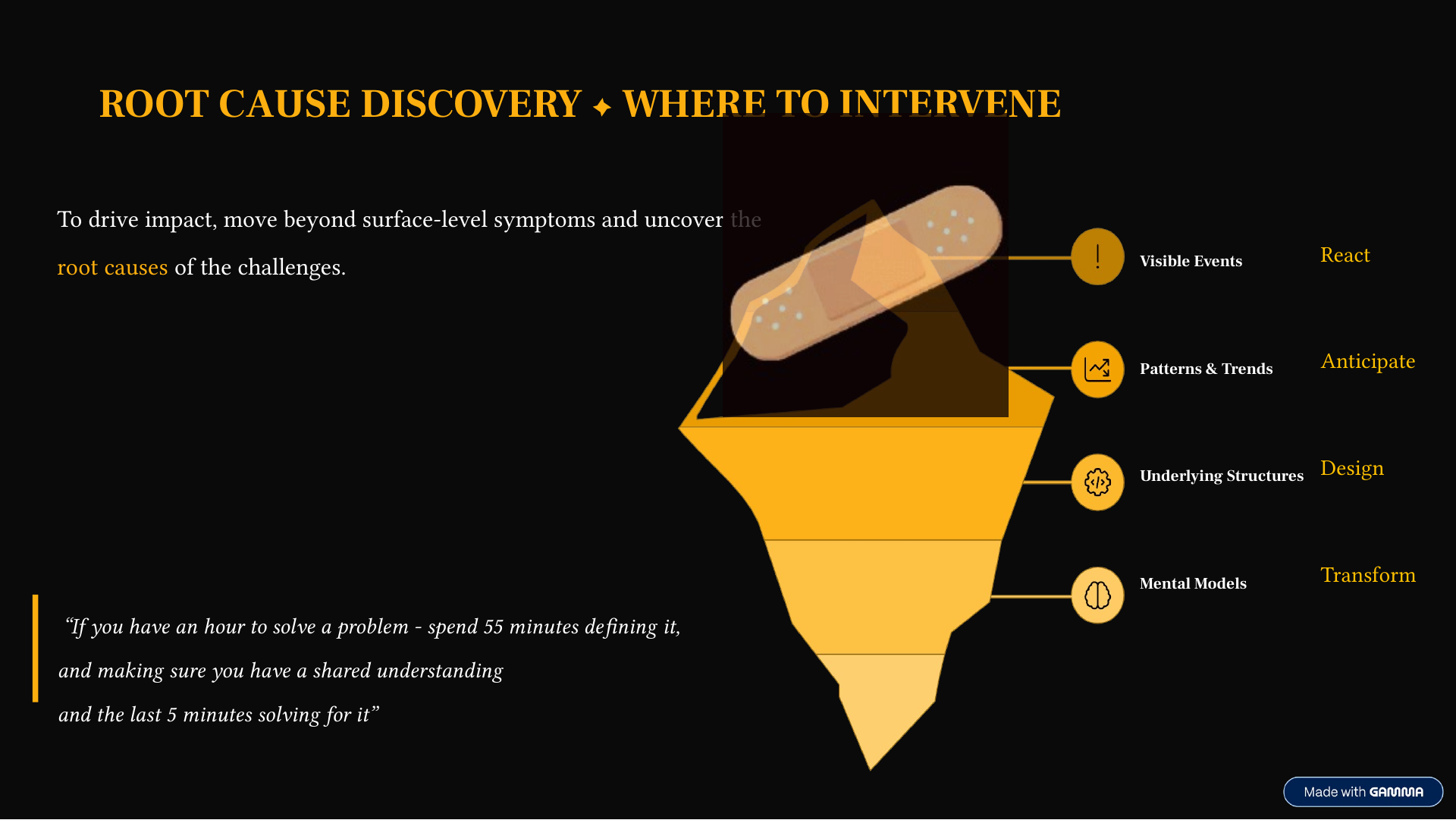
The iceberg in Sara's submitted presentation, slide 6; also Friday show deck page 20. Presentation: Sara Blenkhorn / Buckminster Fuller Institute.
She pointed to Donella Meadows's writing on places to intervene in a system. Change a rule and different actions become possible. Change the goal and people may stop optimizing the thing that was causing the damage.
That's an uncomfortable instruction for anyone who gets paid to deliver another project. We can be very efficient at treating a symptom. We can build a lovely dashboard showing how busy we are treating it.
Then the next team arrives and starts the same discovery process from scratch.
Sara called attention to that duplication. The knowledge exists somewhere. Somebody has already tried an approach. Another group has the relationship that could make it work. Their separate reporting systems don't necessarily help them find one another.
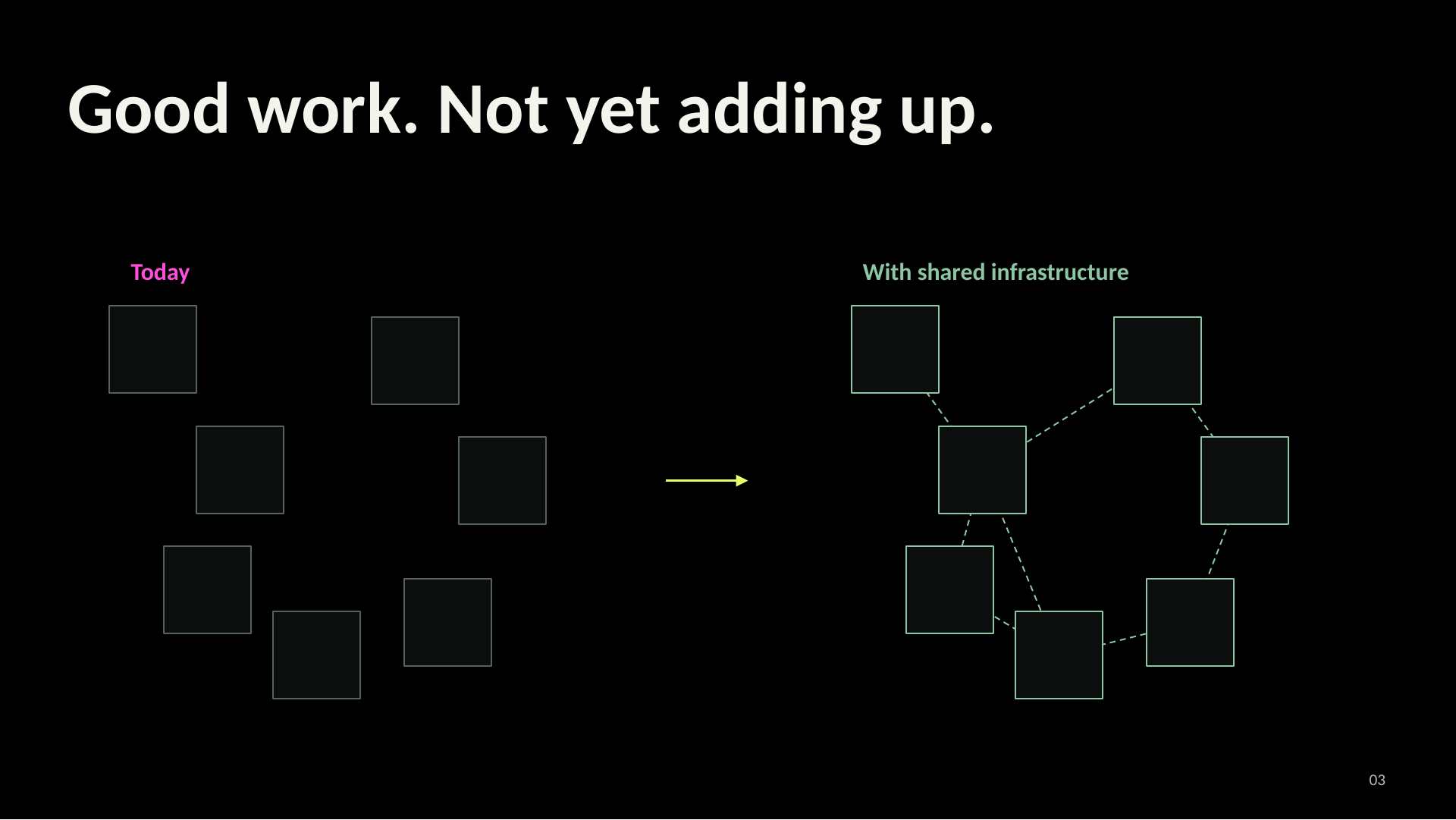
Good work, not yet adding up. Sara's submitted slide 13, rendered PDF page 12; Friday show deck page 27. Presentation: Sara Blenkhorn / BFI.
Coordination takes work too. Someone has to make the map, maintain the introductions and notice when the original plan stops fitting the situation. If nobody pays for that work, good intentions get to keep paying the same stupid tax.
Rating the tools doesn't decide what we build
Sara described making an AI comparison tool, looking at questions such as governance, water and energy. The exercise left her asking a larger question about the choices available to compare.
Which arrangements have we already accepted? Who gets to propose a different one?
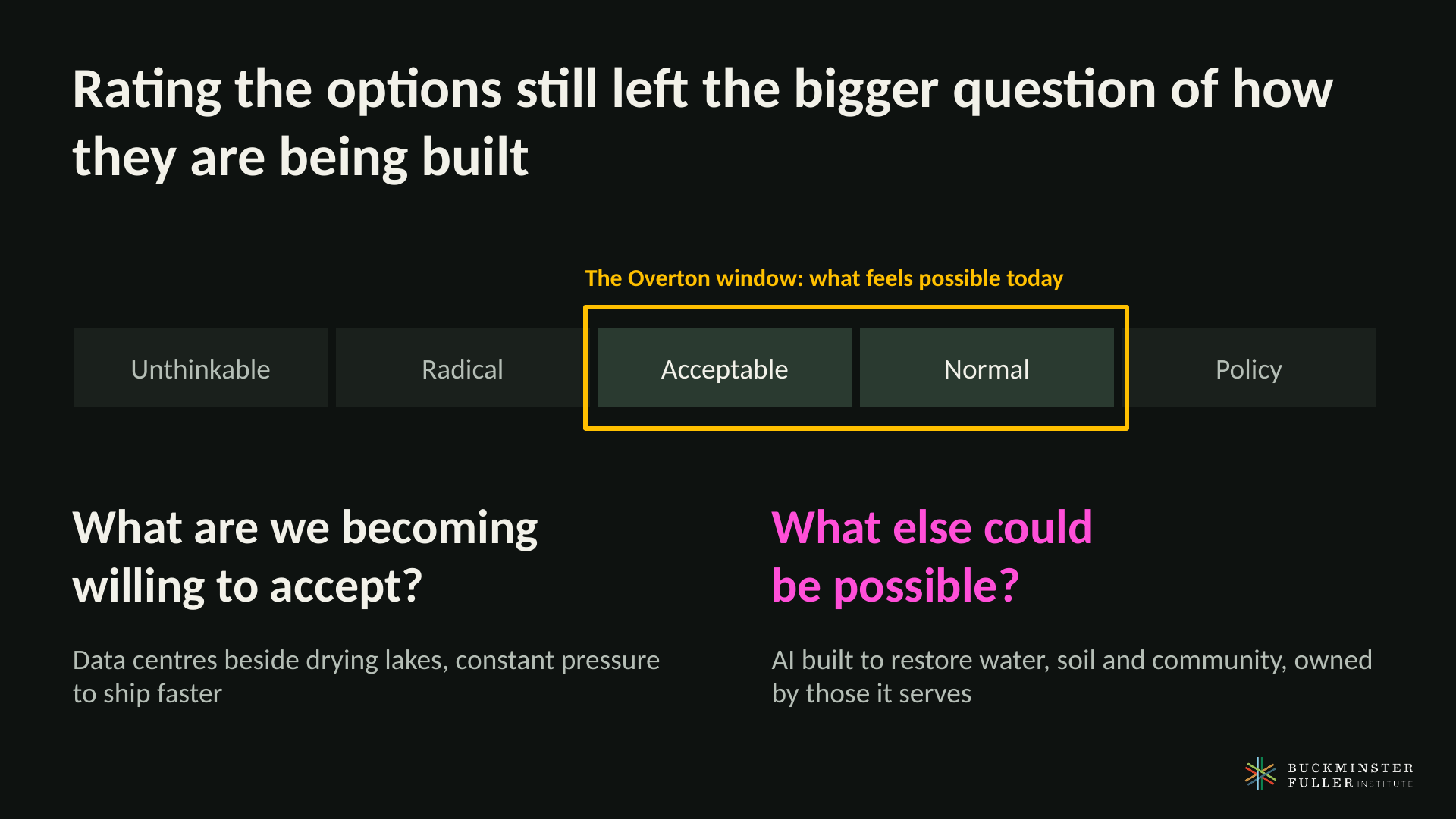
The question after comparing tools: how are they being built? Sara's submitted slide 14, rendered PDF page 13; Friday show deck page 29. Presentation: Sara Blenkhorn / BFI.
A ranking can help us choose among products. It cannot make the decision about what those products ought to be for. That still needs people willing to argue about ownership, purpose and the effects on the place where the technology operates.
Her earlier work with the Textile Lab for Circularity gives that coordinating question a local history. The lab connects people across BC's textile system around keeping material out of landfill. The work requires relationships across organizations whose ordinary incentives may keep them apart.
For those of us building the AI Ethical Futures Lab, there is a demanding question here. Can a public conversation produce something people can inspect, use and challenge afterward? Our published AI transparency response is one place to look at that attempt. Keeping a conversation useful takes more than announcing that it happened.
Give the next person somewhere to begin
Sara's proposed By Design platform brought the argument down to an interface. She described different routes for people doing the work and people with resources to support it. Help an initiative explain its challenge. Help a potential supporter understand what it is actually supporting. Connect the two with enough context to make the introduction worthwhile.
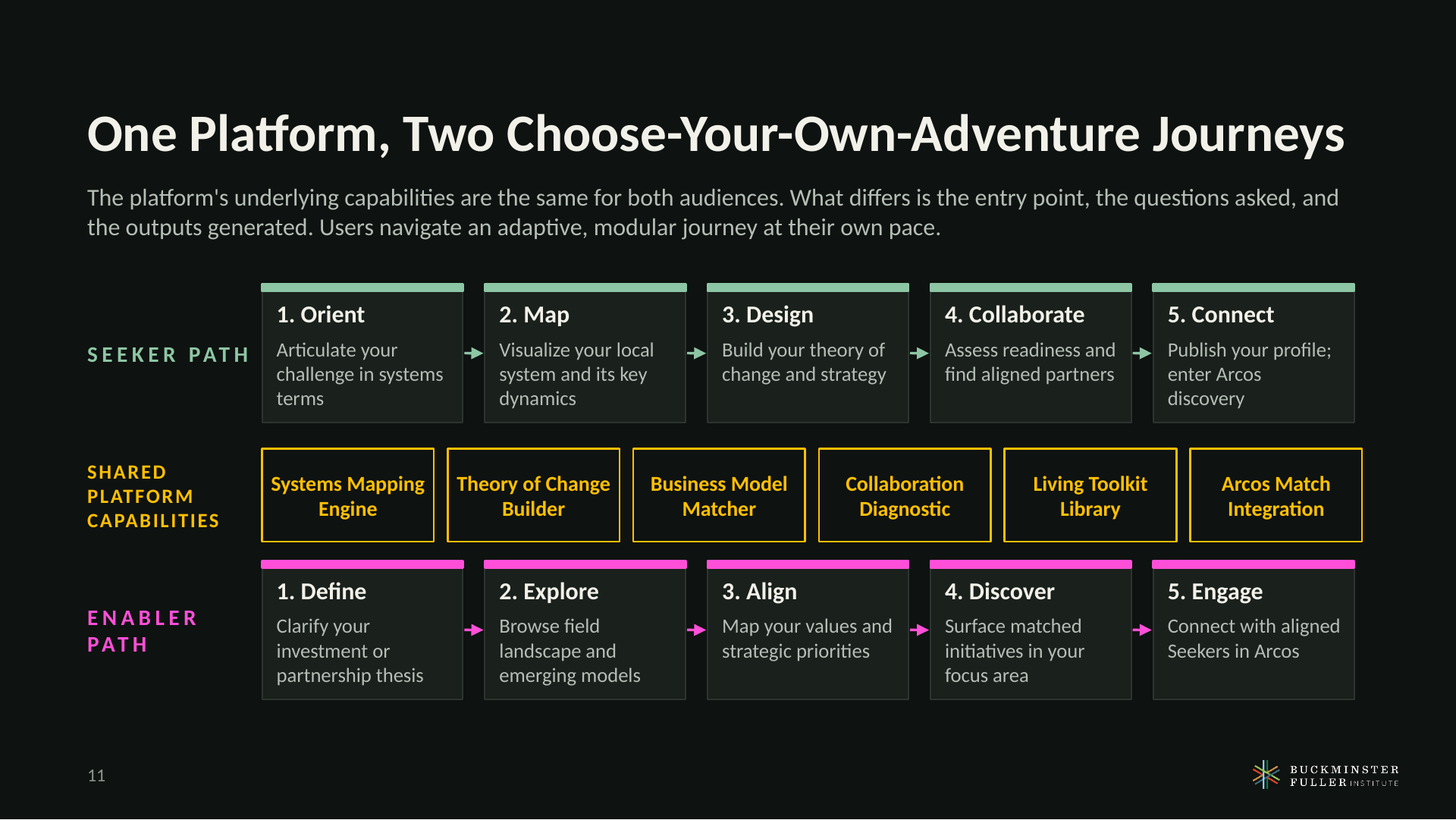
Two entrances into the proposed By Design platform. Submitted slide 33, rendered PDF page 31; Friday show deck page 47. Sara presented the platform as work in development. Presentation: Sara Blenkhorn / BFI.
Sara gave the two sides of the introduction different homework. A project owner may want to learn about structures that protect a project's purpose as it takes on funding. A funder may want to learn how to help a project get to the point where it can take out a larger loan. A useful match has to get them talking about the same thing. What can the money help this work become, and who gets a say?
She also picked up on Andrew Zolli's festival talk about seeing what's happening on the ground. Her example was soil health across a bioregion. Seeing where conditions are changing can help you ask who is already doing the work and where you could help. Now the map has a job. Andrew Zolli at Futureproof.
I wrote about a smaller version of that habit in my account of showing founders how I work with AI. Give the work a home. Keep its context available. Make it possible to return, correct and continue. Sara's argument asks us to think about what that continuity could mean across institutions.
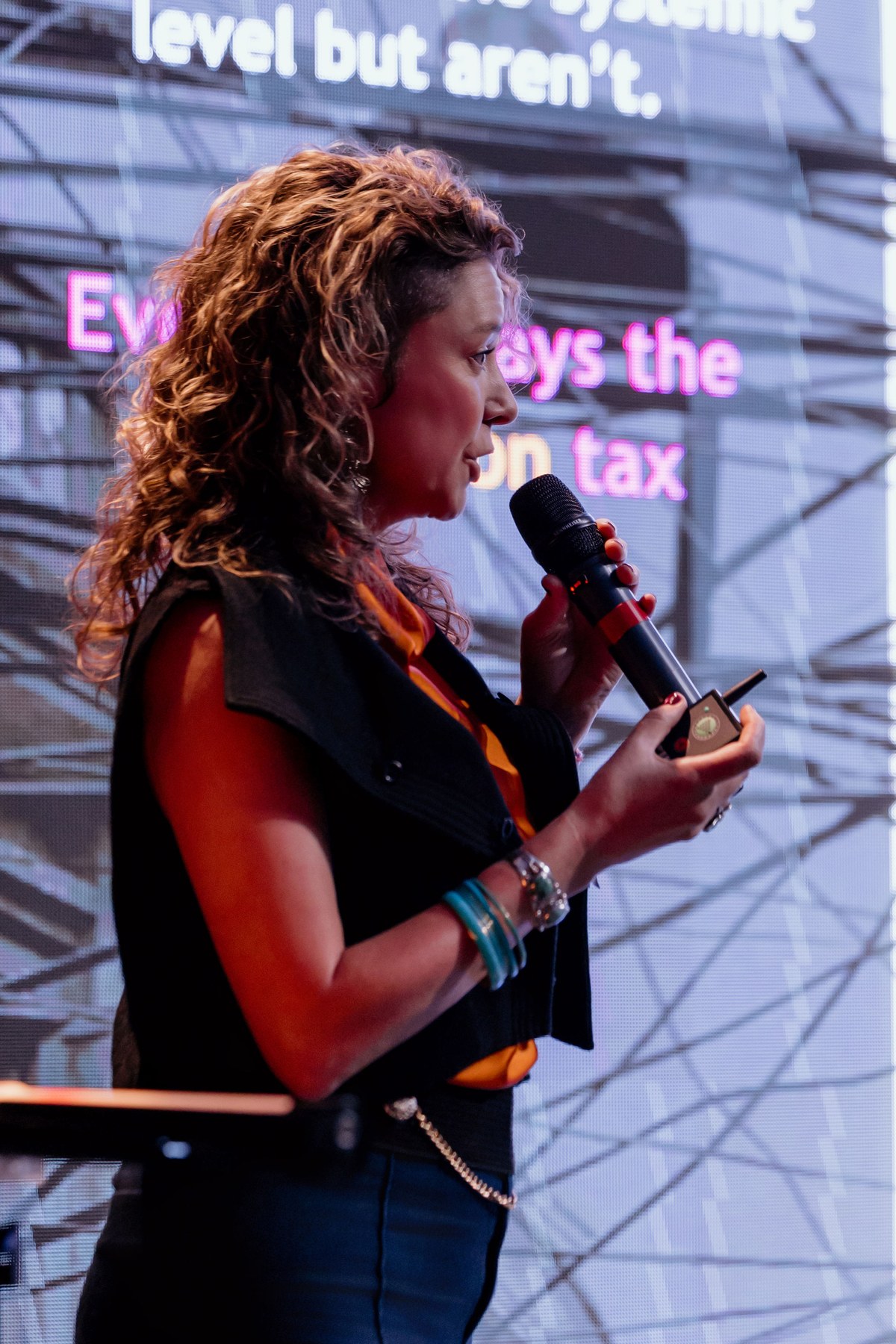
The coordination problem on the festival screen. October 30, 2026.
In the Q&A, someone asked about building a collective vision when people struggle to trust one another. Sara came back to the experience of being together, looking at another person and admitting the scale of what we haven't figured out.
That belongs beside the systems map. A diagram can make a relationship visible. People still have to decide whether they trust it enough to act.
Before commissioning the next fresh start, find someone already working on the problem. What do they know that your project would otherwise spend six months discovering? What could you build together if they didn't have to explain it all again?