Futureproof Festival / 2026
Brett Gaylor: you blew up the internet. Now what?
The conversations worth coming back to.
Source and citation
This is an authored, illustrated recap. The session date records when the talk took place. An edited transcript and festival recording have not been released on this page.
Kris Krüg. “Brett Gaylor: you blew up the internet. Now what?” Futureproof Festival 2026 proceedings, Volume 01. Session: 2026-10-29. Edition updated 2026-11-06. https://www.futureproof.website/2026/proceedings/sessions/brett-gaylor/
You can also select and copy the citation above.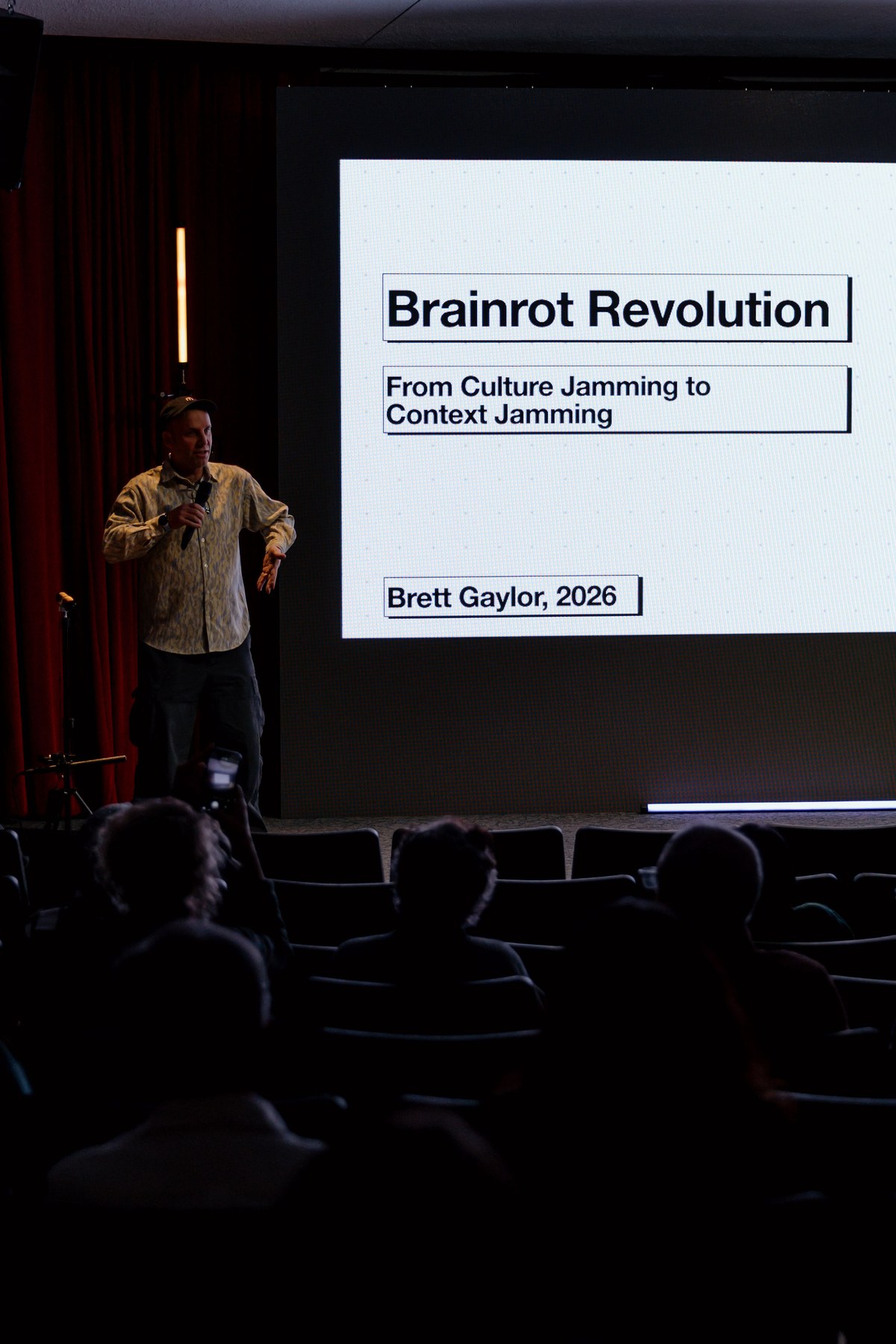
Brett Gaylor at Futureproof Festival of AI, October 29, 2026.
You move your body. The tentacle follows. You feed the monster another meme.
In Brett Gaylor's game, doing well eventually destroys the internet. Then the game asks what you would build instead.
It's a hell of an onboarding flow.
At Futureproof Festival of AI at Vancouver’s H.R. MacMillan Space Centre on October 29, 2026, Brett used BrainRot Revolution to put a familiar documentary question somewhere unfamiliar: inside a motion-controlled arcade game. How do you help people understand the systems shaping their lives while leaving them some space to imagine changing those systems?
His answer involved play, a shopping mall and a willingness to question the media tactics he'd spent years using.
The remixers got their tools. Power got them too.
Brett's RiP! A Remix Manifesto followed people making new culture from existing culture. The internet and cheap computers gave more people ways to edit, distribute and answer back.
The possibility was intoxicating. Culture jamming used the forms of commercial media to interrupt the messages they carried. An advertisement could become an argument with its advertiser. A familiar brand could become the material for a joke about branding.
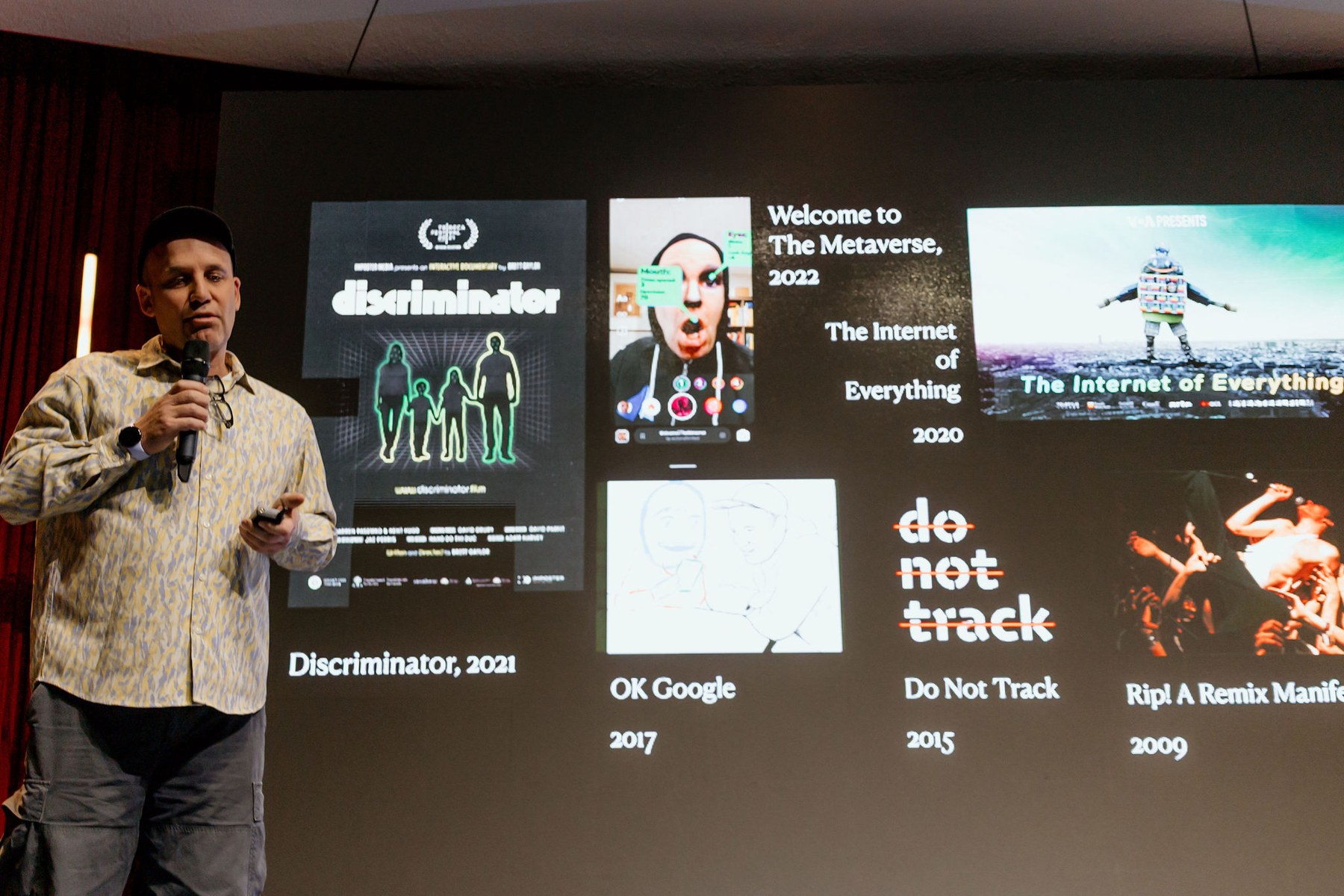
Brett's work history on the actual presentation screen.
I wrote about RiP and generative AI in 2023, connecting the film's questions about creative participation to the new tools. Brett's talk pushed that conversation forward. More people being able to remix doesn't tell you who benefits from the resulting media environment.
The same tactics can serve corporations and organized propaganda. A format developed to interrupt power can become something power uses fluently.
That leaves the maker with an awkward obligation: inspect what your favourite strategy has become. Nostalgia is a lousy impact assessment.
Ambivalence has two hands full
Brett described ambivalence as having conflicting feelings about something. He wanted that productive discomfort, the ability to recognize a technology's possibilities while taking its costs seriously.
He offered the Canucks as an example. Caring about a team that has repeatedly broken your heart is a different condition from not caring about hockey.
For a documentary maker, cultivating that state gives the audience work to do. They can enjoy the encounter and question what made it possible. They don't have to agree with a manifesto before being allowed to participate.
That connects to Toshi Anders Hoo's work on imagining possible futures, which Brett referenced. An implausible scenario can give people enough distance from the expected future to describe something they'd prefer.
Feed the monster with your own body
BrainRot Revolution borrows a bubble-shooter mechanic. A camera tracks the player's pose. Leaning aims a tentacle; raising an arm fires. Familiar bits of internet culture become bubbles to match and consume.
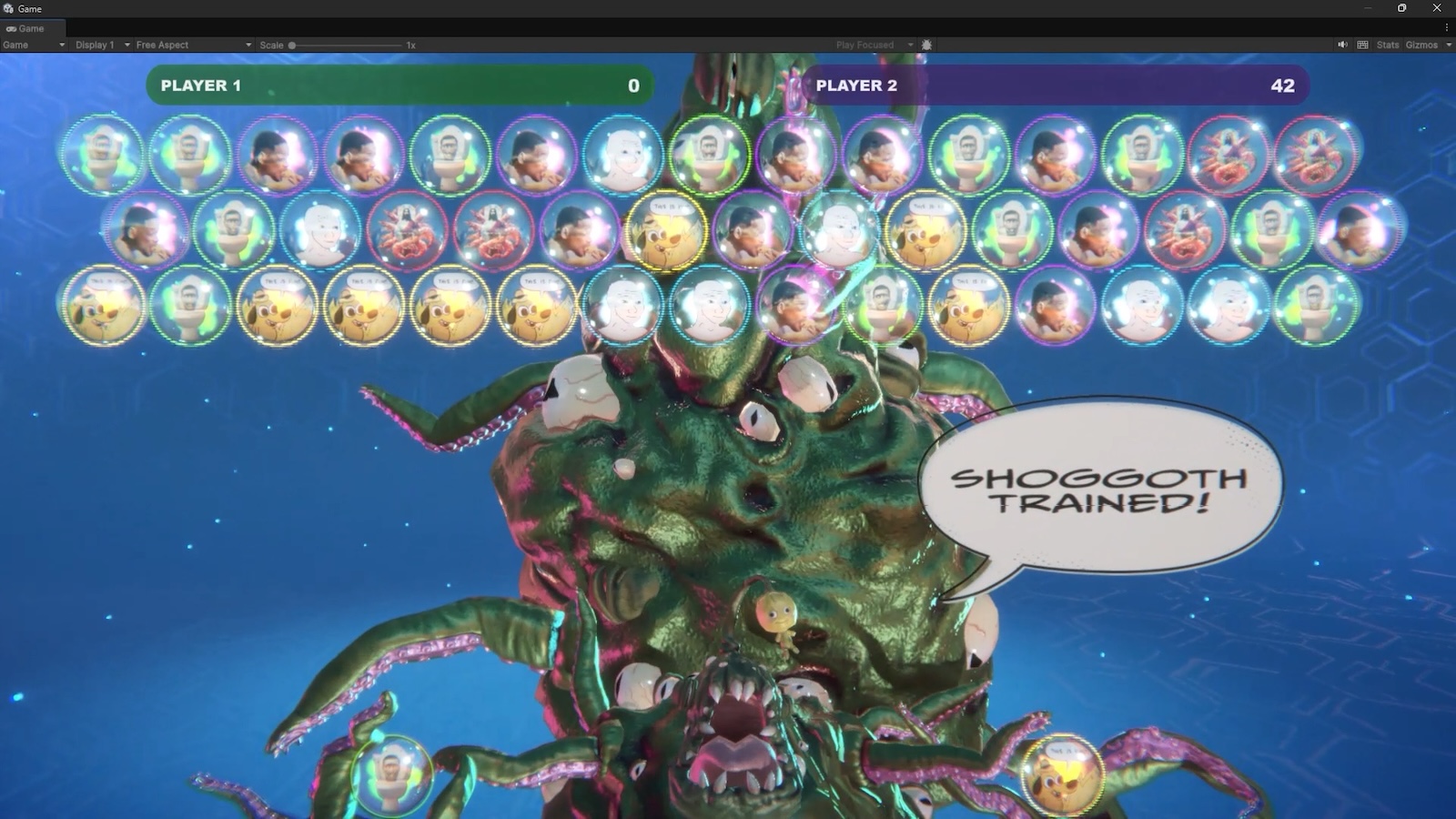
BrainRot Revolution gameplay from the Hololabs project gallery. The game renders memes as bubbles and presents feeding the Shoggoth as a training mechanic.
As the rounds progress, the imagery deteriorates. Brett uses model collapse as a metaphor for a media environment feeding on its own exhausted material.
There is a technical subject behind that metaphor. Shumailov and colleagues' research on recursively generated training data examines degradation when models are trained through successive generations of generated data. The game's exploding internet is an artistic treatment of the problem, rather than a demonstration that every use of synthetic data has the same result.
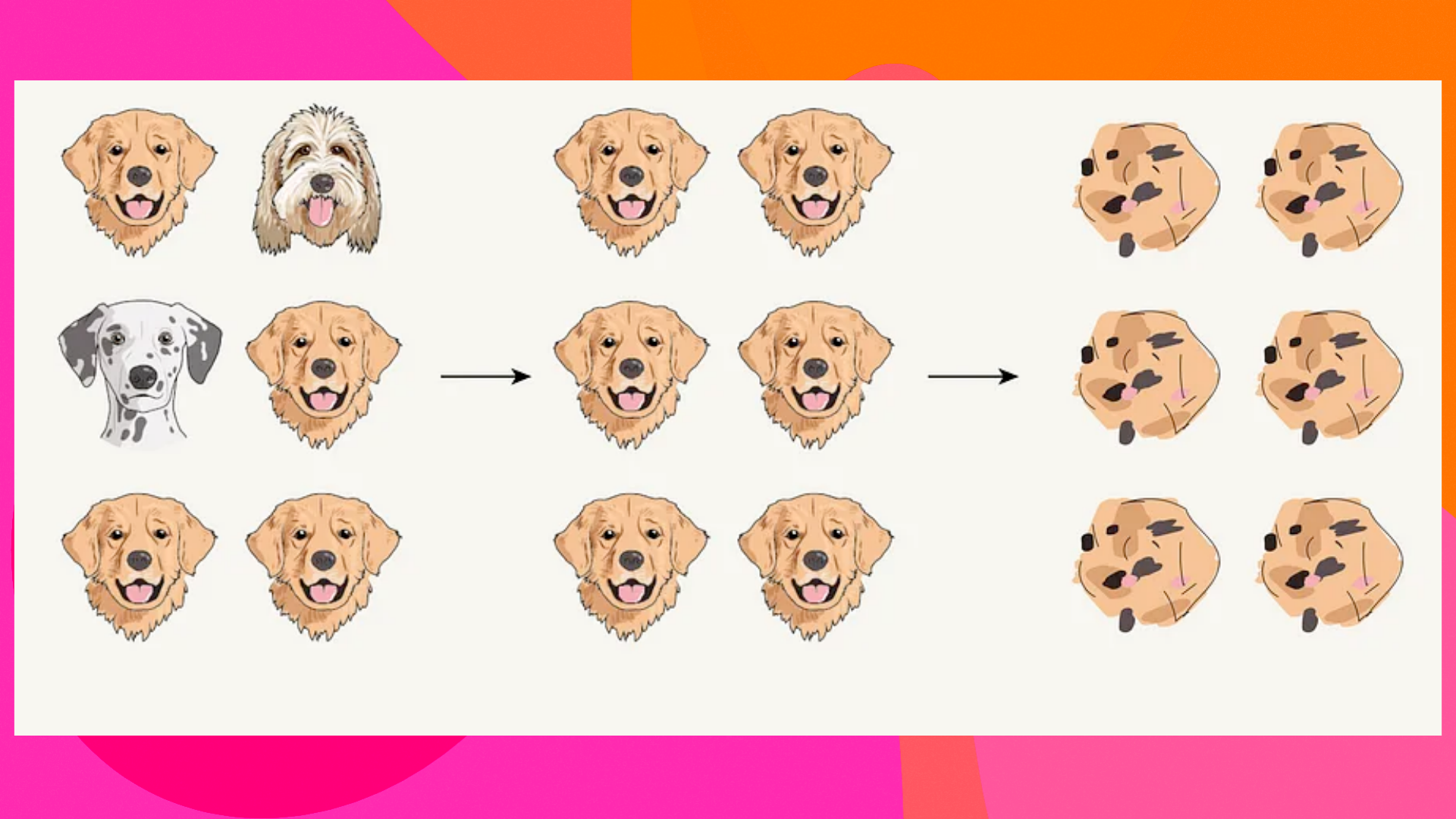
An illustration of successive generations of training material, from slide 17 of Brett’s presentation.
Then comes the prompt: what should replace what you just destroyed?
That is a generous moment in an otherwise grotesque game. The player gets to supply an idea. Brett hasn't arranged the whole experience so they can discover that the correct answer was his opinion all along.
His Making Culture Lab research page places the work within interactive documentary and critical digital literacy. Making the work is part of the inquiry. He builds an encounter, studies what happens and revises what he thinks the encounter can do.
Put the question where people already are
Brett described installing the game in a Victoria shopping mall. Someone could arrive expecting an ordinary shopping trip and find themselves steering a tentacled internet monster.
The location was a decision about audience. A critical-media project can spend its whole life circulating among people who already know the vocabulary. The mall changes who might encounter it and why they might stay.
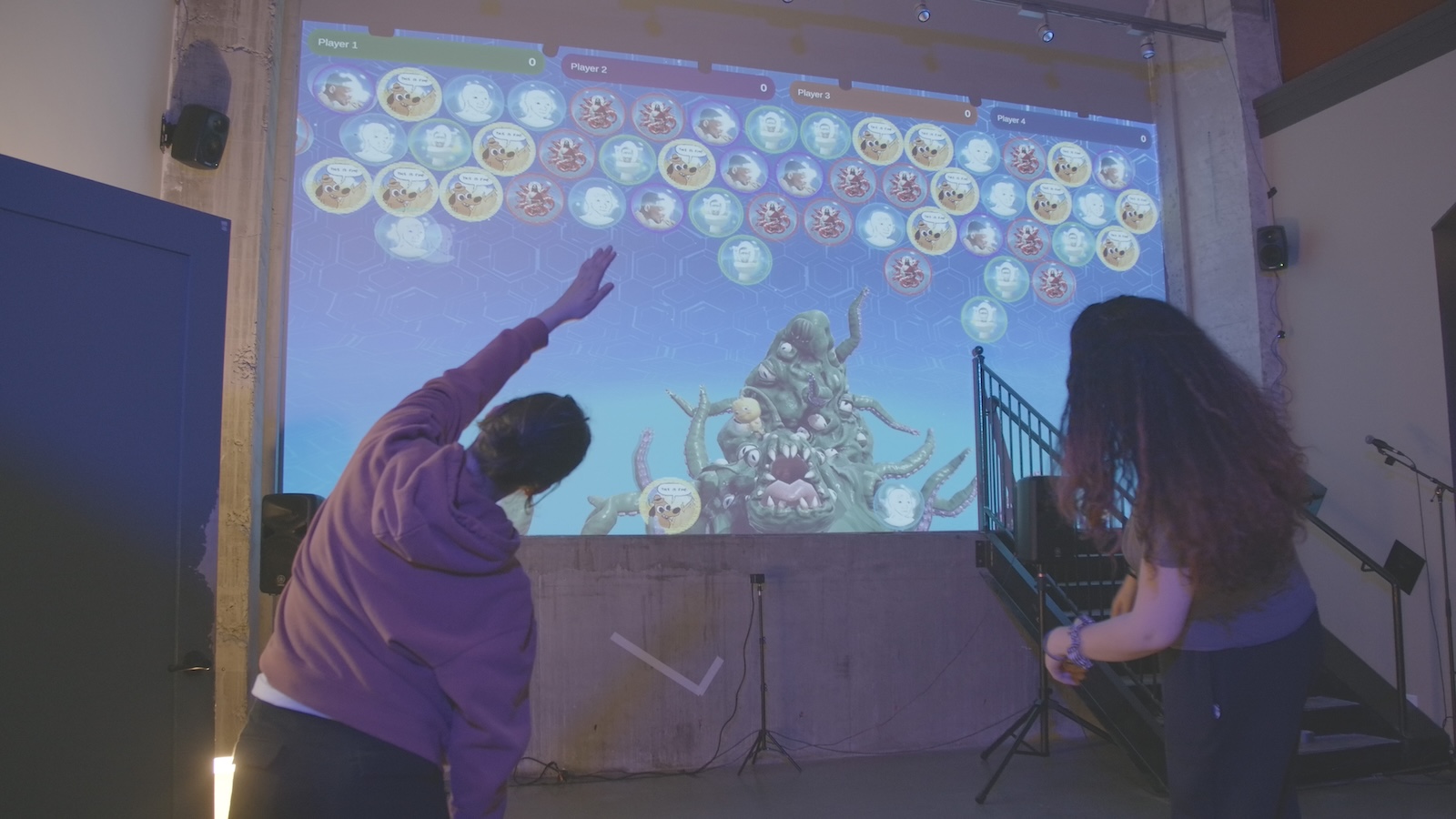
People play BrainRot Revolution with their bodies in this photograph from the Hololabs project gallery.
The installation changes what it means to watch. You can see the player lean, the tentacle move and someone else start working out how to take a turn. At BC + AI Film Club, we talk about how to show the process behind a piece of media. Brett gives that conversation another question. Where could this work meet someone who didn’t come looking for it?
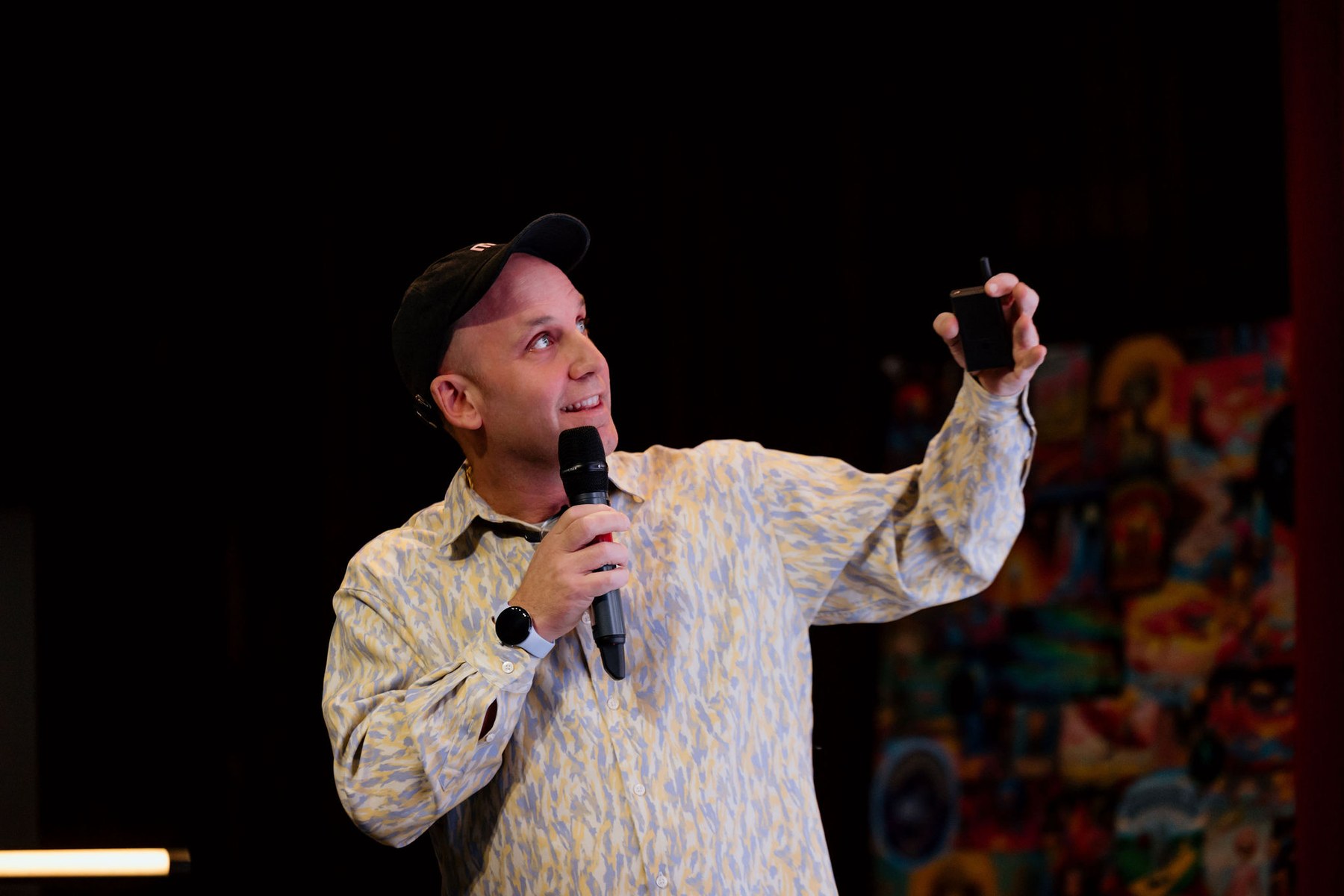
During Brett's presentation.
The interface is already making an argument
Welcome to the Metaverse takes a different route. Brett placed a narrated documentary inside an augmented-reality face filter, using the same kind of interface that turns a person's face into something a platform can process.
The original Hololabs project account describes its fictional onboarding into a metaverse. The encounter uses the machinery of personalization to get the participant thinking about that machinery.
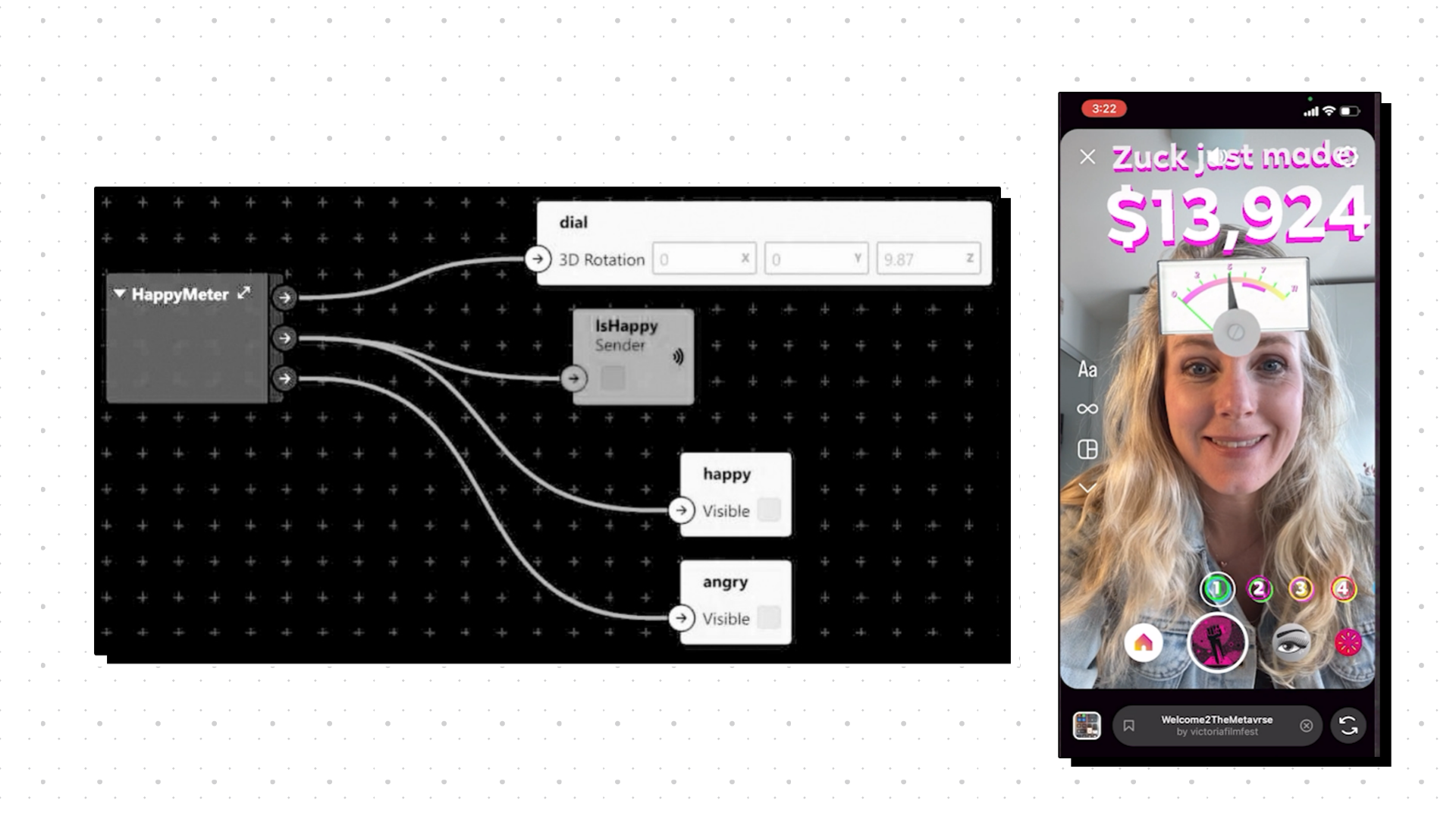
Welcome to the Metaverse: fictional onboarding beside its Spark AR controls, from slide 24 of Brett’s presentation. HappyMeter and IsHappy are software labels. Project case study.
Brett questioned the move from a detected smile to a declaration of happiness. Look at the label in the interface: a complicated human state has become a variable ready to trigger an action.
That belongs beside the questions Angelica Lim raised about how people experience a system's social behaviour. What signals are being interpreted? What does the product encourage a person to believe those signals mean?
Brett calls his intervention context jamming. People no longer encounter one shared billboard. The critique has to enter the personalized conditions in which the message arrives.
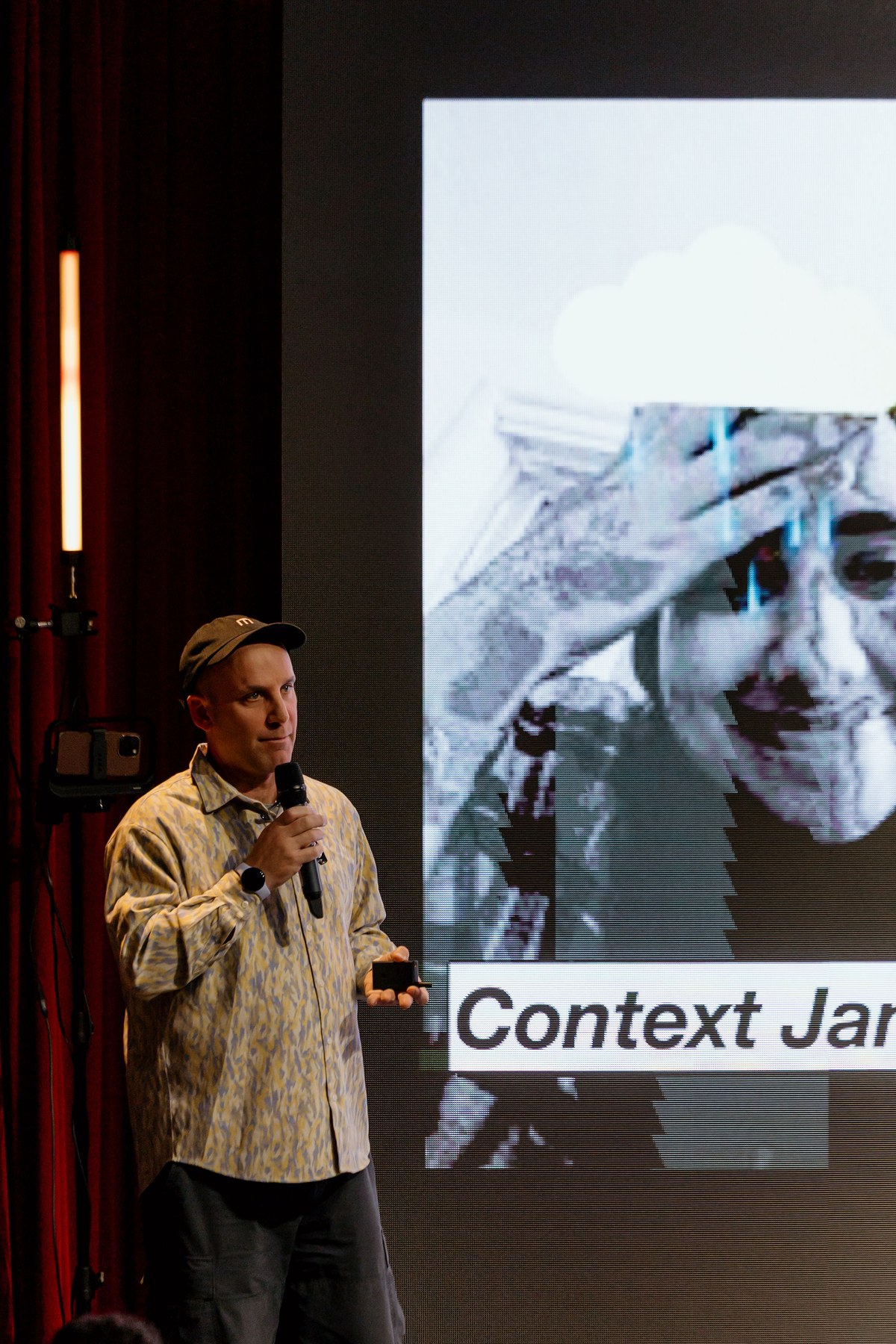
Context jamming on the actual presentation screen.
Show people where the trick ends
The Q&A challenged him. An audience member argued that a provocative remix could still do useful political work and asked whether everything needed to return to culture jamming's older commitments.
Brett didn't pretend the question had been settled. He described his practice as something he was reconsidering. But he held onto a documentary obligation: give people a way to distinguish the invented parts from the claims about the world.
He discussed the importance of a reveal, drawing on a conversation with Negativeland's Mark Hosler. The maker needs to make their own manipulation legible too. For BrainRot, Brett imagined workshops or a zine that could follow the play with a more explicit discussion of what was real.
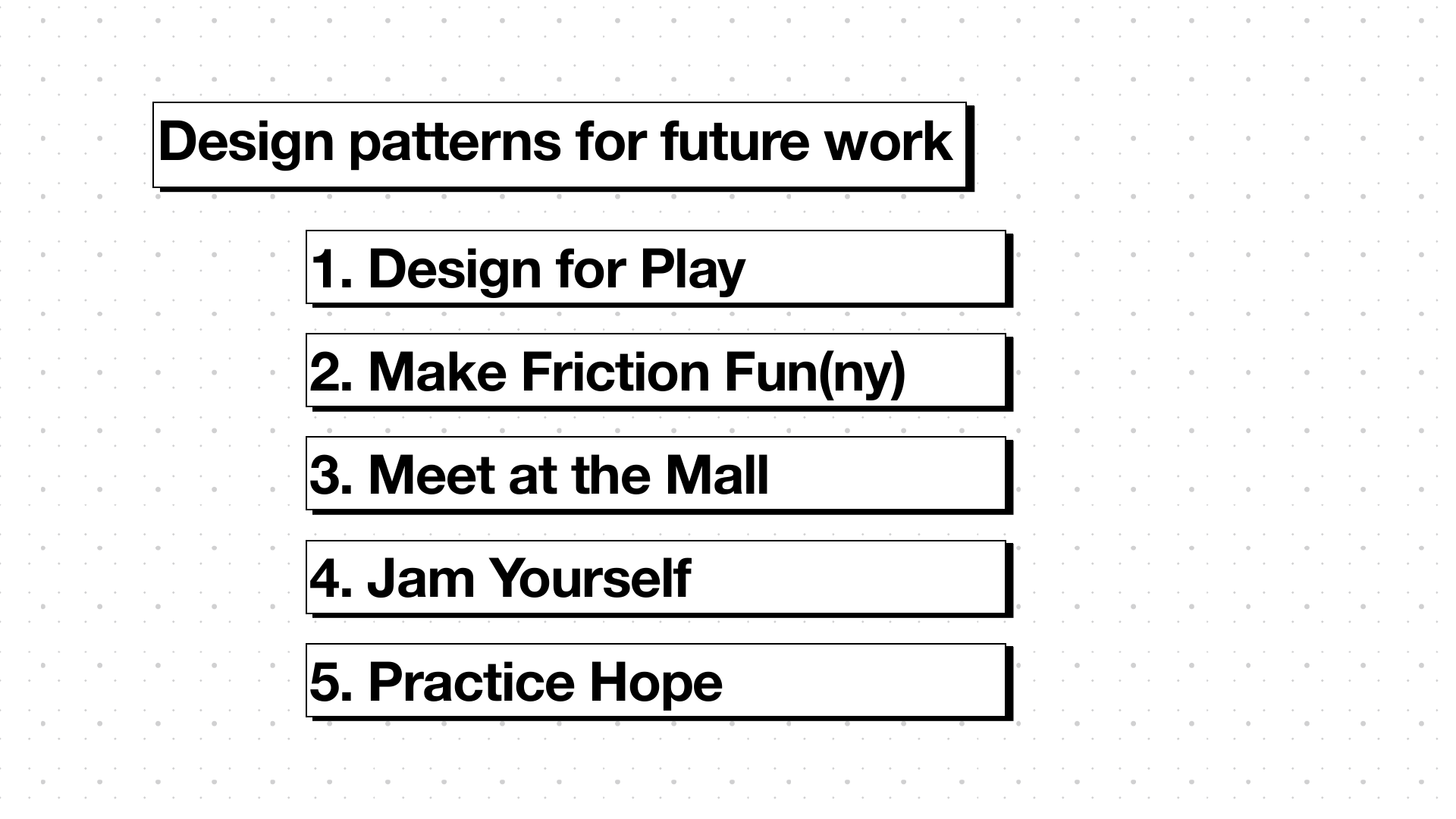
Design patterns for future work, slide 29 of Brett’s presentation. Play, friction and the mall sit alongside the maker’s obligation to question their own tactics.
That's a useful demand for anyone making persuasive work with generative tools. Where does the participant learn what you've done? What can they check? What remains theirs to disagree with?
Brett gives imagination plenty of space. He also asks the maker to leave the audience a route back to the facts.
The internet can be made differently. Start by giving somebody a way to picture it, then let them question the picture.