Futureproof Festival / 2026
Michael Running Wolf: the goal is a conversation with your grandparents
The conversations worth coming back to.
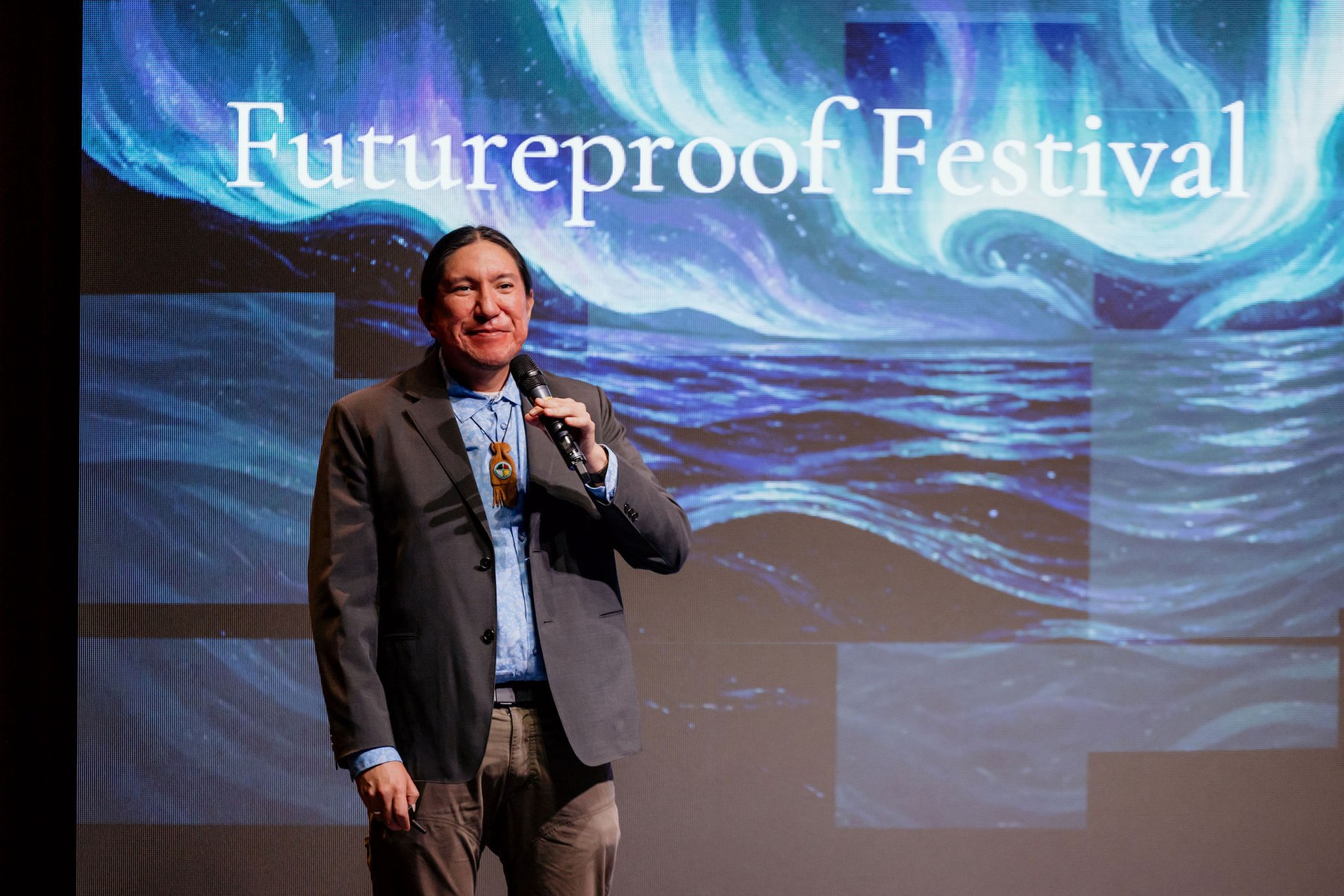
Friday's language-reclamation block at Futureproof Festival of AI, October 30, 2026.
The conversation Michael Running Wolf wants technology to help make possible is a conversation with your grandparents.
That is a much better destination than getting someone to spend another hour talking to a machine.
In his October 30 talk at Futureproof Festival of AI, at Vancouver's H.R. MacMillan Space Centre, Michael described an intermediate step for people learning their own languages. Somewhere to practise before the conversation they are nervous about having with a fluent speaker.
His account began with a familiar conflict over attention. Elders saw young people absorbed in devices while the language needed people speaking it to one another. Michael and Caroline Running Wolf began asking how technology might support that relationship.
A useful tool would have to do more than hold a learner's attention. It would have to help them reach another person.
A place to practise before the stakes feel enormous
Michael talked about the shyness of learning a language, the fear of getting something wrong and the distance between a classroom exercise and speaking with someone fluent. In his account, that distance carries particular weight when a learner is trying to recover a language whose transmission was interrupted between generations.
The proposed technology offers another place to begin. Try a phrase. Hear and practise the sounds. Get enough confidence to attempt the human conversation.
That is the purpose behind the First Languages AI Reality initiative, or FLAIR, which he co-founded with Caroline Running Wolf, Shawn Tsosie and Conor Quinn. Its research focuses on speech technology for Indigenous languages, with community authority over the work built into the brief.
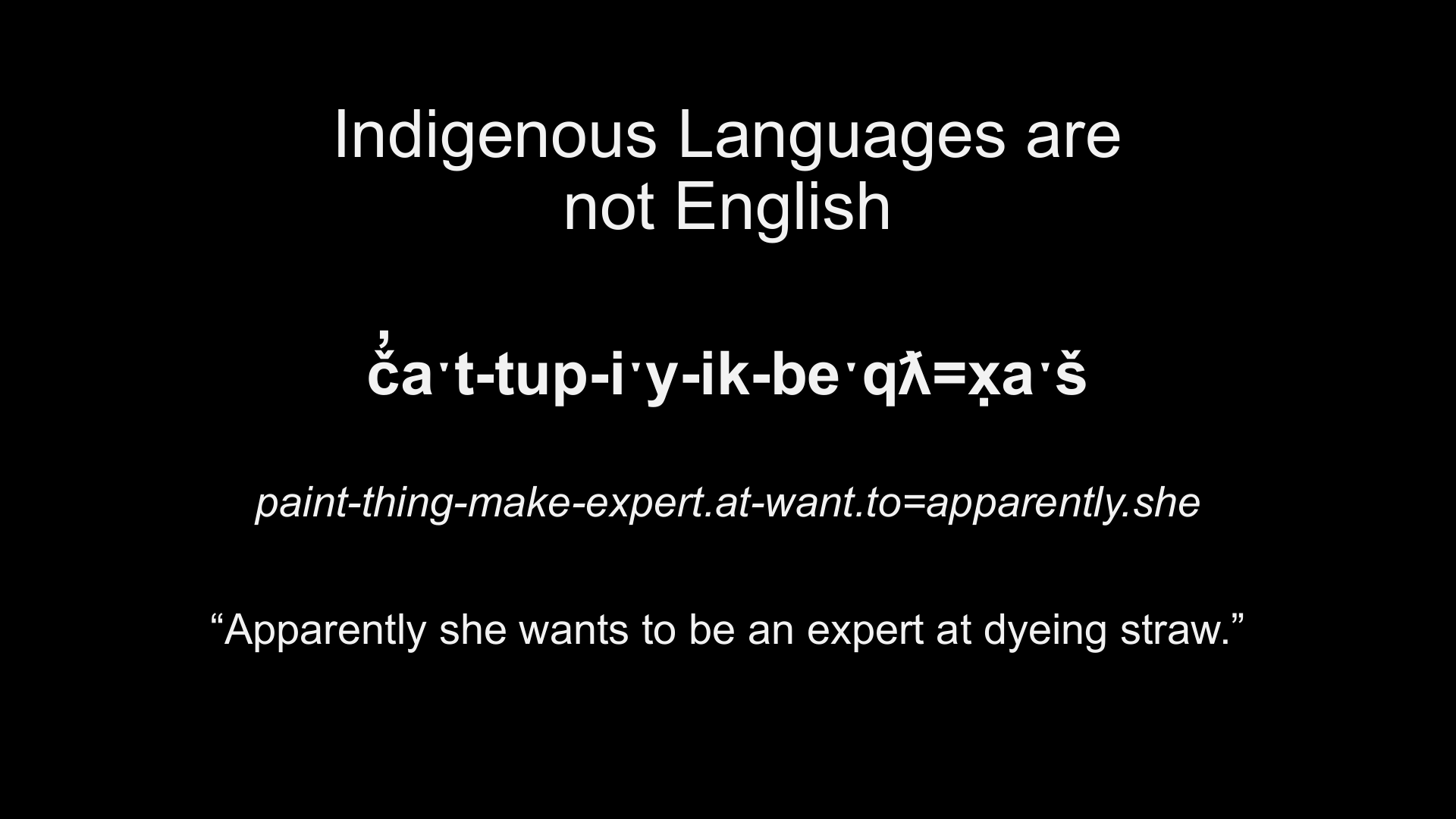
Michael's language example, original presentation slide 4, shown as Friday deck page 190. The slide makes its own comparison with the English gloss; it does not stand for every Indigenous language.
Michael used that example to show why a system designed around one language may make the wrong assumptions about another. What English spreads across a sentence can be assembled differently in a word. The sounds, the word structure and the available recordings all matter to the engineering problem.
A team needs to understand the language well enough to know what the system must learn, and what counts as an error. More enthusiasm about AI won't do that job.
Put the community in the architecture
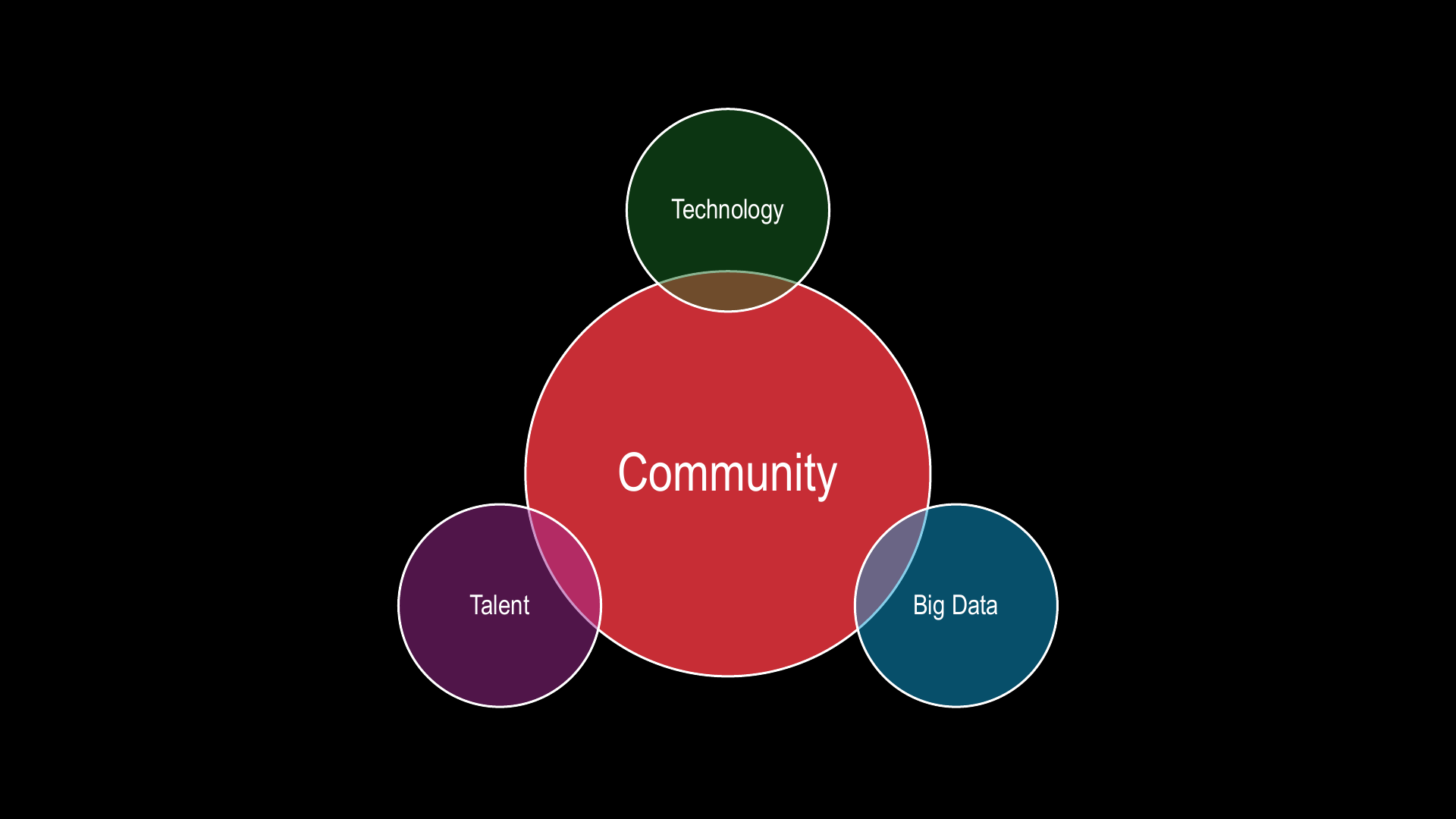
The centre of the diagram is the community. Original presentation slide 14, shown as Friday deck page 200.
That diagram gives the technical work a shape. The people responsible for the language belong at the centre of decisions about data, skills and technology. Each part needs the others.
Michael described a practical constraint for automatic speech recognition: some of the languages his team works with have very little recorded material, and may lack the large written corpus a conventional approach expects.
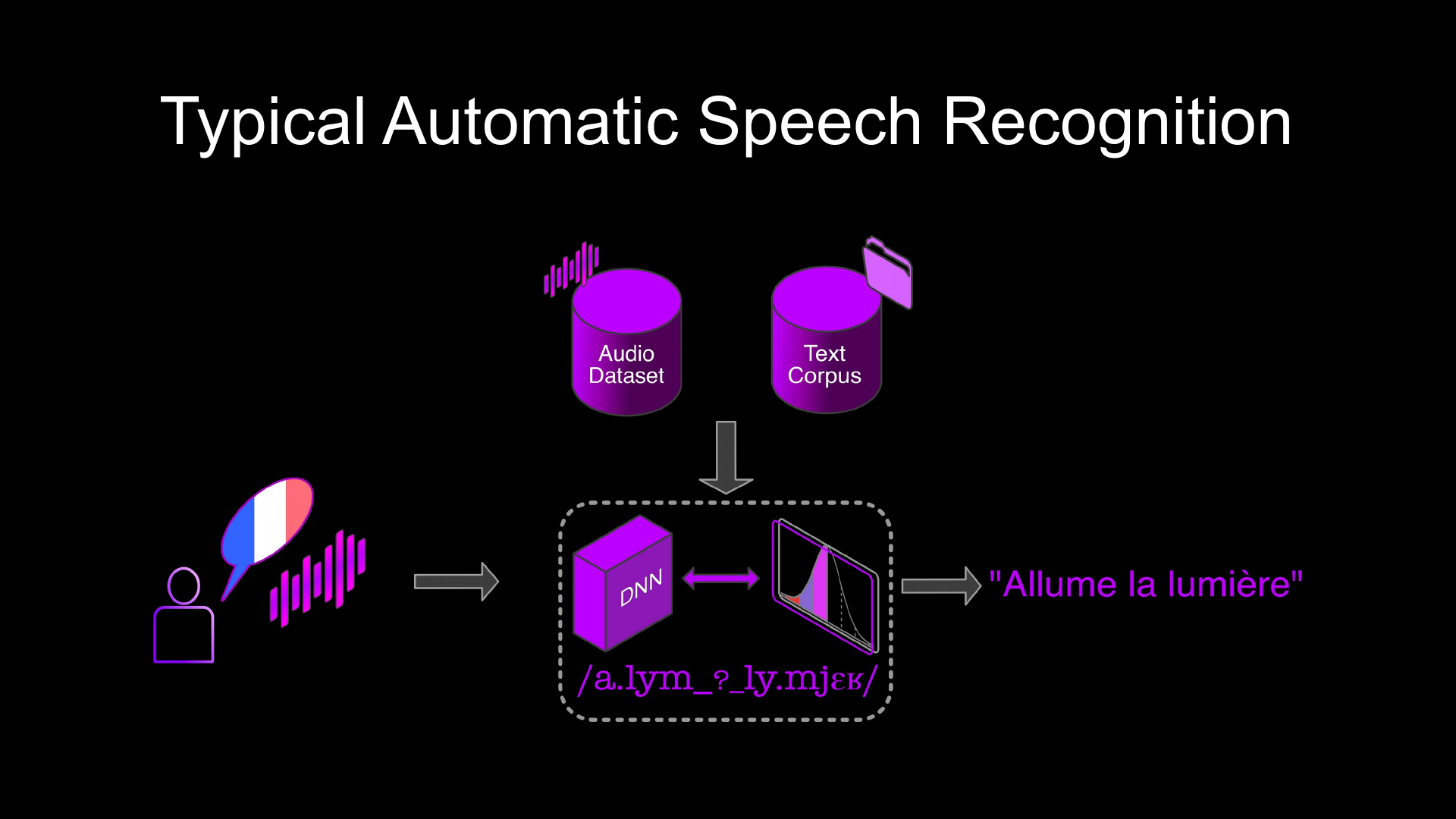
A simplified speech-recognition pipeline from Michael's original presentation, slide 15, shown as Friday deck page 201. It helps locate the data dependencies he discussed.
If the pipeline assumes those recordings and transcripts already exist, the team inherits a research problem before it can offer anyone a useful interface. FLAIR is researching how to build a speech recognizer with less recorded material. That makes each decision about what to record matter more.
Mila describes one way the team approaches that choice. FLAIR co-founder and linguist Conor Quinn develops short courses that serve as teaching material and guide which speech to collect. If you have an hour with a fluent speaker, the question of what a learner needs can help decide what you ask them to record.
Michael credited Te Hiku Media as a mentor in this work. The relationship matters because another Indigenous-led team has already worked through decisions about its own language technology. Knowledge can travel through a relationship while authority over a community's language and data stays with that community.
The Kaitiakitanga conditions for Te Hiku's Kaituhi service make that distinction concrete. Publicly available services do not turn the underlying language data into material anybody is free to mine.
The people who can build the next version
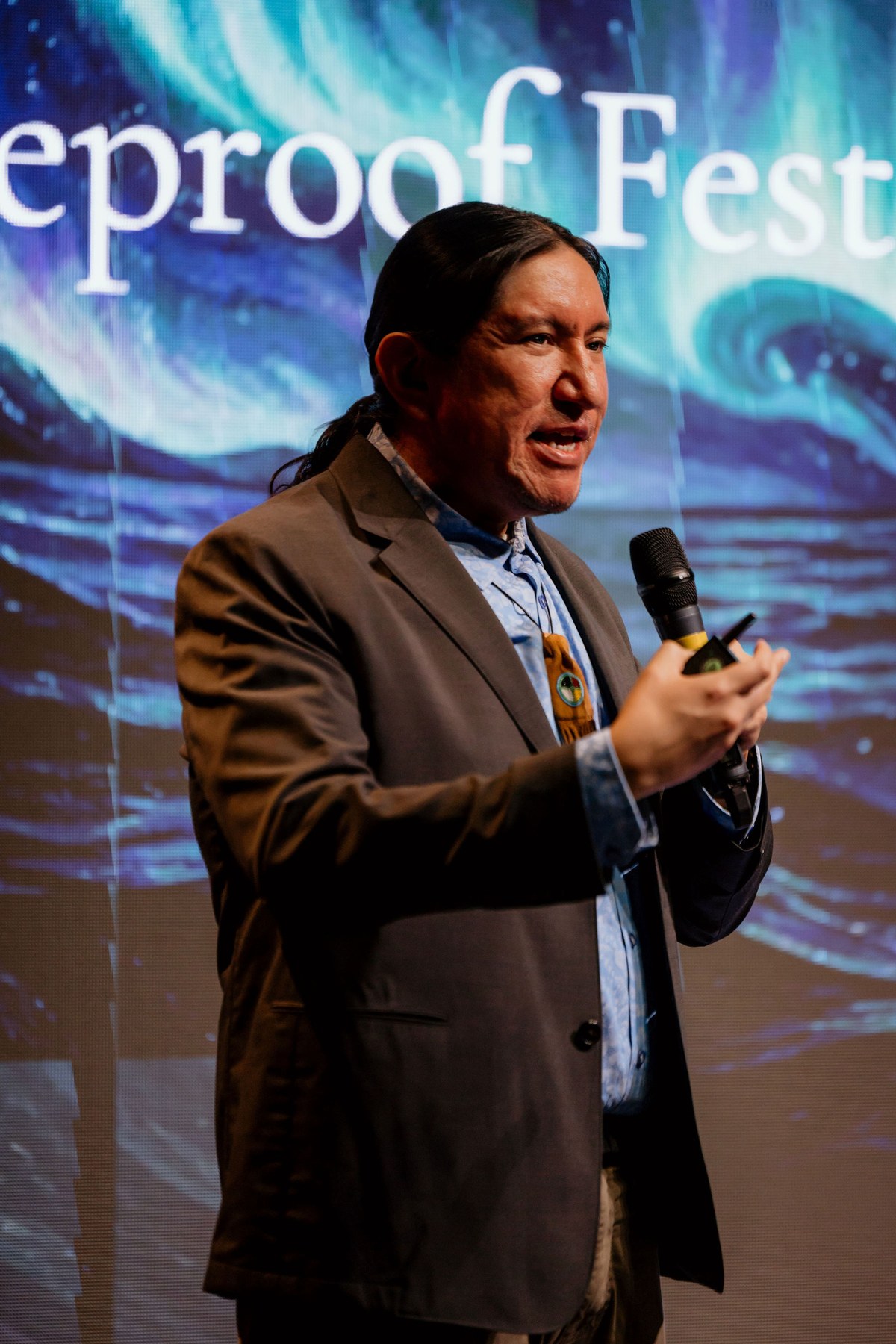
The language-technology discussion on stage, October 30, 2026.
Michael's account of the Lakota AI Code Camp brought another part of the diagram into focus: the people who can build and maintain the tools. He described young participants making systems of their own, including work around Lakota plants.
Teaching someone to build changes the relationship. They can begin to ask how a system works, what it gets wrong and how they might change it. The knowledge doesn't have to leave when a visiting expert packs up a laptop.
Those of us organizing local AI education through Ed + AI should take that ambition seriously. What can someone do after the workshop? Who can they teach? What will they be able to question without needing us beside them?
Michael also outlined a longer-term goal for a small language-tutoring device that could be kept within a community. He connected that goal to the costs of hosting systems and to retaining a resource people could return to.

An edge-device illustration in Michael's original presentation, slide 18, shown as Friday deck page 204. He described a direction for future language tools, not a demonstrated finished tutor.
In the joint Q&A, Michael and Peter-Lucas Jones discussed the continuing work of growing technical teams and compute resources. The work has costs. People need the skills and resources to keep a system available after the interesting demonstration is over.
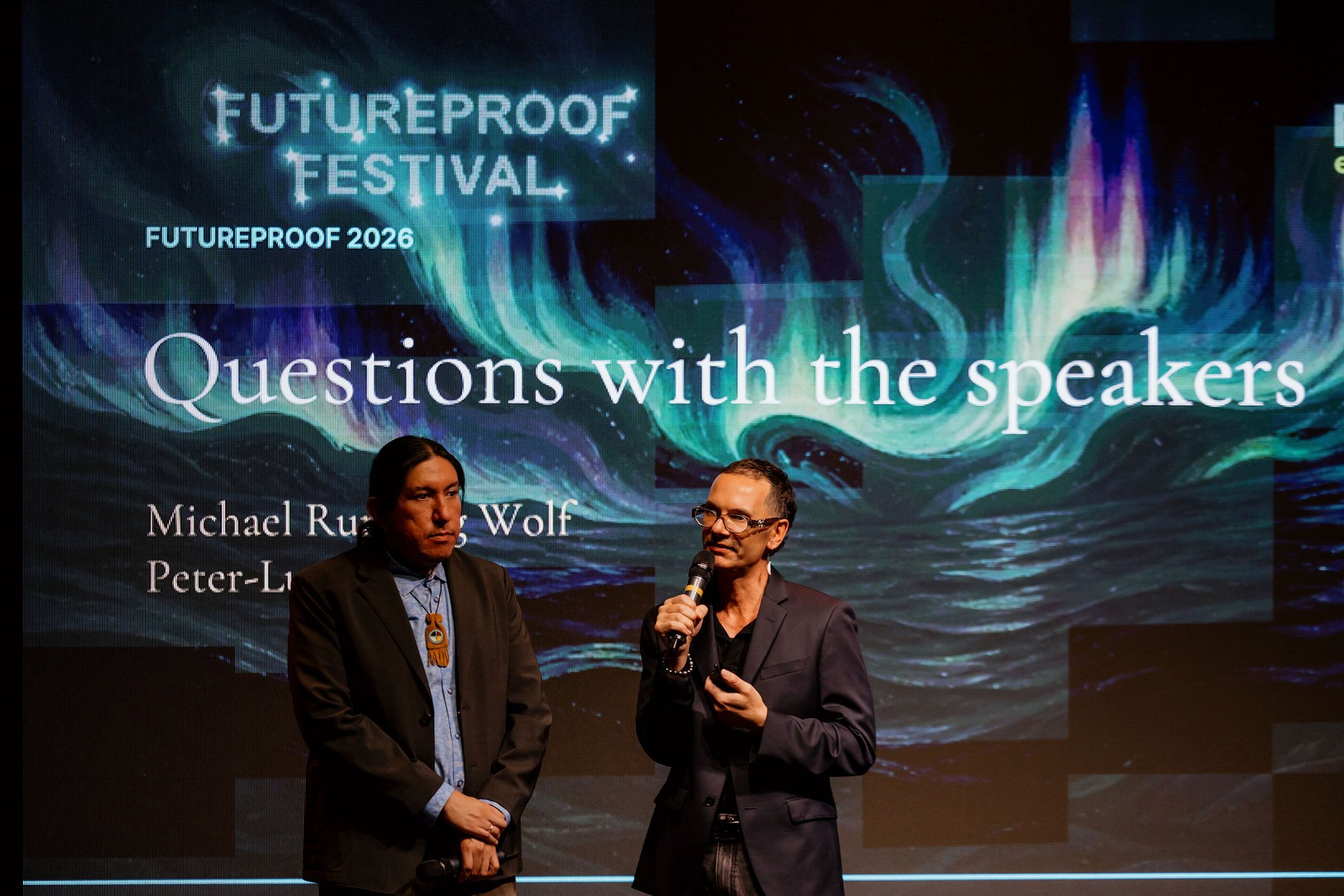
The joint language-technology Q&A. October 30, 2026.
When I wrote about Futureproof's first year, the language sessions belonged in the account of what this festival asked people to consider. Here was a purpose for AI with a human relationship at its far end, and a community doing the work of deciding how to reach it.
Judge the tool from that end. What conversation can a learner have with another person because this exists? Who will still be able to care for the system when the original project team moves on?