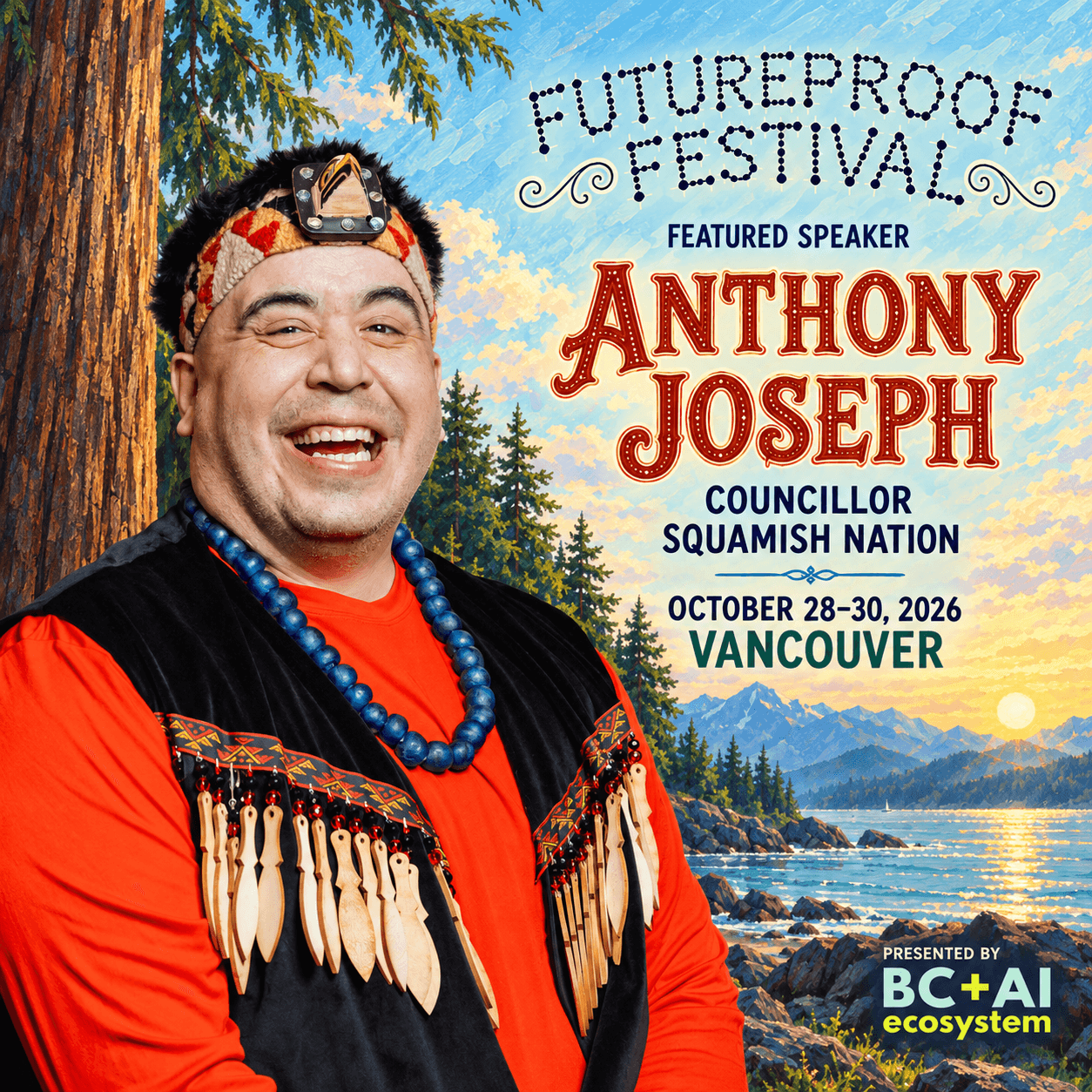
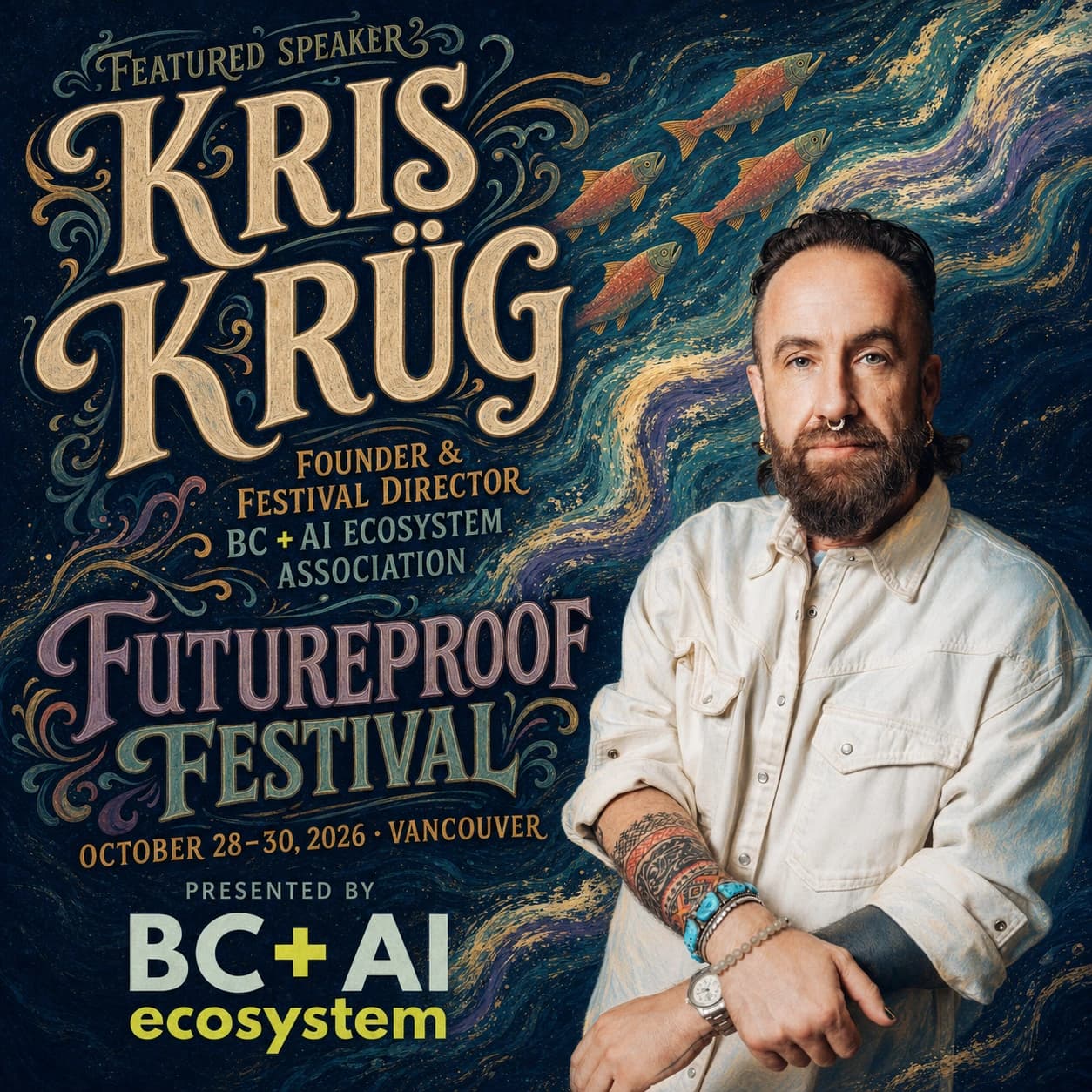
Session recaps by Kris Krüg, with photographs, presentation images and paths into the work.
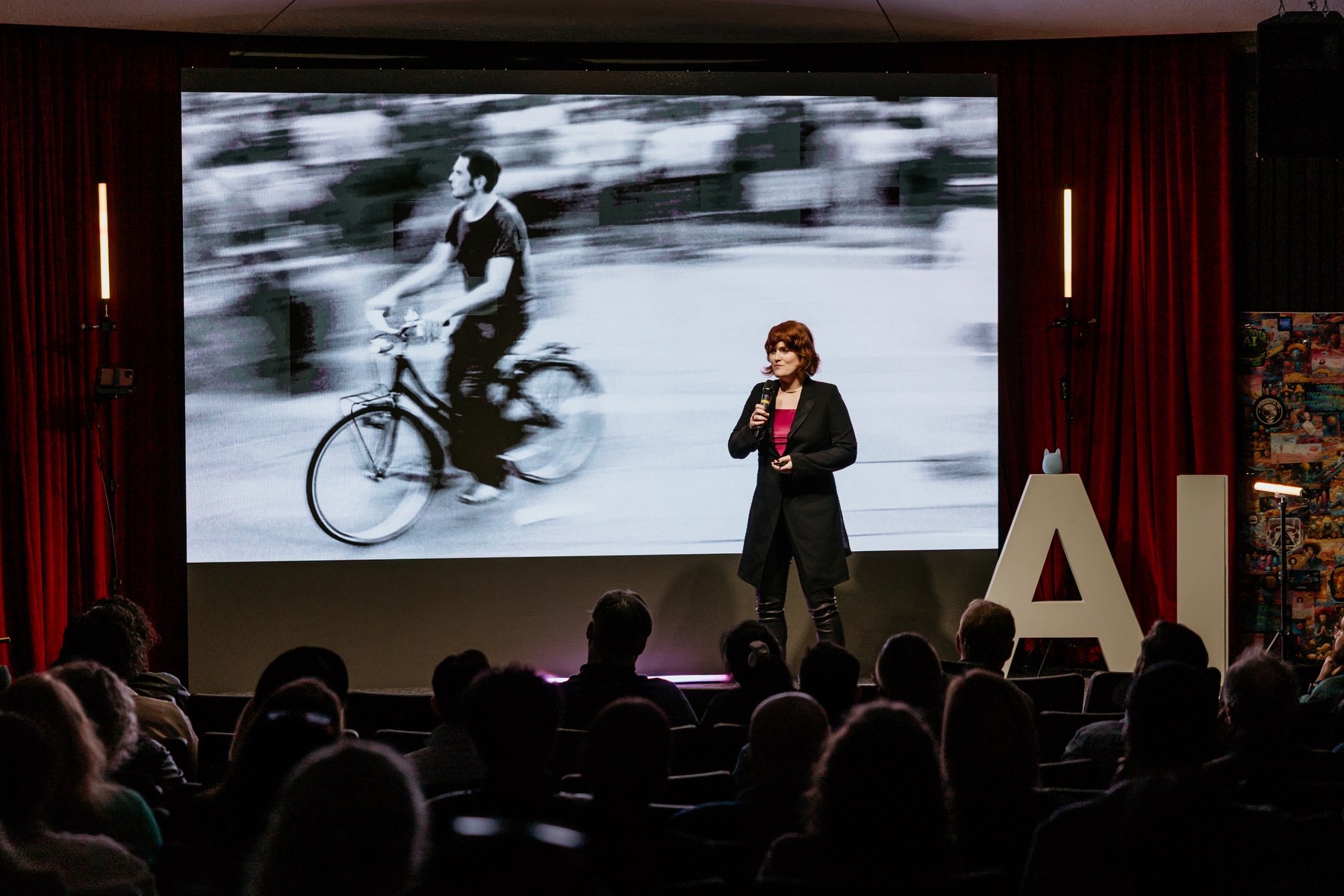
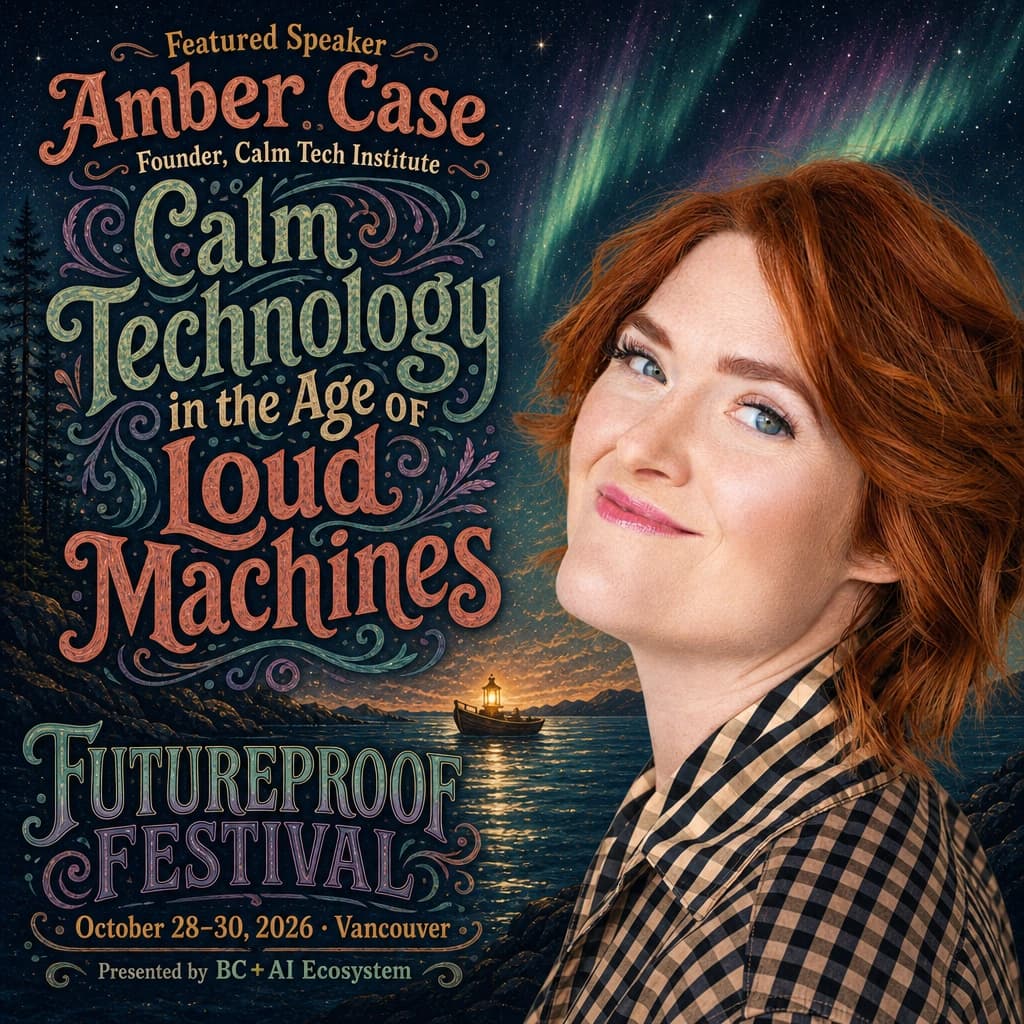
At Futureproof Festival, Amber Case asks what our tools demand from us, using physical controls, ambient information and calm technology that can fail gracefully.
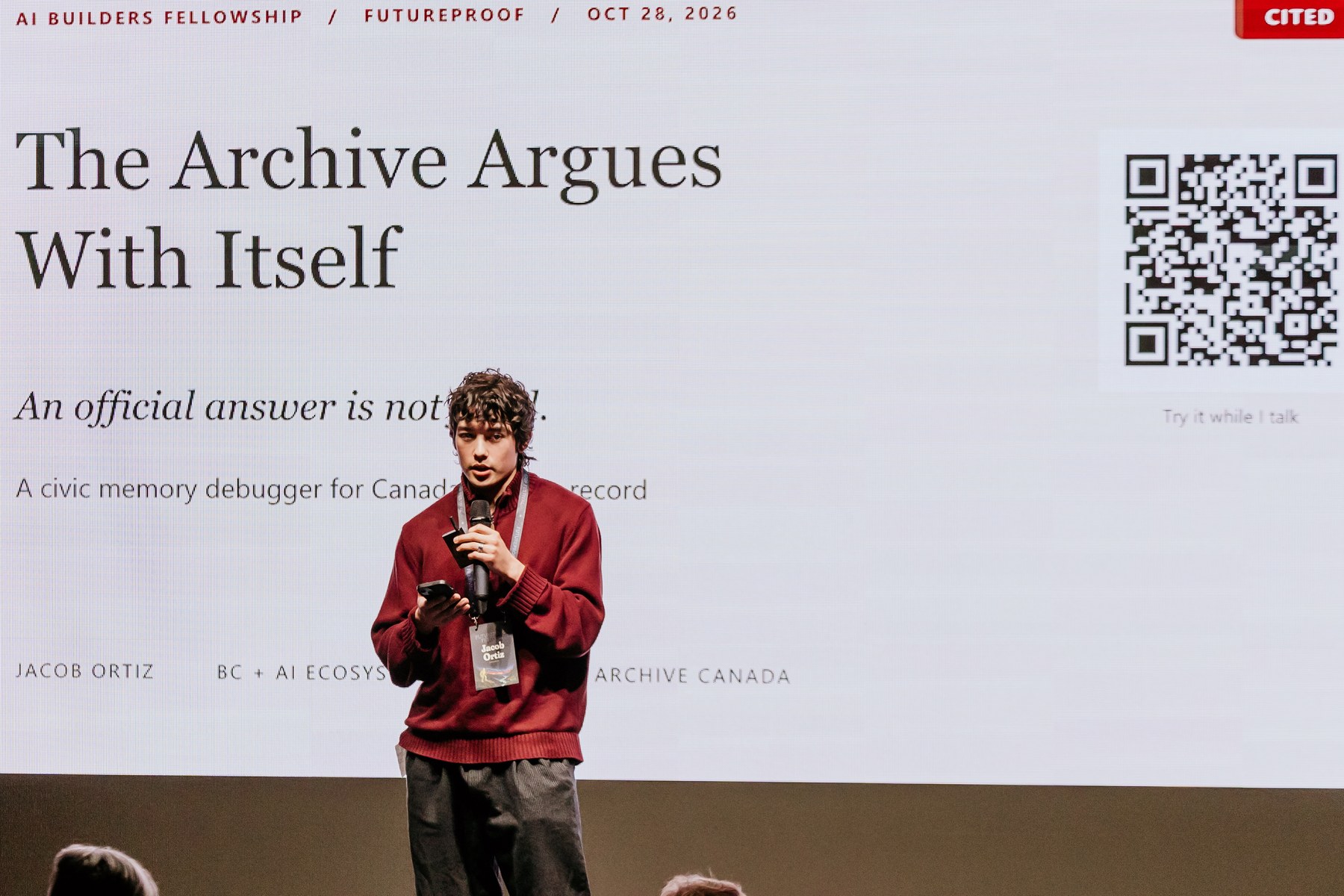
Jacob Ortiz demonstrates The Archive Argues With Itself at Futureproof, showing source pages, gaps in Canada's public-health record and the limits of a cited answer.
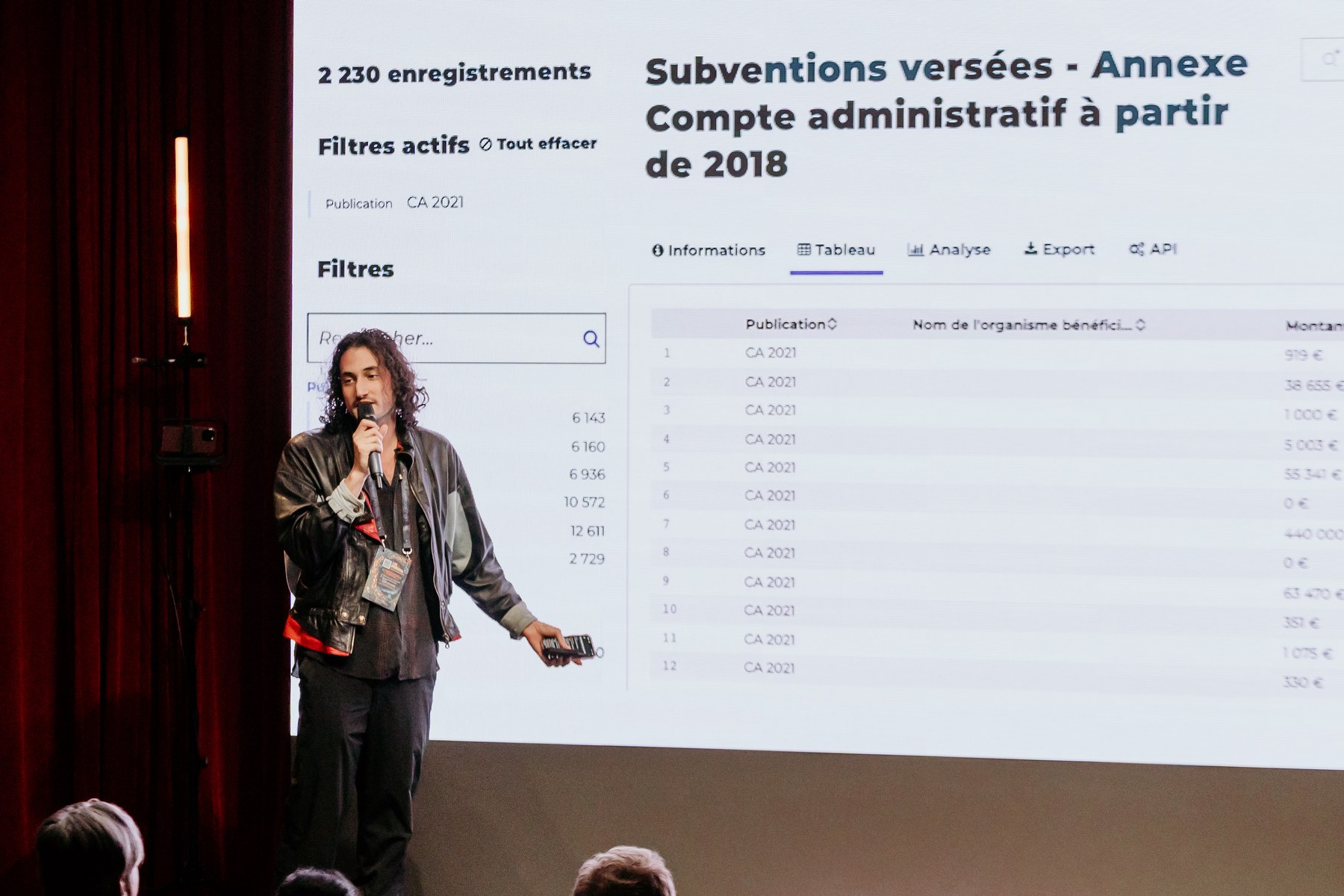
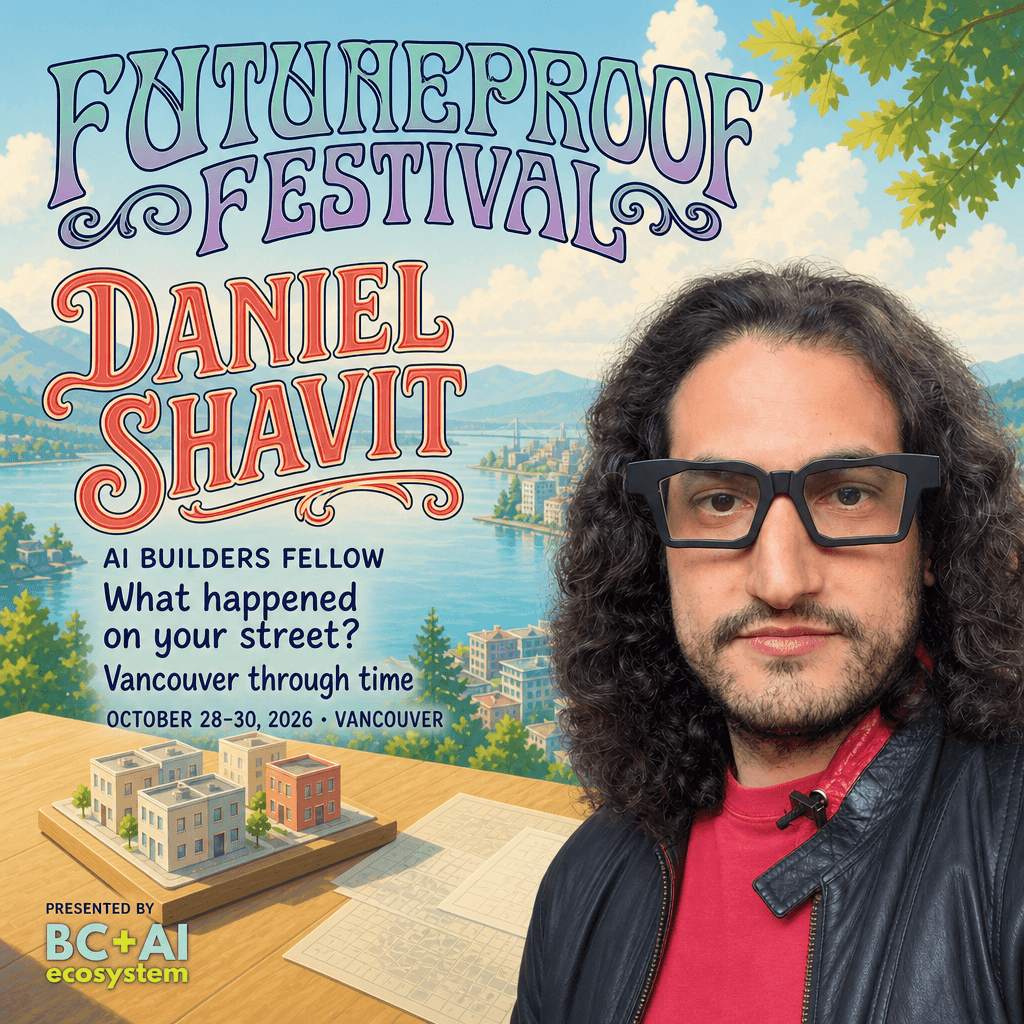
Daniel Shavit's Futureproof demonstration connects council records to places, using a Vancouver film and civic-data interfaces that let people follow decisions back to sources.
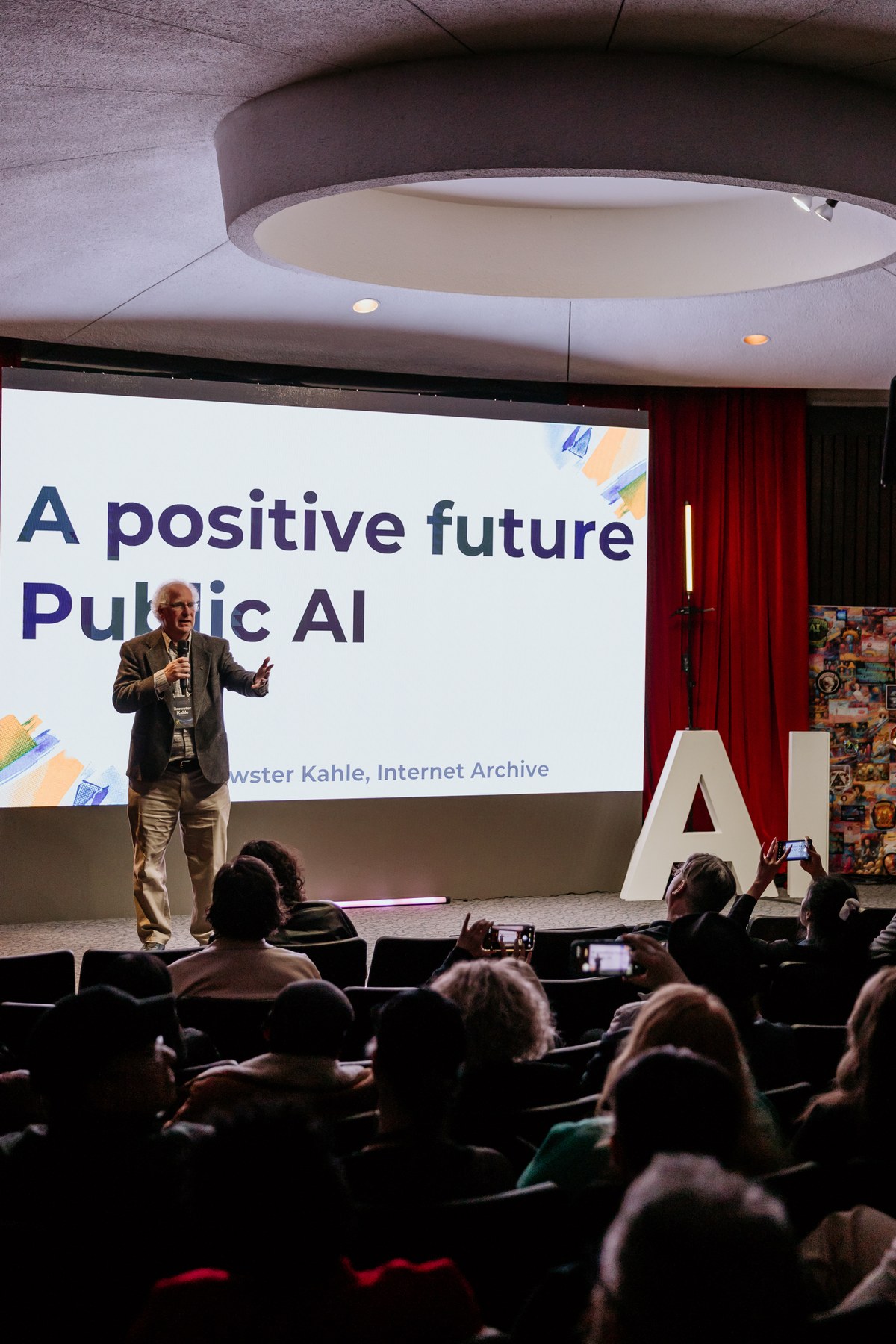
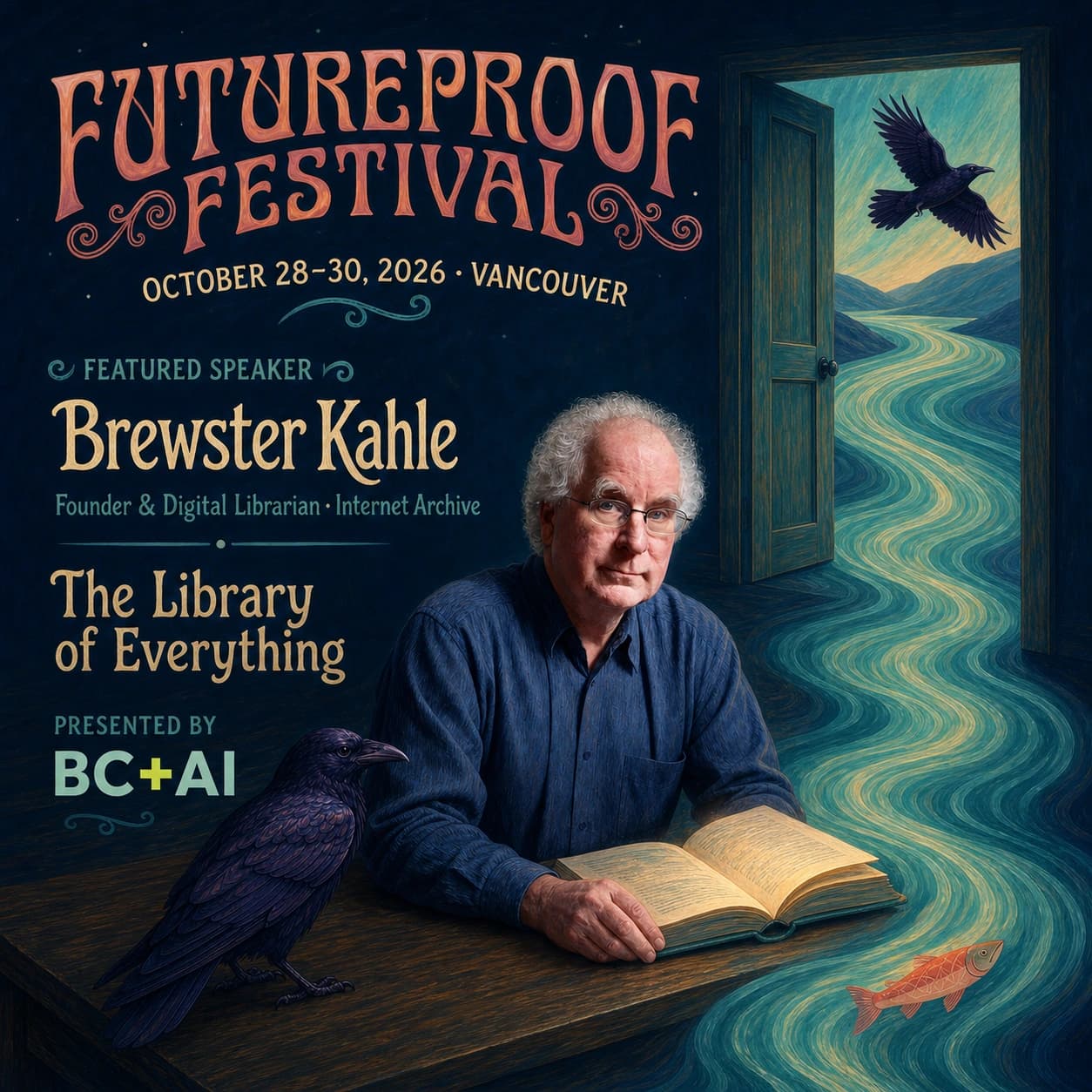
Brewster Kahle's Futureproof keynote connects public AI to libraries, focused research tools and the people who preserve the material future builders will need.
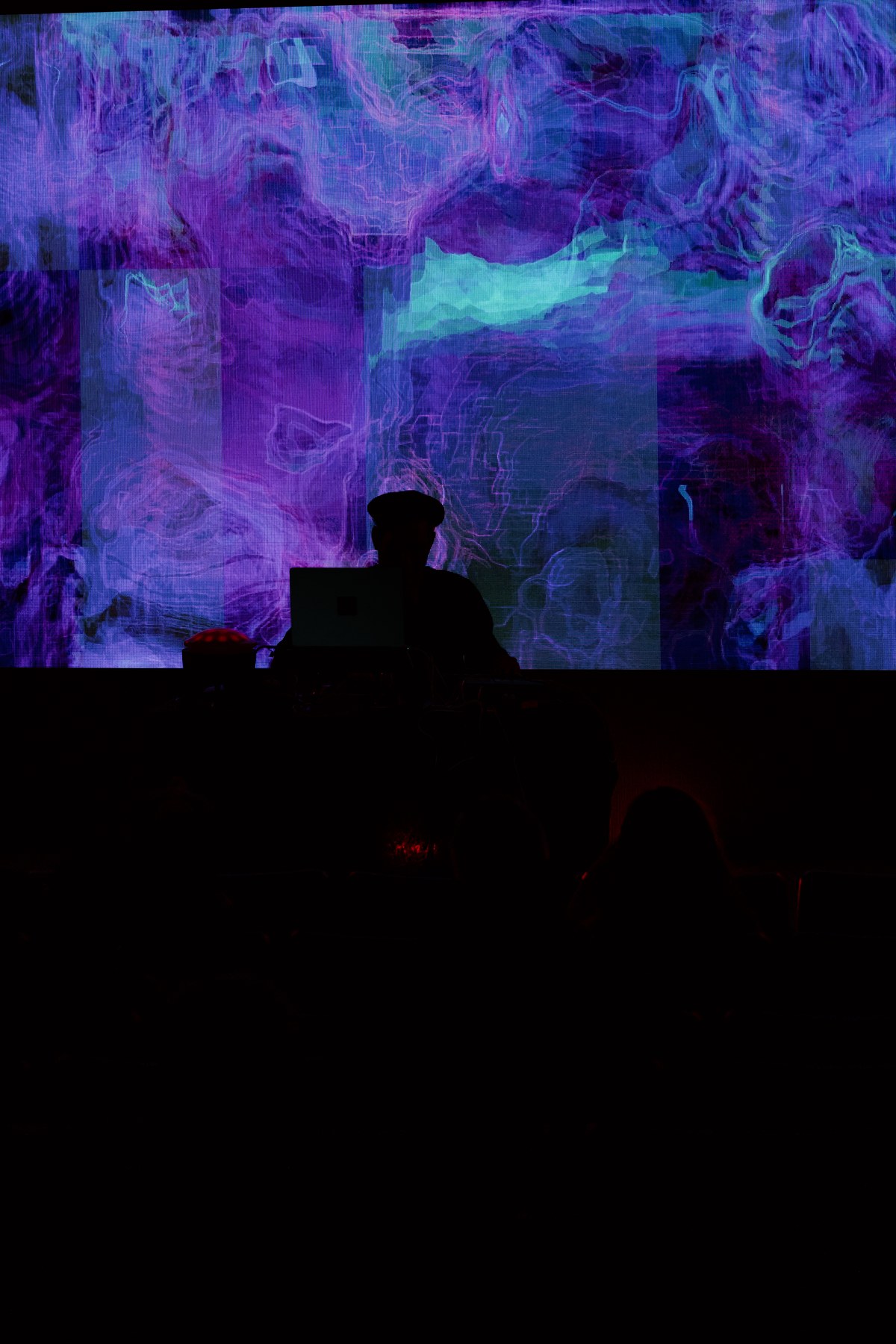
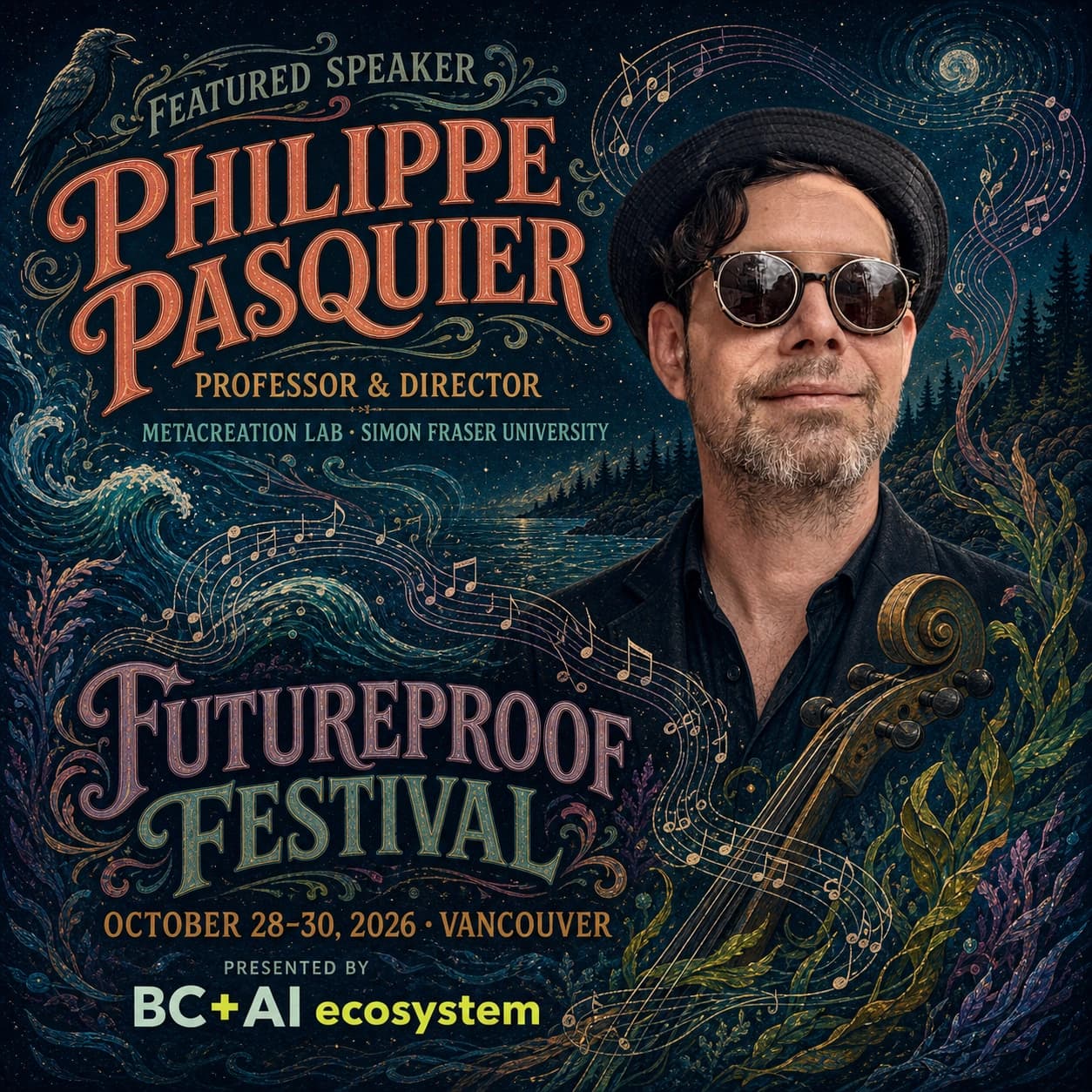
A photo essay on Philippe Pasquier's Futureproof opening-night performance, connecting its generative visuals with Autolume and the practice of playing a model.
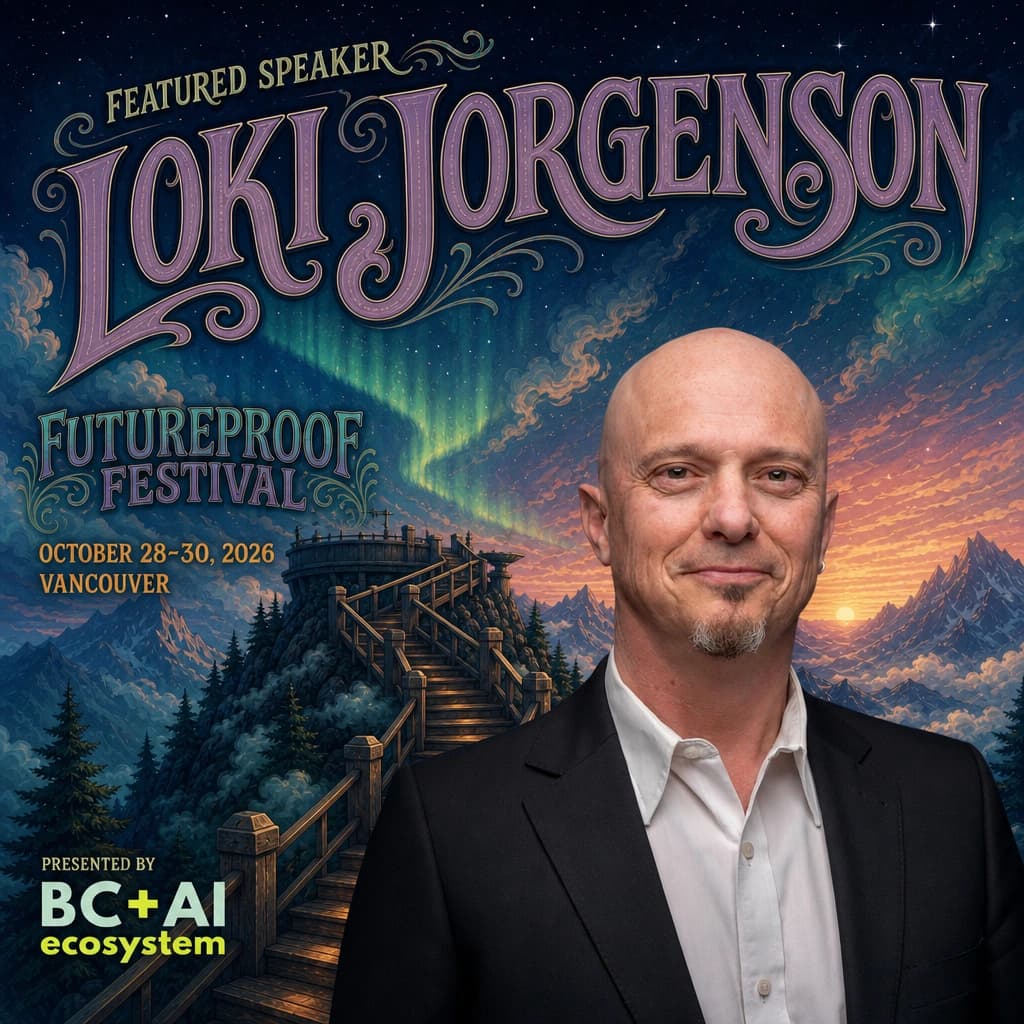
Loki Jorgenson's Futureproof talk asks what would count as evidence of AI consciousness, examining memory, identity and the engineering choices that turn uncertainty into responsibilities.
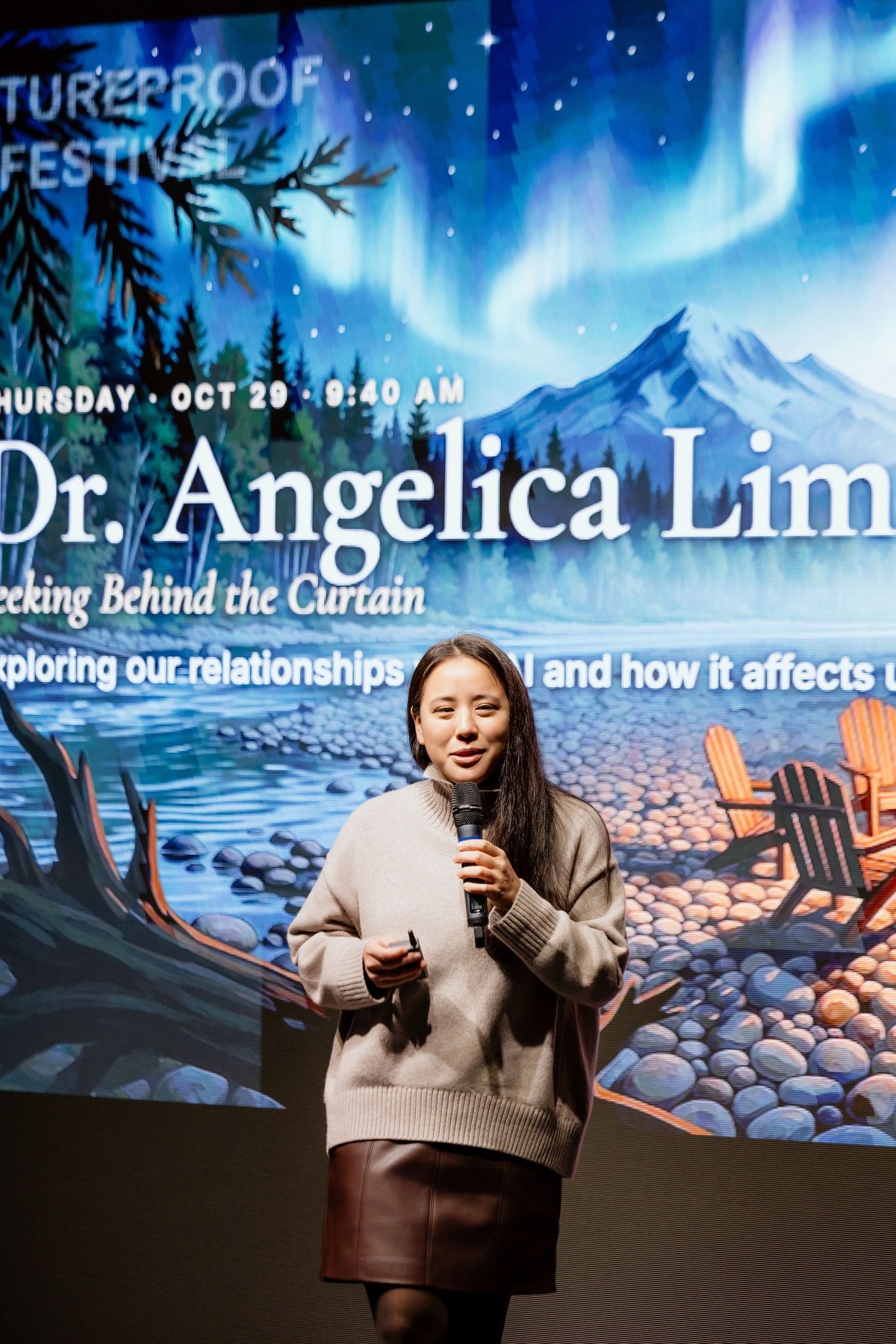
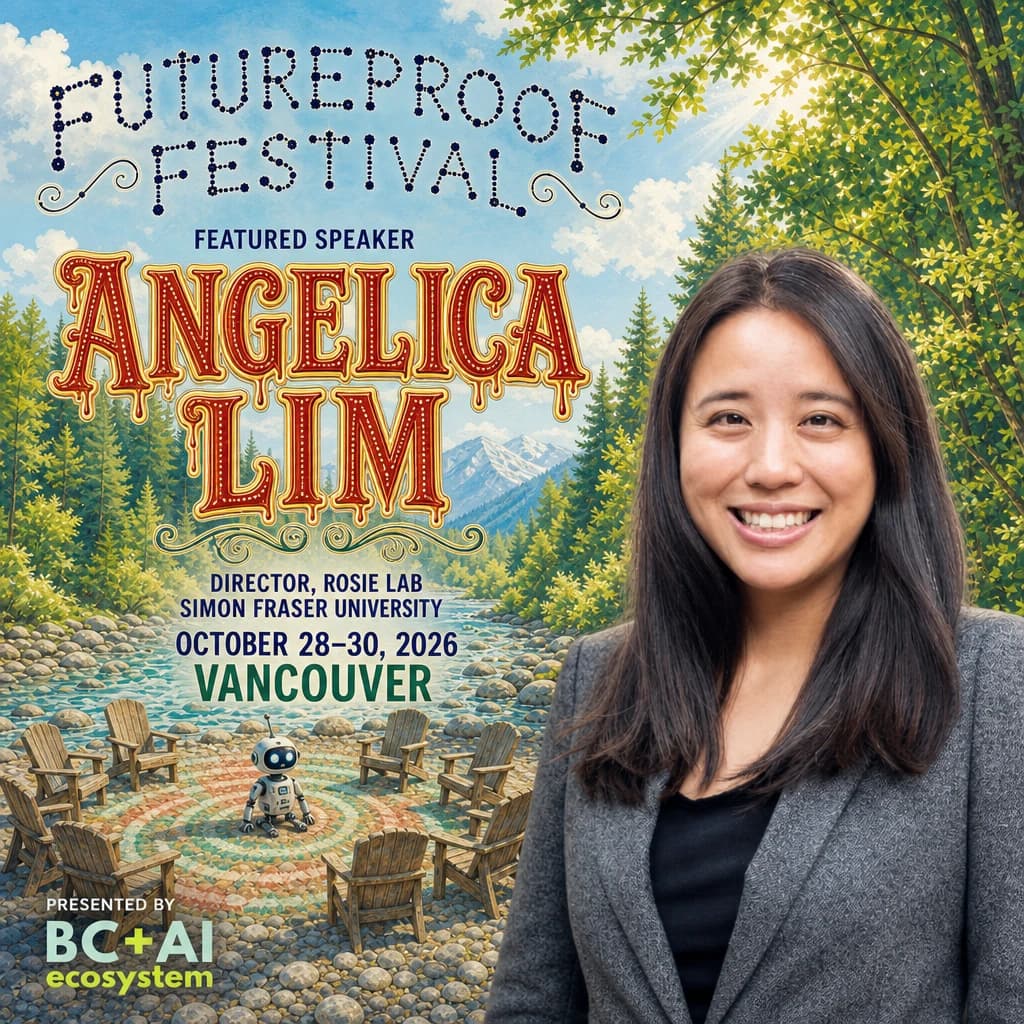
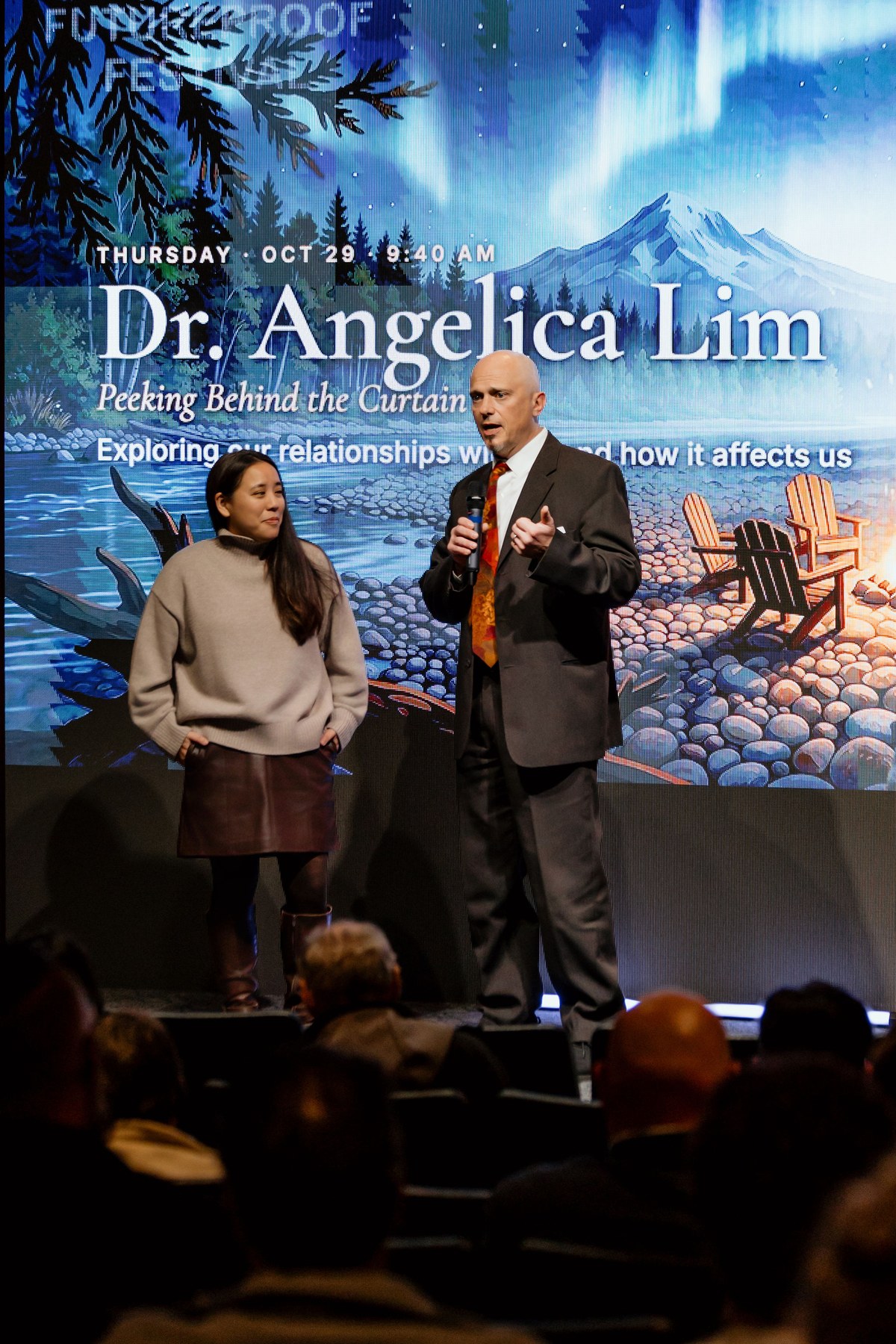
At Futureproof, Angelica Lim examines how a chatbot's voice and personal conversation can shape felt closeness, sharing early research and the case for clearer emotional boundaries.
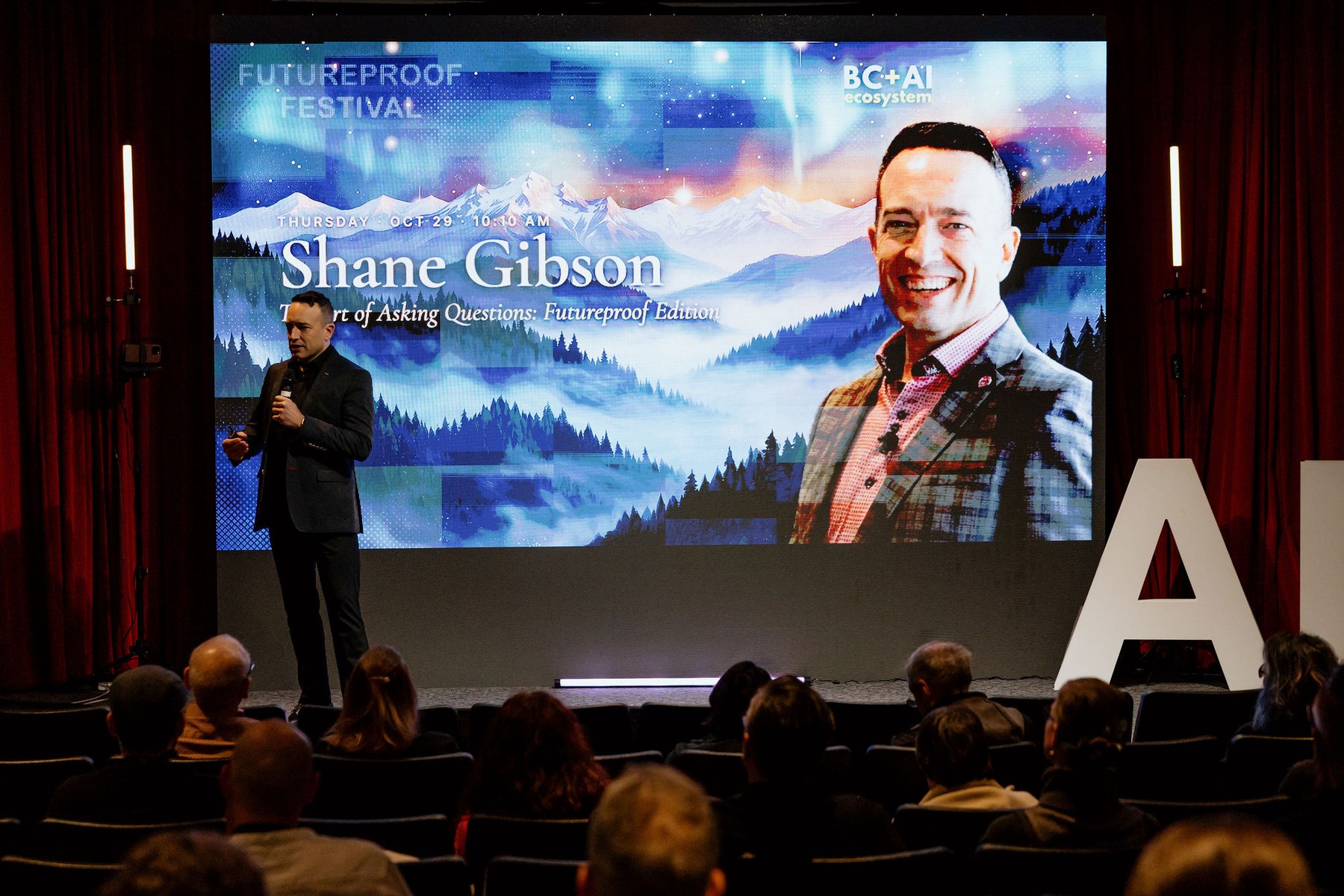
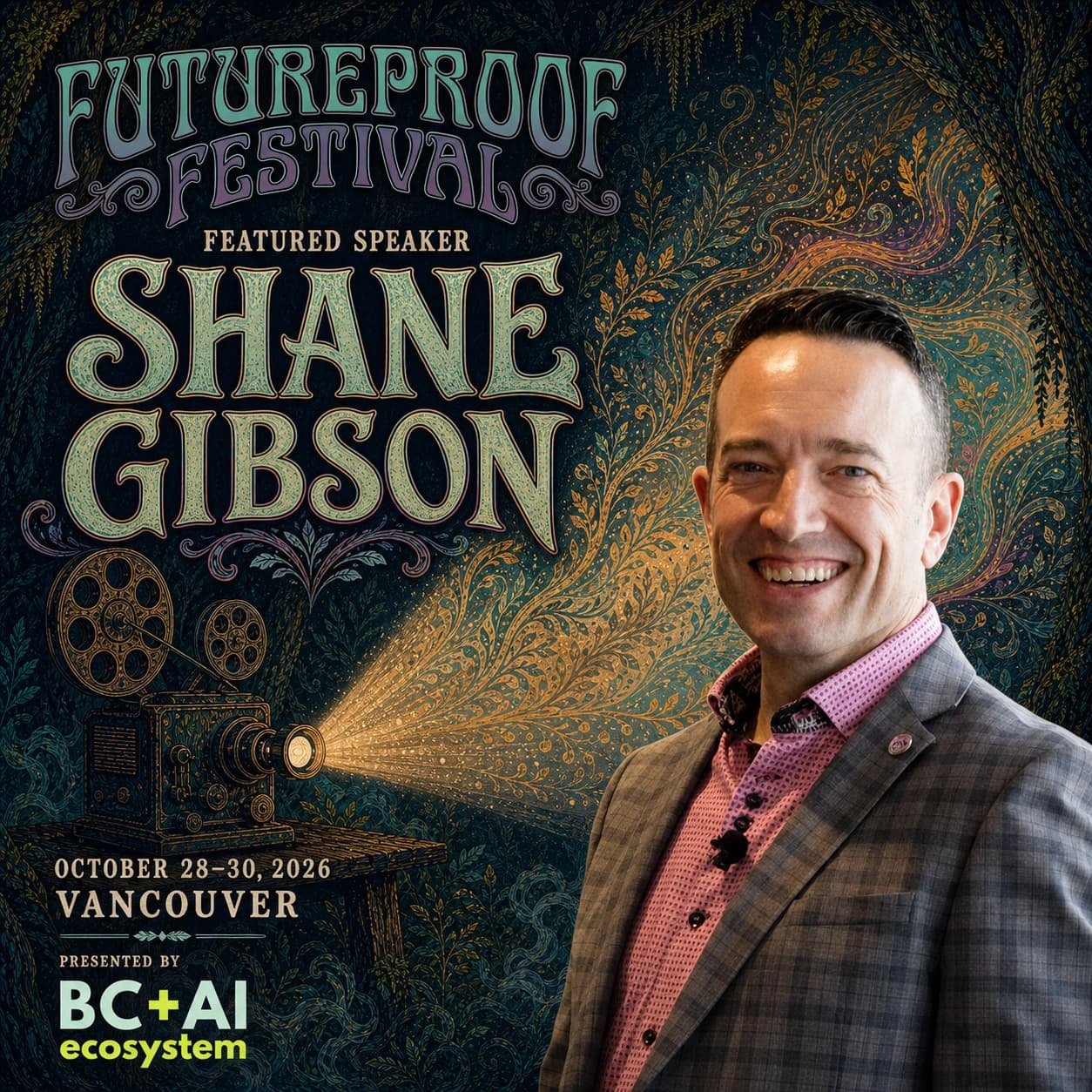
At Futureproof, Shane Gibson shows how conversation review, a personal knowledge base and deliberate corrections can improve an AI agent without outsourcing human judgment.
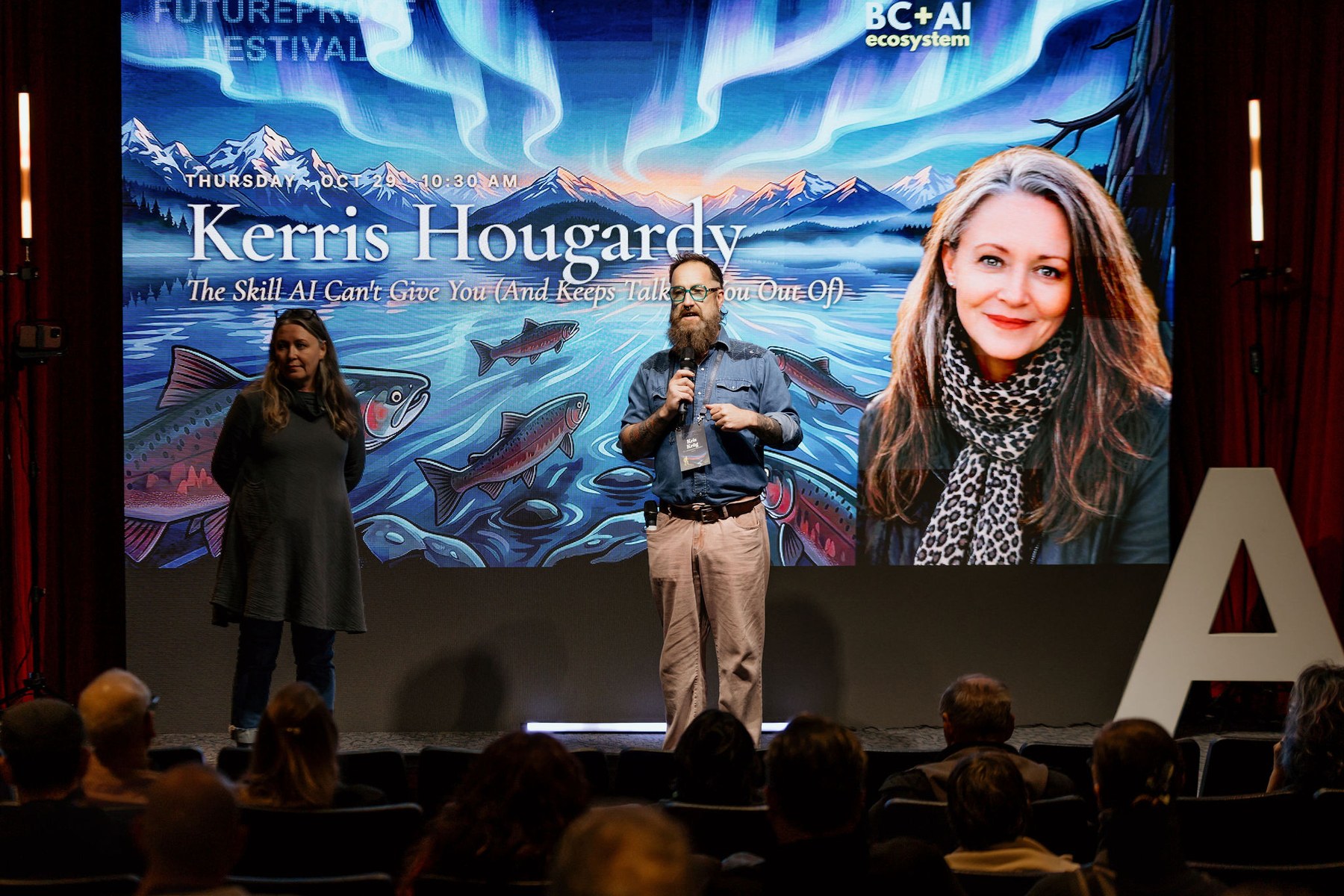
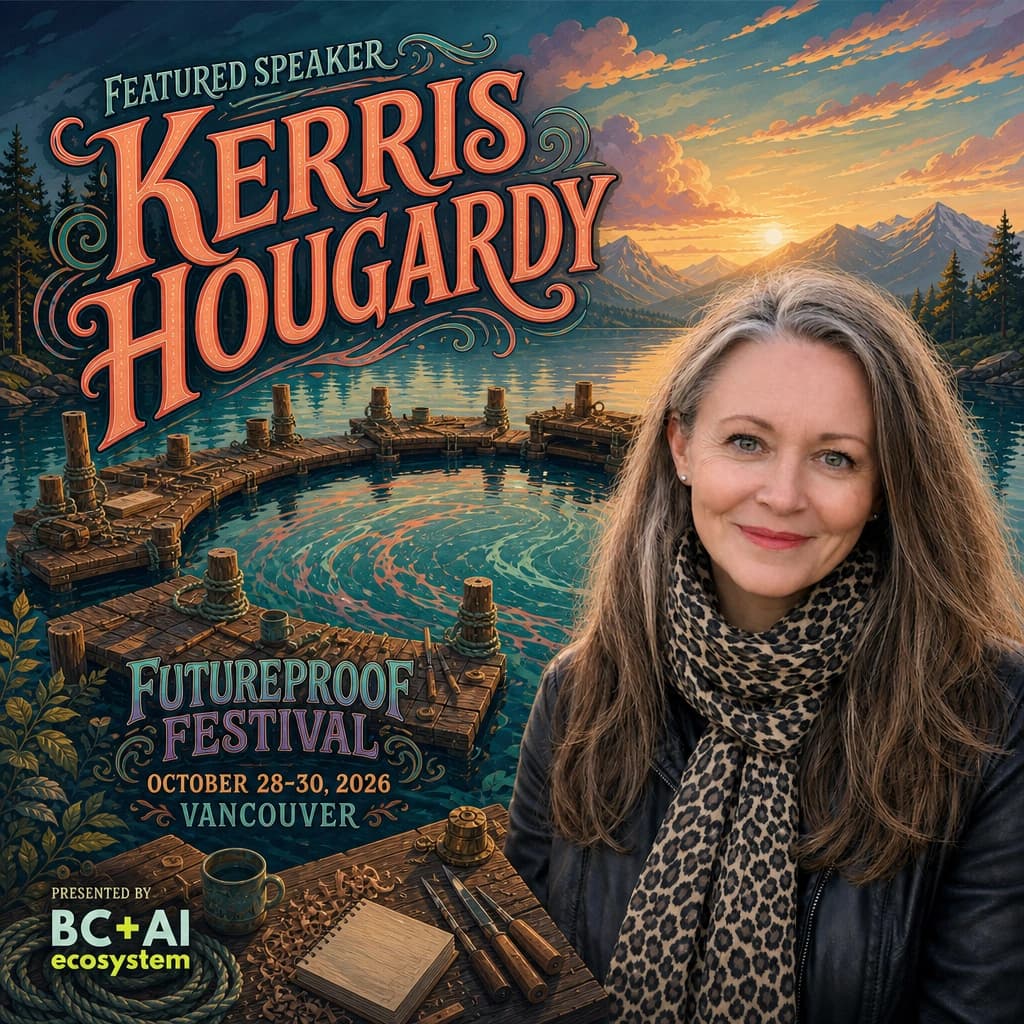
Kerris Hougardy's Futureproof talk asks whether an AI rollout rewards people for questioning outputs, with practical habits for checking work and protecting the skills needed to do it.
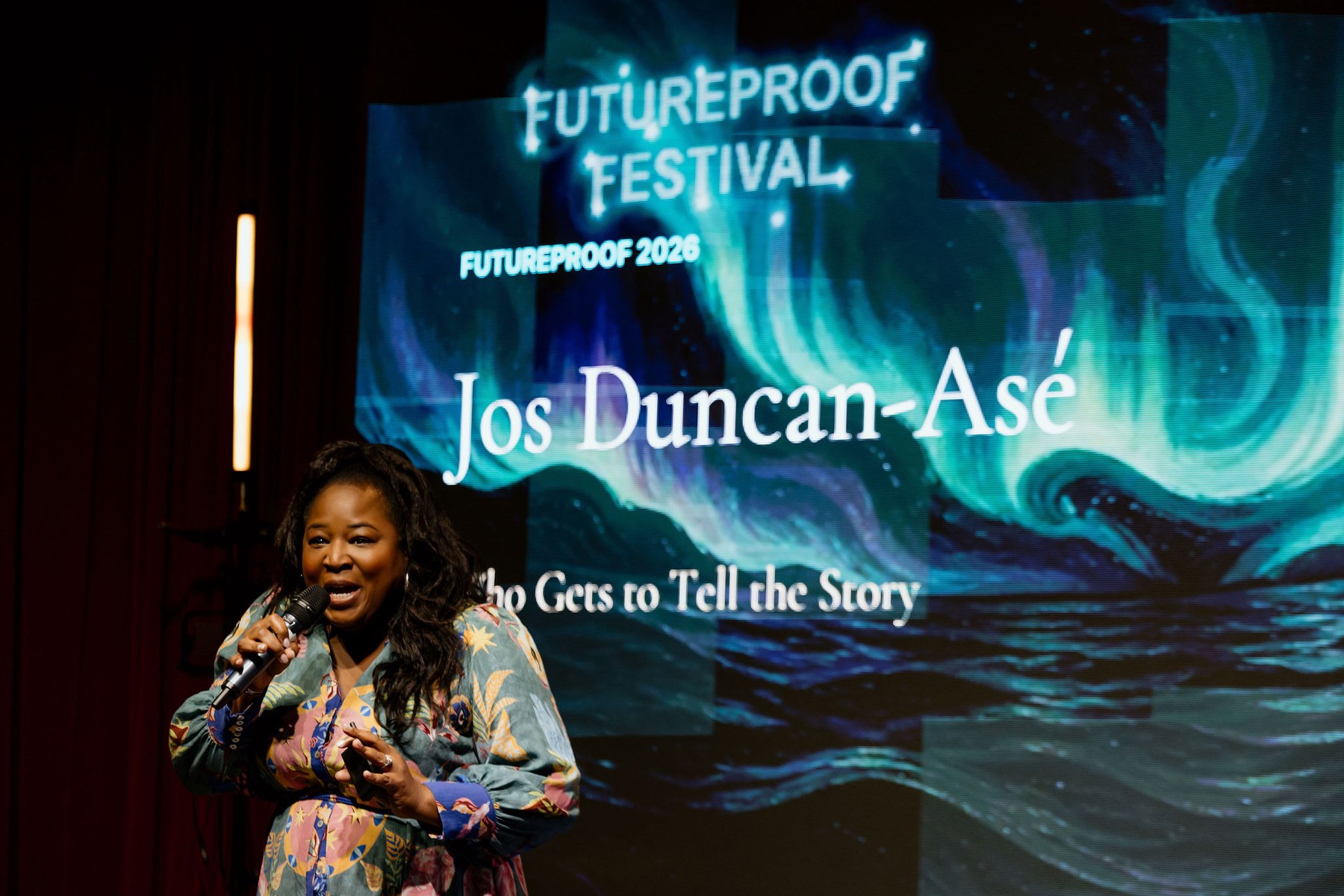
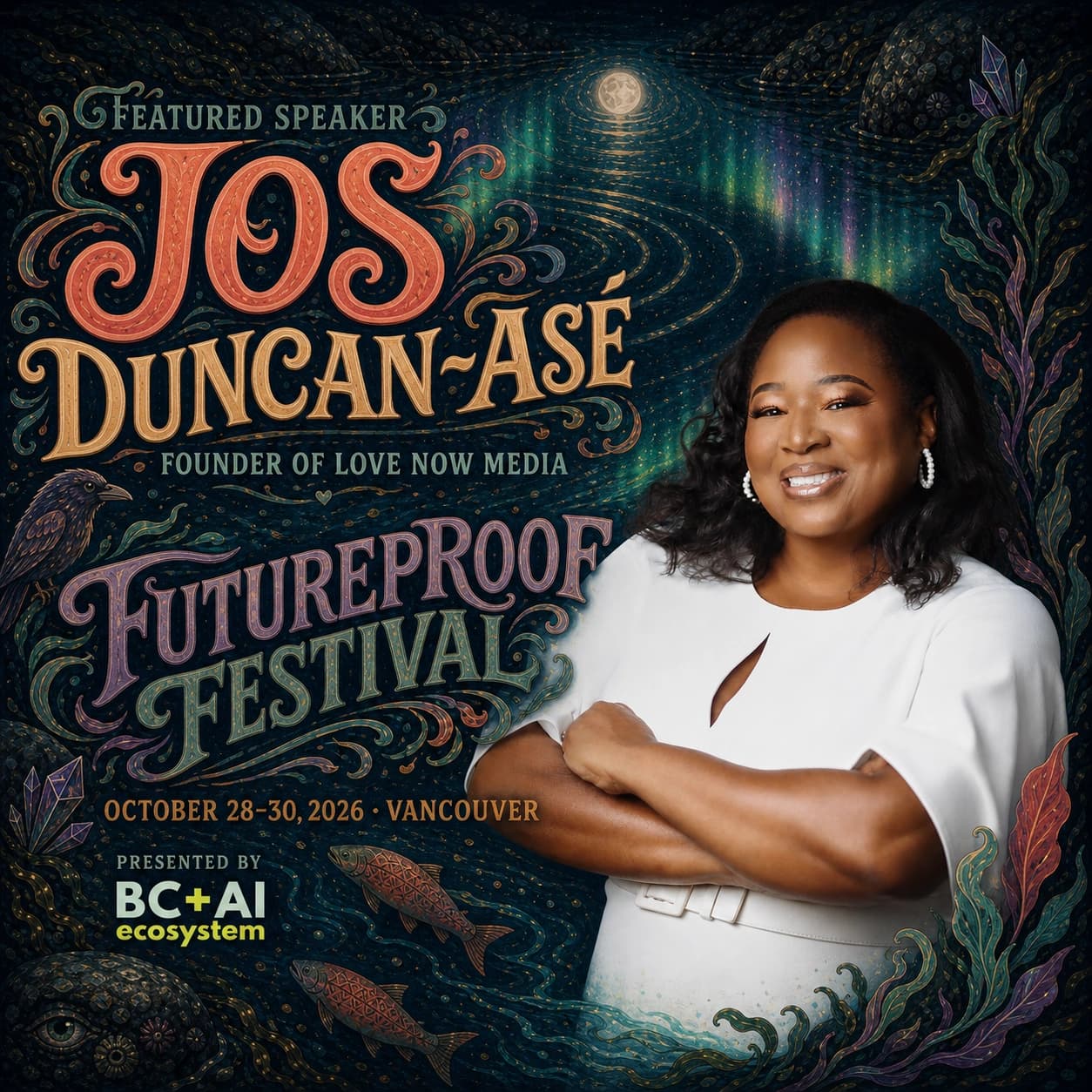
At Futureproof, Love Now Media founder Jos Duncan-Asé shows how community interviews, paid reporting and ancestral storytelling can guide the use of AI in journalism.
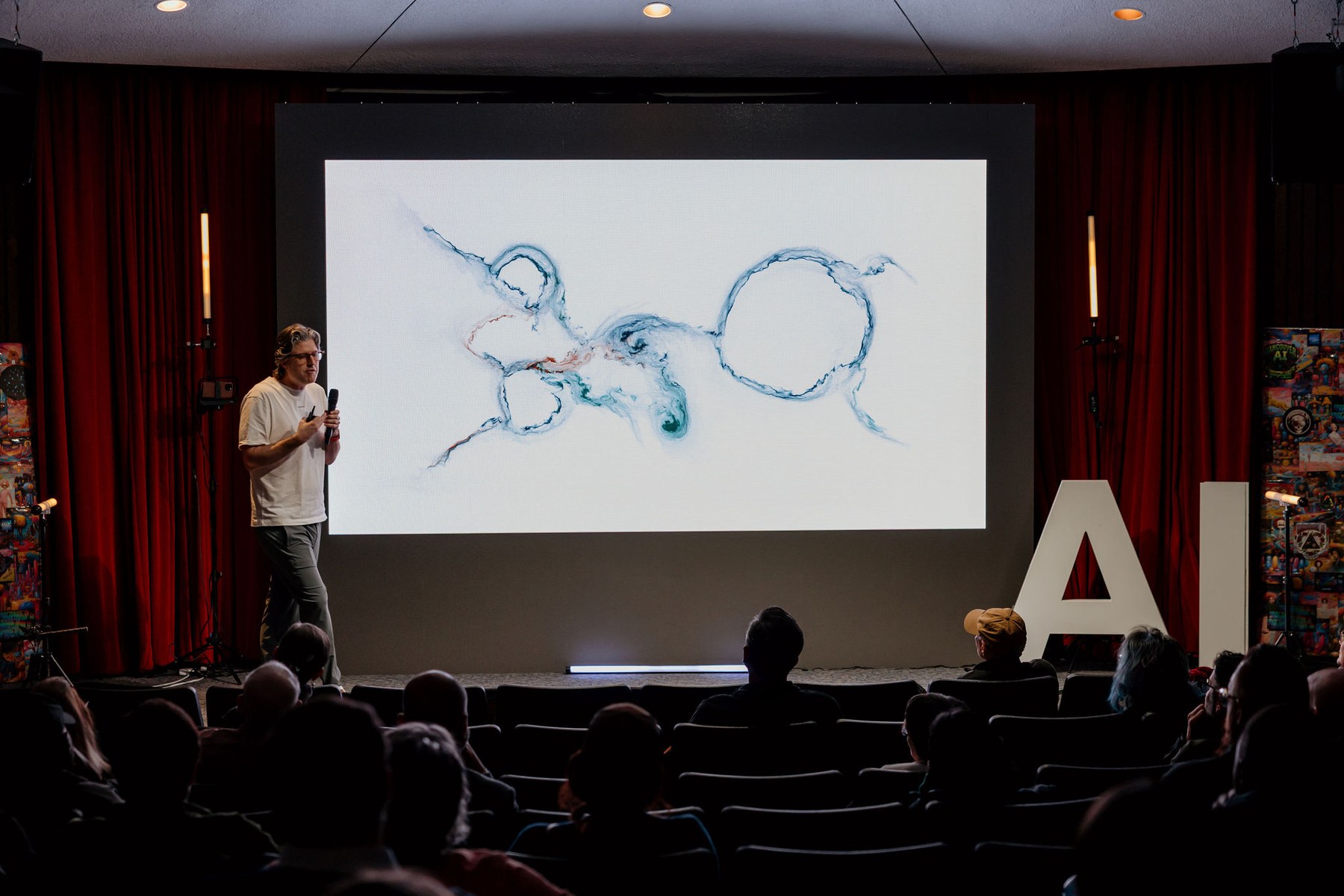
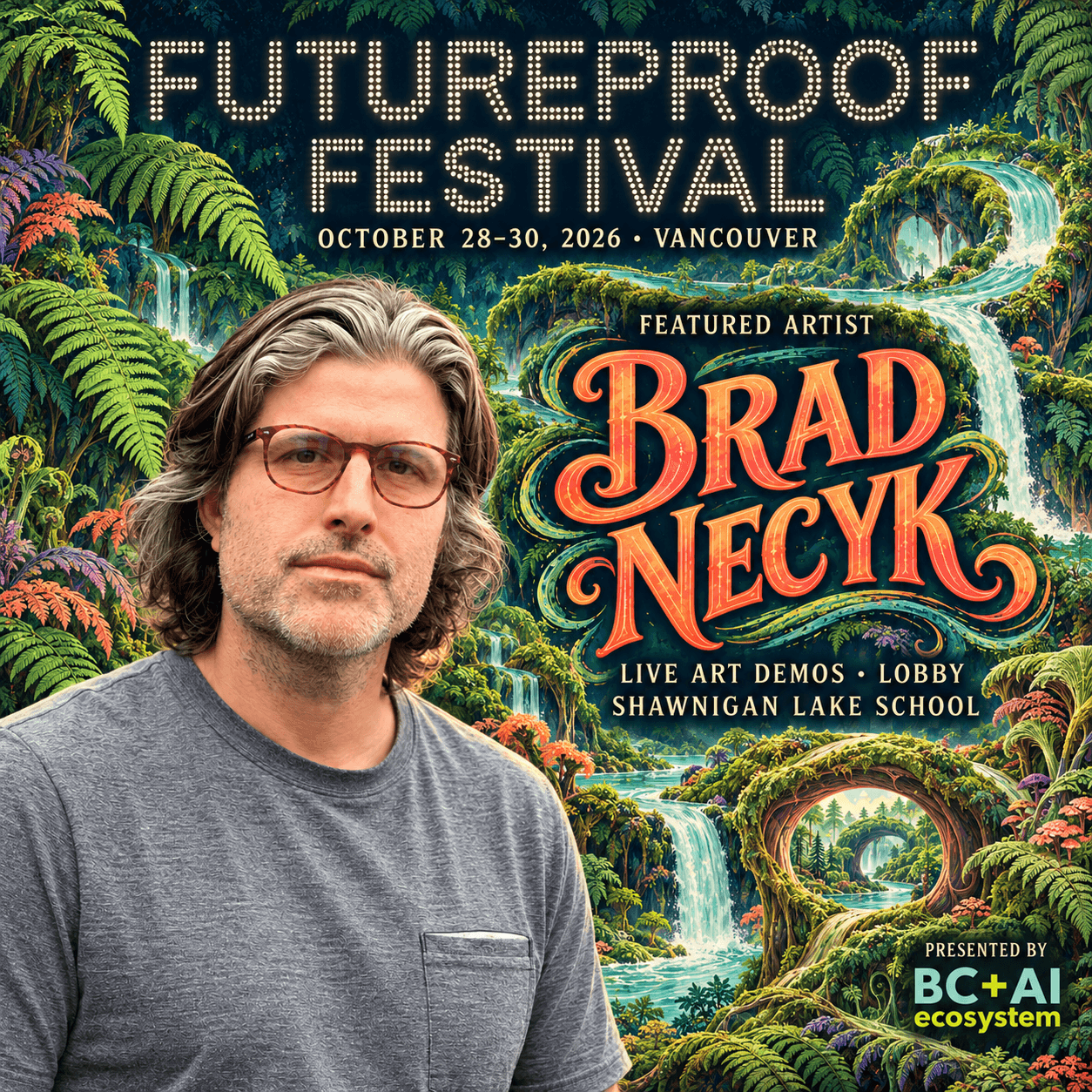
At Futureproof, artist Brad Necyk follows a creative process from spoken associations to computational art, films and MindOS, asking how the work changes the person making it.
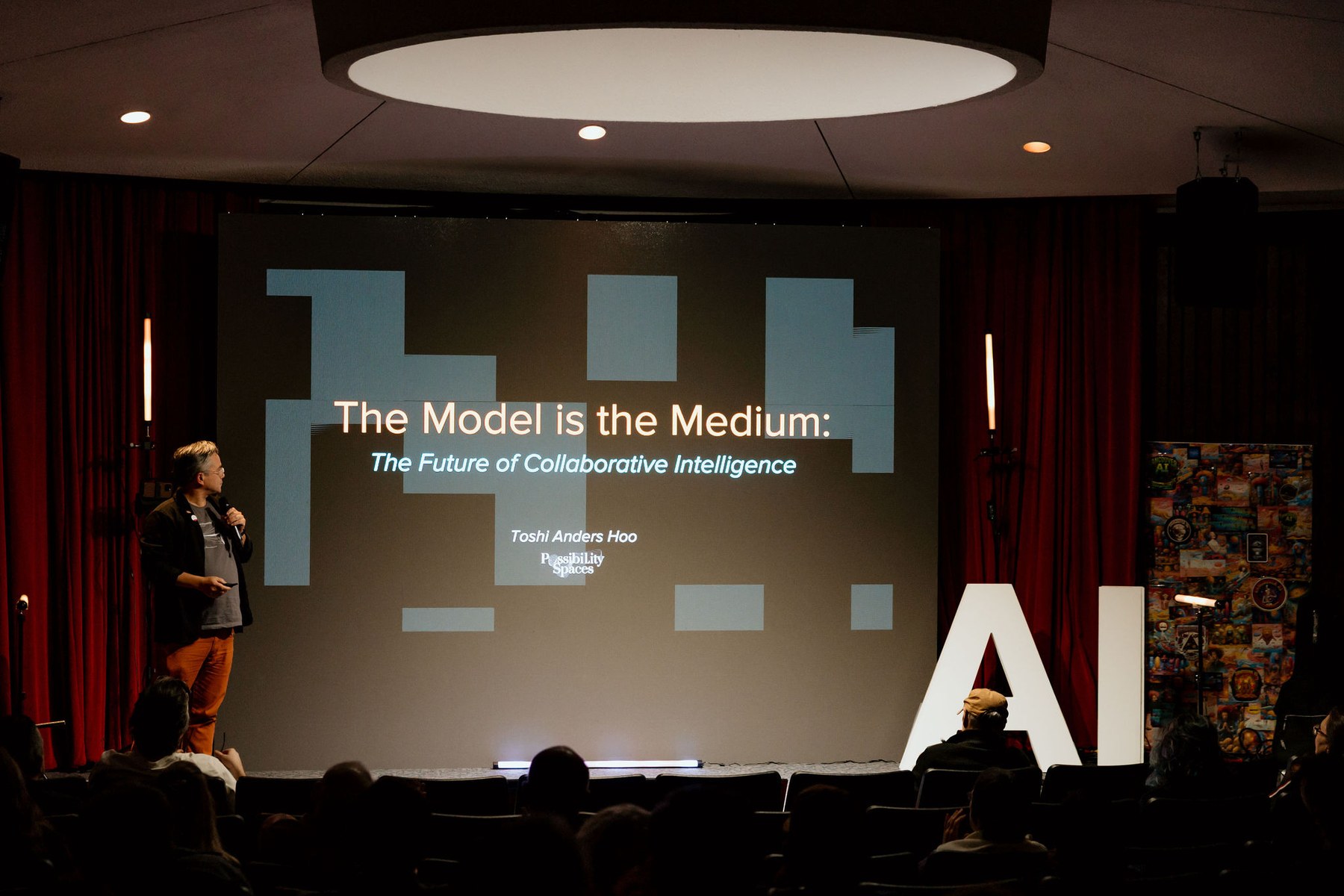
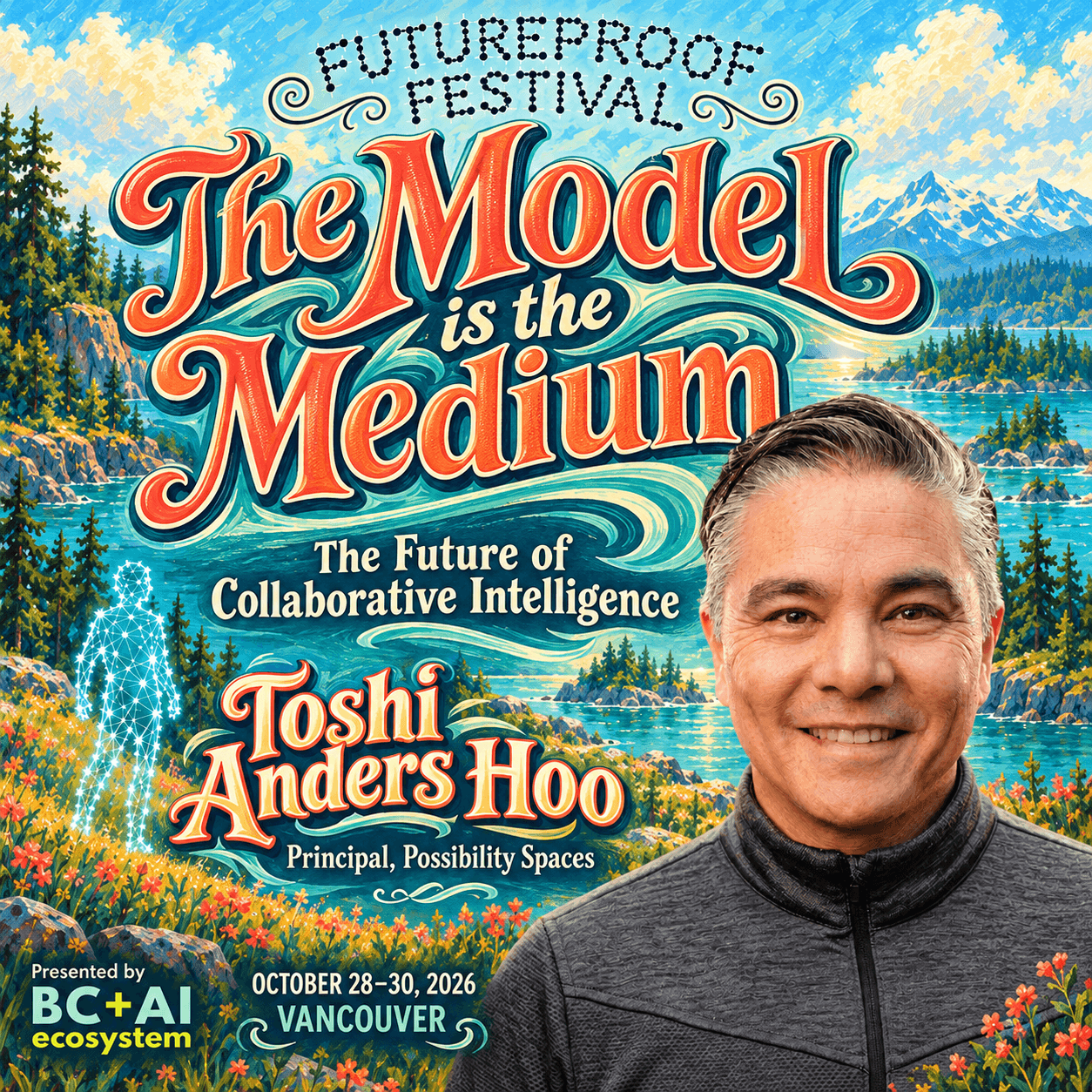
At Futureproof, Toshi Anders Hoo uses possibility cones, an innovation-centre prototype and a water-system model to ask how AI can help people revise their understanding together.
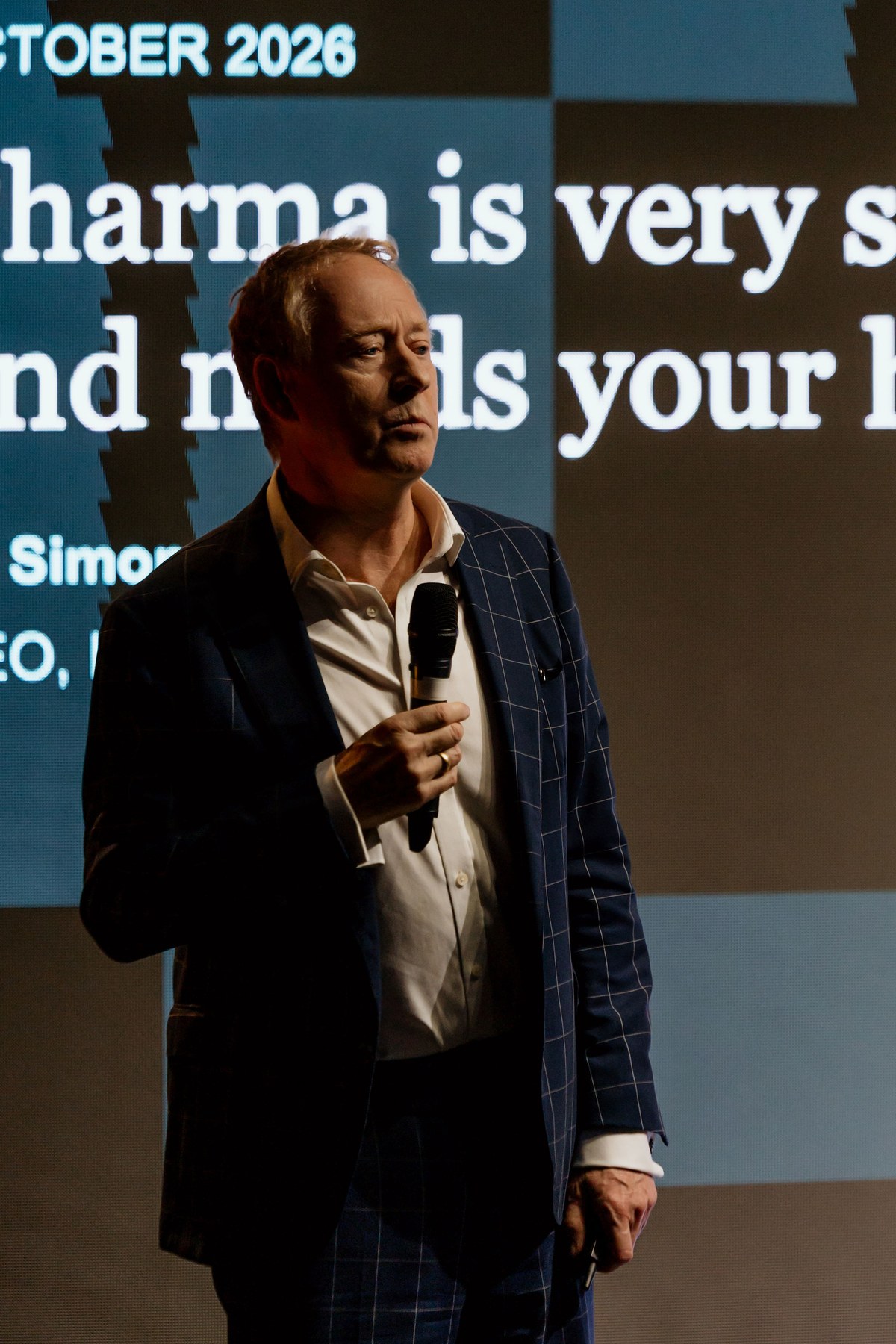
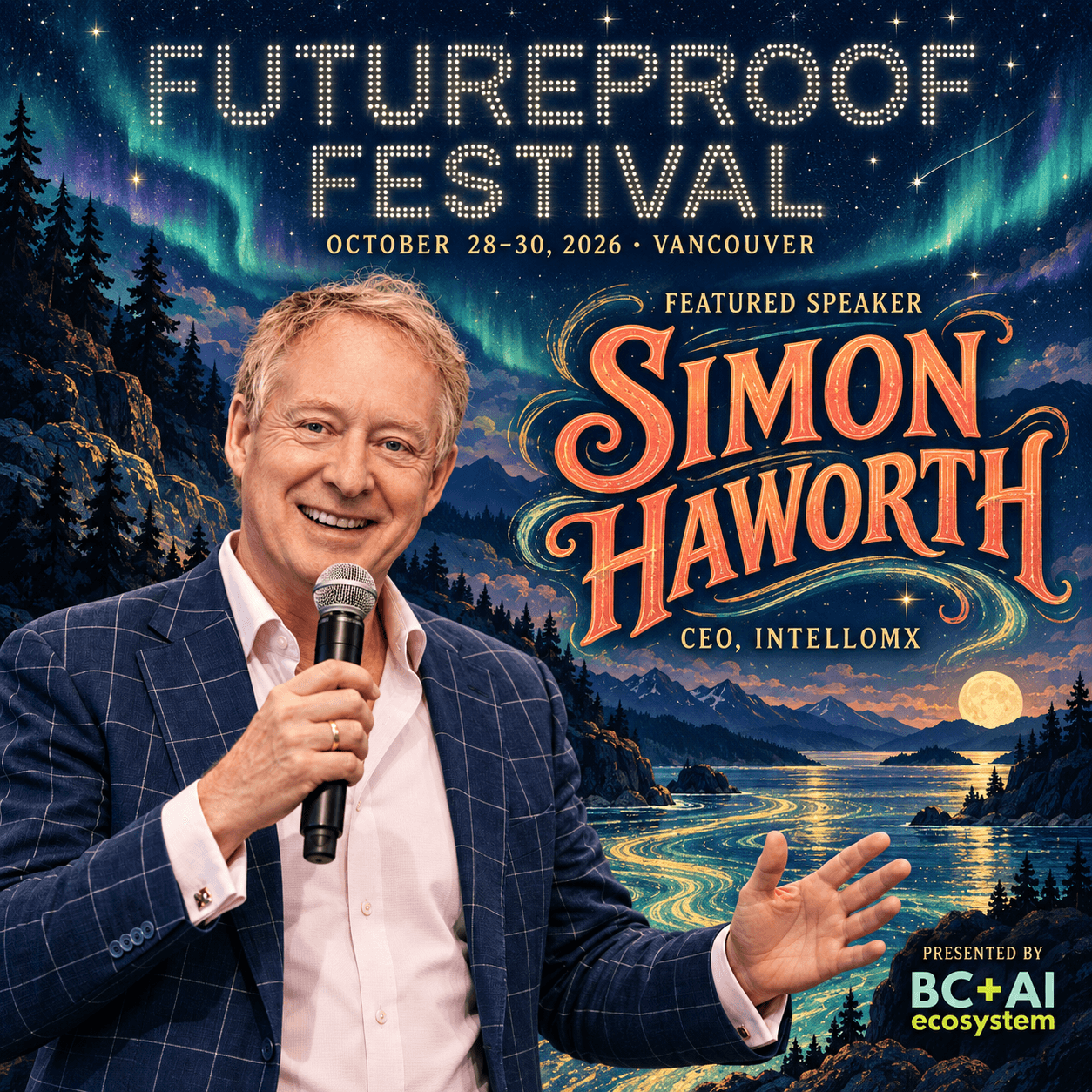
At Futureproof, Simon Haworth argues for AI that investigates disease biology, with physical experiments, better disease models and coordination across BC's life sciences community.
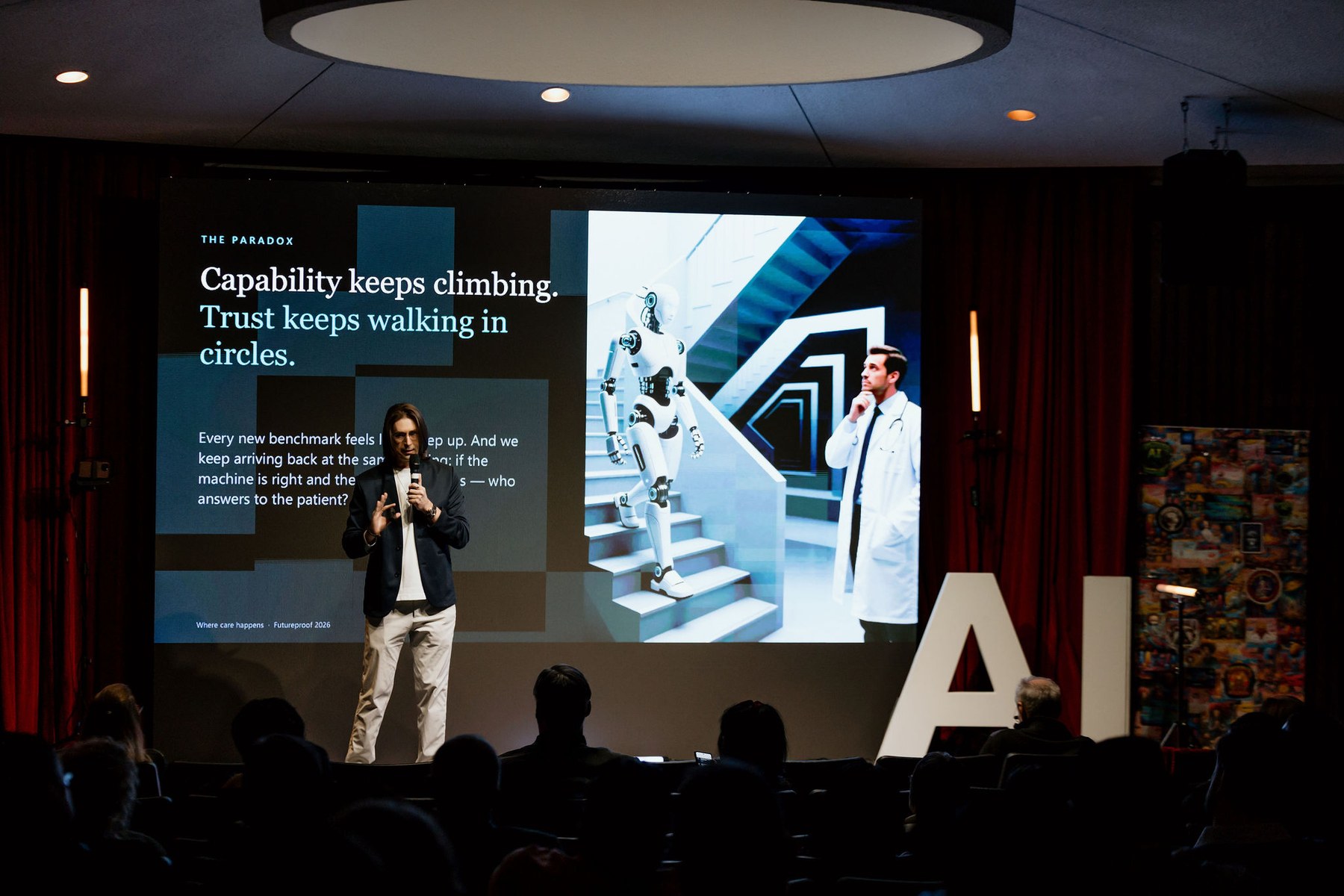
At Futureproof, Dean Shev examines how health AI answers are checked, what patients consent to and where a human takes responsibility, with a research prototype and a pointed data-sharing debate.
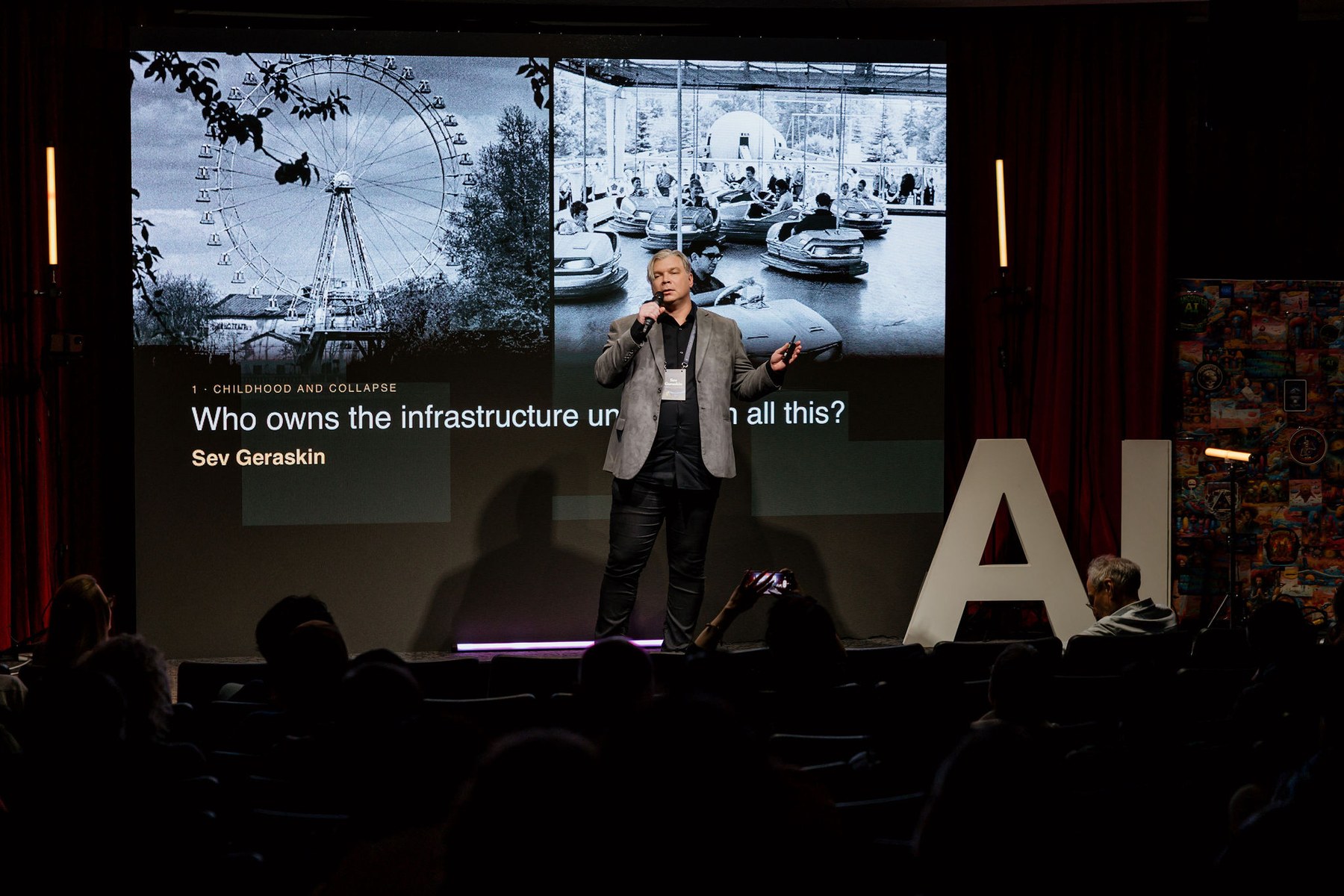
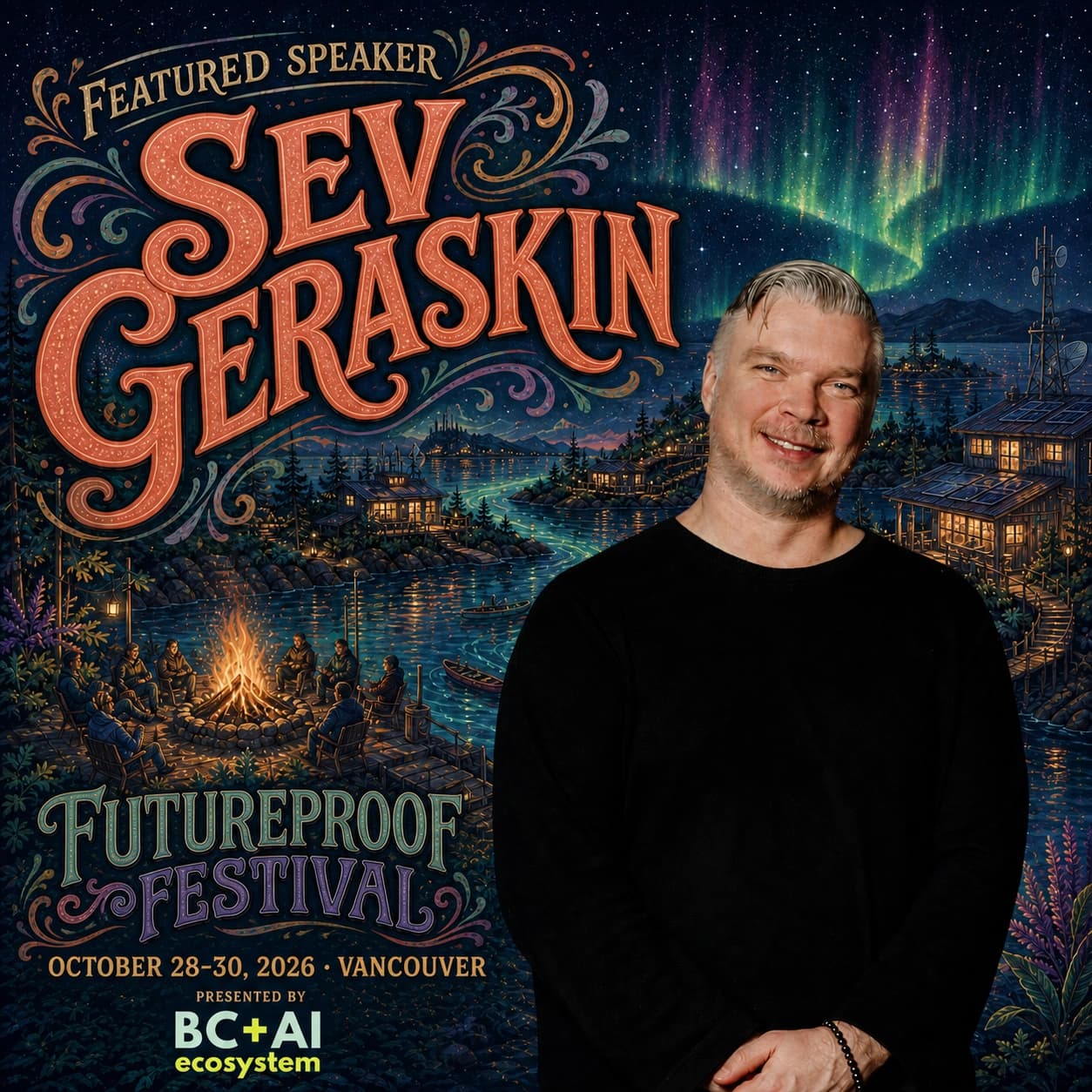
At Futureproof, Sev Geraskin connects distributed AI infrastructure to the people who maintain it, with practical failure monitoring and a proposal for community compute.
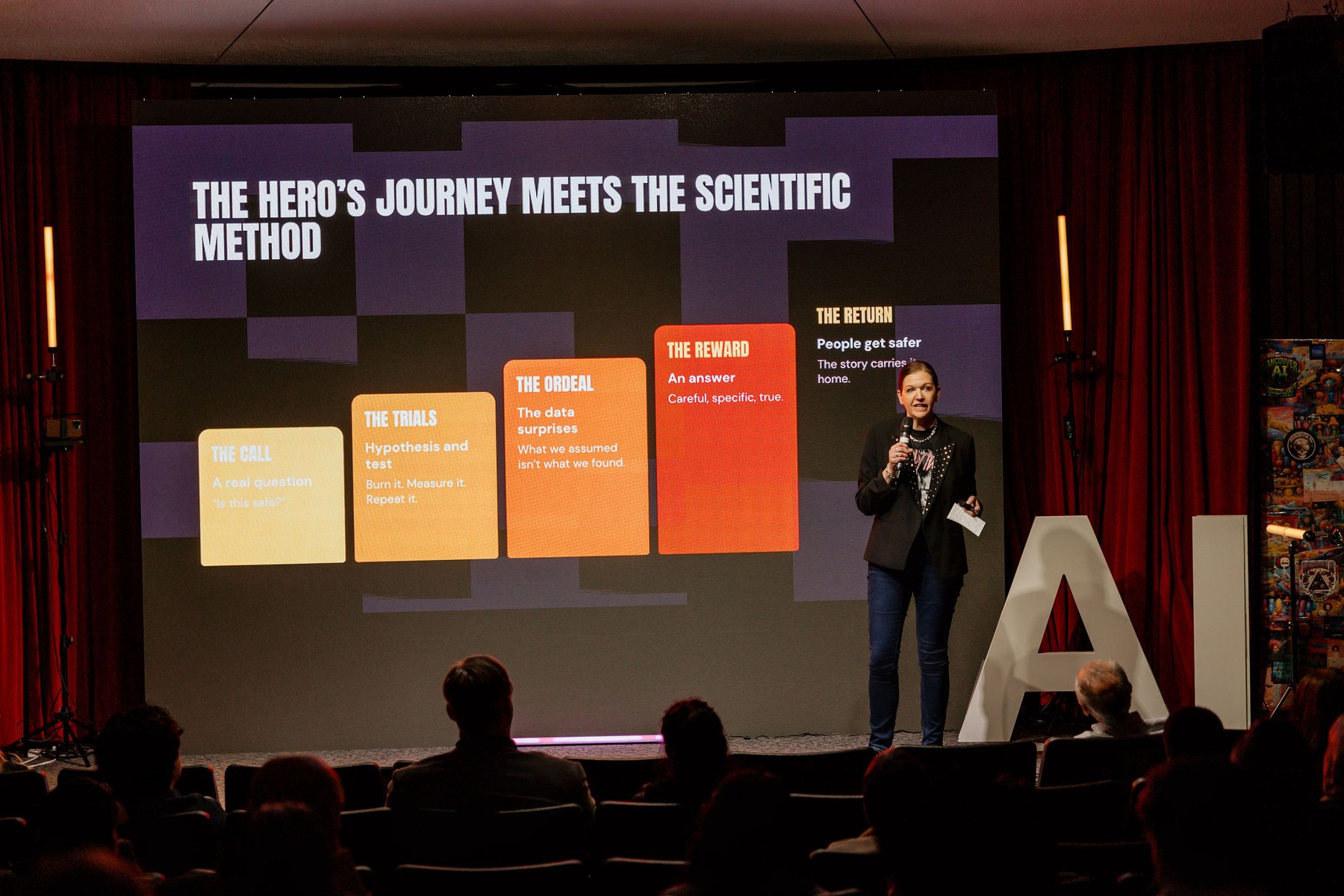
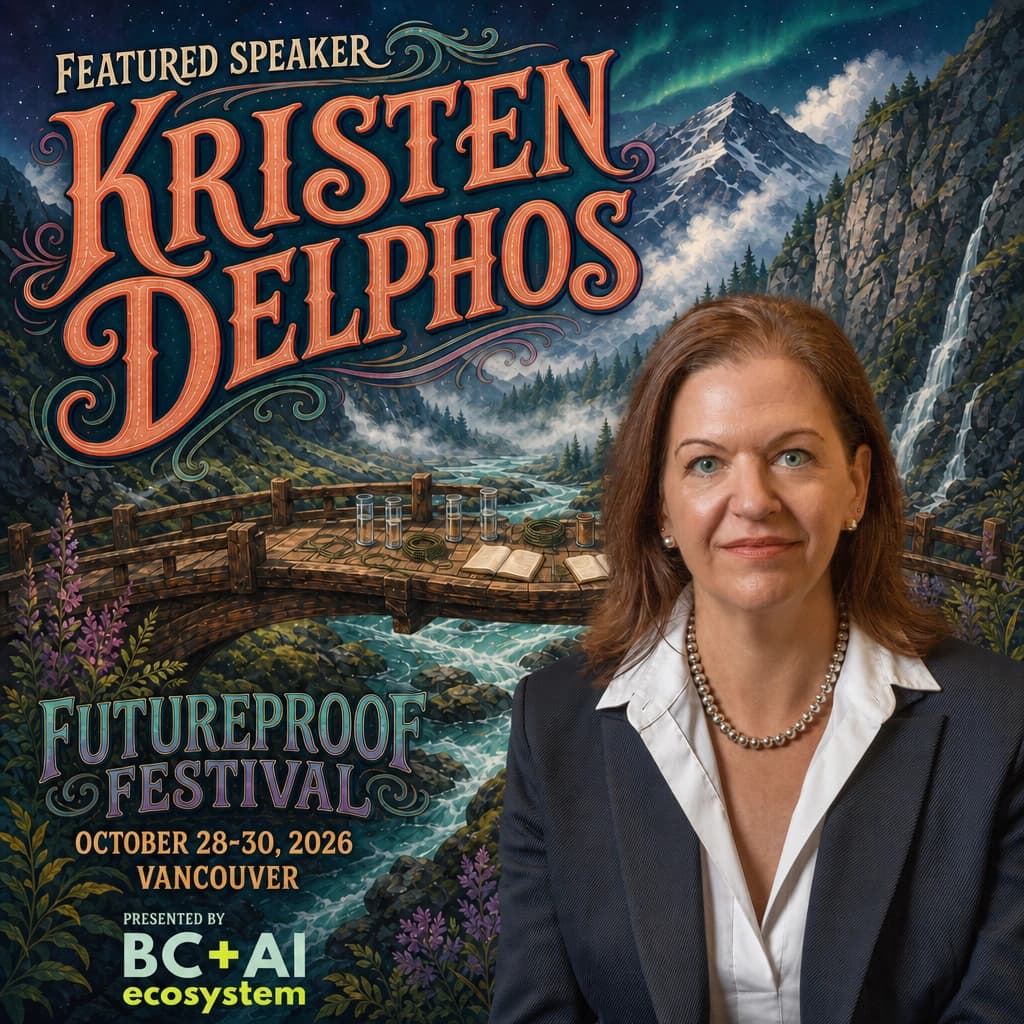
Kristen Delphos shows how skeptical science writers built their own AI workflow at UL Research Institutes, with source limits, better questions and scientists reviewing the claims.
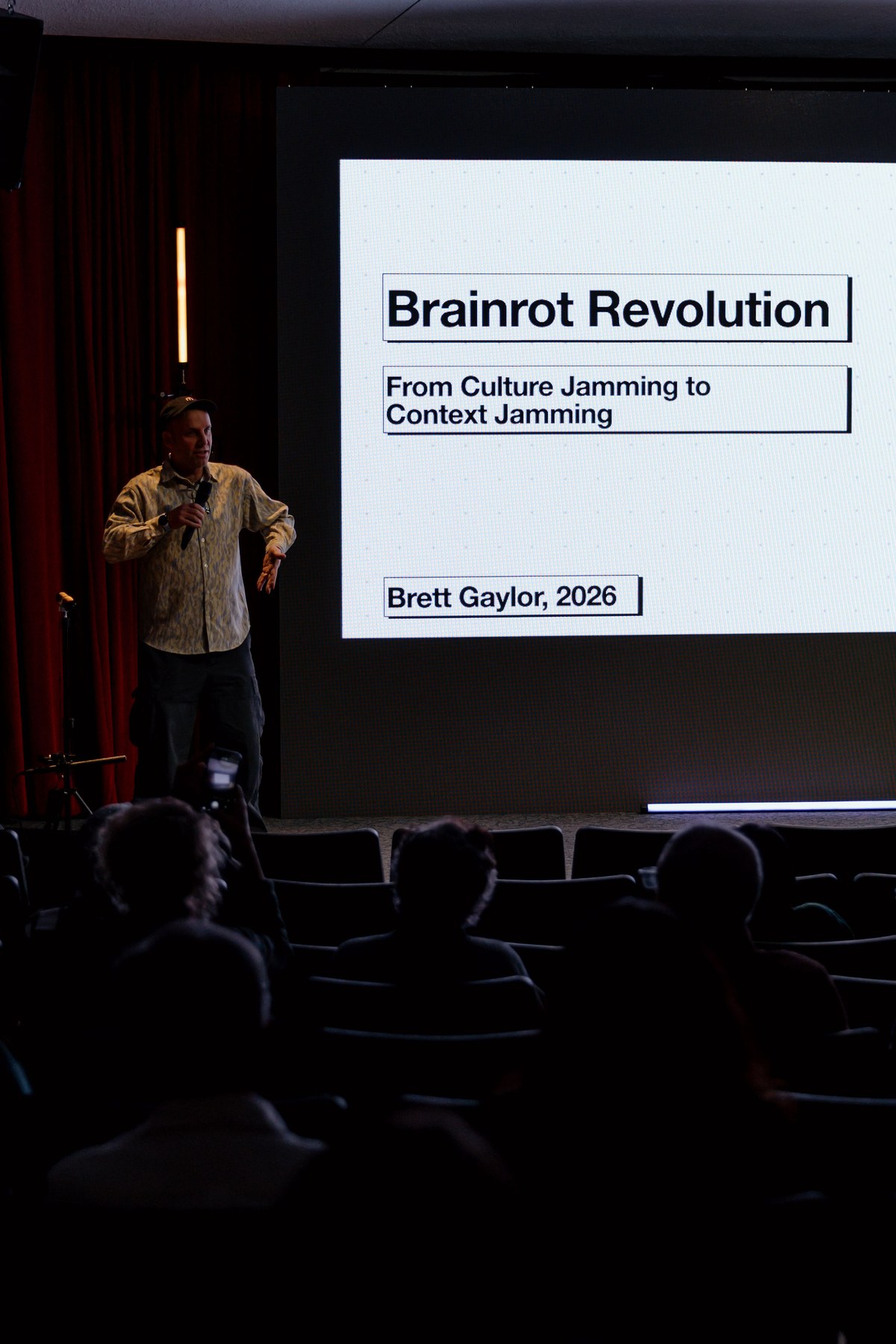
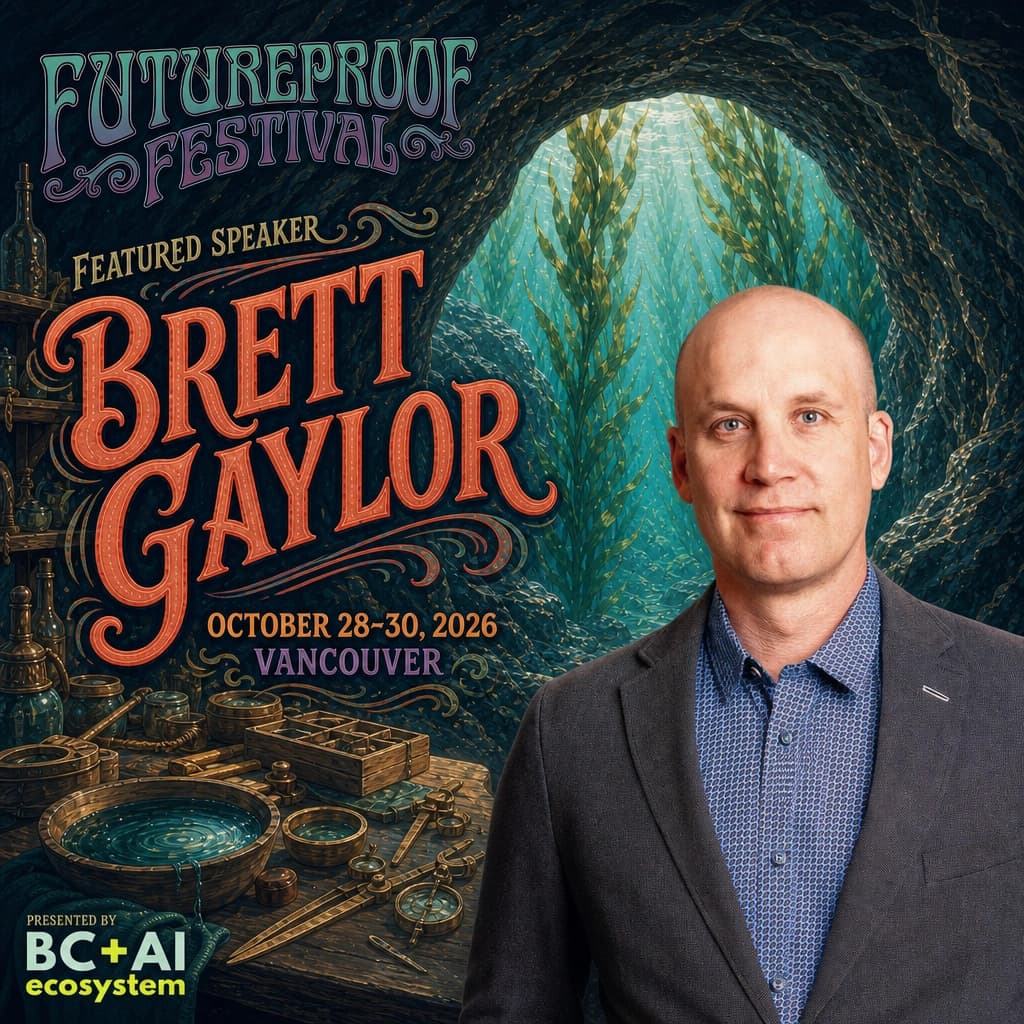
At Futureproof, documentary maker Brett Gaylor uses a motion-controlled game and an AR face filter to question platform power, with a commitment to making the trick visible.
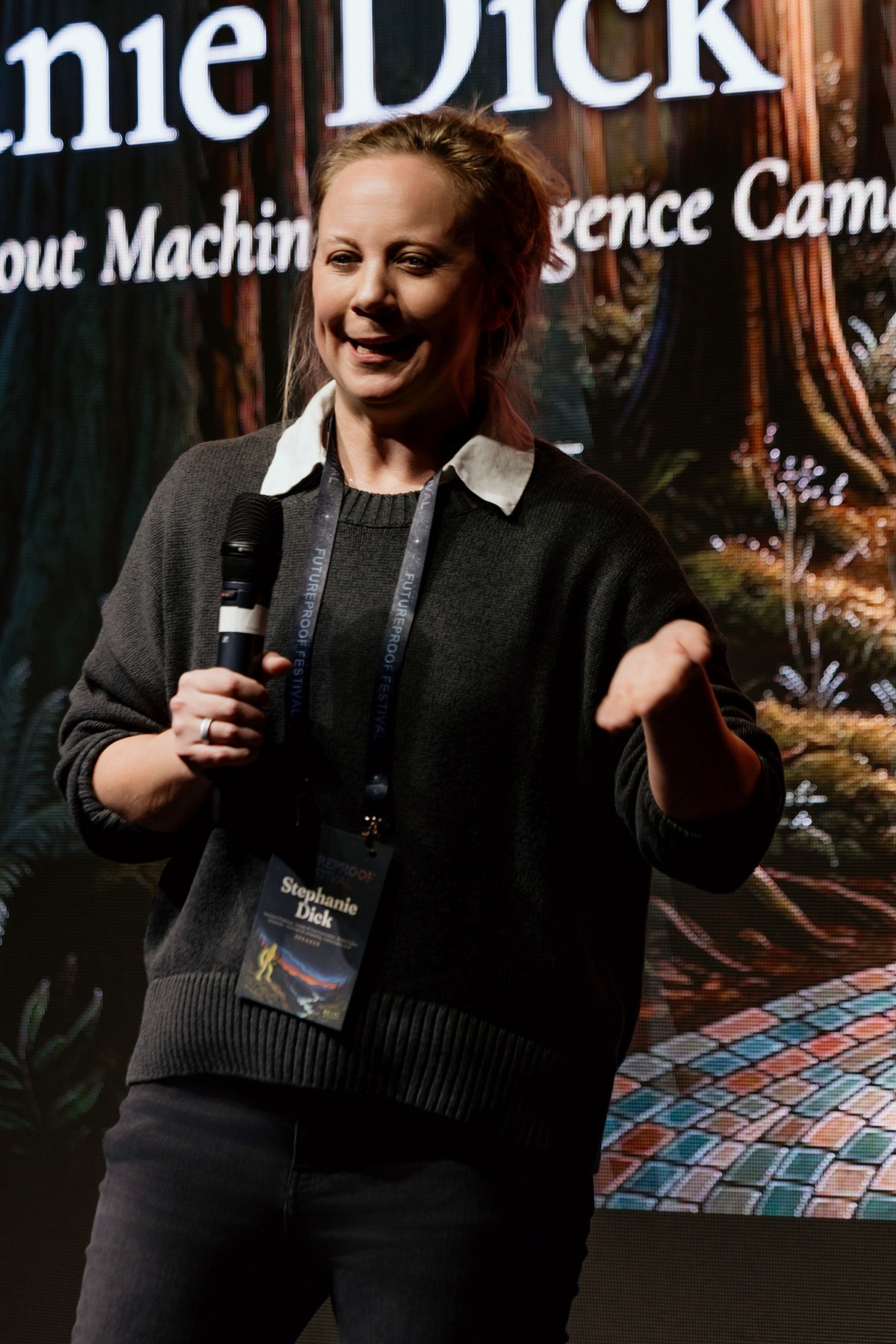
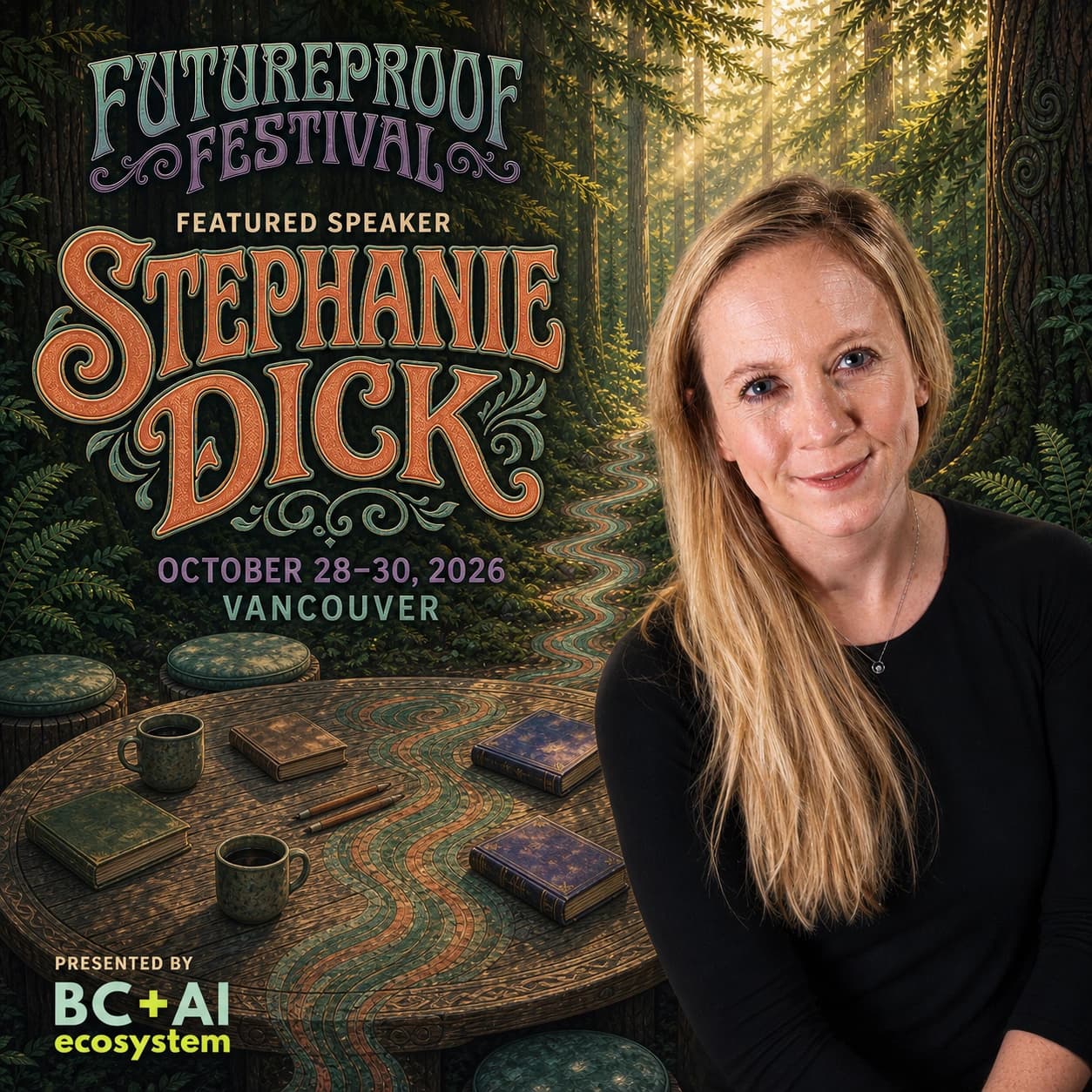
Historian Stephanie Dick traces changing ideas of intelligence at Futureproof, from symbolic reasoning and expert knowledge to statistical language systems and collective human work.
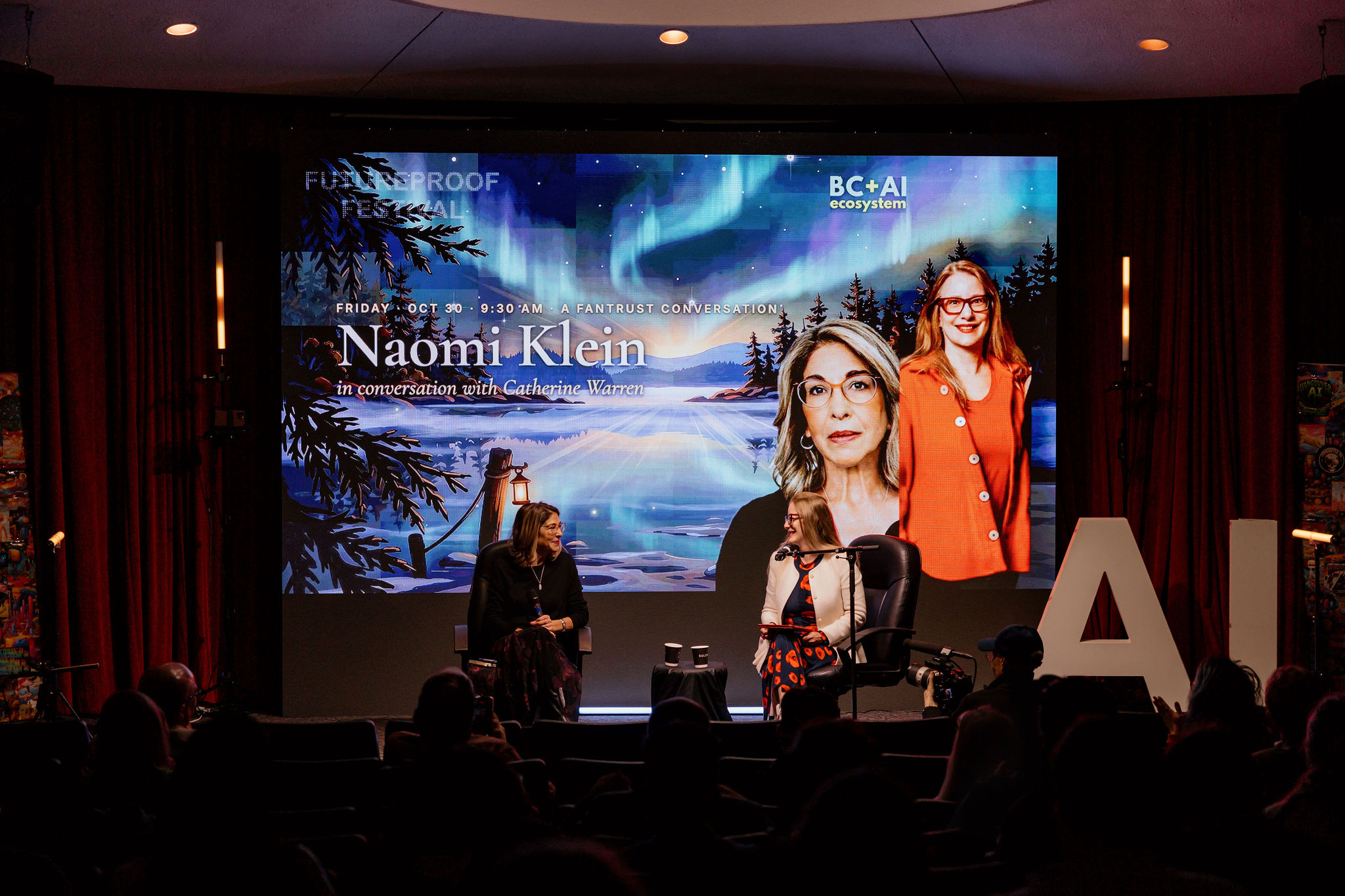
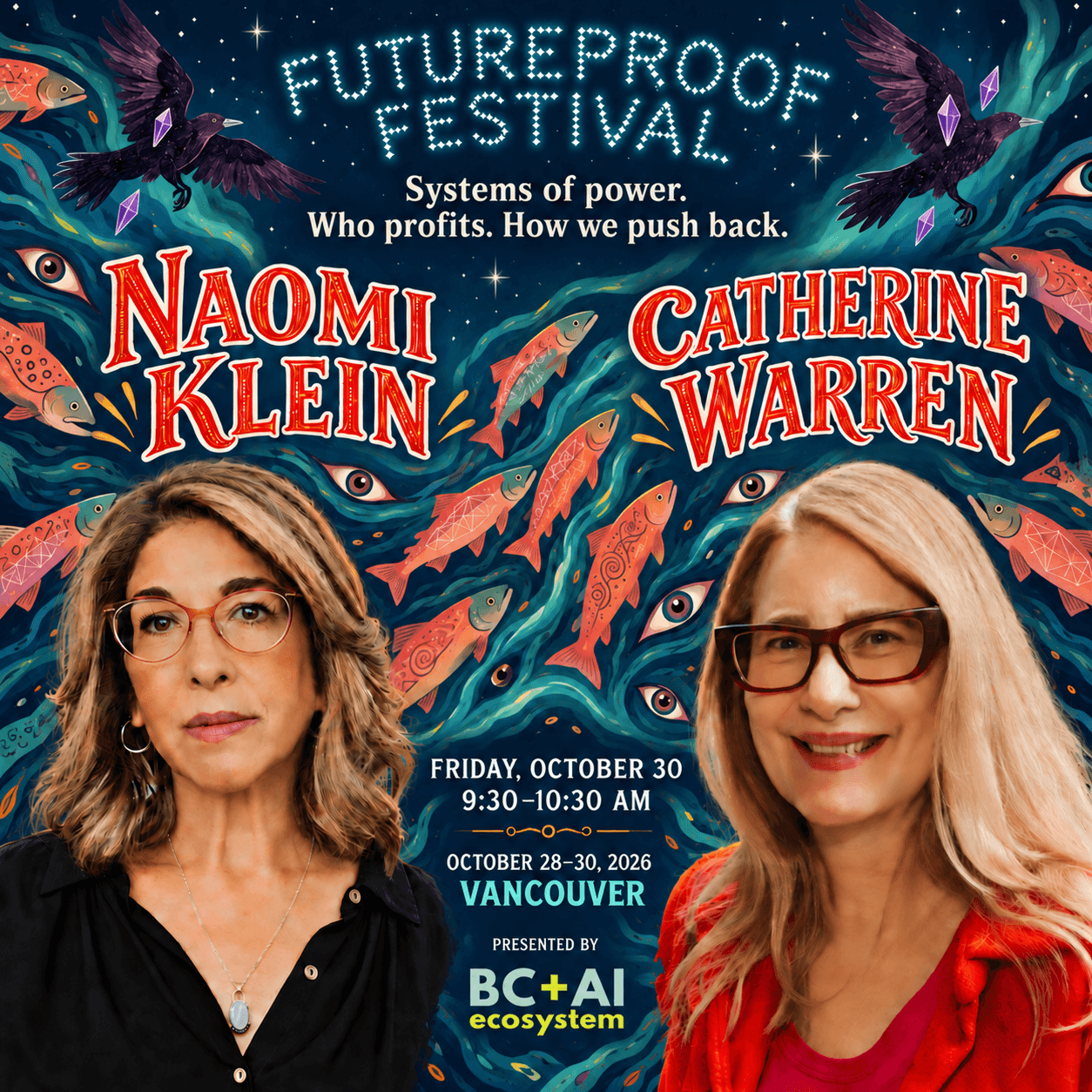
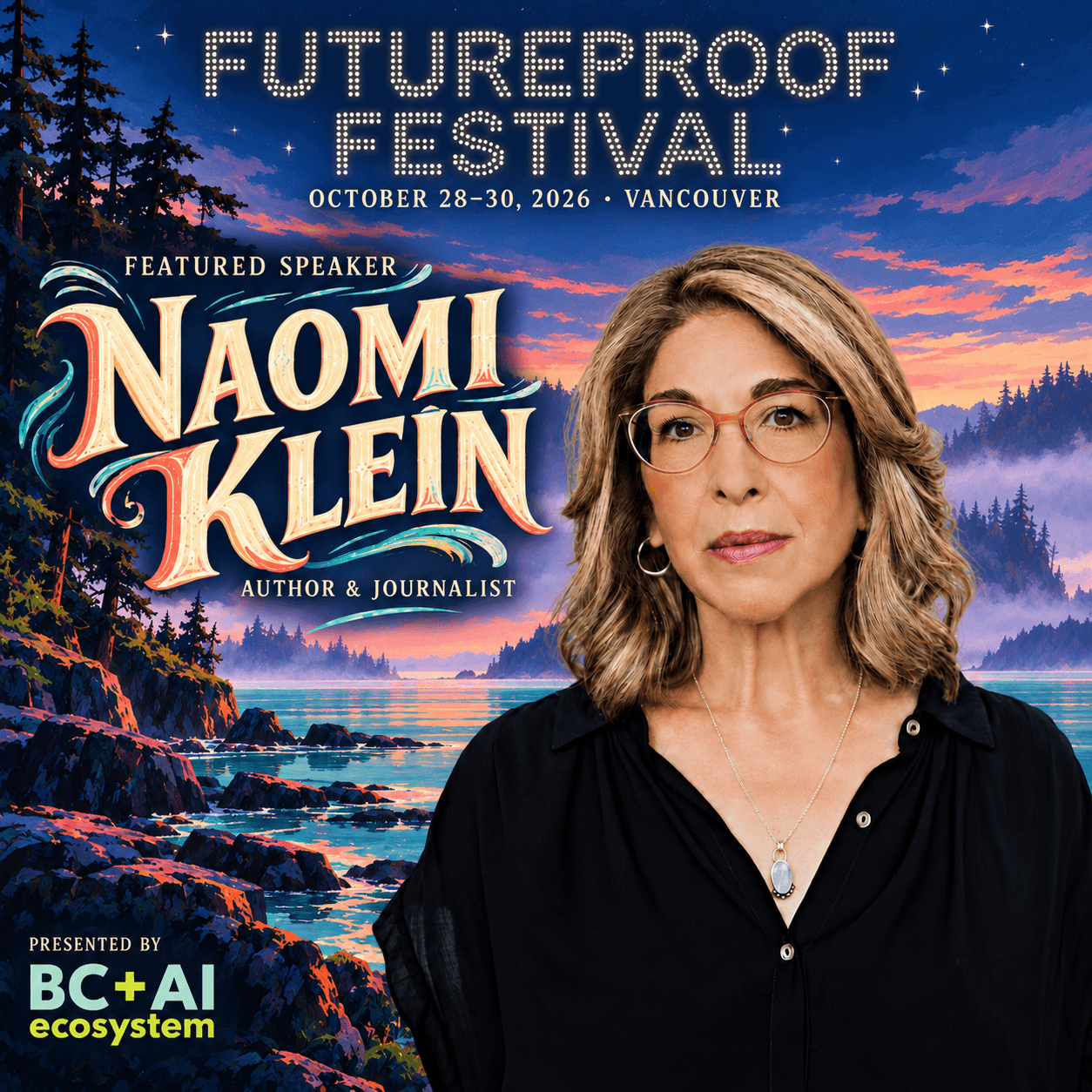
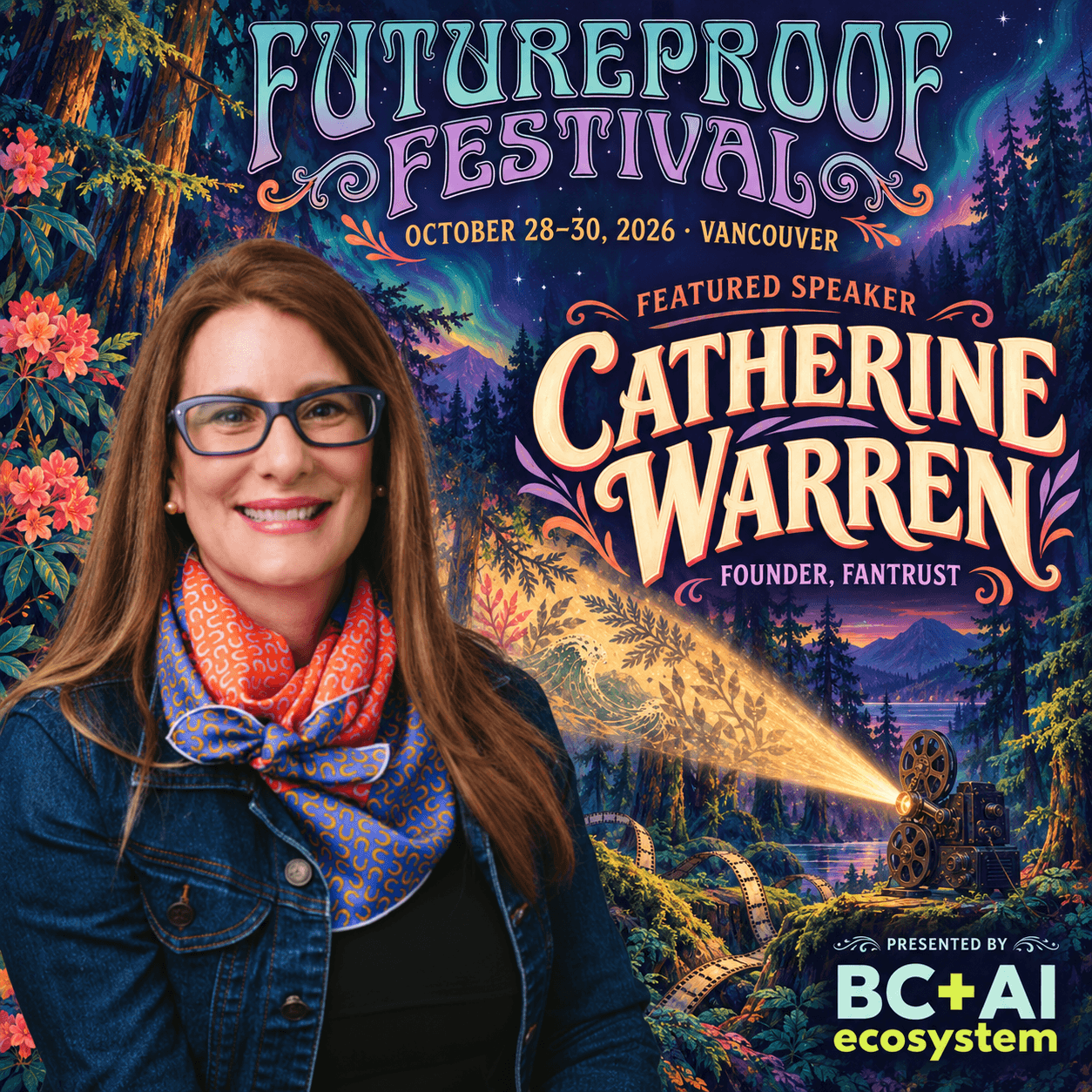
At Futureproof, Naomi Klein and Catherine Warren debate who controls AI, who carries its costs and how creative agency fits inside a systemic critique.
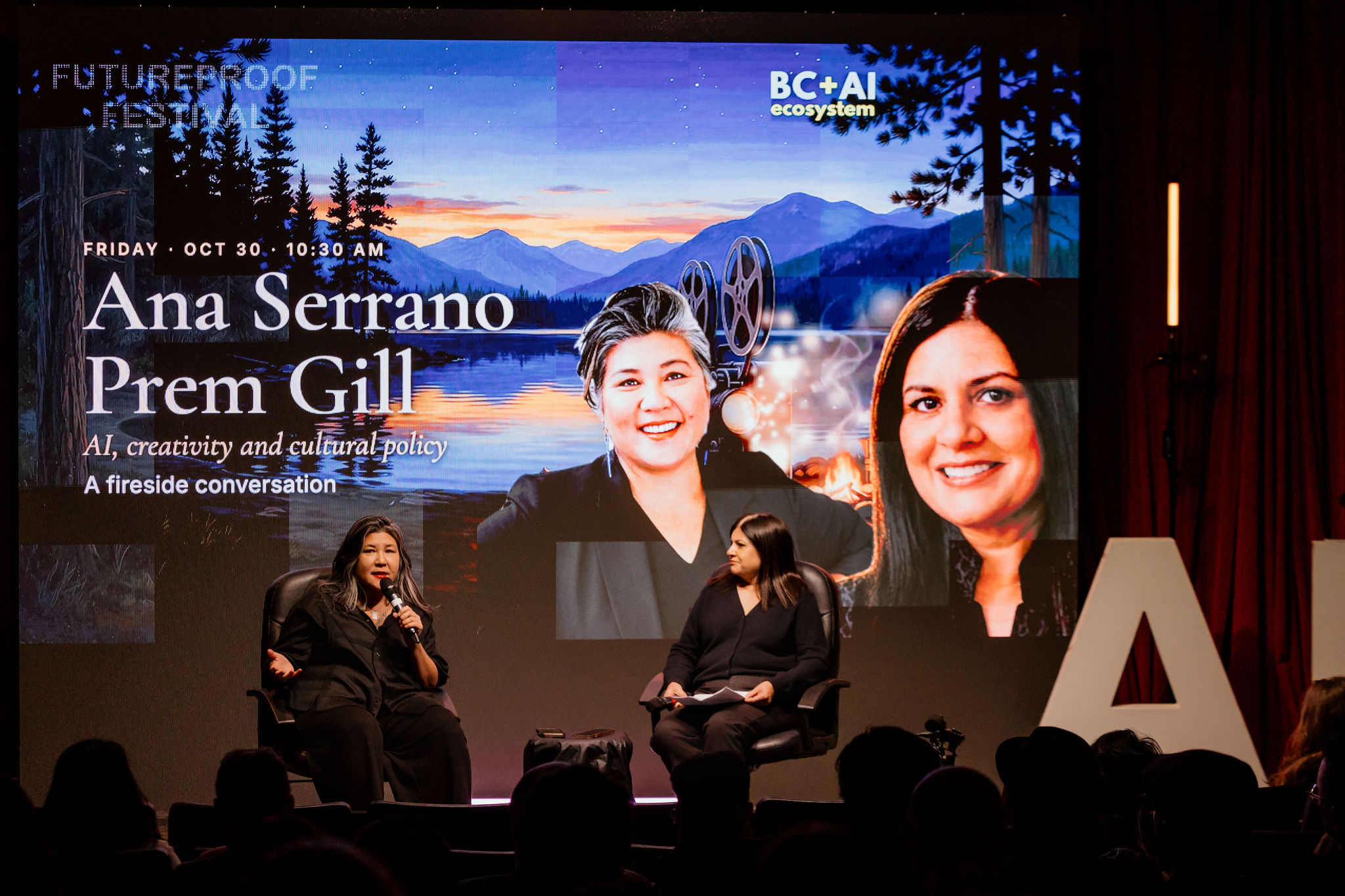
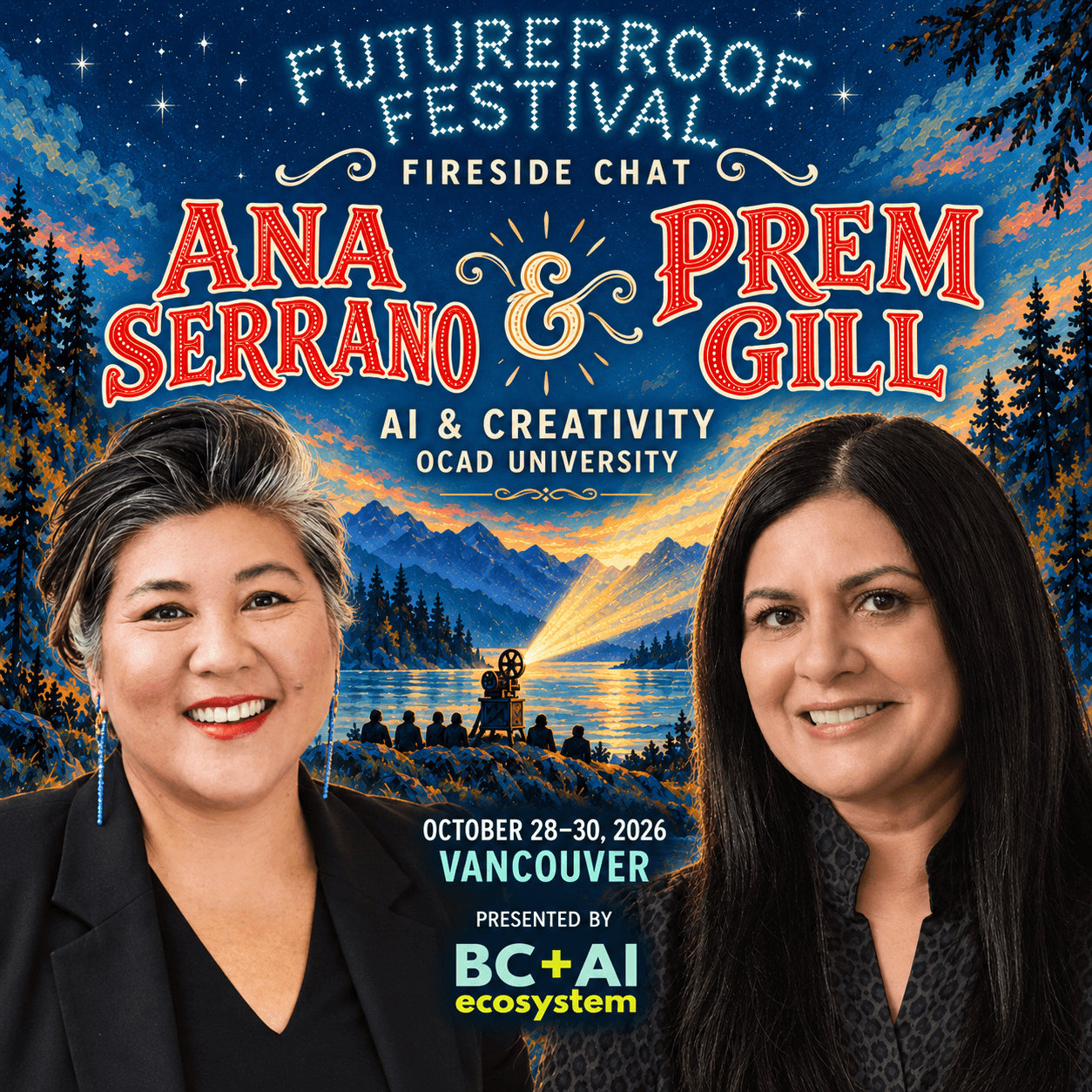
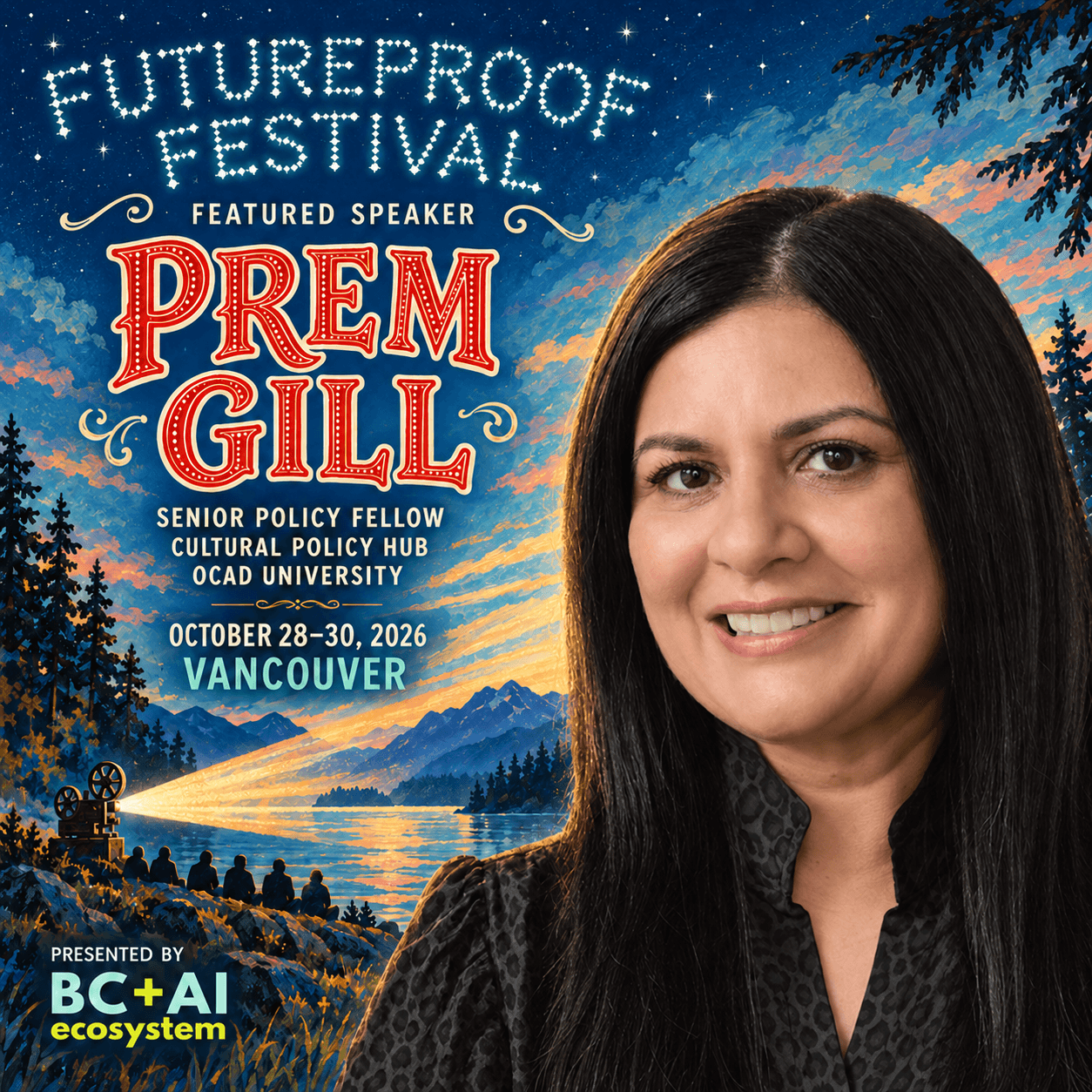
Ana Serrano and Prem Gill discuss public AI, arts funding and creative education at Futureproof, asking how tools can build capacity while preserving judgment.
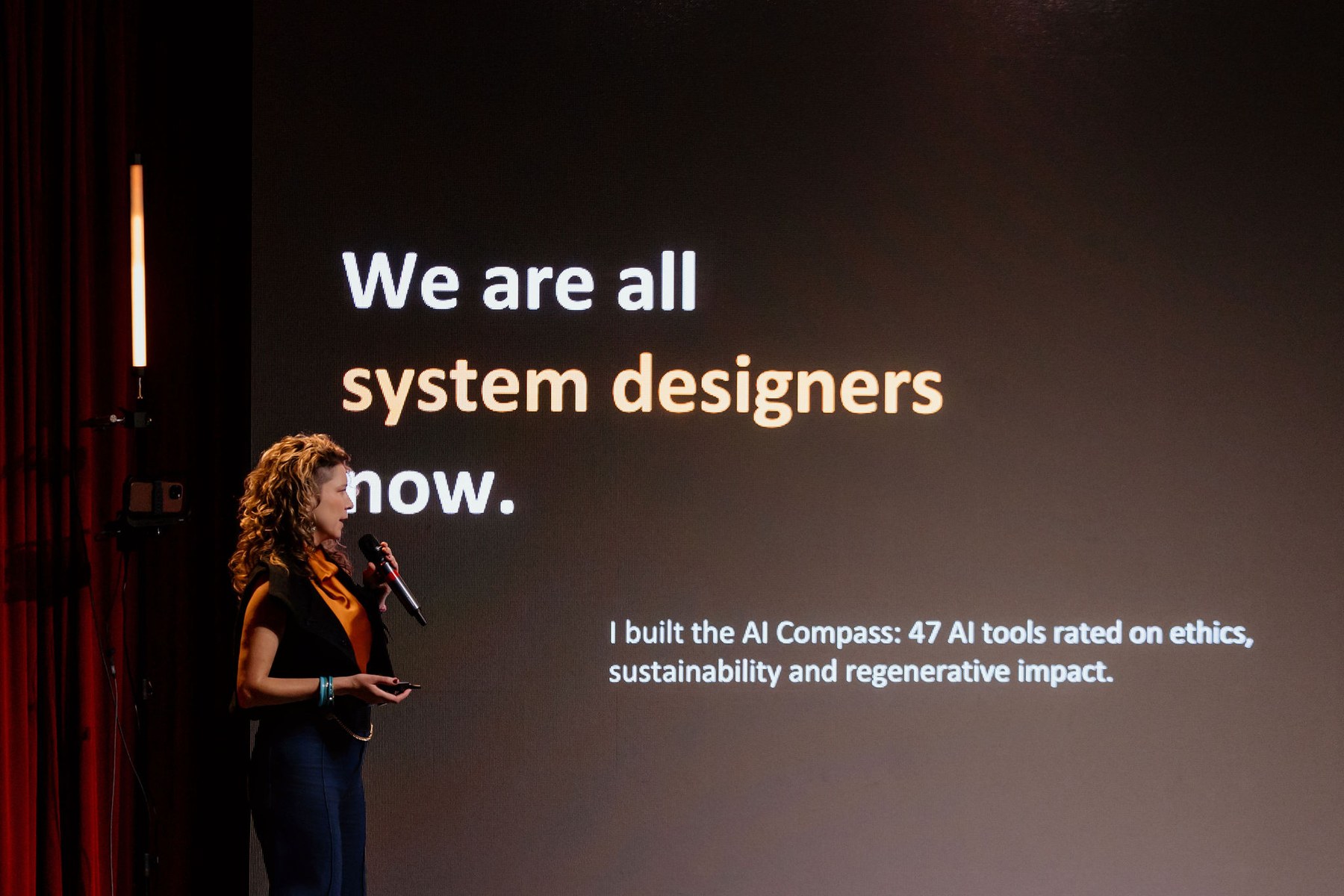
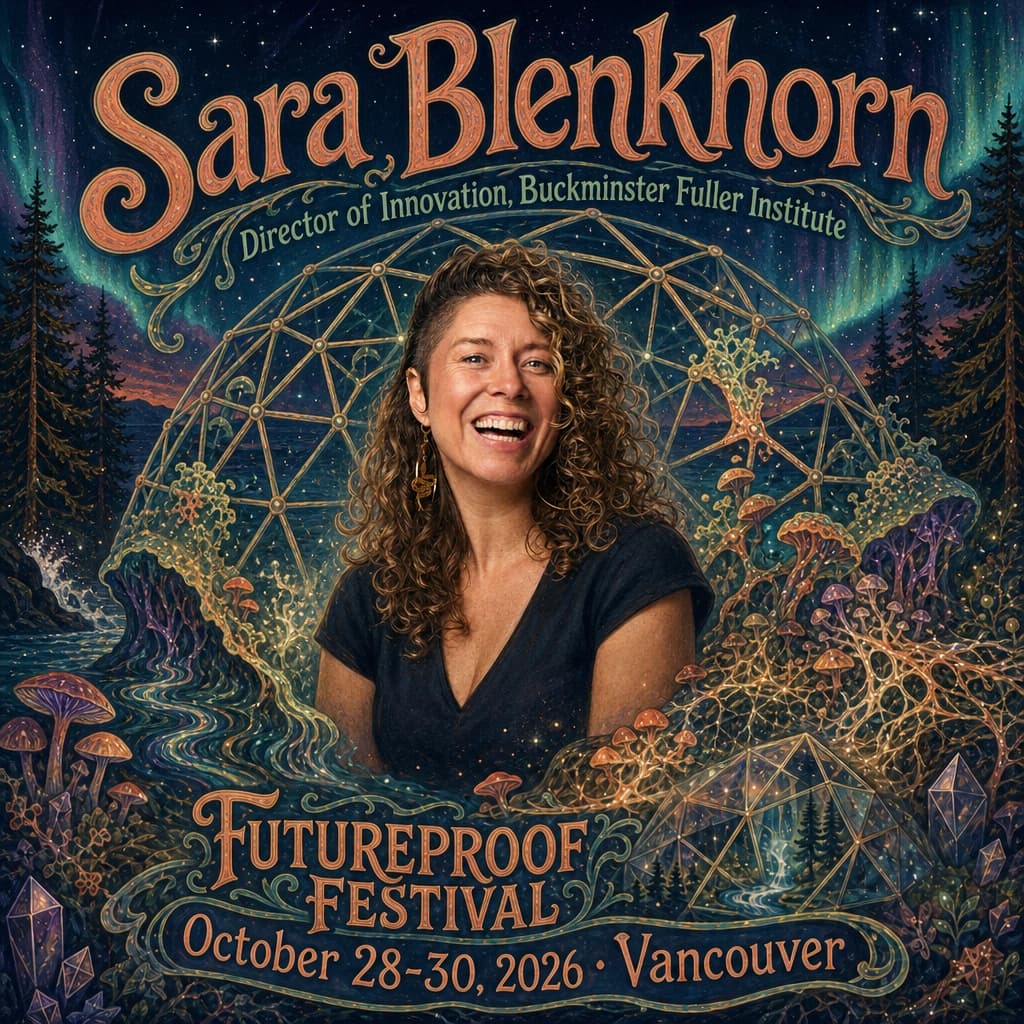
Sara Blenkhorn's Futureproof Festival talk connects life-centred AI, systems thinking and the work of helping people coordinate instead of starting over.
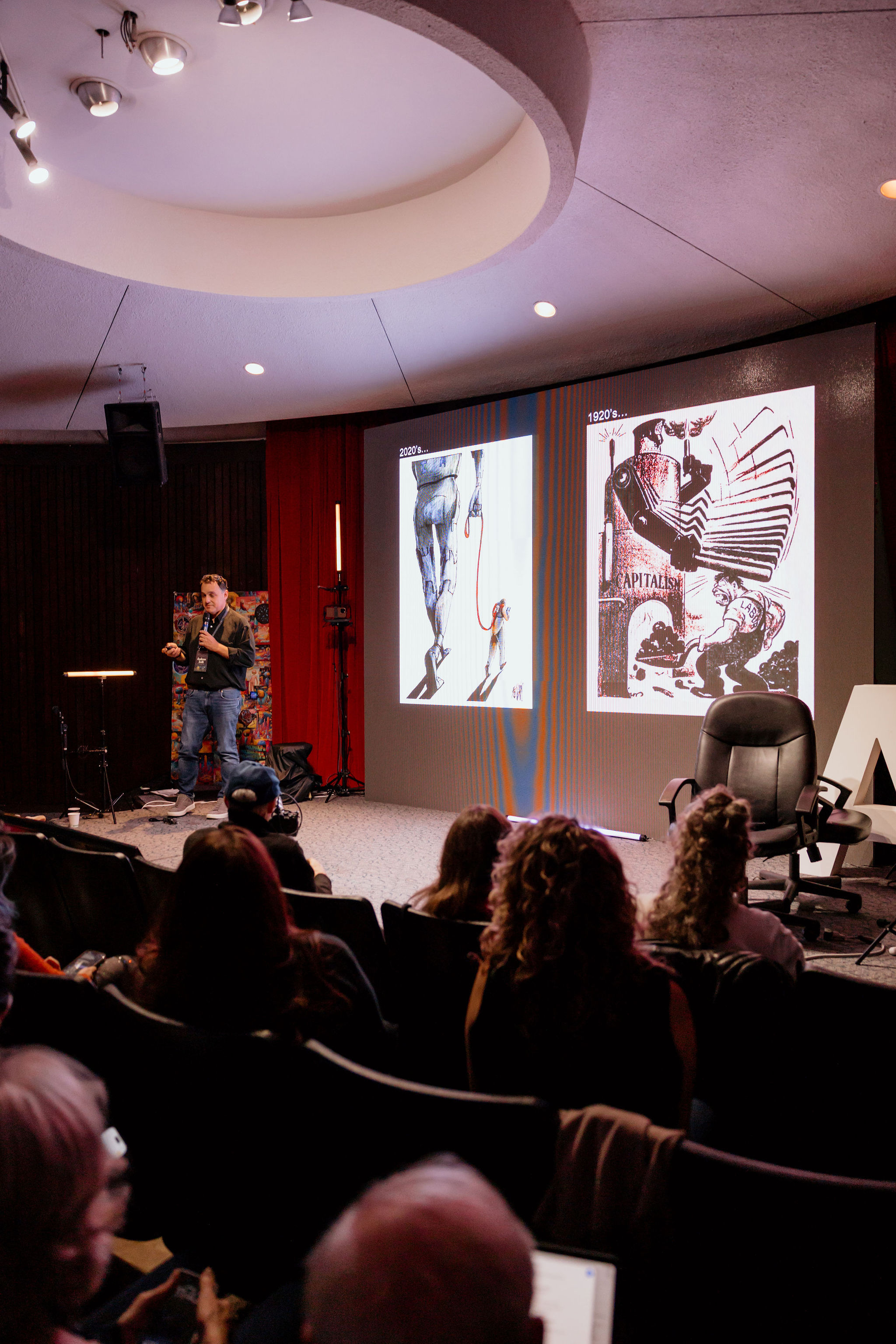
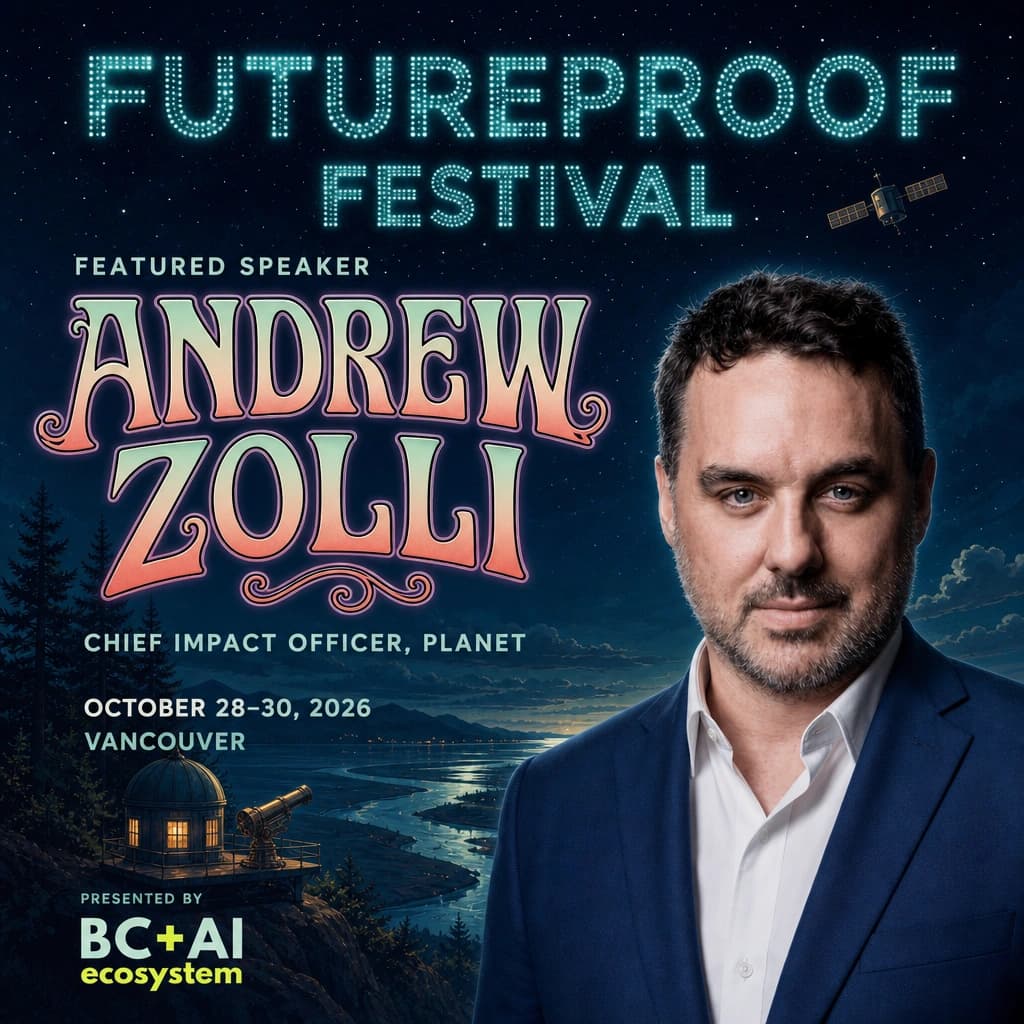
Planet's Andrew Zolli follows satellite observations into conservation decisions at Futureproof, connecting AI detection with human attention, shared data and accountability.
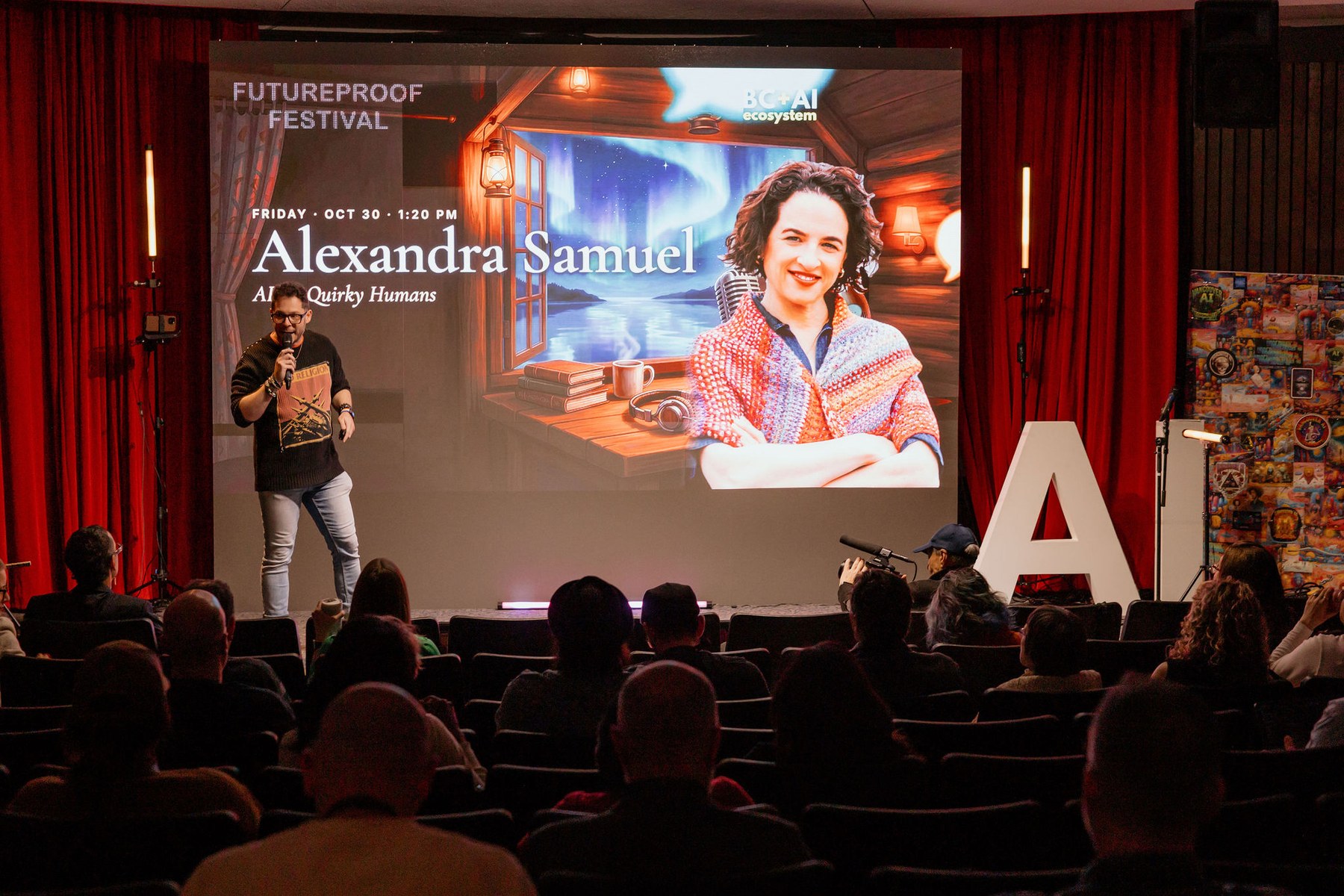
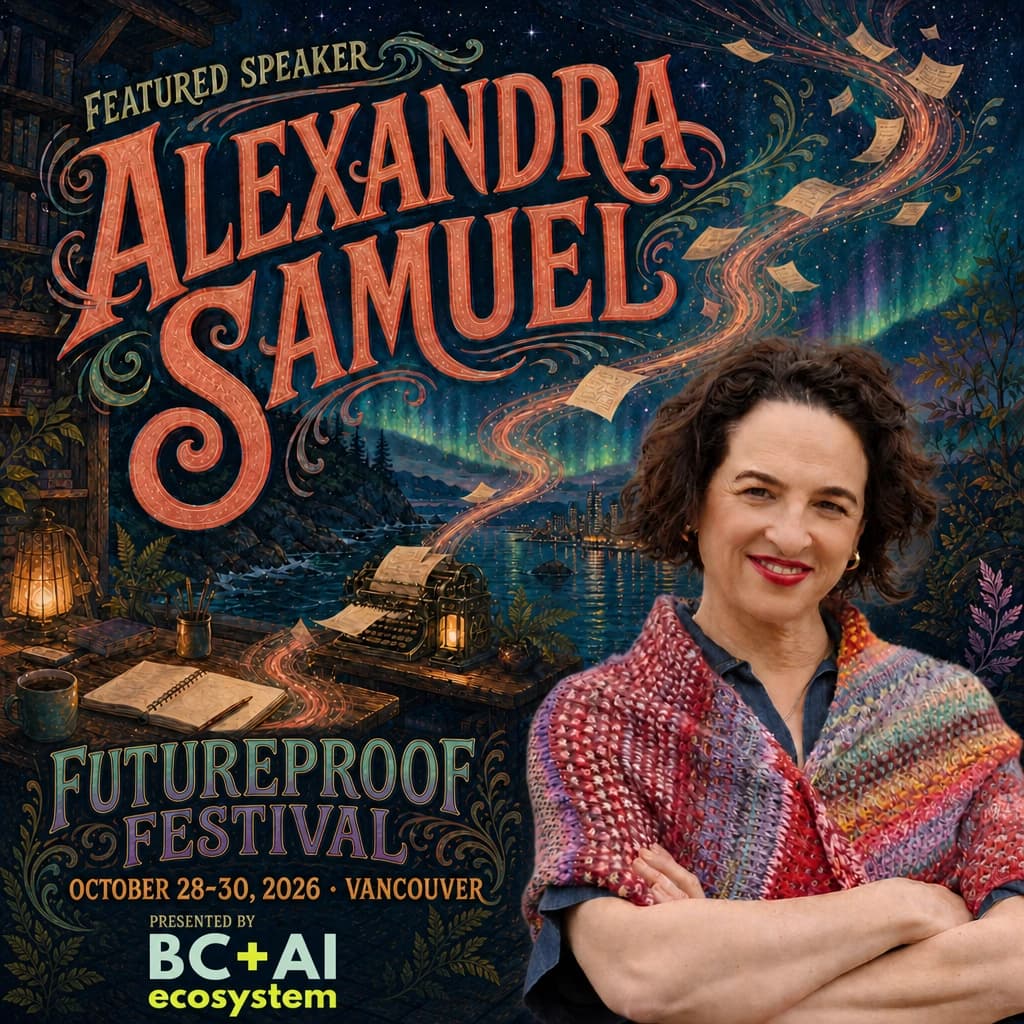
Alexandra Samuel's Futureproof Festival talk shows how AI can support different ways of working, from visual prototypes to her Go Dog Go pause.
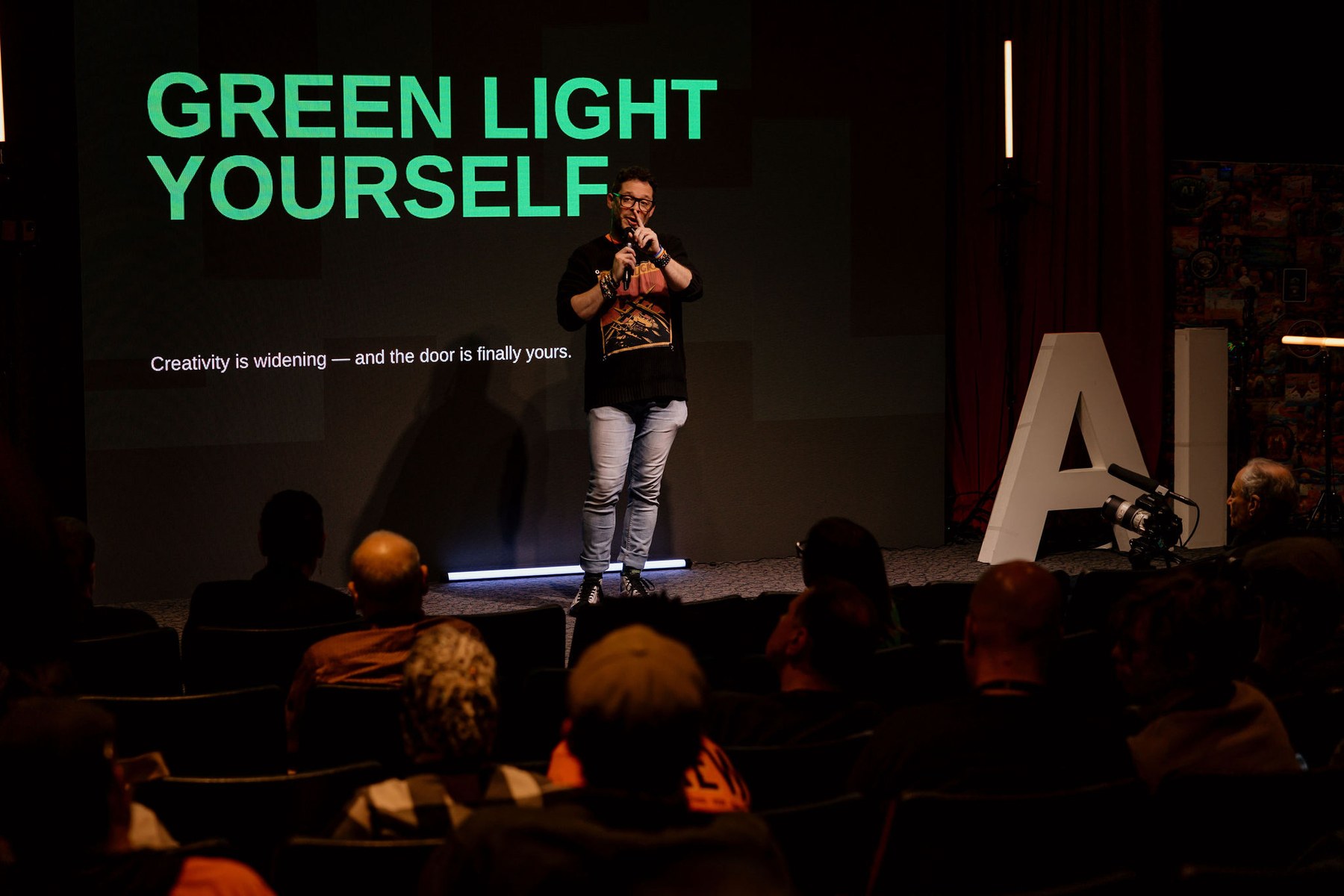
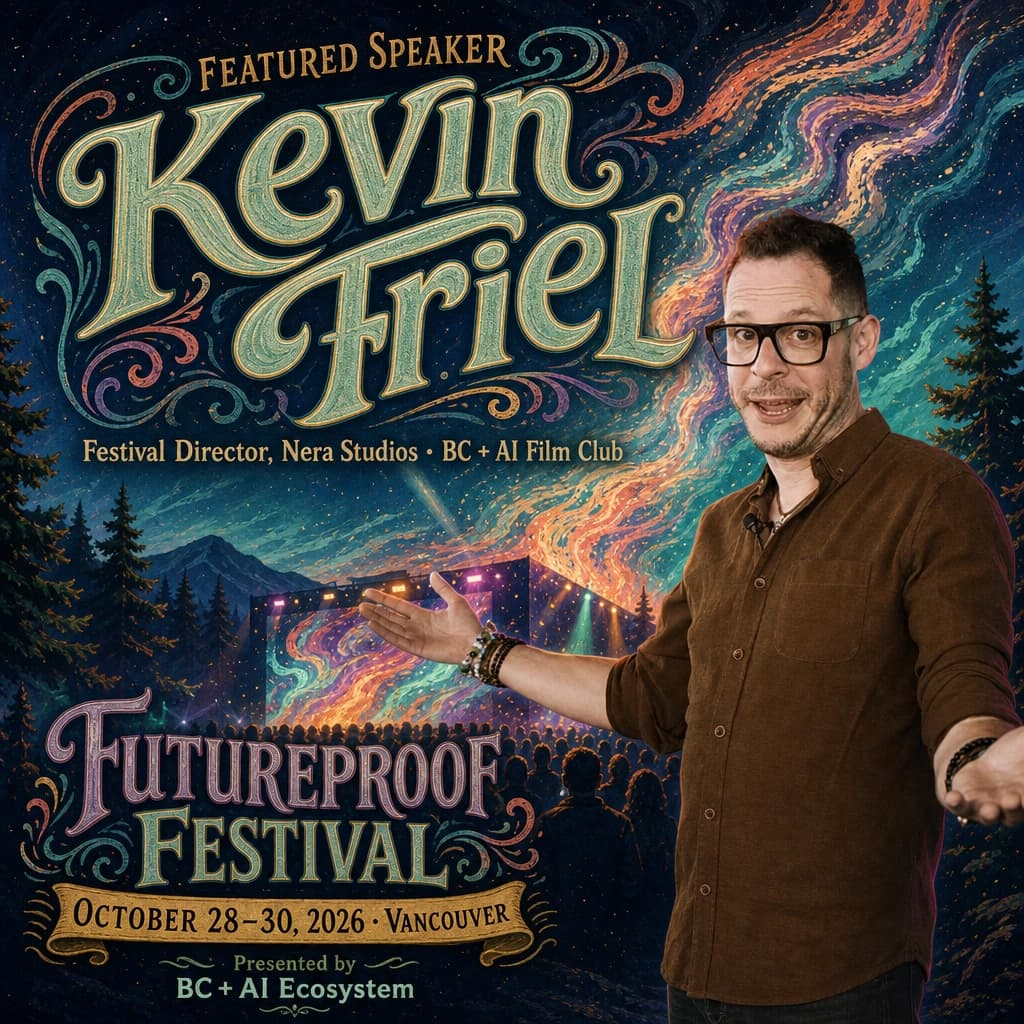
Kevin Friel's Futureproof Festival talk on AI filmmaking, showing unfinished work, and the care a filmmaker deserves when they press play.
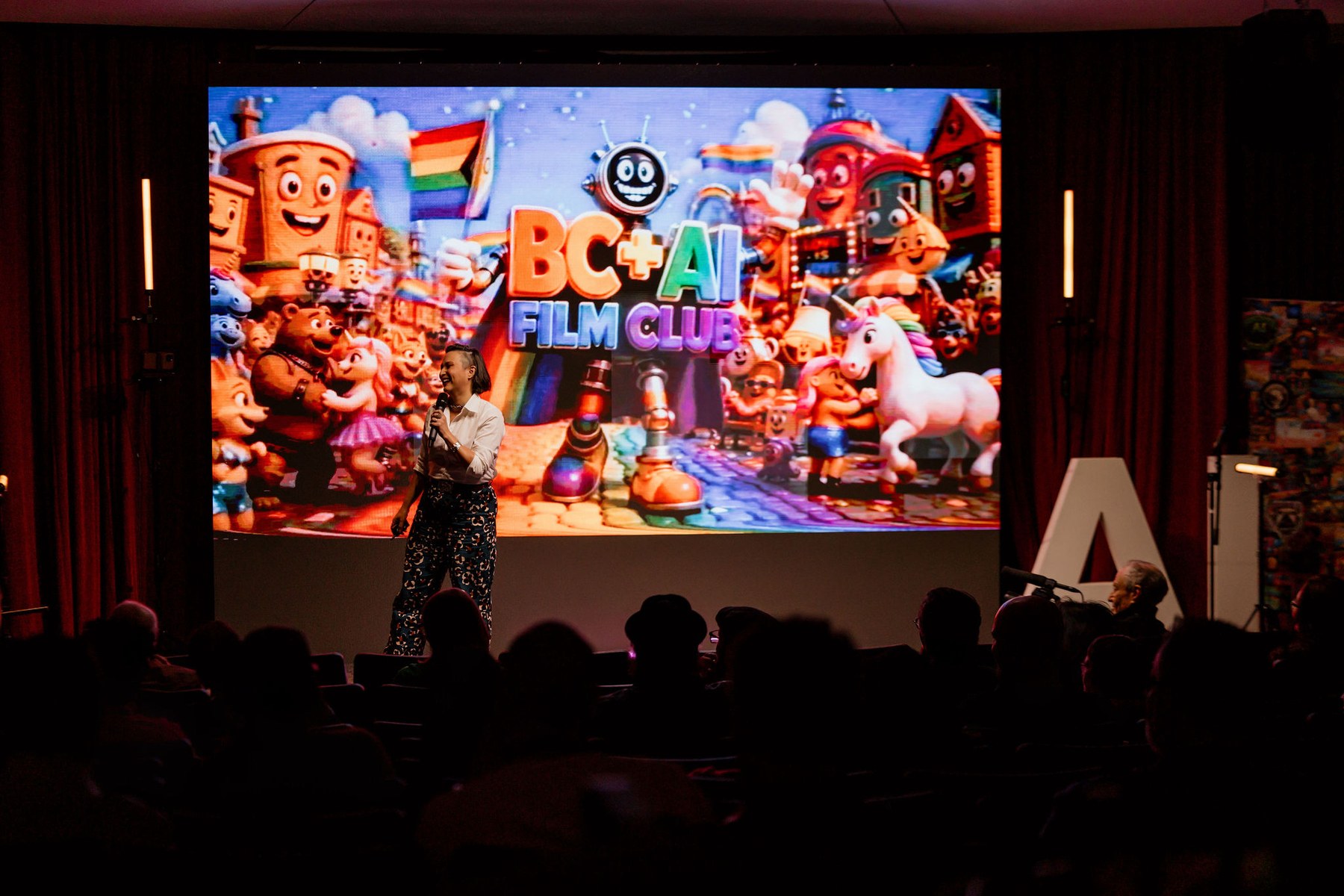
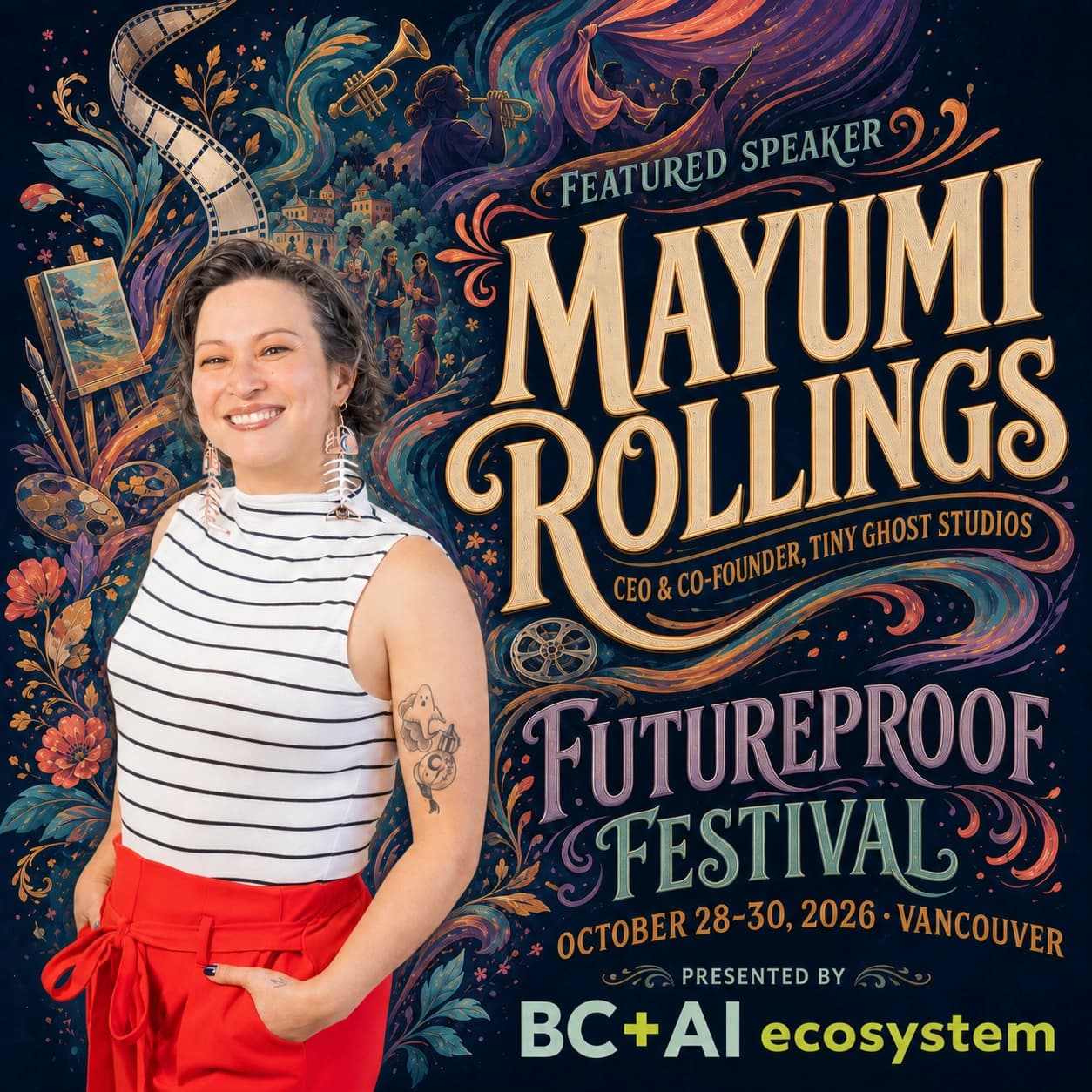
Mayumi Rollings's Futureproof Festival screening connects AI animation, Film Club experiments and teaching people to make their own choices about tools.
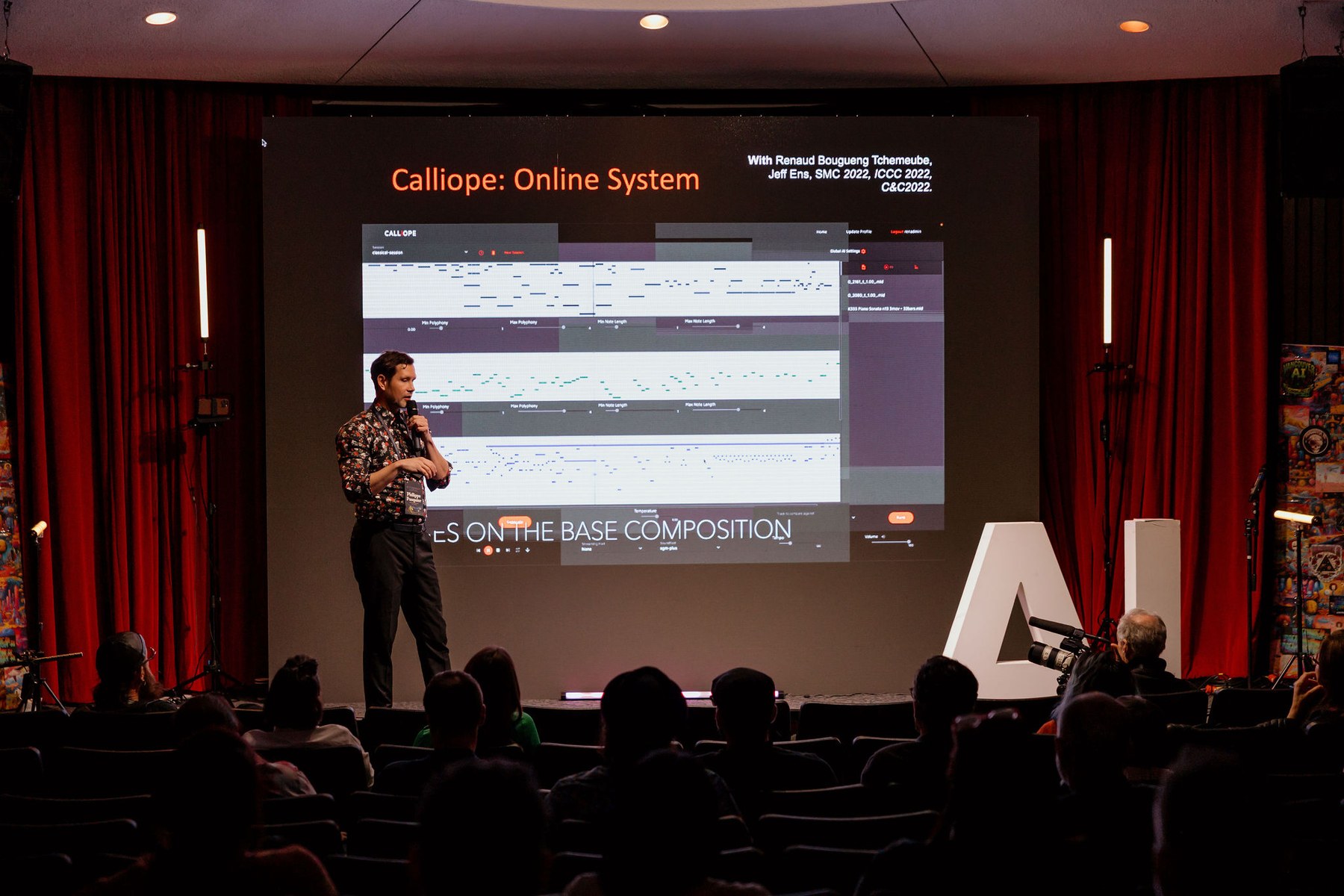
Philippe Pasquier's Futureproof Festival talk asks what changes when artists shape creative AI around their own material and learn it as an instrument.
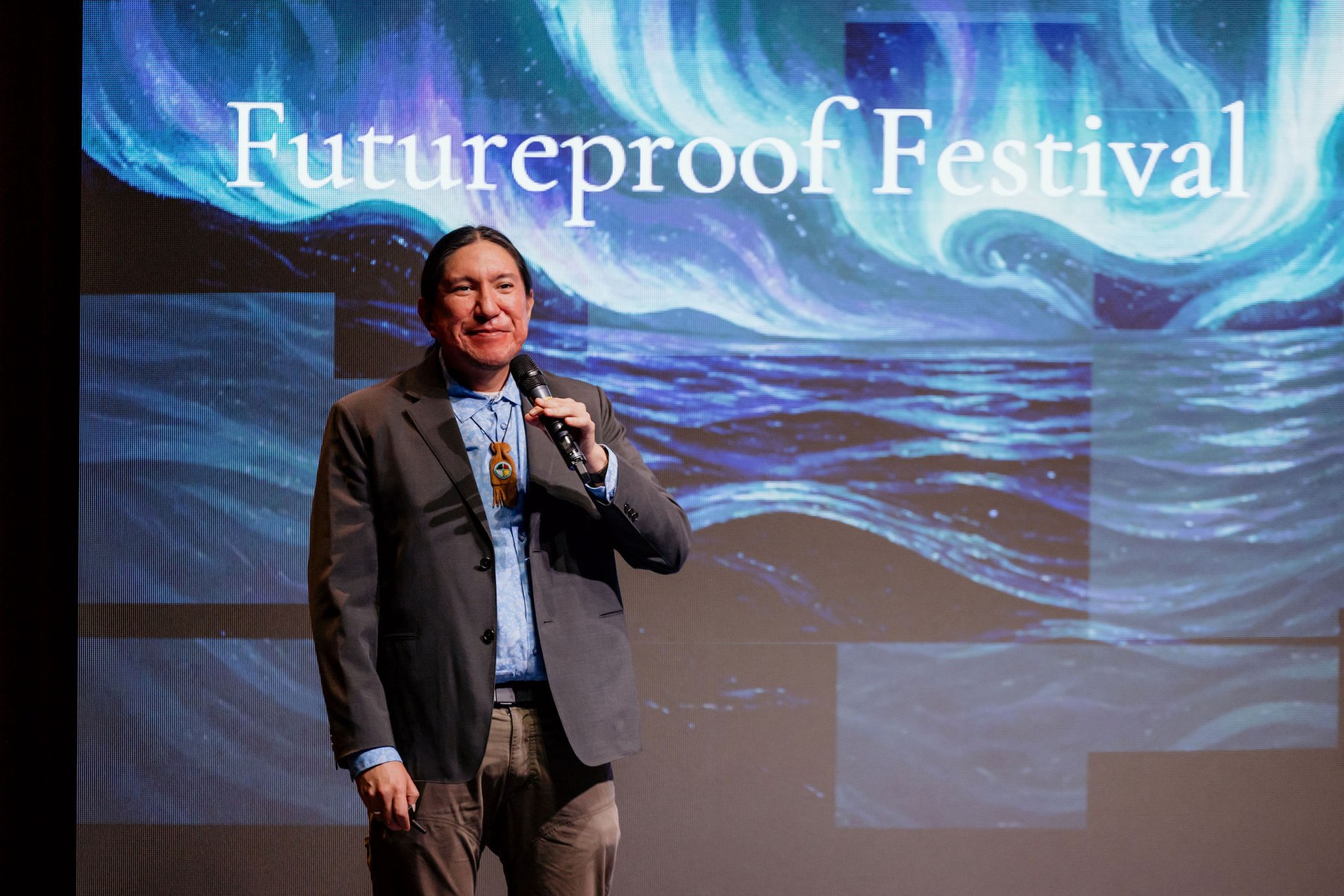
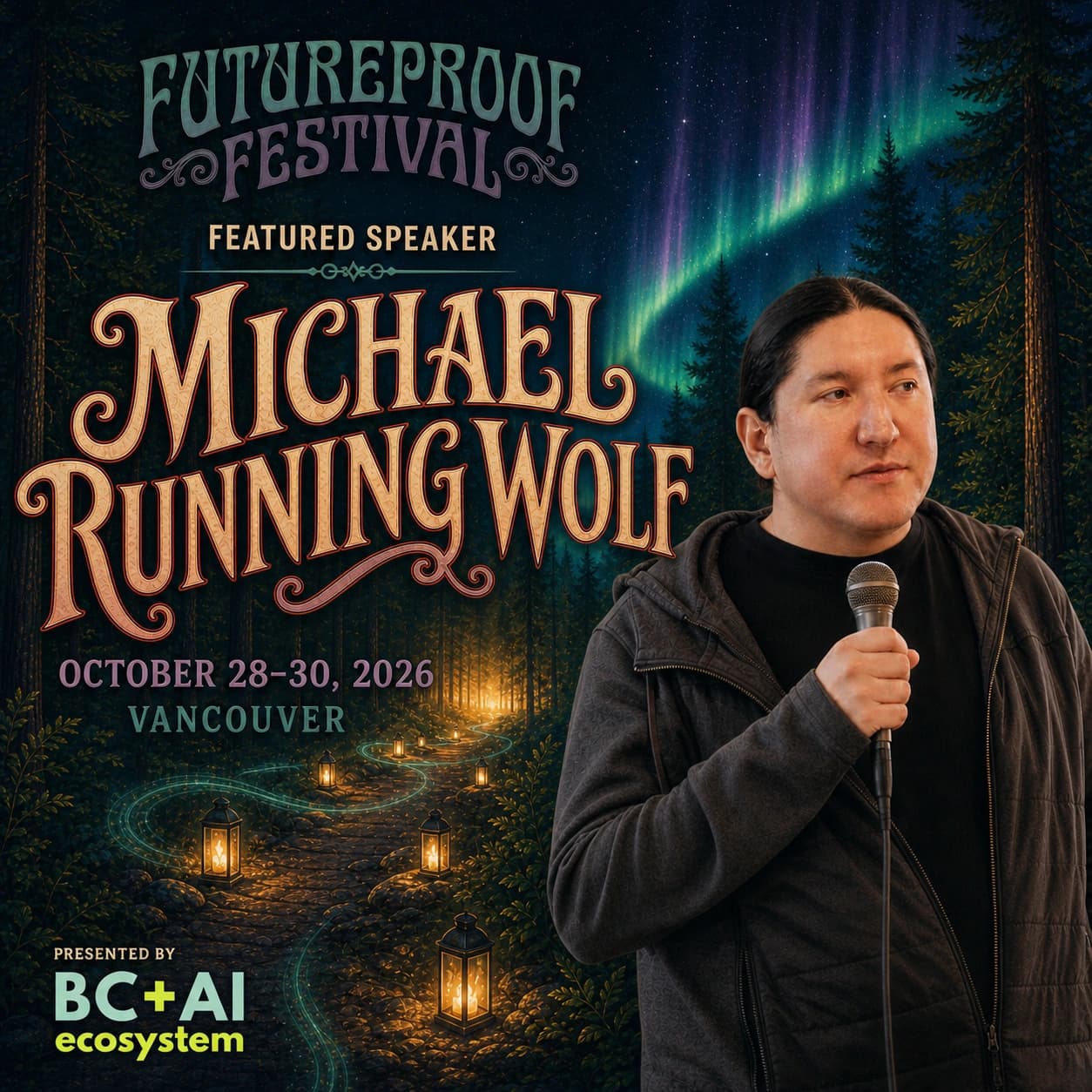
Michael Running Wolf's Futureproof Festival talk connects language learning, community-built AI and the path from practice to conversations with elders.
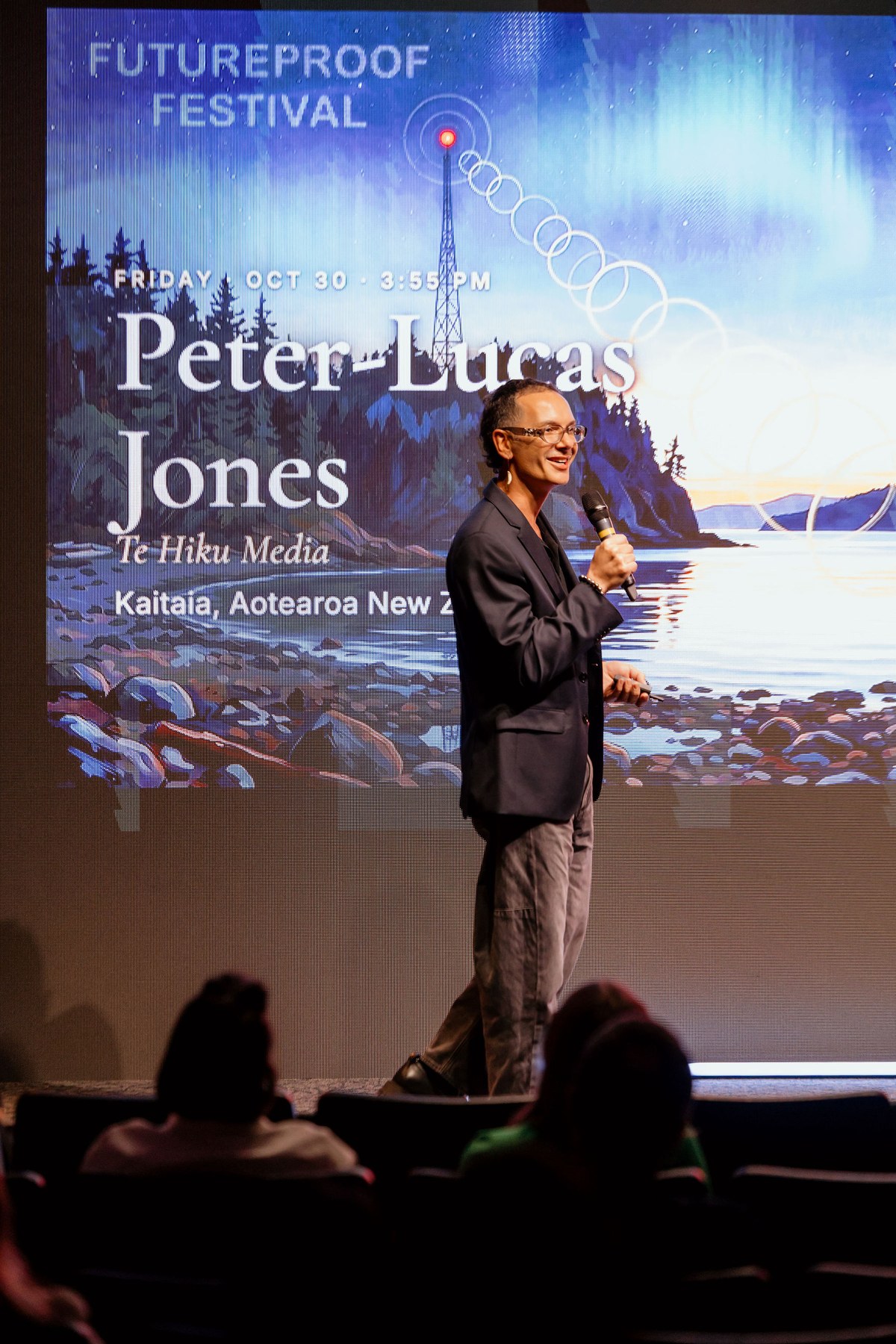
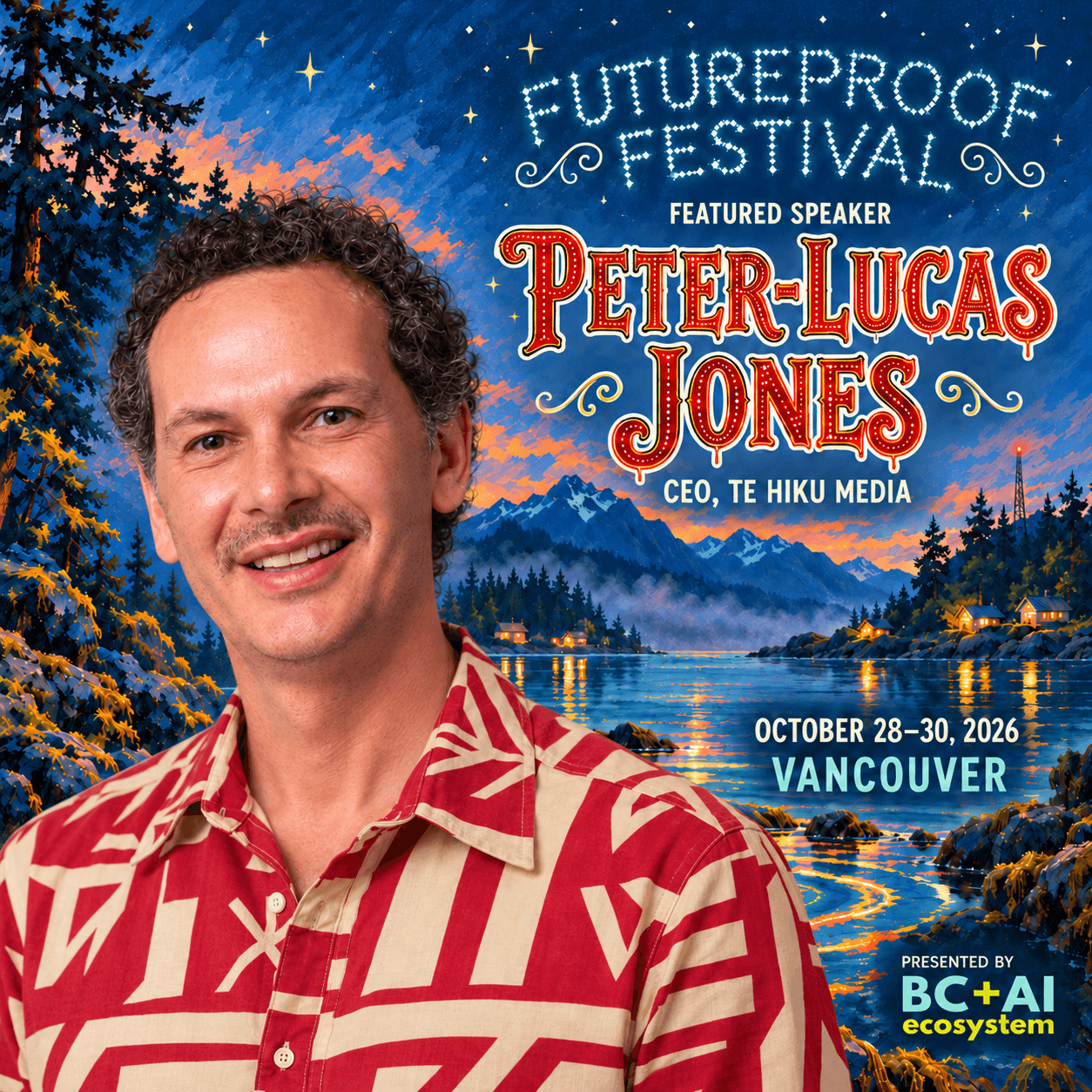
Peter-Lucas Jones's Futureproof Festival talk traces Te Hiku's language technology through broadcasting, community expertise, research and data sovereignty.
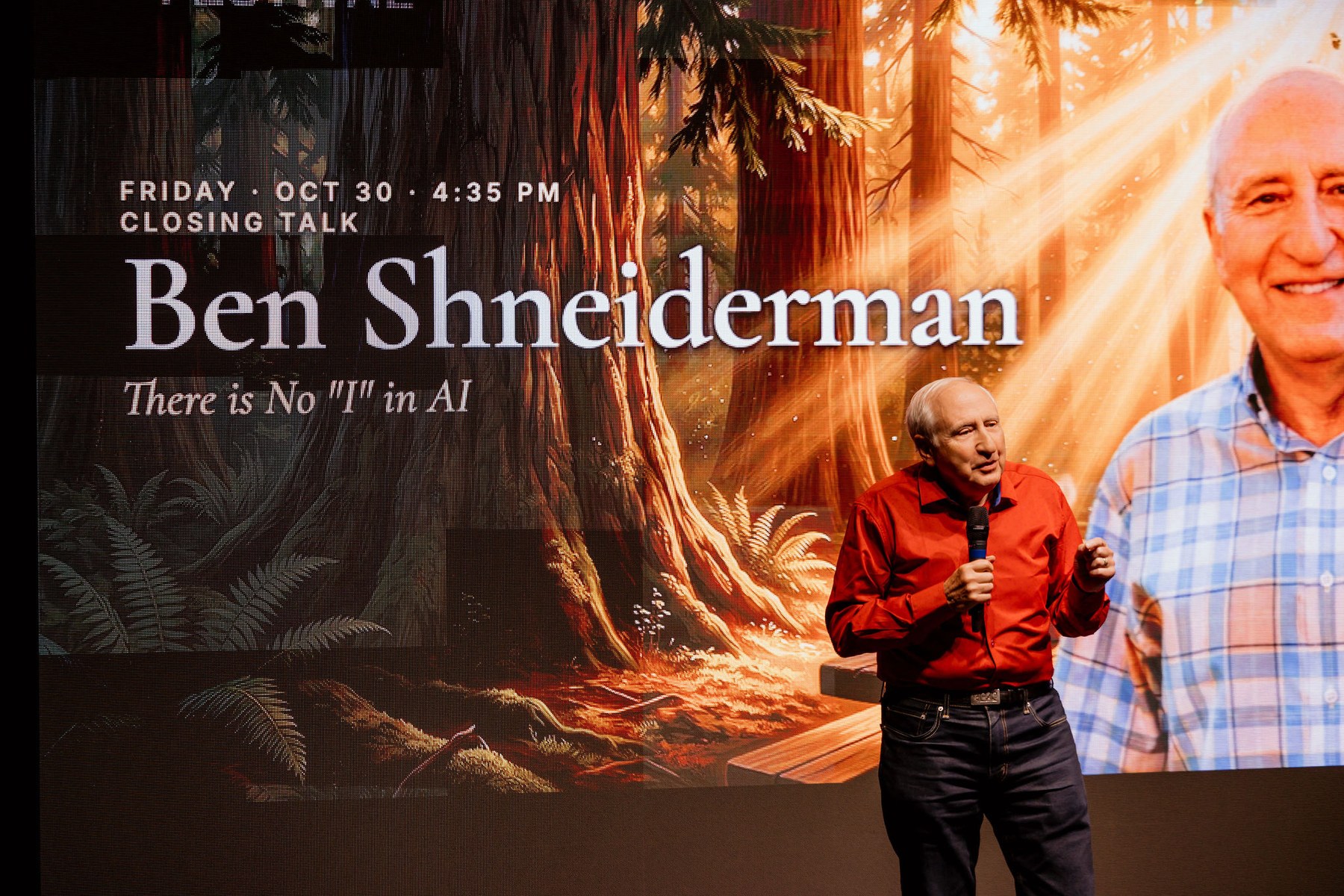
Ben Shneiderman's Futureproof Festival closing talk asks who controls AI tools, which decisions stay with people, and who answers for them.