Futureproof Festival / 2026
Peter-Lucas Jones: teach the computer. Keep authority with the people.
The conversations worth coming back to.
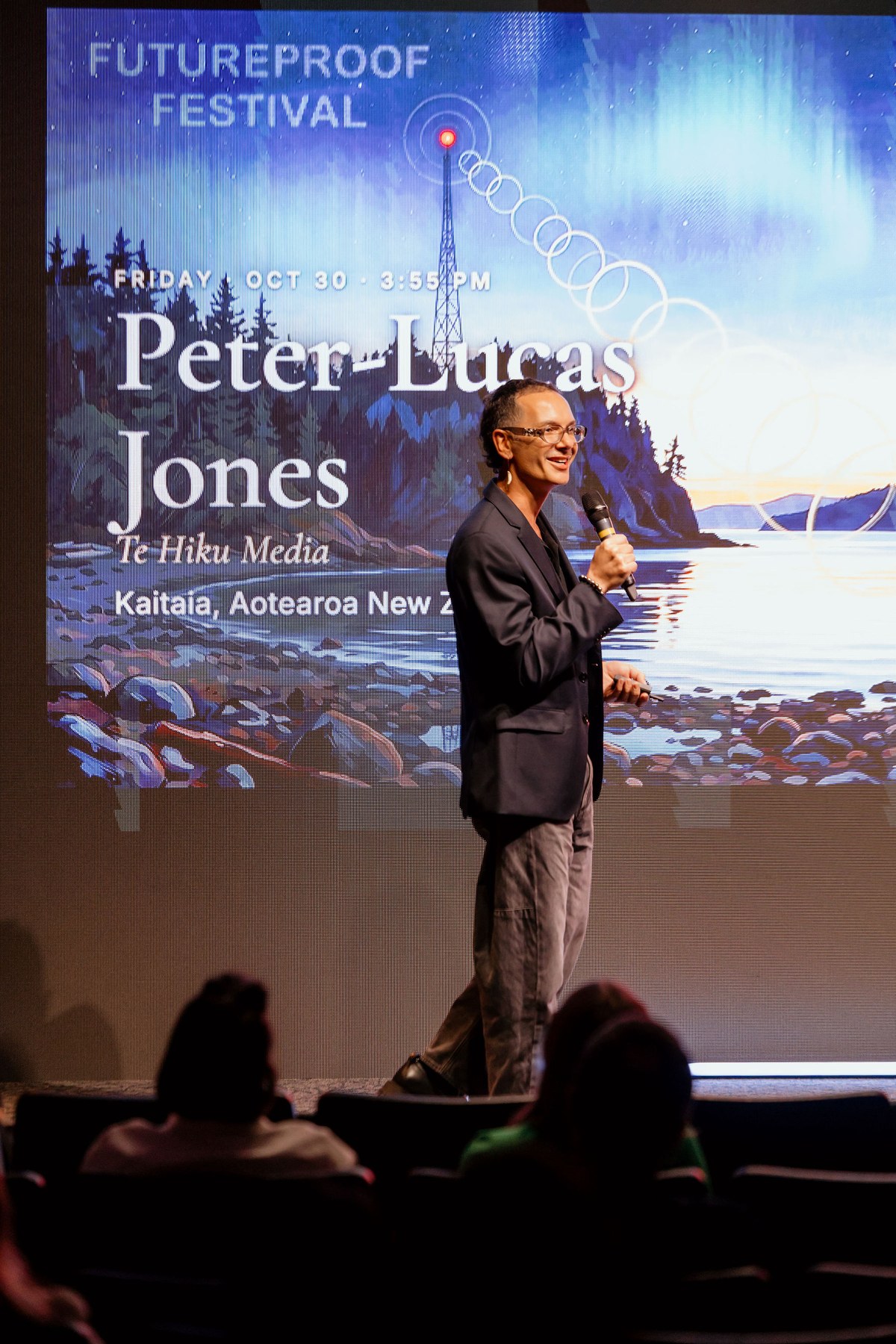
Peter-Lucas Jones's Friday talk at Futureproof Festival of AI, October 30, 2026.
Before the speech model, there were tapes. People recording stories. A community fighting for the right to broadcast in its own language. People who could hear when something was wrong.
Peter-Lucas Jones brought that history into his October 30 talk at Futureproof Festival of AI, at Vancouver's H.R. MacMillan Space Centre. His account of Te Hiku Media began with a community creating ways to hear and see itself, then learning the technology needed to keep doing it.
The computers arrived inside an existing set of relationships and responsibilities.
And if you're working with language, he advised, employ aunties.
That line deserves a place in the technical brief.
Who can tell you that you got it wrong?
Peter-Lucas described a team whose relationships reach beyond job titles. He connected the knowledge of proficient speakers and elders to accuracy: somebody has to know what a correct result sounds like, and why a seemingly small error matters.
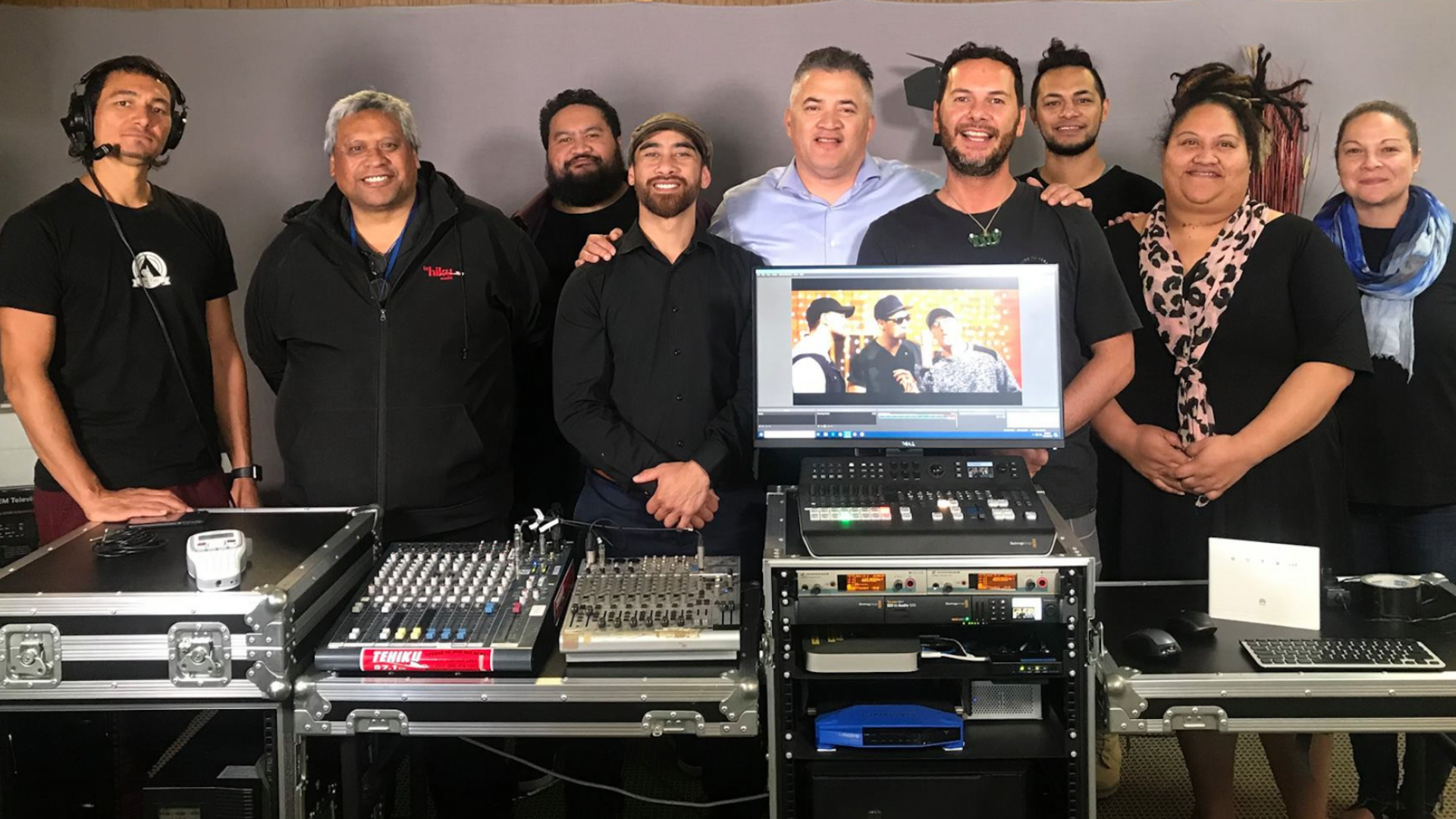
The Te Hiku team in Peter-Lucas's presentation, Friday show deck page 213. Presentation and source team photograph: Te Hiku Media.
That changes who counts as an expert. The person who understands the recording system needs the person who knows the language. The person choosing training sentences needs to know which sounds and everyday words the set must cover.
Peter-Lucas explained how Te Hiku organized group reading competitions to collect paired speech and text. The design used relationships the community already understood: people participating together, encouraging one another, contributing to something whose purpose they could recognize.
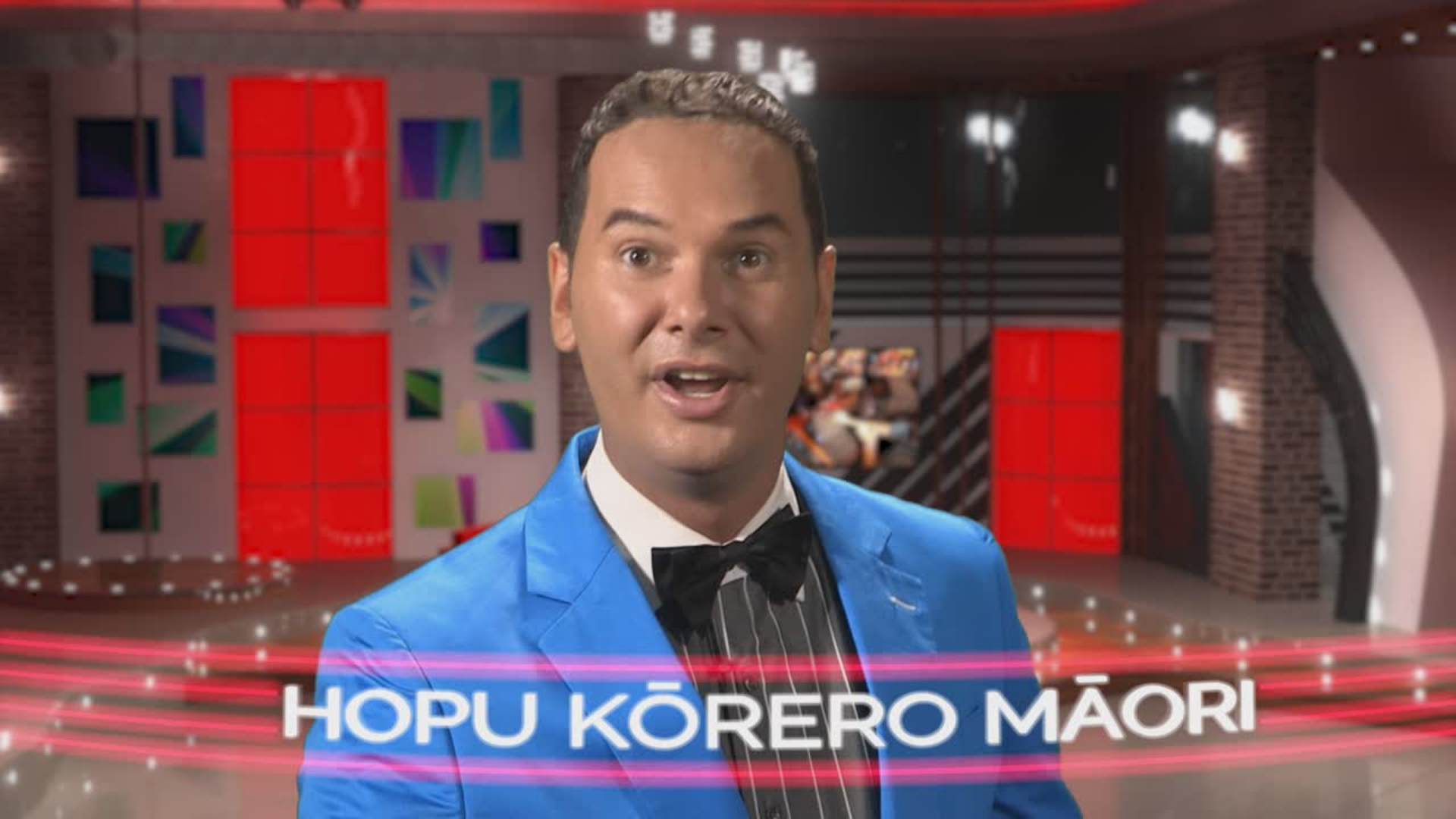
Te Hiku Media's Hopu Kōrero Māori competition film, shown in Peter-Lucas's presentation on Friday page 217.
Kōrero Māori also ran a separate listening competition. The rules asked people to listen to recordings and mark whether they approved each sentence. That gave listeners a part in checking what had been recorded. Kōrero Māori's listening competition rules.
The choice of sentences mattered as much as the mechanism for collecting them. A collection can grow while still missing the language people need a tool to understand.
So the evaluation has to ask whose speech is represented, which situations it covers and what the system is supposed to help someone do.
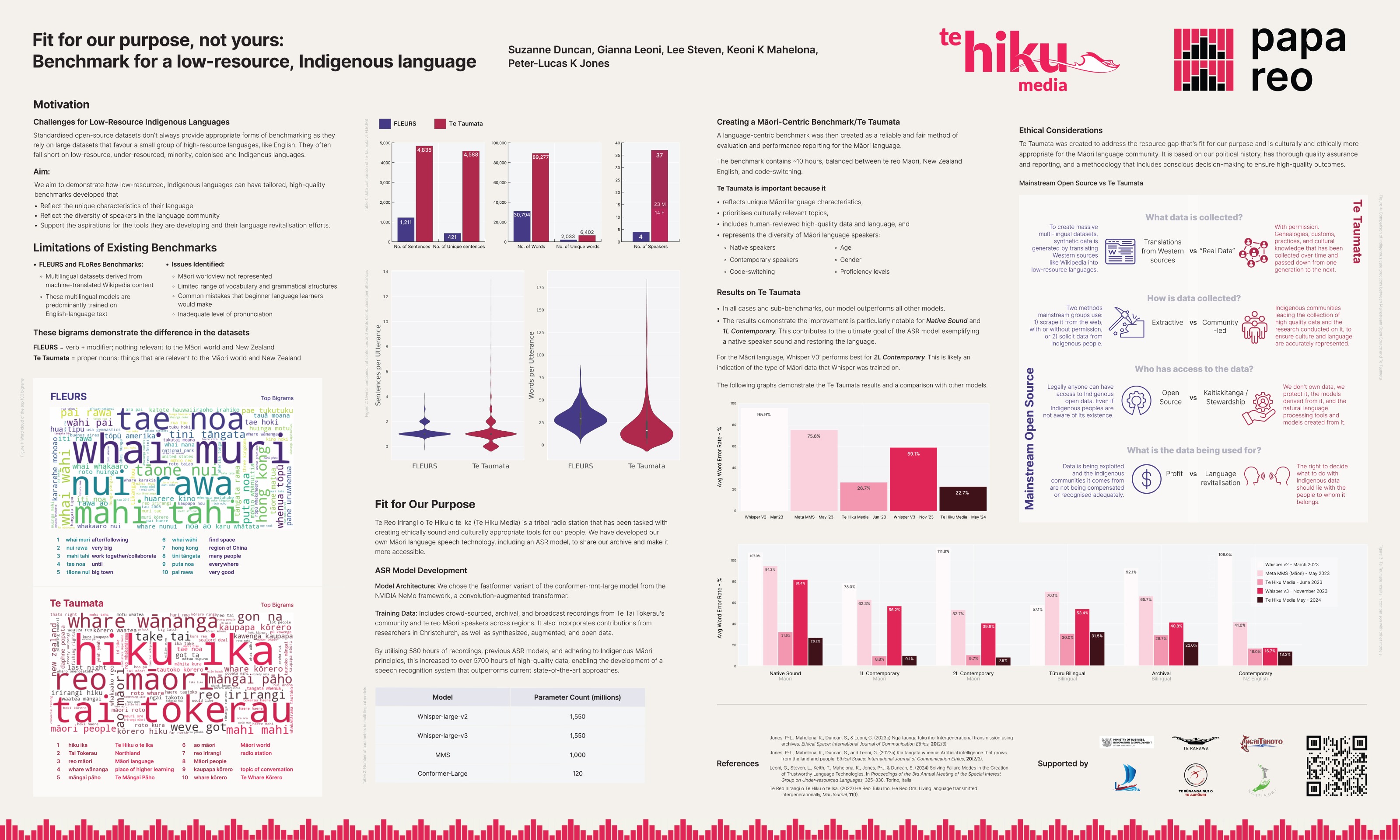
Fit for our purpose, not yours: Benchmark for a low-resource, Indigenous language. Research poster by Suzanne Duncan, Gianna Leoni, Lee Steven, Keoni K Mahelona and Peter-Lucas K Jones. Included in the Friday presentation at page 221. The charts report the team's research results.
Fit for whose purpose? Start with a pause. For Te Taumata, the benchmark drawn from Te Hiku's archive, reviewers tried to keep a speaker's whole thought together. A breath could fall in the middle of a clip. A one-word reply could be a clip of its own. That is what the team needed to measure if its tools were going to help people caption interviews and transcribe the archive. Te Hiku's 2024 NeurIPS paper.
The researchers also tracked how well the system heard different groups of speakers. They considered some setbacks on contemporary and bilingual speech acceptable as recognition improved on recordings of older first-language speakers. Restoring that sound was the community's priority. A single score would have hidden that decision.
When somebody tells you their speech model got better, ask whose voice got easier to hear.
Digitizing a record creates more decisions
Peter-Lucas described years of recordings on cassettes, VHS and other media. Transcribing that archive by hand would consume an enormous amount of the time of the very speakers whose expertise the work needed.
Teaching computers to recognize the language came out of that problem. Searchable records could help people find knowledge that was already there. Captioning could help language work reach more people. Tools could support the people creating new records too.
Peter-Lucas told an earlier chapter of this story at NeurIPS in Vancouver in 2024. That account takes you from the radio station to the computers processing the recordings in Kaitaia. Vancouver AI's coverage of the 2024 keynote.
Kaituhi, Te Hiku's transcription service powered by Papa Reo, gives that work a usable form. Its public description covers Māori, English and bilingual transcription, subtitles and archive search.
Making a recording easier to find also makes the decisions about access and use more consequential. The file has moved. The responsibility for it has not evaporated.
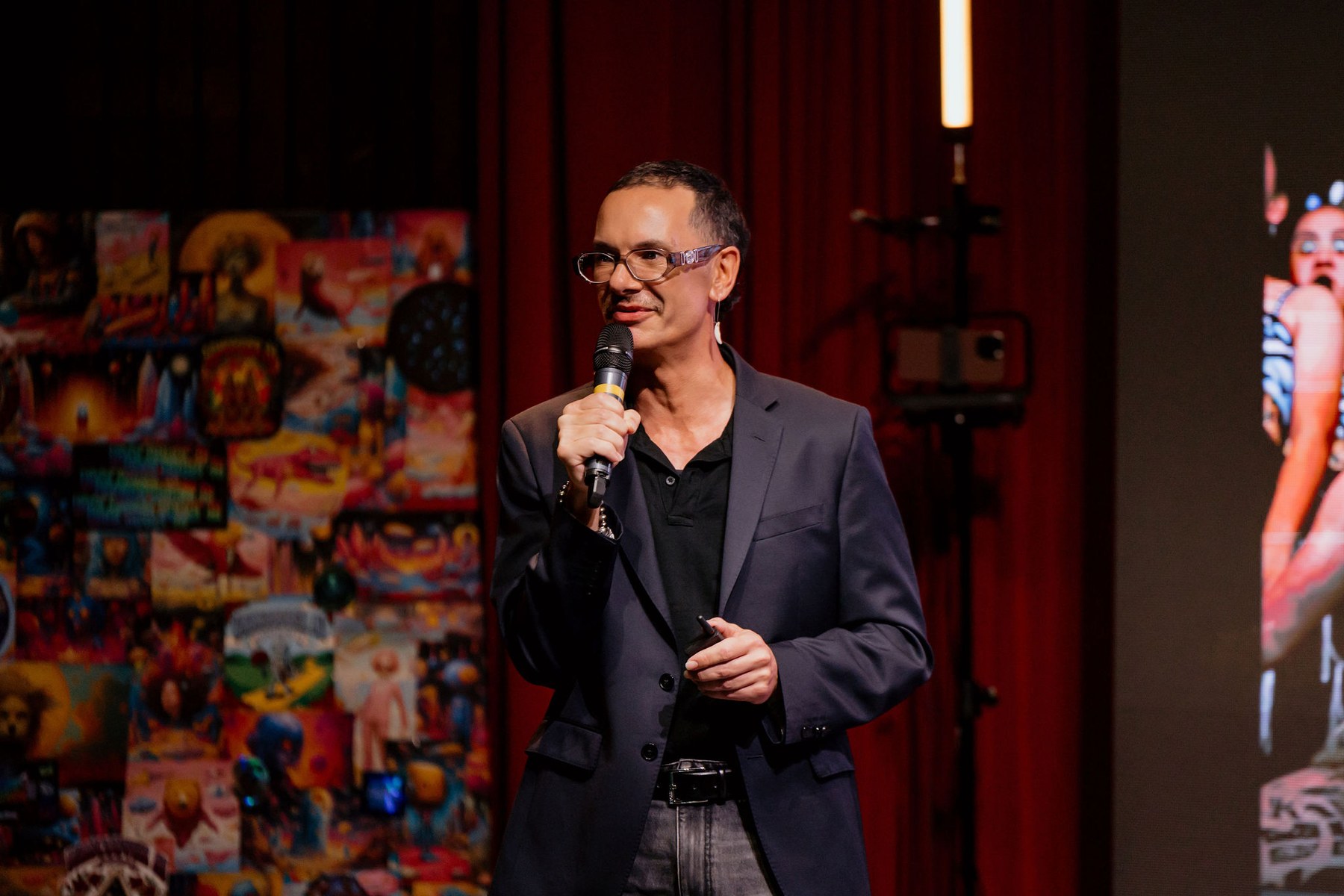
The Te Hiku presentation on stage. October 30, 2026.
In the Q&A, Peter-Lucas was explicit that their data are not open source. The Kaitiakitanga conditions attached to Kaituhi are worth reading alongside that statement. They describe guardianship over uploaded data and prohibit uses including mining Māori data and building Māori corpora through the service.
An available tool is not an invitation to take the material behind it.
For people working with archives, including those of us working in photography, that question has teeth. What may someone retrieve? What may they reuse? Who has the authority to decide? A folder full of files doesn't answer any of those questions by itself.
The infrastructure has to keep serving the people
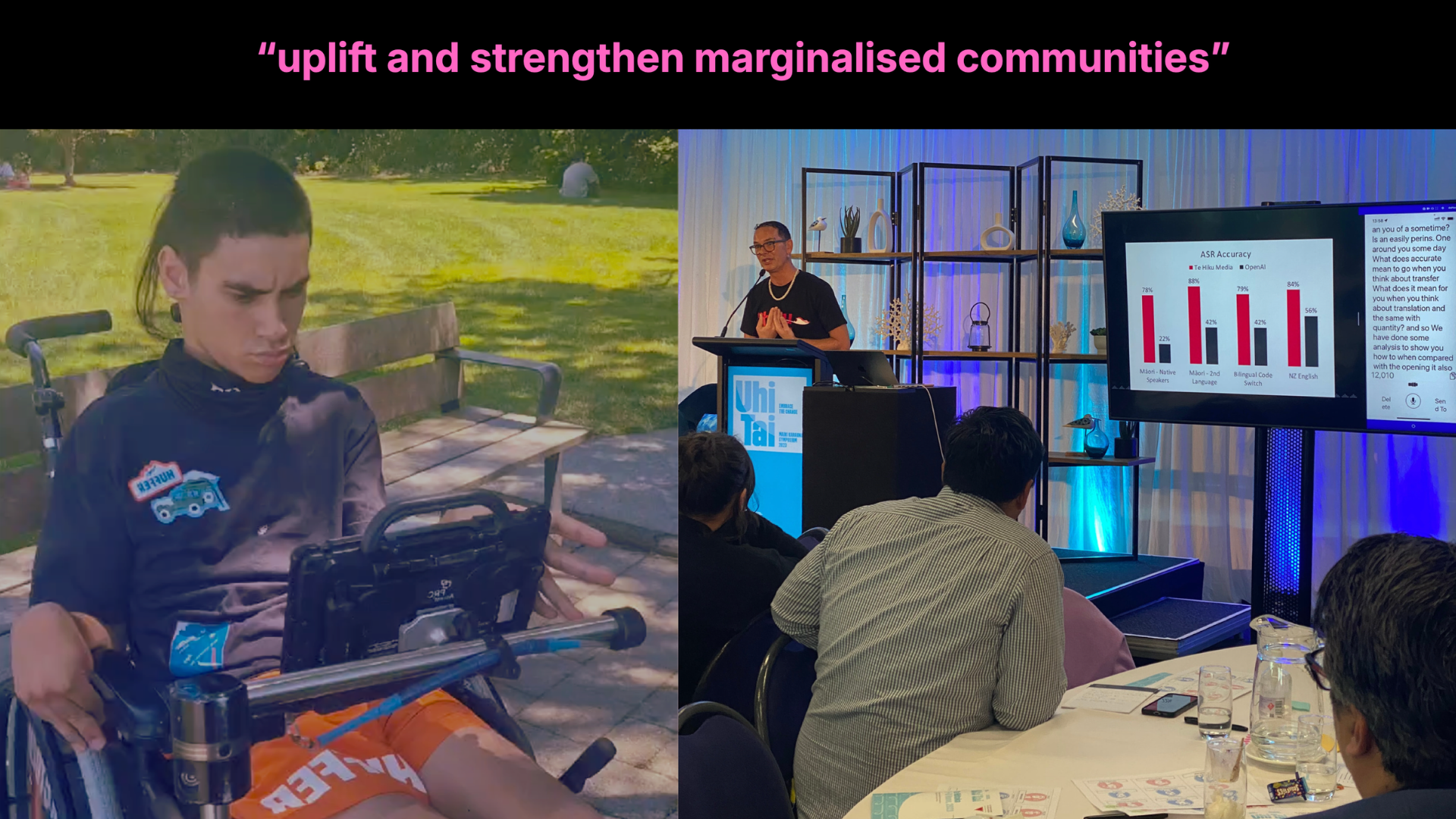
Uses and people in view, not only model outputs. Peter-Lucas's presentation, Friday page 220. Source: Te Hiku Media.
Peter-Lucas described applications that range from helping people transcribe interviews to supporting people who use communication devices to speak. The ability to use your language belongs inside the design of those tools.
He also discussed work with Hawaiian-language partners. The relationship lets experience and technical work travel between language communities. It still requires decisions about each community's data and authority.
The joint Q&A with Michael Running Wolf brought the cost of keeping that work alive into focus. People need compute, capable teams and a way to support access. A service that the intended community cannot afford has a problem a better demonstration won't solve.
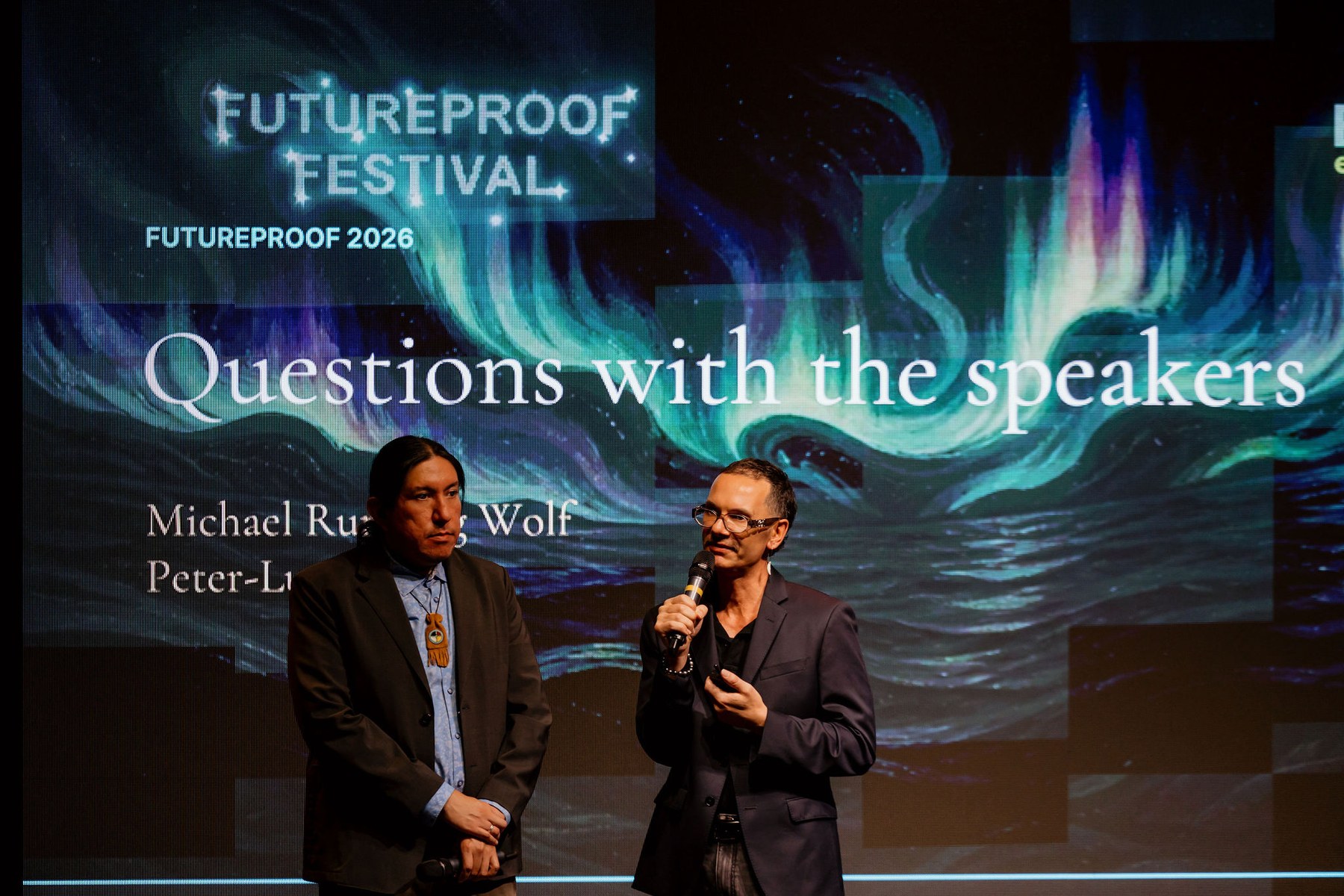
The joint Q&A about language technology, capability and infrastructure. October 30, 2026.
This is a hard question to carry into our own AI Ethical Futures Lab work: when we ask people to contribute knowledge, what authority do they retain over what happens next? Te Hiku's work is grounded in its own people and tikanga. Our task is to take the question seriously in the work we are responsible for.
The language sessions in Futureproof's first-year account belong to a larger conversation about who gets to shape AI. Peter-Lucas gave that conversation a history, a team and a set of tools you can examine.
Before asking for somebody's archive, name who can say no. Explain who will benefit. Then show how that authority survives the next version of the technology.