Futureproof Festival / 2026
Kevin Friel: the film was unfinished. The person deserved a screen.
The conversations worth coming back to.
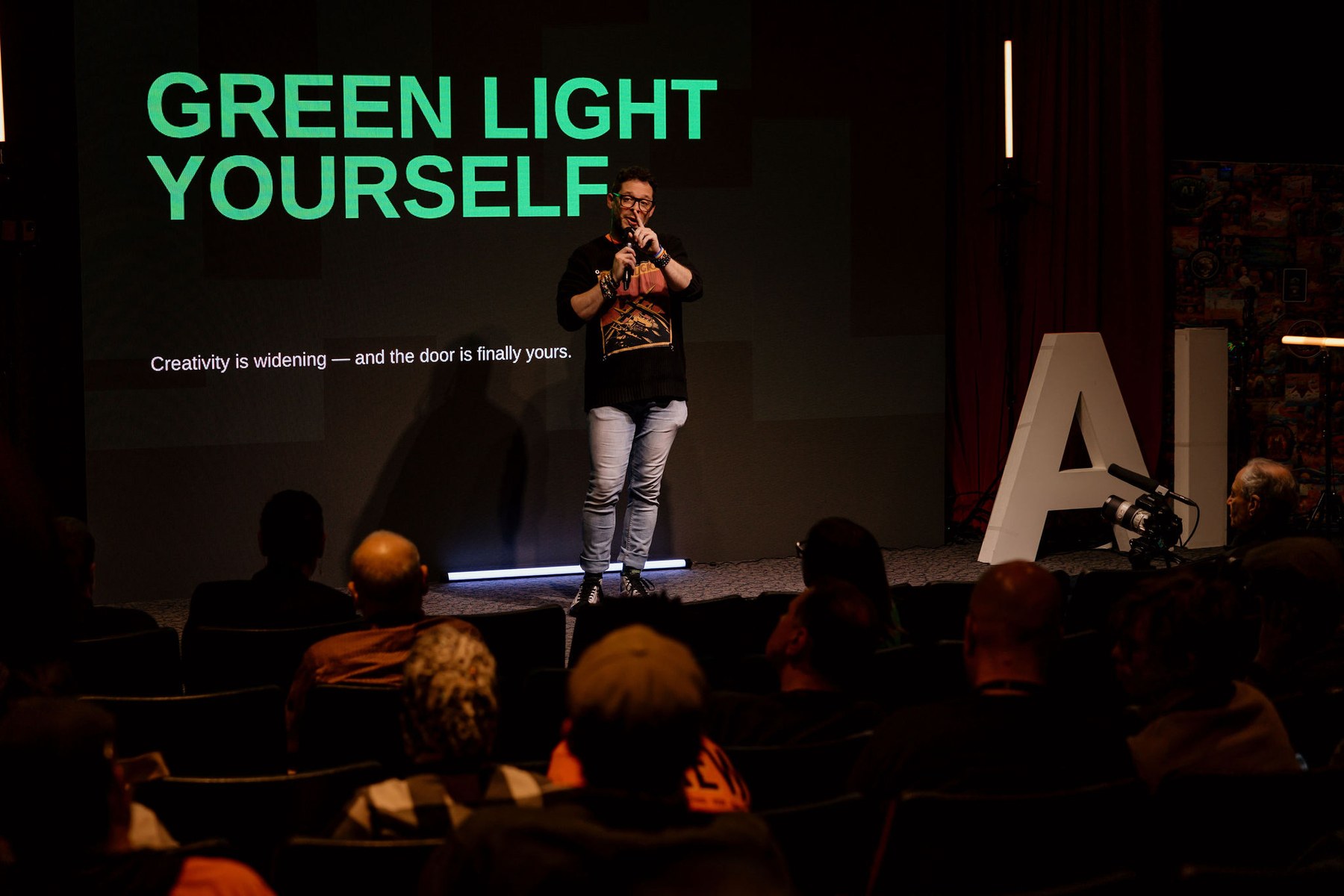
Green Light Yourself on stage at Futureproof Festival of AI. October 30, 2026.
Kevin Friel told us he'd fumbled a film submission. Then he corrected the size of what he'd fumbled.
There was a person attached to that file. Someone who had made something, felt nervous about showing it and trusted the people running the screening to receive it.
That's the part of Green Light Yourself, his October 30 talk at Futureproof Festival of AI at Vancouver's H.R. MacMillan Space Centre, that I want to stay with.
We can spend the whole afternoon discussing how quickly a model generates a shot. A screening still needs someone to make sure the fucking file plays.
Getting the idea out of your head has a cost
Kevin described hovering over the button to share Shepherds, a film idea he'd carried for years. He had plenty of professional experience. Sharing this particular thing still made him nervous.
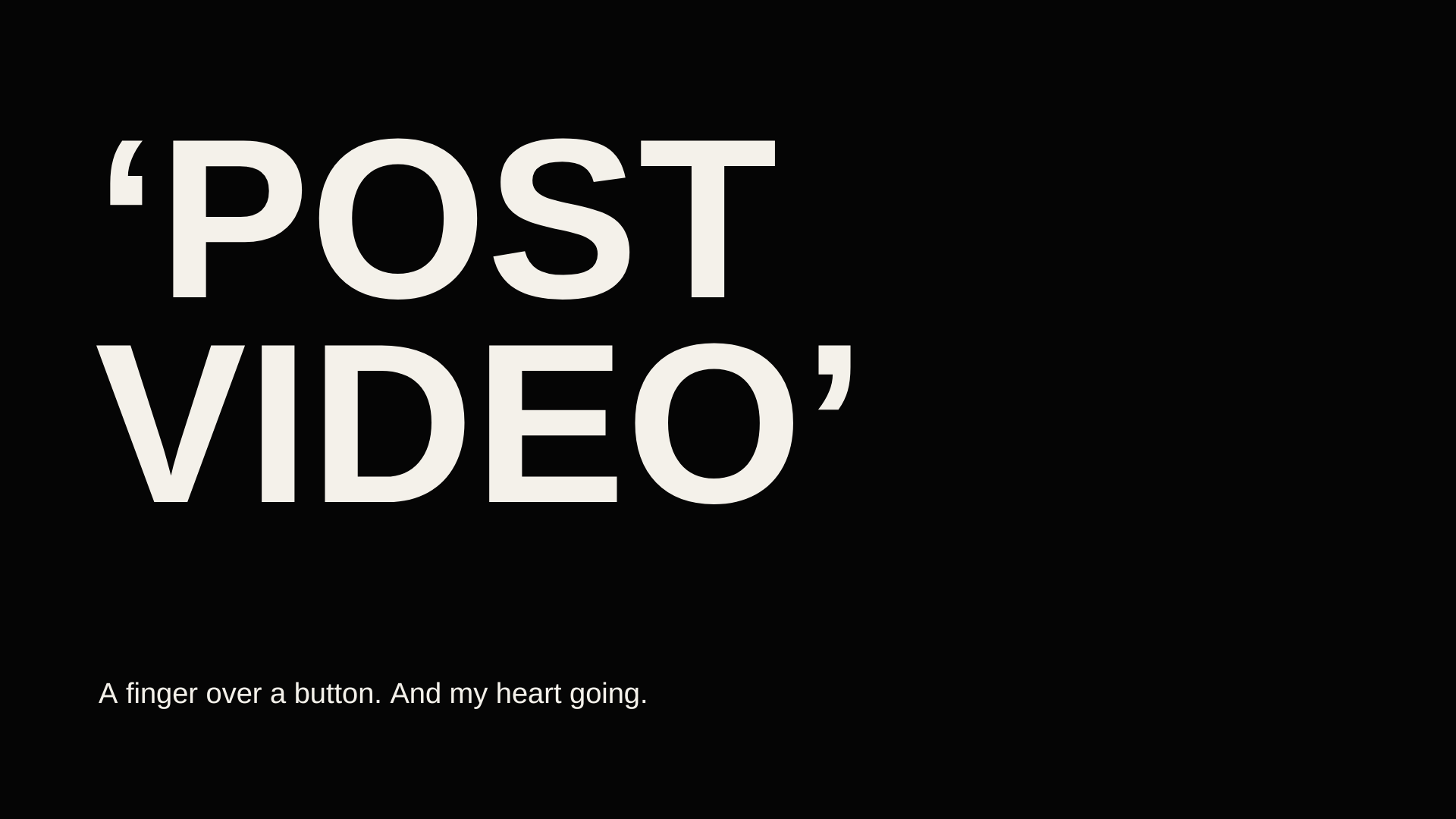
The moment before sharing it. Kevin Friel's presentation, Friday show deck, page 142.
Experience hadn't made him immune to that feeling. Sometimes the project closest to you is the one you can barely bring yourself to show.
He recalled my advice to show it broken. An unfinished work can give you a conversation you cannot have while it stays on your hard drive.
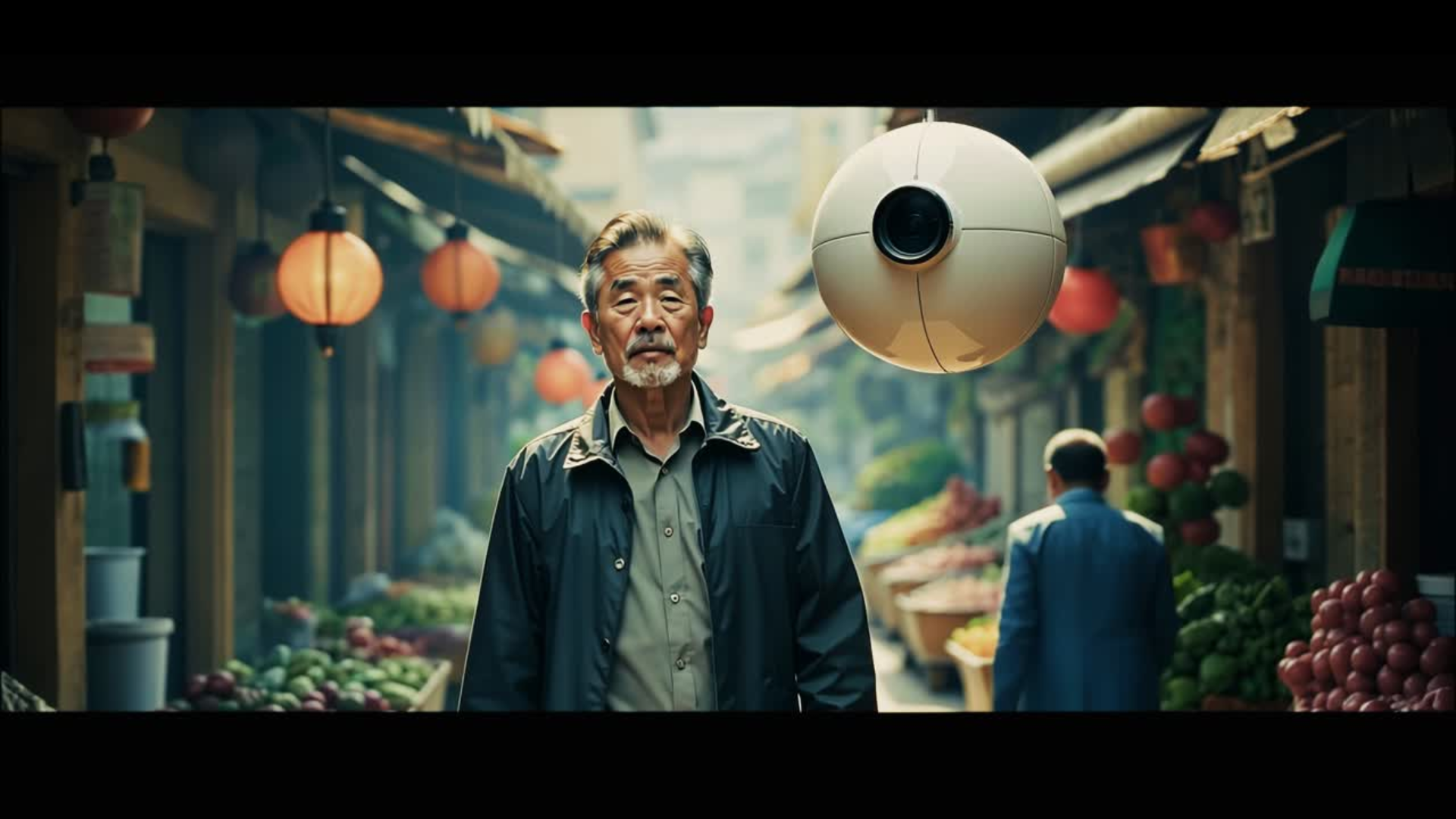
A frame from Shepherds, shown in Kevin Friel's presentation, page 144. AI-generated film imagery, not a documentary photograph. Film and presentation: Kevin Friel.
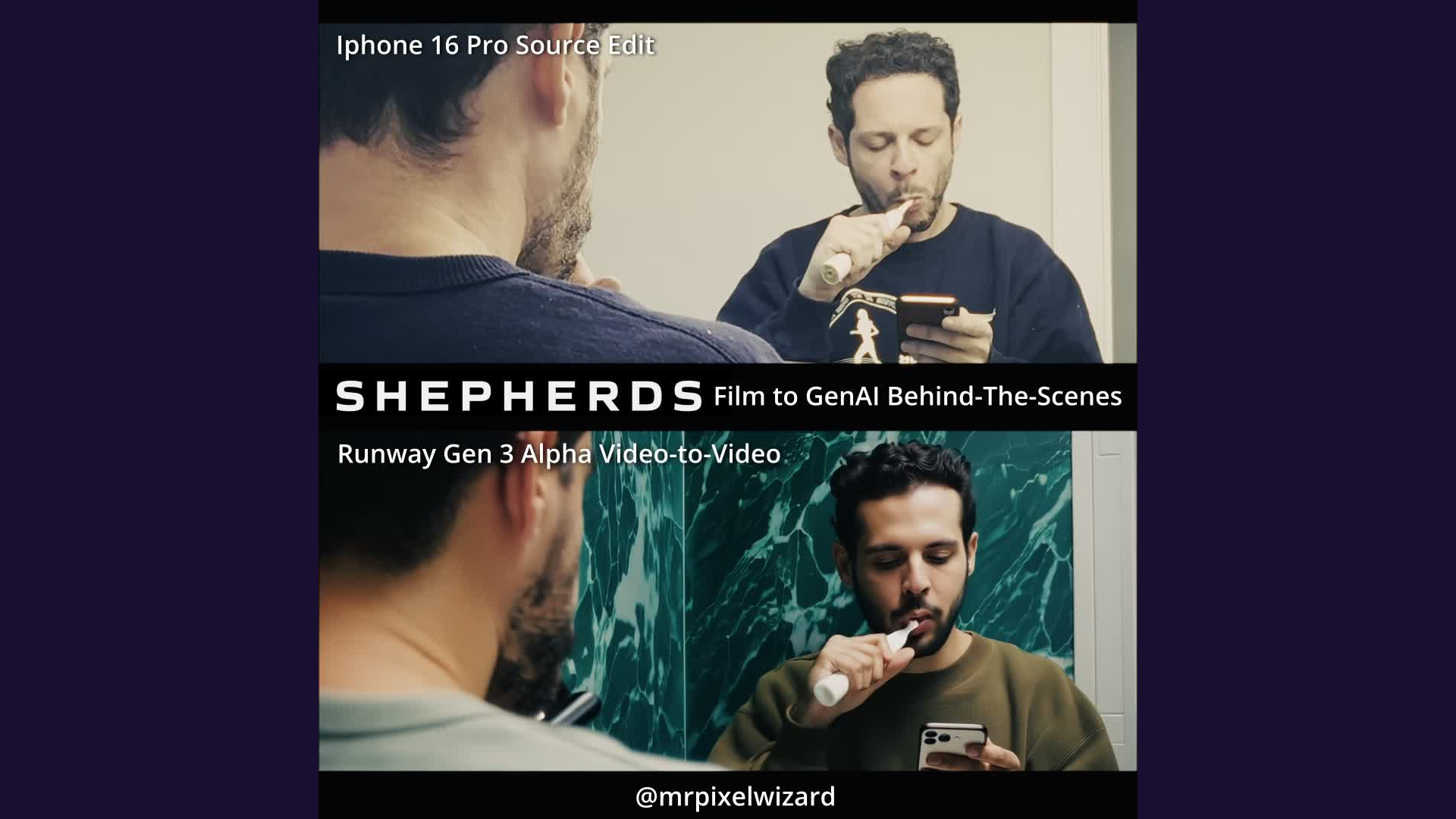
The source shot and the generated version, shown together in Kevin's presentation. Page 146. Film and presentation: Kevin Friel.
Here he lets us look at the work. A phone, a mirror, a performance, then a different treatment of that shot. You can compare the images and start asking specific questions. What did he keep? What changed? What would he change again?
You get to see what reaches another person. You find the bit they remember. You discover that the scene you spent all night polishing isn't doing the job you thought it was.
None of that requires pretending the work is finished. It requires being honest about what you're showing.
The screen comes with a responsibility
The BC + AI Film Club gives that exchange a regular place to happen. Finished films, rough cuts, experiments. People explaining what they tried and other people asking how it worked.
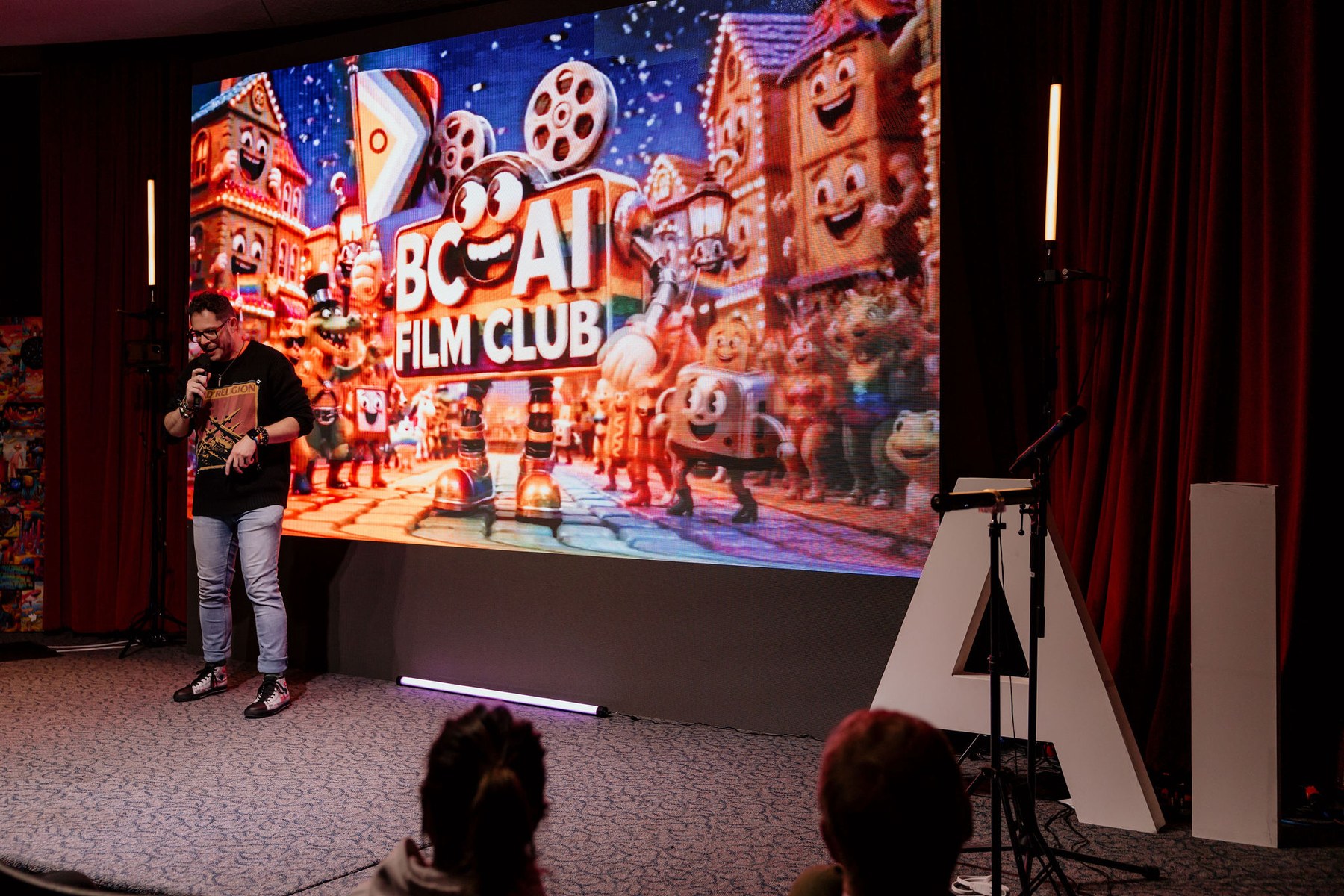
The Film Club story on the festival screen. October 30, 2026.
In Kevin's talk, the monthly prompt challenges provided a shared starting point, with filmmakers taking the work in their own directions.
Then came his admission about submissions that hadn't made it to the screen.
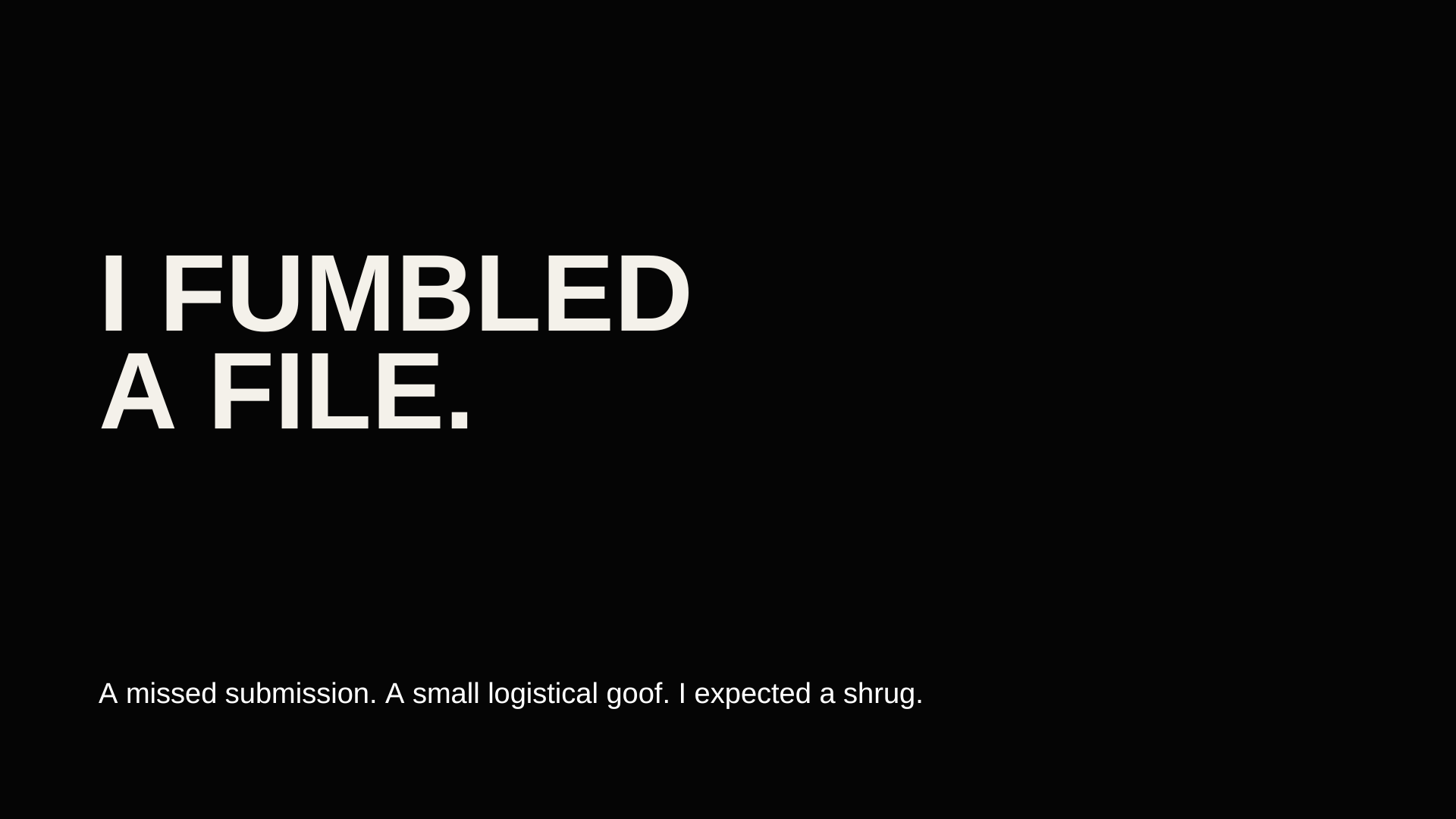
The logistical description. Kevin Friel's presentation, page 152.
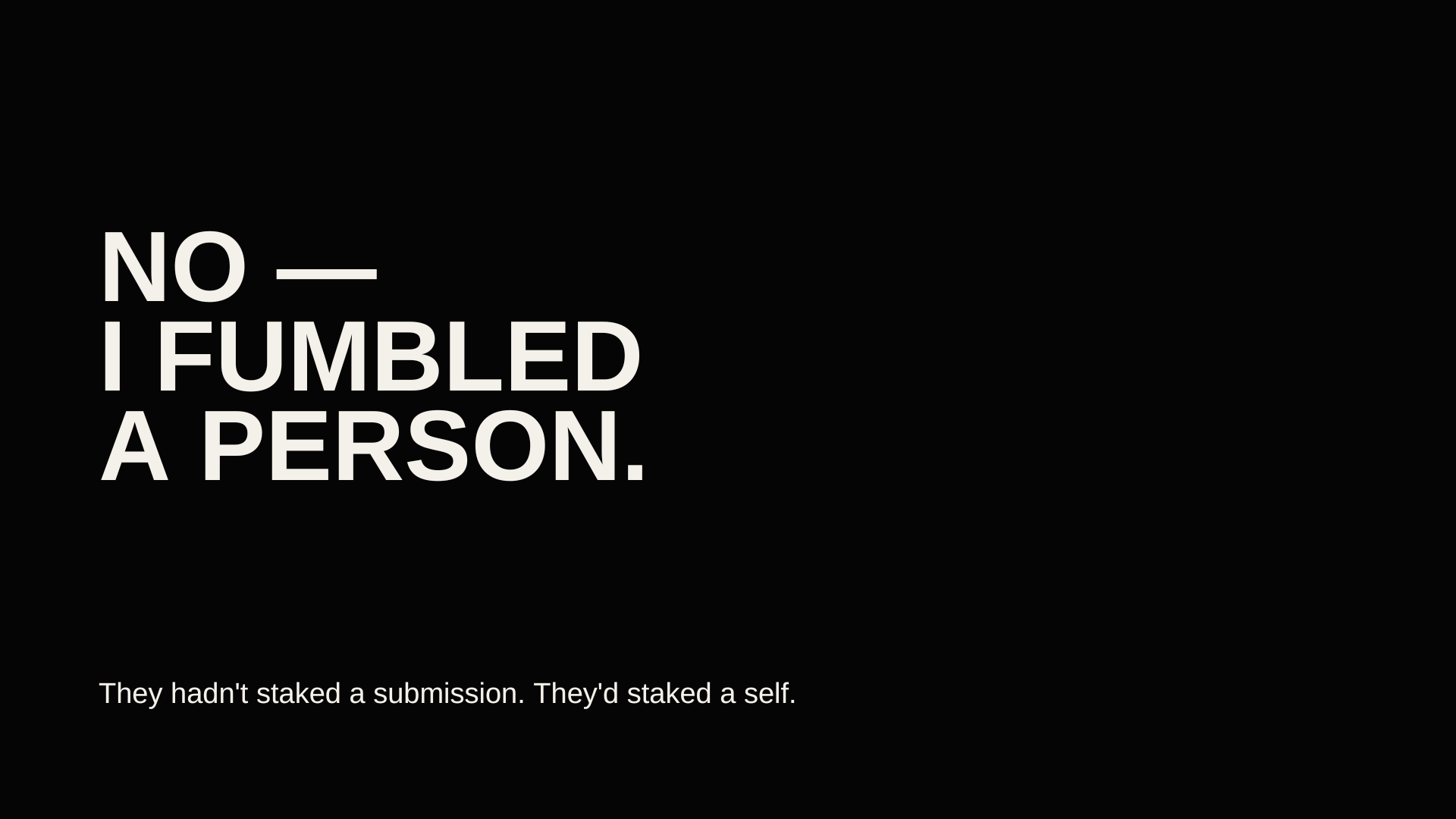
The correction. Kevin Friel's presentation, page 153. These are successive slides, kept in their original order.
He recognized the nervousness he'd felt himself. A missing file looked different once he considered the person waiting to see whether their work would be received.
For me, that's an organizing lesson hiding inside a filmmaking talk. If you invite people to bring something personal, the unglamorous parts of hosting deserve care. Can they submit it? Did someone check it? Do they know what will happen? Is there a way to fix a mistake?
Those details carry the invitation. An encouraging speech can't do their job for them.
The Film Club archive gives those screenings a history people can return to. The club also helped build the community I wrote about in Futureproof's first year. Hosting that community includes remembering the person waiting for their film to play.
Craft gives you something to ask for
Kevin also made a practical argument about filmmaking knowledge. He contrasted a vague request for a pretty image with a filmmaker describing the camera, lens, light and composition they want.
The point is what the maker can see and specify. If you know why a shot feels wrong, you have somewhere to go next. If you can only ask for another version, you are waiting for a result to please you.
In the Q&A, an audience member asked about visual controls for adjusting an image. Kevin offered ComfyUI, with its connected nodes and models, as one example. He emphasized repeatability. That matters when somebody likes a shot and asks for one small change. You need some idea of which decision produced the thing they want to keep.
He also described blocking camera moves in Blender. A blue block represents a car. A rectangular plane stands in for the road. The rough scene gives the movement a shape before the finished surfaces exist. A filmmaker can work on where the camera goes without first making every object look expensive.
There's more of his thinking in Context Is the New Art Form, an earlier BC + AI Film Club talk recorded in April 2026. It gives this discussion of craft a longer history; it is a separate talk from his festival session.
Later, Philippe Pasquier's creative AI work returned to the relationship between craft, tools and a maker's sense of authorship. There's a conversation to keep having between those talks. What do people need to learn so they can recognize their own decisions in the work?
Bring the crew with you
Another question came from someone thinking about the people who own the cameras and lenses, and whose livelihoods depend on filmmaking. How do you bring those peers along? Kevin pointed to production designers and the specificity they bring. Asking for an Art Deco interior still leaves somebody responsible for deciding which details belong there.
He recalled colleagues looking at his studio work several times a day and suggesting changes that made it better. That is a useful test for the lone-genius fantasy: can another person still get close enough to your process to improve it? A workflow you can explain gives a collaborator something to work with.
The final question concerned corporate clients and their rules about AI. Kevin's advice was to disclose its use and discuss how much of a budget could go toward experimentation. He also described the interest in behind-the-scenes footage: green screens, rough renders, the work before the polish. Showing the process can help a client understand what they are agreeing to try.
Kevin didn't present distribution as a solved problem. An audience question about getting AI-made films seen opened up the uncertainty. Making a film and finding a home for it remain different jobs.
A careful first screening is something we can give a filmmaker now. Test the file. Watch the work. Say something specific enough that the person who made it can use it.
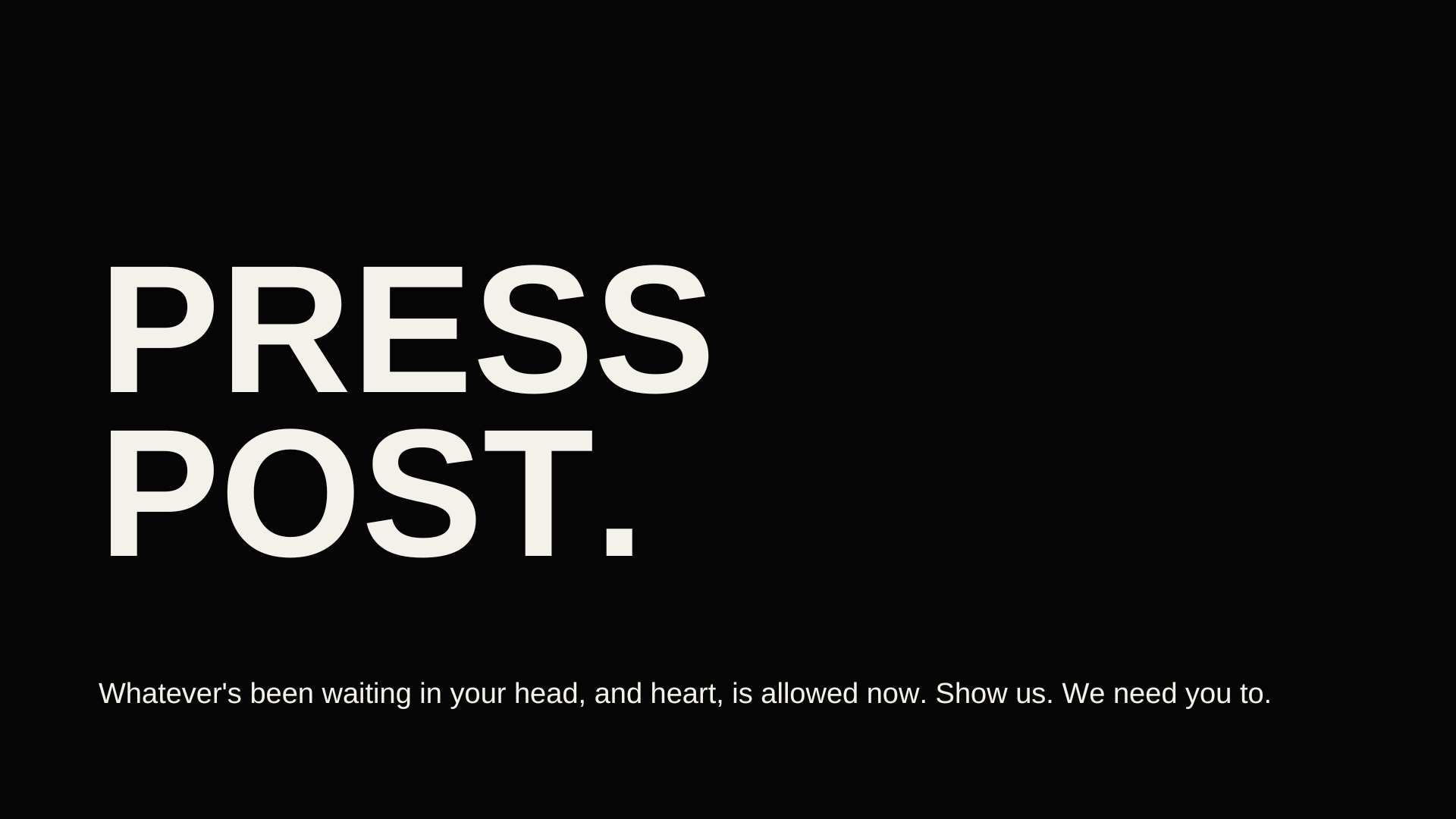
The invitation Kevin left on screen. His presentation, page 169.
What have you been waiting to finish before you let another human see it? Who could give it a careful first screening?