Futureproof Festival / 2026
Philippe Pasquier: let the artist learn the instrument
The conversations worth coming back to.
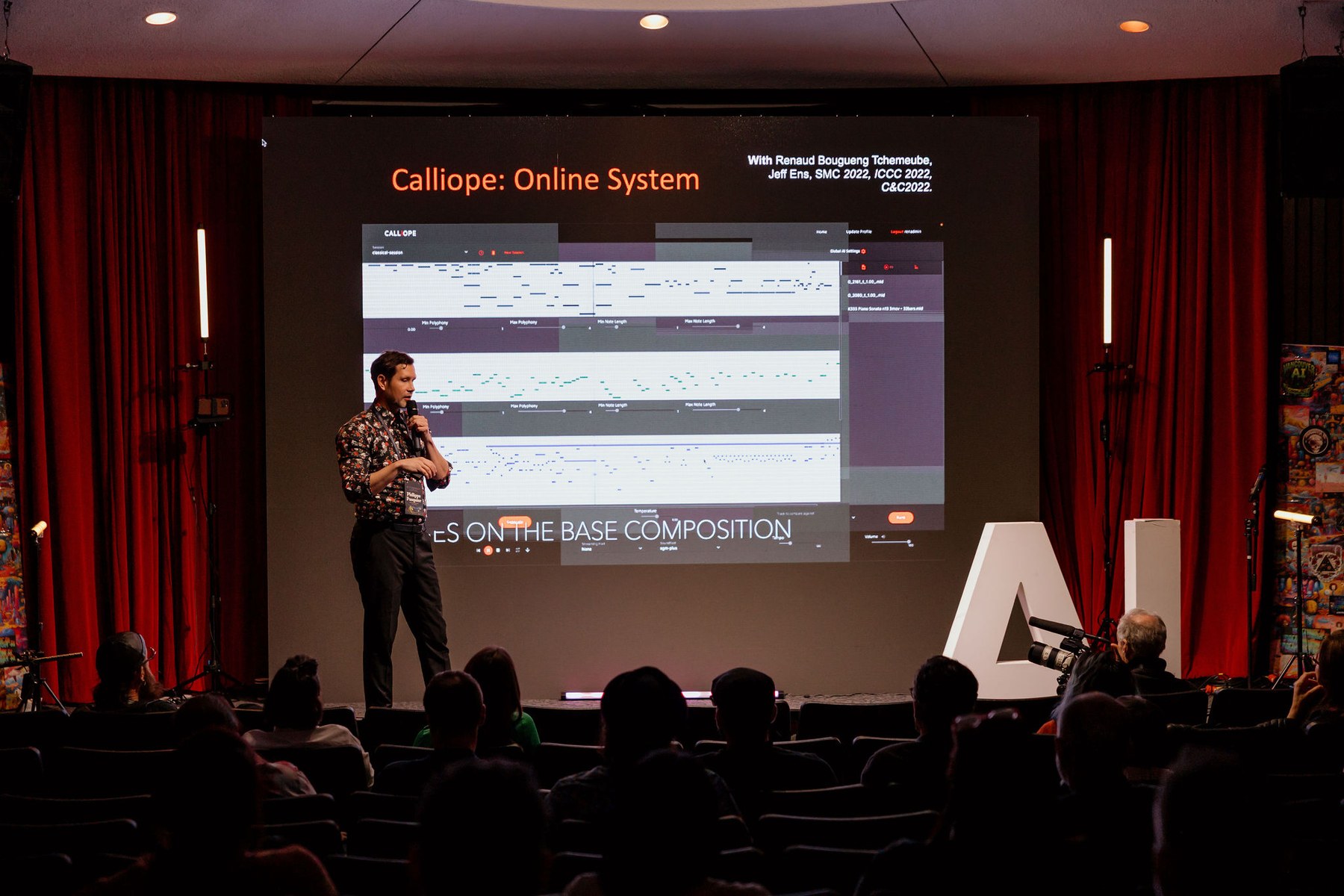
Philippe Pasquier presents a music interface during his Friday talk. October 30, 2026.
If your violin changed every three months, how good would you ever get at playing it?
Philippe Pasquier brought that question into his October 30 talk at Futureproof Festival of AI at Vancouver's H.R. MacMillan Space Centre. In a creative AI field that keeps asking us to drop everything for the next release, he made a case for staying with an instrument long enough to learn something.
The usual creative AI sales pitch starts with a box. Type what you want. Get something back. Type again. Somewhere in there, you're supposed to become an artist, an art director and a delighted subscriber.
Philippe starts further upstream. What does the artist actually want to make? What material have they spent years gathering? Which decisions should remain theirs? At SFU's Metacreation Lab, his account of participatory design includes artists helping shape the system from the beginning, while the underlying methods are still being worked out.
That changes the brief. An interface built around someone's practice has different obligations from a machine built to satisfy the largest possible market.
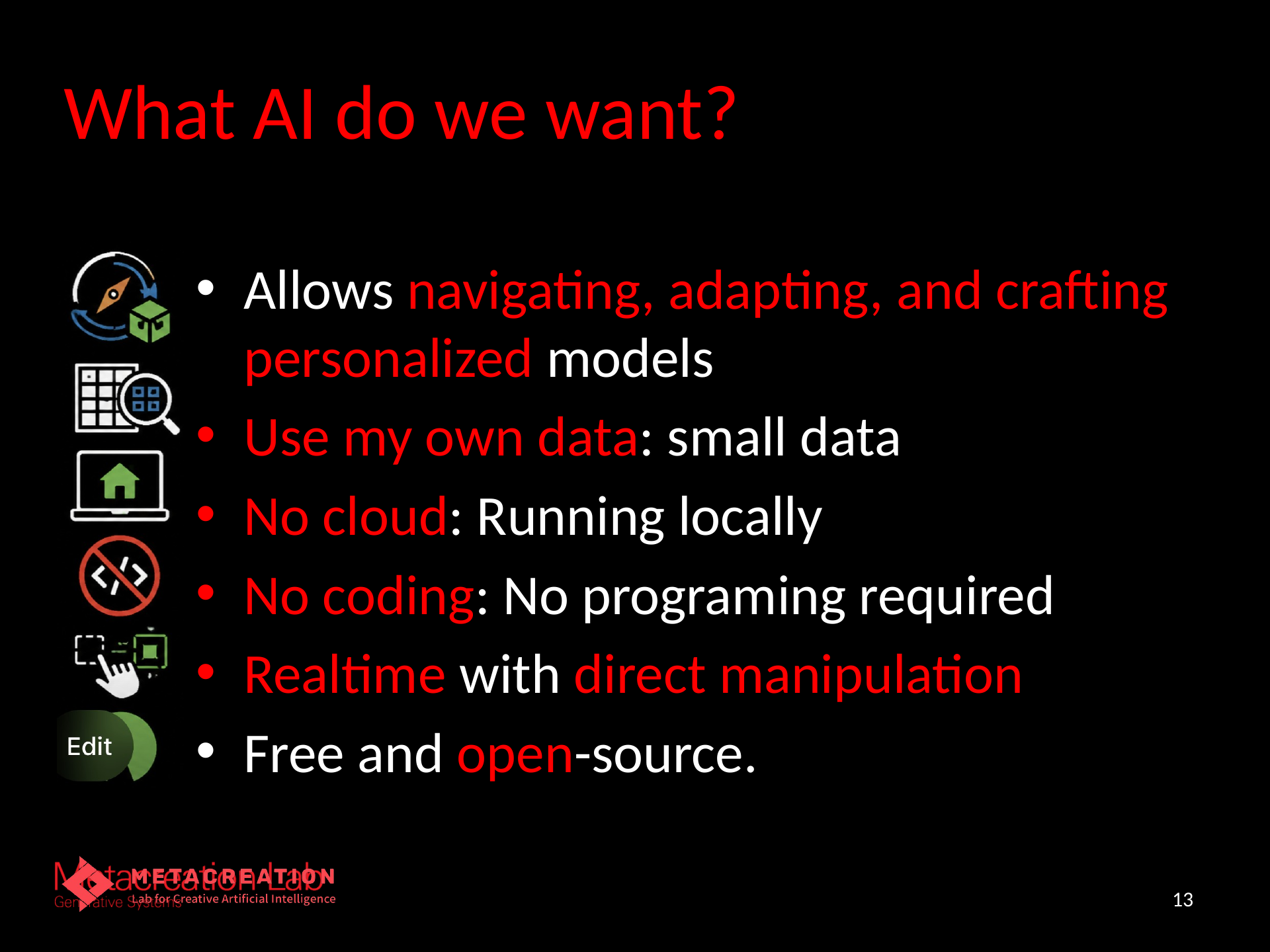
Philippe’s brief for creative tools. Slide 13 from the presentation supplied for his Friday talk.
The archive on your hard drive is a place to begin
Philippe described artists who want to work with their own pictures, recordings and aesthetic vocabulary. Their material might be small compared with a commercial training collection. It can still contain years of decisions about what deserves attention.
Autolume gives that approach a concrete form: a visual synthesizer for artists to train and work with their own models without having to code the whole thing themselves.
You can stay with a model, change a setting and see what that decision does. What becomes possible when the artist gets familiar with the material, instead of asking a fresh text box to surprise them again?
Philippe used calligraphy to make the difference visible. A generic model can imitate the look of Arabic script while mangling the letters. Arshia Sobhan’s Ensemble begins with siyah-mashq, a Persian calligraphic practice, and develops its forms through model crafting. The artist brings a relationship to the material that ‘make it look Arabic’ cannot supply.
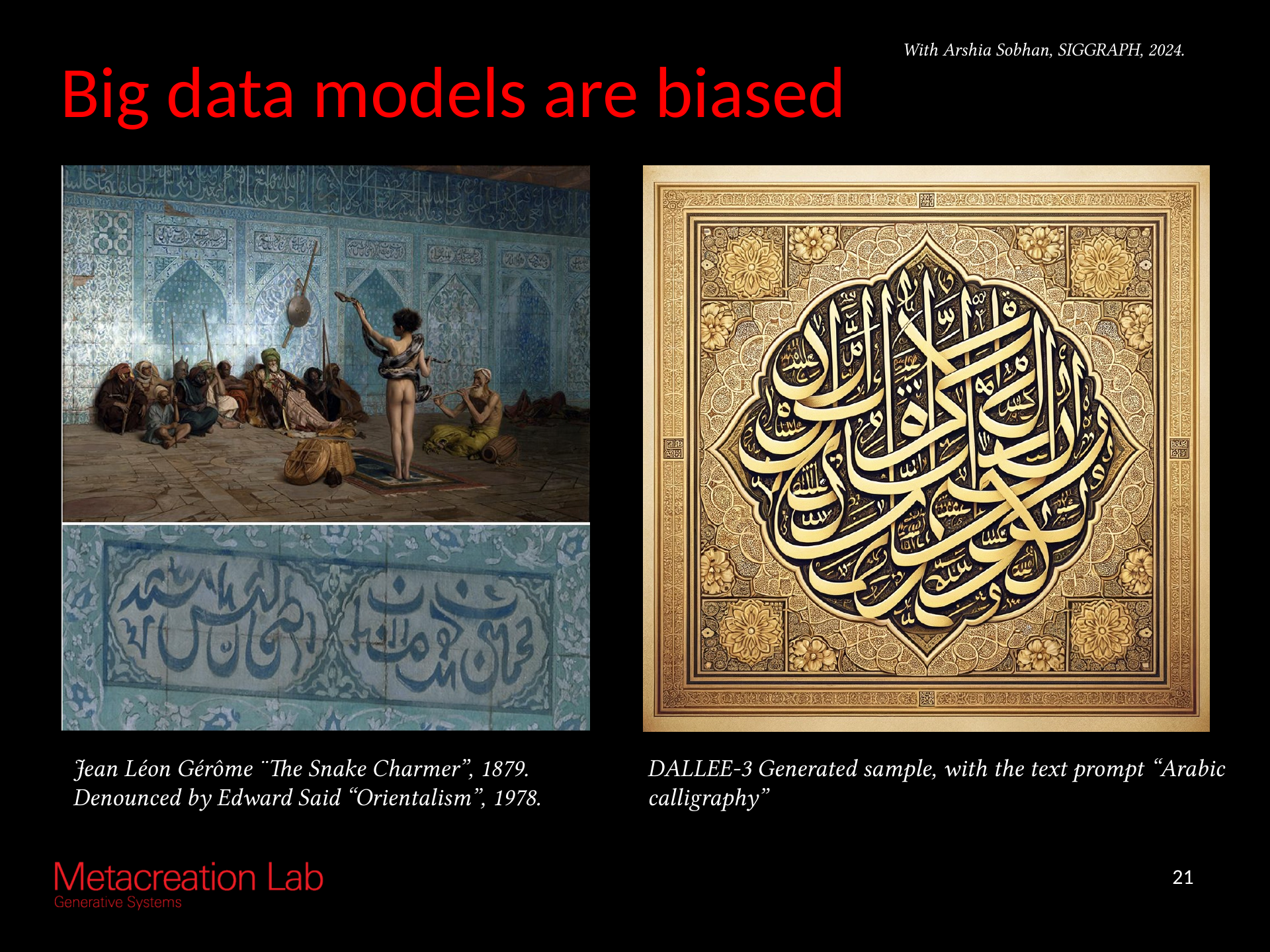
Philippe compares Jean-Léon Gérôme’s The Snake Charmer (1879) with a DALL-E 3 generated image. Slide 21 from his supplied presentation. The related Broken Letters, Broken Narratives study examines the system’s treatment of Arabic script.
Philippe connected the talk to his opening-night performance, saying he'd used Autolume in that set. The Friday discussion had a practice behind it, with a laptop and a room in which to try it.
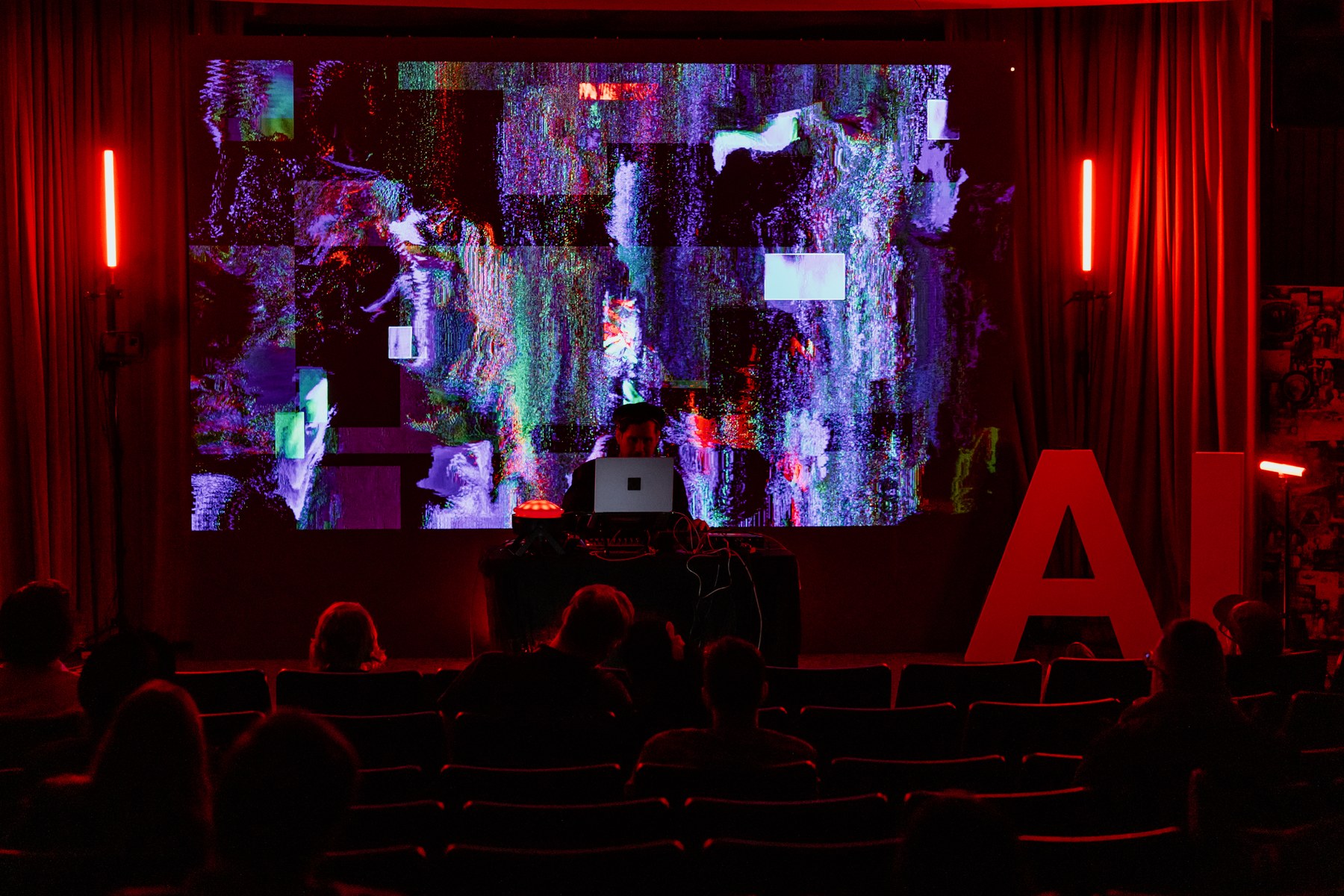
Opening-night creative AI performance, October 28, 2026. This photograph records the set Philippe referred back to in his Friday talk.
I have a personal way into this. My photography is part of Alpha Prism, with Lionel Ringenbach, Philippe and Arshia Sobhan, credited on the lab's project page. I wrote about that post-photographic experiment at the Wosk Centre in 2024.
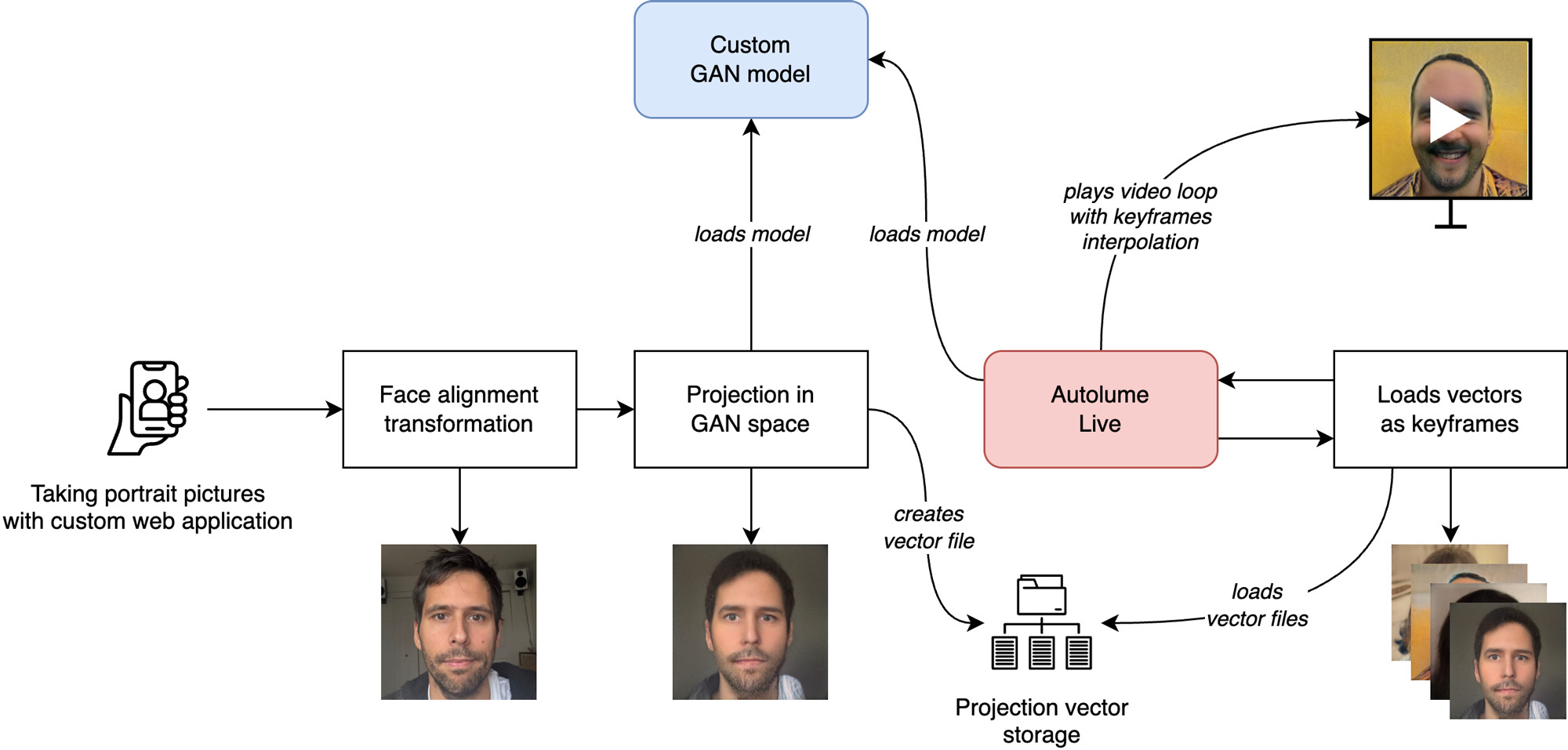
Related project context: the original Alpha Prism workflow, Figure 7, page 170, in Sobhan and colleagues' Autolume paper, 2025. Authors: Arshia Sobhan, Ahmed M. Abuzuraiq, Philippe Pasquier, Lionel Ringenbach and Kris Krüg. This is the published installation diagram, not a festival slide. Images inside it include generated portraits.
The diagram makes the relationship concrete. A new portrait is mapped into a model trained on my photographic archive. The resulting position becomes a keyframe in an evolving loop. The archive shapes what the system can produce; the installation gives people a way into that space.
For me, the interesting question is what I can recognize and steer when my own photographs become material for a different kind of image-making. Which habits follow me into that process? Which surprises are worth keeping? When do I walk away from an output that looks impressive and feels empty?
Those are artistic decisions. A model doesn't relieve me of making them.
You can make better work and feel less like its author
Philippe described a sound design class where better work could still leave a student feeling farther from what they made. In the published study, 71 beginners made a soundscape with conventional tools, then returned to the same theme with Audio Metaphor. They could bring its generated tracks into Reaper and keep editing and mixing. The 2025 Audio Metaphor study.
Grades rose and students logged less time on the second assignment. Everyone had already done a first round of practice, and the grader knew which assignment used the tool. How much of the improvement came from the tool remains open.
Students gave different answers about where they felt authorship. Some found it in the choices they made when writing a prompt. Others felt that typing a description gave them too little say. Several pointed to editing and mixing as the part where the work began to feel like theirs. A good grade won't tell you which of those experiences the maker had.
He described professional composers using another system differently: generating possibilities, hearing something useful, then writing a part themselves. Their craft gave them choices about what to do with the suggestion.
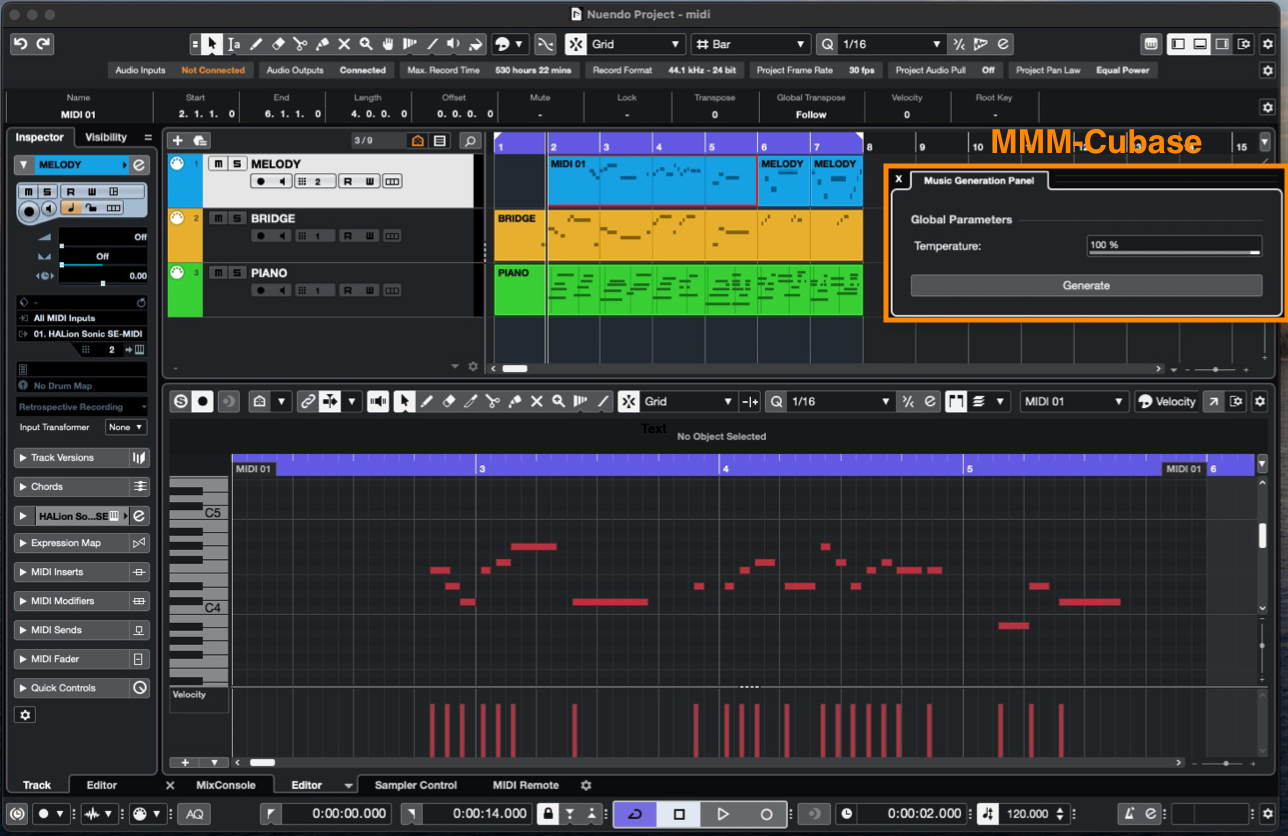
Research context: Figure 1 of Bougueng Tchemeube and colleagues' MMM-C study, 2025. Source: the authors / SFU and Steinberg. The tested interface, not a festival slide.
The study followed eighteen experienced composers, including professionals and hobbyists. Participants generally retained creative ownership by curating and editing generated material. They also wanted more control: an interface could be easy to operate while making a particular musical intention difficult to achieve.
The composer study used a different tool with experienced beta testers. Both papers describe ways people shaped what they got back. They leave open how experience itself affects ownership.
If you want to hear what that control sounds like, the lab’s MIDI-GPT workshop takes it into the studio. A musician can keep the material they want to work from and generate a part inside the recording software they already use. That makes the next decision concrete. Keep the part, change it or play something else against it.
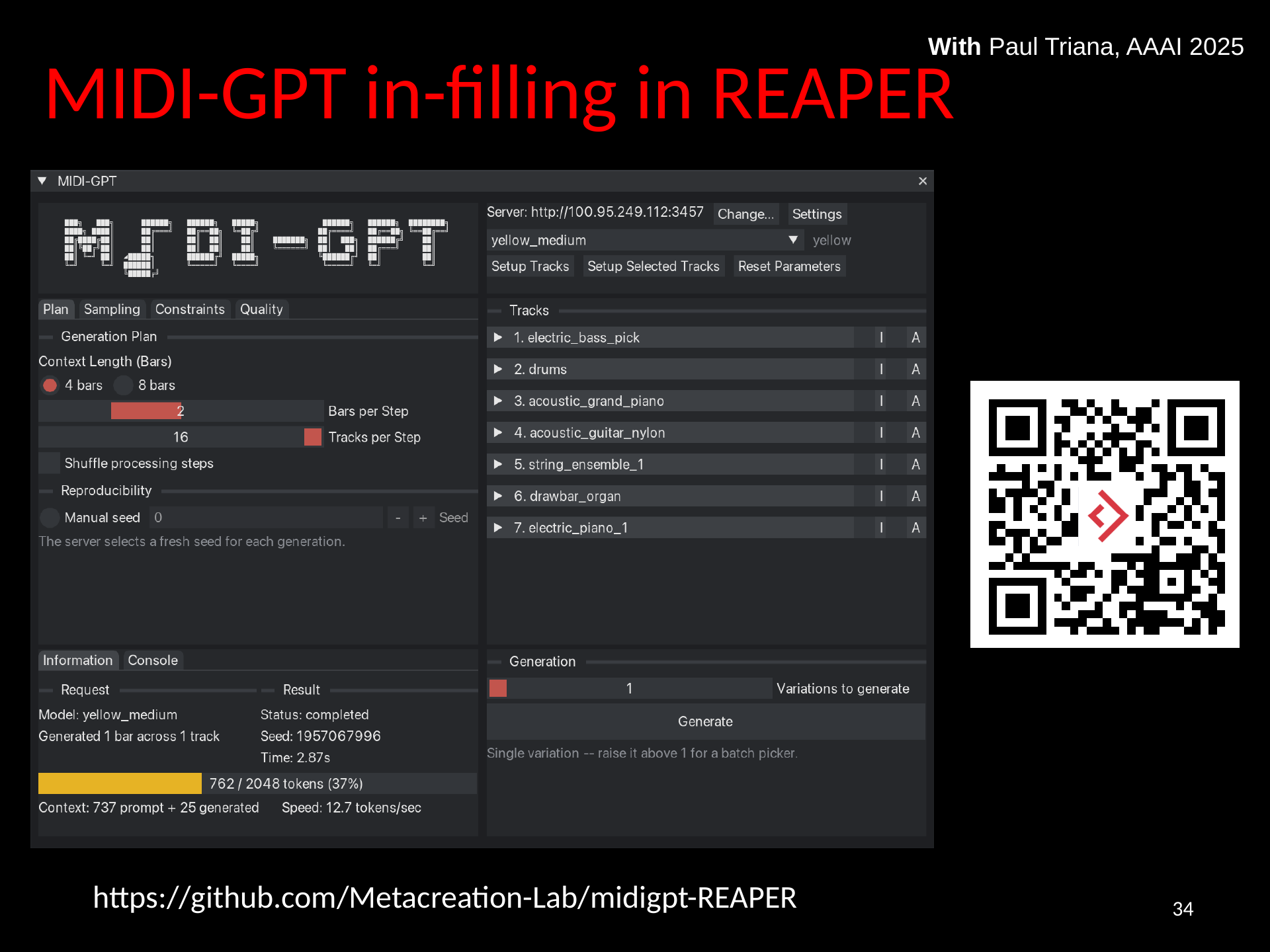
MIDI-GPT’s in-filling controls inside REAPER. Slide 34 from Philippe’s supplied presentation, with Paul Triana. The lab publishes the REAPER integration and documentation.
The invitation to press Generate is simple. Learning to get somewhere on purpose takes more.
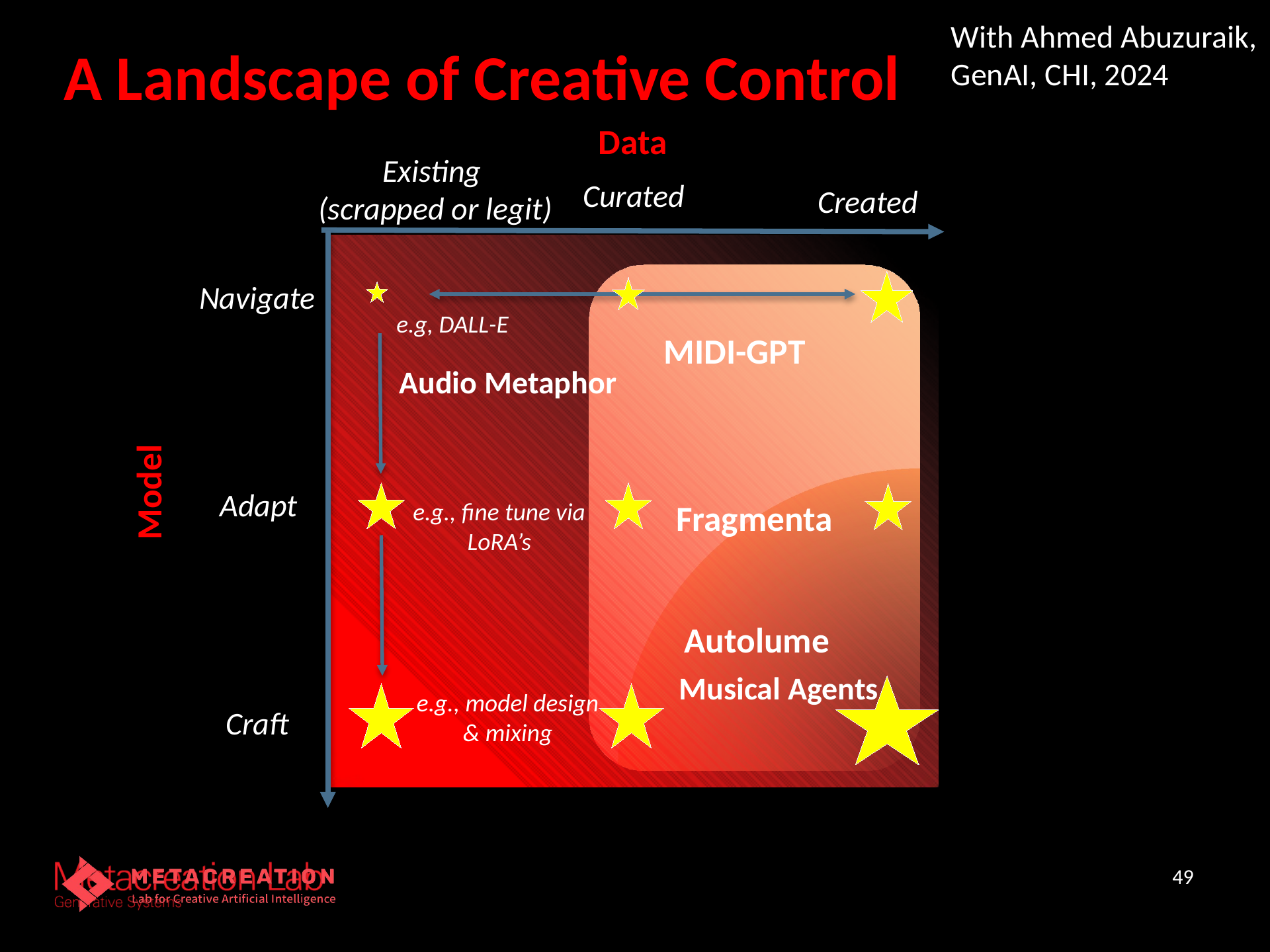
A landscape of creative control, slide 49 from Philippe’s supplied presentation. The diagram separates the source of the data from the ways an artist can shape a model.
His creative-control map separates two choices. Where does the data come from: an existing collection, a curated selection or material you created? What can you do to the model: navigate it, adapt it or craft it? Those axes give “I used AI” a useful follow-up. Which decisions did you actually get to make?
That's where education gets interesting. What does someone need to practise so they can make a choice they understand? What should a tool help them notice? How can it leave room for them to get better?
Kevin Friel's earlier BC + AI Film Club talk, Context Is the New Art Form, gives another filmmaker's route into that question of craft. Put the work on screen and ask where the maker intervened. The conversation gets more useful once we have something specific to look at.
Keep the disagreement
Philippe also described musical agents and co-creation. Later, Ben Shneiderman argued strongly for the language of tools and against treating a machine as a collaborator.
I don't need to pretend those are the same position to put them in the same festival. The difference gives us something worth working on. Which kinds of interaction help a musician? Which metaphors make responsibility clearer? What happens when the language that serves a performance travels into a classroom or a hospital?
This is one reason I wanted the larger Futureproof conversation to happen among people who do different kinds of work. A single slogan can't hold all of it.
Philippe also gave a University of Galway masterclass on creative AI and its alternatives earlier that October. Galway’s recording gives the sound, music and visual systems he brought into the Futureproof conversation more room.
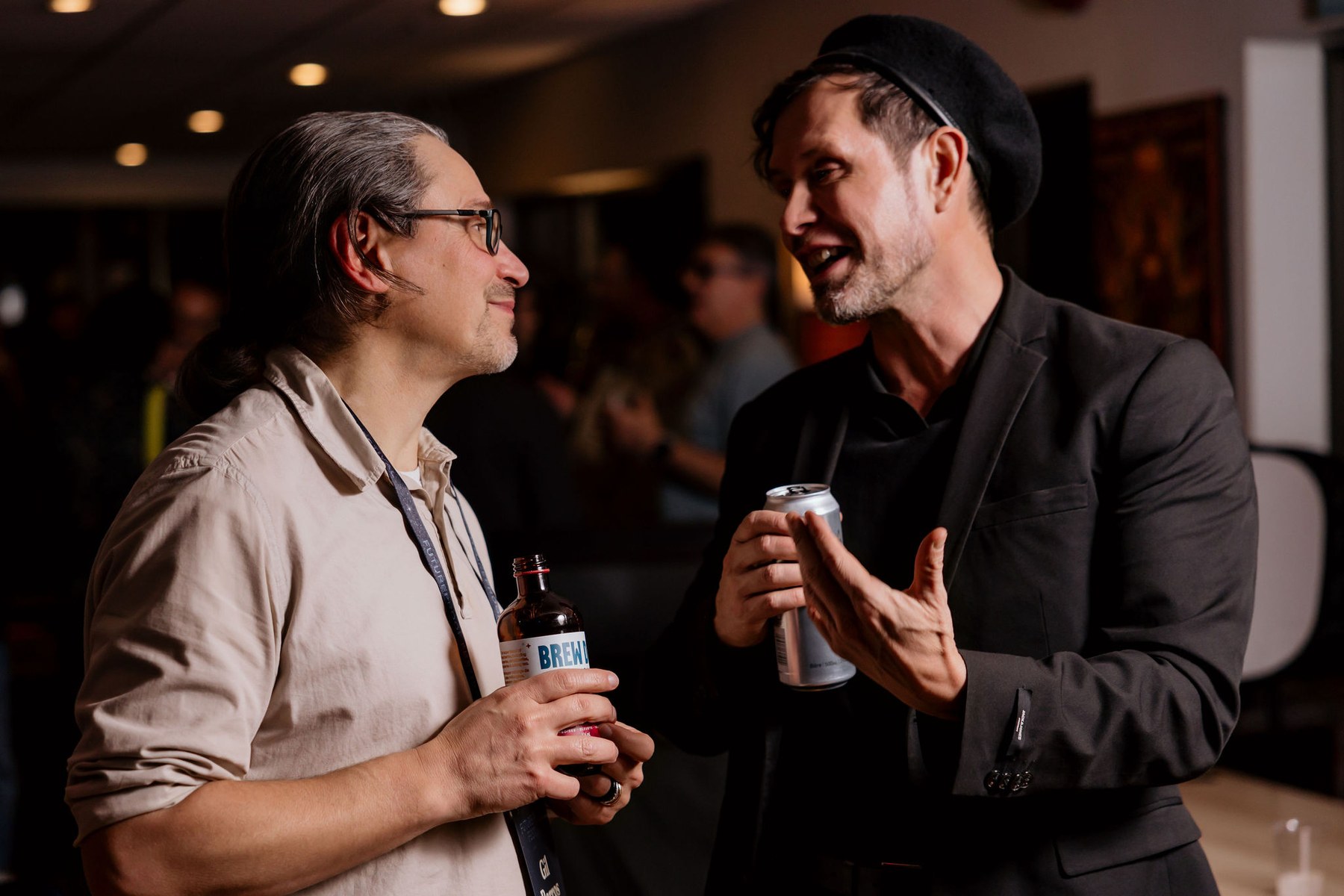
The conversation continues at Friends Quarters, October 30, 2026.
Return to Philippe's violin. You practise, get frustrated, learn where to put your fingers. Eventually you can do something you could only hear in your head. Changing the instrument every few months asks the artist to keep paying that learning cost.
Before the next upgrade asks for your attention, ask something of it: what will this let me learn that I can still use a year from now?